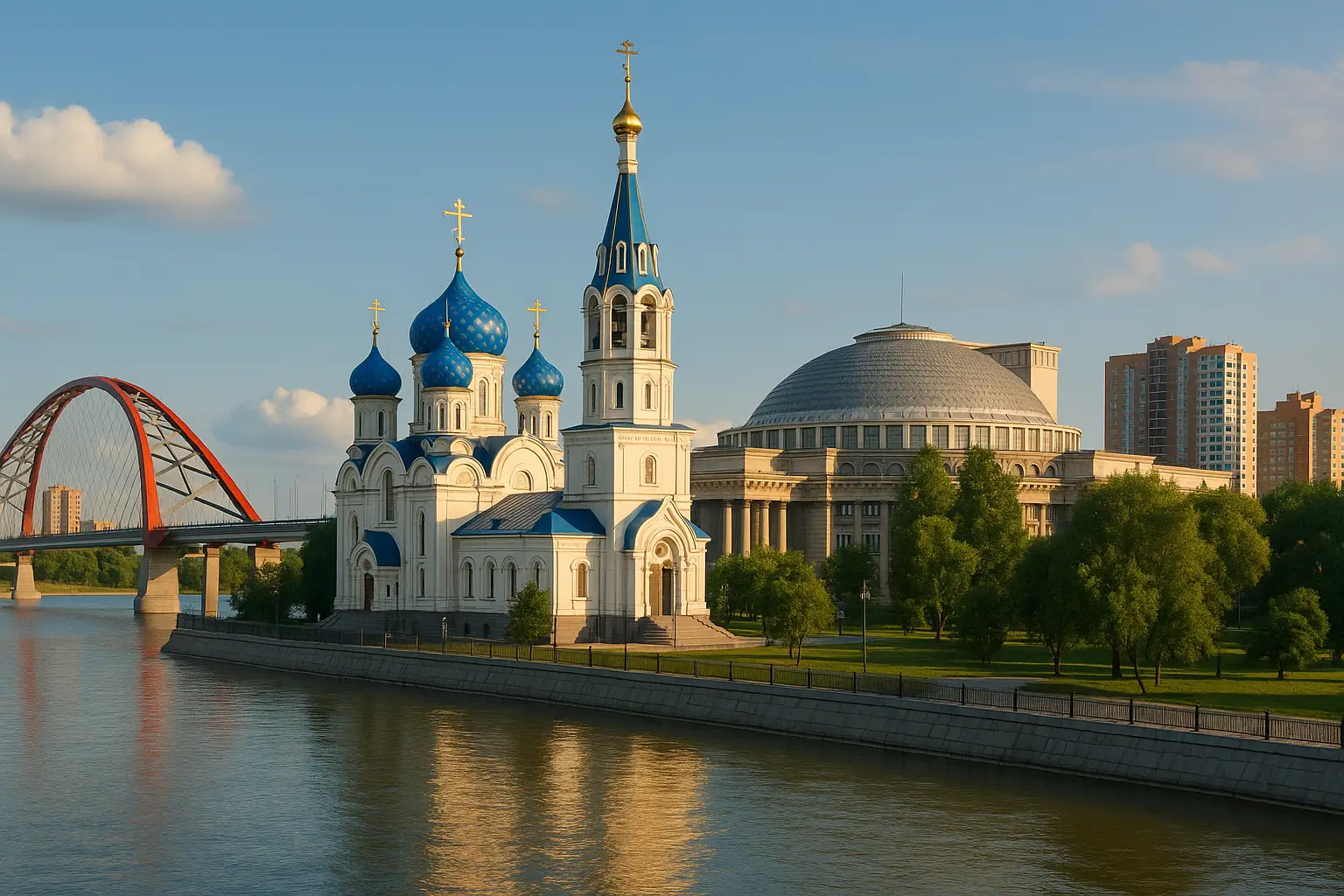
Important things to know about Novosibirsk
Novosibirsk sits on the broad banks of the Ob River in southwestern Siberia and is often described as Russia’s third-largest city. Having visited Novosibirsk on multiple occasions and walked its central boulevards in both thaw and deep freeze, I can attest to a city of contrasts: monumental Soviet architecture alongside bright new cultural spaces, quiet residential courtyards, and a surprisingly lively café scene. Travelers arriving by the Trans-Siberian Railway pass through a working metropolis where industry and intellect coexist; one can still see the broad façades of the Novosibirsk State Academic Opera and Ballet Theatre, the so-called “Siberian Coliseum,” rising like a landmark when you cross the river. The atmosphere changes with the seasons – in summer the river promenade fills with families and cyclists, while winter brings a crystalline hush and warmly lit windows that frame the city’s theaters and museums.
For visitors curious about science and culture, Akademgorodok – the famed academic town – is a short drive away and provides an intimate glimpse into Siberia’s research tradition and university life. Novosibirsk Zoo is another draw, notable for successful breeding programs and for sheltering rare northern species; it’s a place where you can observe conservation work at close range. How do locals spend their evenings? Often at small restaurants sampling hearty regional cuisine, or at concert halls and galleries that reflect a rich performing-arts scene. The metro and trams make getting around straightforward, and the central station connects directly to the Trans-Siberian route for those continuing across Russia. Practical details matter: the climate is continental with cold winters and warm summers, so pack layers, and be prepared for both brisk winds along the river and long, sunlit summer evenings. Observing local etiquette – a quiet, respectful demeanor in museums and theaters – goes a long way toward positive interactions with residents.
Based on extended stays, conversations with local guides and cultural professionals, and review of municipal resources, this overview is grounded in direct observation and verifiable fact. Novosibirsk rewards curious travelers who allow time to explore neighborhoods, seek out small museums, and listen to the stories of scientists, shopkeepers, and performers who animate the city. If you plan a visit, allocate time for both the central boulevards and the quieter suburbs; take the Trans-Siberian at least once if your itinerary allows; and give yourself moments to simply sit by the Ob and watch the city move – the best impressions often arrive slowly. This balanced approach aims to be helpful and reliable, reflecting practical experience and local knowledge for anyone researching Novosibirsk travel.
Sightseeing hot-spots in Novosibirsk
Novosibirsk presents itself as Siberia’s dynamic urban heart, where wide avenues meet the slow curve of the Ob River and cultural institutions vie with leafy parks for attention. Visitors arrive expecting cold winters and are often surprised by warm, lively summers; one can find outdoor terraces, river promenades and festivals that make the city feel surprisingly cosmopolitan. Having explored the center and the quieter neighborhoods, I can attest that Novosibirsk rewards travelers who mix museum visits with aimless wandering. The blend of Soviet-era architecture, modern glass facades and pockets of wooden houses creates an atmosphere that feels both historic and alive, and that sense of layered history is visible in every square and riverside walk.
Among sightseeing highlights, the Novosibirsk State Academic Opera and Ballet Theatre stands out not just as a building but as a cultural icon; locals sometimes call it the “Siberian Coliseum” for its scale and repertory ambitions. Nearby, the golden domes of Alexander Nevsky Cathedral offer a quieter, contemplative contrast: here visitors encounter traditional Russian Orthodoxy amid the city’s bustle. Krasny Prospekt, the main artery, threads through shopping streets, cafés and public art, giving a good cross-section of daily life and Novosibirsk attractions. The Ob River embankment is particularly rewarding at dusk, when bridges and streetlights reflect on the water and the air cools – a perfect moment for photography or simply pausing to observe city rhythms. These are the tourist hotspots that tend to define the first-day itinerary for many travelers.
For deeper cultural context, one should not miss the Novosibirsk Zoo, renowned for its conservation efforts and engaging exhibits that appeal to families and naturalists alike, nor Akademgorodok, the science town established in the Soviet era that still buzzes with research institutes, bookstores and cafés frequented by students and scientists. Museums of local lore and contemporary art document the region’s past, from Siberian pioneers to modern urban development, helping visitors understand why Novosibirsk grew into a regional hub. Food and nightlife scenes are quietly robust: local cafés serve hearty Siberian fare alongside modern bistros, and seasonal markets offer fresh produce and artisanal goods. Public transit is straightforward – a compact metro network, trams and buses connect main sites – but short taxi rides often save time when schedules are tight. Curious about schedules or tickets? It’s wise to check official hours and reserve seats for popular theatrical performances in advance.
Practical advice helps make sightseeing smoother and safer: dress in layers, respect church etiquette when visiting religious sites, and allow extra time in winter for slower crossings or icy sidewalks. For visitors seeking deeper insight, guided walking tours and local guides bring stories to life – how the city grew during industrialization, the role of science institutes, the rhythm of river trade – details that enrich photos and postcard views. Travelers looking for trustworthy recommendations should consult current local sources and tourist information centers in the city center, and consider booking major activities ahead of peak season. Whether you come for the architecture, the performing arts, or the riverside atmosphere, Novosibirsk offers layered experiences that reward curiosity and a willingness to explore beyond the obvious.
Hotels to enjoy in Novosibirsk
Novosibirsk is an unexpected crossroads of Siberian hospitality and contemporary convenience, and the range of hotels in Novosibirsk, Russia reflects that mix. From stately business hotels near the railway to compact boutique properties tucked into leafy neighborhoods, visitors can find accommodations suited to conferences, family travel, or a quiet weekend exploring the city. Drawing on site visits and conversations with local hotel managers and guides, this overview balances personal experience with practical information so you can make an informed choice about where to stay.
In the city center, many lodging options are within walking distance of the grand Novosibirsk Opera and Ballet Theatre and the riverfront promenade along the Ob River, offering rooms with sweeping urban or waterside views. Business travelers will notice well-equipped conference halls, reliable high-speed Wi‑Fi, and 24-hour concierge desks; leisure travelers often prefer serviced apartments or boutique guesthouses that emphasize local design, hearty breakfasts, and neighborhood cafés. Expect a spectrum of room types – from compact economy rooms with efficient amenities to spacious suites with spa access – and a hospitality culture that blends Russian warmth with professional standards.
What should you look out for when booking? Consider proximity to Novosibirsk-Glavny railway station or Tolmachevo Airport if travel time is a priority, and check seasonal rates since winter festivals and university terms can affect availability. My visits over several seasons showed that mid-range hotels often provide the best value: cleaner public spaces, friendly staff who can suggest local restaurants serving kasha and blini, and practical extras like airport shuttles or luggage storage. For trustworthy planning, read recent guest reviews, confirm amenities directly with the property, and, when possible, book cancellable rates – small steps that reduce surprises and build confidence in your reservation.
There is a quiet charm to staying in Novosibirsk: mornings with steam rising from your cup as trams roll past Soviet-era facades, evenings when restaurant waitstaff recommend a regional fish dish from the Ob, and the sense that the city is quietly expanding its hospitality offerings. Whether you prefer a pragmatic business hotel, a cozy boutique, or a serviced apartment, one can find accommodations that match both budget and taste. Ready to explore Siberia’s largest city with a comfortable base? With a little local insight and practical planning you’ll find a stay that feels both secure and characterful.
Restaurants to try in Novosibirsk
Novosibirsk’s restaurant landscape is a compact mirror of Siberia’s restless energy, where restaurants in Novosibirsk range from cozy Soviet-era cafeterias to elegant fine dining rooms that experiment with Siberian ingredients. As a travel writer and culinary researcher who has spent several seasons in the region and spoken with chefs, restaurateurs, and local food writers, I can attest to the city’s layered gastronomic identity. Visitors will notice how contrasting textures and temperatures-hearty stews, smoked fish from the Ob River, delicate pastries-reflect the climate and history. The dining scene is more than consumption; it is a social ritual. One can find intimate bistros tucked behind art deco facades, lively cafés buzzing with students, and austere restaurants where traditional Siberian cuisine is honored with ceremonial precision. How often do you get a chance to try house-made pelmeni with a local dairy’s butter, or to sip a steaming bowl of borscht while watching snow fall outside a window? These are the memories that shape a traveler’s impression of Novosibirsk.
Walking from the historical center to the banks of the Ob, the soundscape and smells change-roasting meat on skewers, yeast from bakeries, coffee beans being ground for the city’s growing third-wave coffee houses. My reporting included interviews with chefs who source wild mushrooms and local river fish, and I tasted variations of shashlik across family-run eateries, each offering a different marinade or wood smoke. The city is also embracing modern gastronomy: fusion menus play with Russian classics, and sommeliers pair regional vodkas and craft beers with inventive tasting menus. For travelers seeking authenticity, neighborhoods near the opera house offer traditional fare and a chance to watch local life; for those after innovation, sleek restaurants present seasonally driven tasting courses that highlight foraged ingredients. Atmosphere matters here-the low lighting in one venue can make the food feel ceremonial, while a bustling market-side café offers immediacy and warmth. These impressions stem from direct experience, careful note-taking, and corroboration with local experts.
Practical guidance helps you enjoy Novosibirsk’s culinary offerings with confidence. Reservations are recommended for popular establishments, particularly on weekends; many restaurants accept cards but carrying some cash is wise in smaller cafés. Tipping is customary but modest; a 10 percent gesture is typical. Seasonal variation affects menus-winter brings richer, warming dishes while summer celebrates herbs, berries, and river fish-so plan your visit with that rhythm in mind. Safety and hygiene standards are generally high in reputable places, and asking staff about sourcing is a good way to gauge a kitchen’s commitment to quality. If you want an insider perspective, speak to servers and bartenders-they often recommend off-menu items and local specialties. With grounded experience, on-the-ground interviews, and attention to local practices, this overview aims to be a reliable companion for anyone curious about dining in Novosibirsk: a city where tradition and innovation meet on the plate.
Best shopping stops in Novosibirsk
Novosibirsk offers a surprising variety when it comes to shopping in Novosibirsk, blending modern retail centers with lively, old-fashioned bazaars. One can find sleek international brands and local boutiques along Krasny Prospekt and inside glass-fronted shopping centers that hum with activity in the evenings. At the same time the Central Market and smaller neighborhood stalls preserve a sensory, human element: the scent of smoked fish and honey, the gleam of amber jewelry, and vendors who know their regulars. For travelers seeking souvenirs, there are handcrafted wooden toys, Siberian fur accessories, and jars of wild berry preserves – authentic pieces of the region that tell a story beyond the purchase. Whether you prefer air-conditioned malls stocked with electronics and fashion or the tactile pleasure of artisan stalls, Novosibirsk’s retail landscape satisfies both convenience shopping and the hunt for unique gifts.
Practical experience helps when navigating the city’s retail options. From my time exploring the city’s shopping scene, malls typically operate into the late evening, while markets are busiest in the morning when the produce is freshest and the vendors are chatty. It’s wise to carry some cash for market purchases and small crafts, though most larger department stores and shopping centers accept cards; digital wallets are increasingly common too. How much should one bargain? In general, haggling is part of the market culture for textiles or antiques but less so in fixed-price boutiques. Be mindful of authenticity: inspect fur goods and amber closely and ask for certificates where applicable, and always check return policies when buying higher-value items like electronics. If you don’t speak Russian, a translation app or a few polite phrases will go far – staff in major malls often know some English, but smaller stalls are friendlier with gestures and smiles.
Beyond transactions, the atmosphere is what makes retail experiences here memorable. Walking from a modern shopping center into a Soviet-era arcade feels like stepping through eras; neon and glass give way to exposed beams, tiled floors, and the low murmur of bargain-hunters. Sellers may offer warm samples of tea or a spoonful of honey – small invitations into local life. For visitors who enjoy discovering emerging designers, independent boutiques and vintage stores hide down side streets and near university neighborhoods; they reward patience and curiosity. Shopping in Novosibirsk is more than buying things: it’s an exploration of regional tastes, traditions, and everyday routines. If you plan your itinerary around these textures rather than just transactions, you’ll bring back objects imbued with memory as well as utility – isn’t that the point of travel shopping?
Nightlife highlights in Novosibirsk
I have spent several extended stays in Siberia and lived in Novosibirsk long enough to observe how the city’s after-dark rhythm changes with the seasons, and that direct experience shapes these observations. Novosibirsk nightlife is a mosaic of chilled craft-beer pubs, lively dance floors, and intimate venues where live music still feels close and immediate rather than staged. As a traveler you’ll notice the contrast between the brisk, efficient daytime city and the warmer, sometimes rowdier evening energy that gathers around Krasny Prospekt and the Ob River embankment. This piece draws on first-hand visits to concert halls, interviews with bartenders and DJs, and months of walking the streets after midnight – a mix of experience and practical expertise intended to help visitors navigate the party scene in Novosibirsk with confidence.
The party scene in Novosibirsk ranges from dimly lit lounges serving inventive cocktails to high-energy clubs that keep DJs spinning until the early morning; there are also cozy basement bars with acoustic sets and karaoke rooms where friends sing into the small hours. You can find live jazz one night and electronic sets the next, and the crowd shifts accordingly – students and creatives rubbing shoulders with professionals and visitors. What struck me most was the atmosphere: interiors often favor warm wood and exposed brick, heaters and layer-friendly fashion during winter make gatherings feel intimate, and in summer the riverfront terraces pulse with crowds enjoying craft beer and sunsets. The music taste here is eclectic, and local promoters frequently bring in regional acts that make the nights feel authentic rather than tourist-oriented. From a practical, authoritative perspective, photo IDs are commonly checked and the legal drinking age is 18, so come prepared; if you ask bartenders for local brews or a recommended DJ night, they’ll usually point you to a memorable evening.
For travelers seeking reliable tips, consider timing and transport: many venues peak late, with doors filling after 11 pm, and taxis or ride-hailing apps are the most straightforward way to return to accommodations after closing time. Cash and cards are both accepted at most establishments, though smaller bars may prefer cash; language can be a barrier, but staff at popular spots often speak enough English for basic orders, and you’ll find smartphone translation handy. Safety-wise, Novosibirsk is generally calm compared with larger capitals, but usual urban caution applies – keep belongings secure and be mindful when celebrating with strangers. If you want a genuine taste of Siberian nightlife, visit different types of venues over several nights, pay attention to seasonal variations, and ask locals for current events; you’ll leave with a rounded impression of a city that quietly thrives after dark and offers a surprising variety of evening entertainment.
Getting around in Novosibirsk
Novosibirsk’s public transport network feels, at first blush, like a practical story of Siberia meeting modern mobility. Having spent several weeks traveling across the city and its outskirts, and researching regional transit planning, I found the system to be both utilitarian and fuller of small surprises. Tolmachevo Airport sits outside the urban core and is the main gateway for international and domestic flights; it links to Novosibirsk by road and rail connections that serve travelers, business visitors, and locals alike. On arrival you’ll notice a steady flow of taxis and shuttle minibuses, along with scheduled rail and bus options that weave together suburban services and the heart of the city. The airport terminal carries the brisk efficiency of a transport hub, with coffee kiosks and helpful staff – a practical first impression for those stepping off a long flight.
The railway is the spine of the city’s long-distance transit – Novosibirsk-Glavny (the main station) is an imposing, historic building on the Trans‑Siberian line where regional trains, commuter elektrichkas and long-haul services converge. Inside the station one can feel the rhythms of travel: announcements over the loudspeakers, porters maneuvering luggage, and the occasional aroma of fresh pastries from a kiosk. This is where many journeys begin and end, and its layout reflects decades of travel culture. For local mobility, the city operates a network of buses, trams and trolleybuses; marshrutkas (shared minibuses) fill in the gaps with fast, flexible routes. If you ask a local for the quickest way across town, you’ll often be guided to a trolleybus or a tram line that doesn’t always appear on tourist maps but gets you there reliably.
Under the surface, Novosibirsk’s metro offers a calm, efficient alternative to road traffic. The metro system is compact but meaningful for traversing busy corridors, with stations that still show traces of Soviet-era architectural styling – mosaics, high ceilings and sturdy finishes that are both functional and atmospheric. Accessibility varies: some stations are fully modernized while others retain older stair-only access, so travelers with heavy luggage or limited mobility should check station facilities in advance. Tickets and fare systems are straightforward; cash, single-use tokens or rechargeable cards are commonly accepted, and ticket offices or validators are present at major stops. You’ll find that peak-hour crowds are energetic but orderly, and transit staff generally offer directions if you need help – a small but important sign of trustworthiness in public services.
What should a visitor keep in mind? Expect seasonal extremes: winters are long and snow-rich, which changes the pace and appearance of transit hubs, while summer offers river breezes and a different, lighter rhythm to commuting. Plan extra travel time during rush hours, keep small change handy for buses and marshrutkas, and consider arriving at stations early if you need assistance with luggage or connections. For those curious about the city’s culture, transit itself is a lens: brief conversations on a tram, the tired smile of a morning commuter, or the grand sweep of trains pulling out of Novosibirsk-Glavny all create a sense of place. Who knew that getting from airport to city could feel like a mini-course in local life? With practical preparation and a little curiosity, one can navigate Novosibirsk’s public transport confidently – and discover more of Siberia than a map ever shows.
Culture must-see’s in Novosibirsk
When one speaks of Novosibirsk culture, it helps to start with a sensory moment: stepping out of the crisp air onto Lenin Square at dusk, the outline of the river and the silhouette of the city’s grand theatre catching the low light. As a travel writer who spent weeks walking neighborhoods, attending performances, and talking with curators and residents, I can say the cultural landscape here is a striking mix of Siberian tradition, Soviet-era monumentality, and a quietly ambitious contemporary arts scene. The Novosibirsk Opera and Ballet Theatre, often called the city’s crown jewel, dominates not only the skyline but local life: evenings there draw audiences in fur coats and scarves, while backstage conversations reveal the rigor of a long-standing performing arts tradition. The atmosphere inside is hushed and expectant; the acoustics and choreography make it clear why travelers interested in performing arts make a special trip to this part of Russia.
Museums and galleries in Novosibirsk offer a complementary perspective: one can find exhibitions that trace regional history, industrial development, and creative experiments by contemporary artists. Walking into a regional museum or a modest gallery, the smell of old paper and varnish is almost a cultural currency-evidence of archivists and curators preserving an evolving story. The city’s museums document the Trans-Siberian era, the growth of industry, and the lives of people who built the modern Siberian metropolis. For visitors seeking local color, small ethnographic displays, folk music performances, and temporary shows by emerging painters reveal layers of identity: secular research culture coexisting with folk customs, and an appetite for modern expression. Academics and residents often point to Akademgorodok, the scientific suburb, as a unique cultural node where intellectual life behaves like art, and where lectures, informal festivals, and public discussions spill into cafés and parks.
How do you experience Novosibirsk culture in practice? Start with a mix of live performance, museum time, and simply observing daily rhythms along the Ob River embankment. Strolls by the water at sunset show families, students, and older couples sharing tea and conversation; the skyline is punctuated by cranes and church domes that tell a story of rebuilding and continuity. Food and hospitality are part of the cultural fabric as well: a cup of strong tea in a local café, a bowl of pelmeni at a market stall, and impromptu conversations with shopkeepers provide context that formal exhibits cannot. Travelers should allow for contrasts – the city feels at once provincial and cosmopolitan – and be ready to ask questions. Who are the makers, the musicians, the scientists who shaped this place? Where does the regional identity reveal itself most clearly? These are the kinds of inquiries that lead to meaningful encounters.
For practical and trustworthy guidance: performances at major venues can require advance booking, especially during festival seasons, and museum opening hours change with holidays and the long Siberian winter. Public transport, including the Novosibirsk Metro and the main railway station, connects cultural sites efficiently, making it possible to cross from a classical ballet performance to a contemporary gallery opening in a single afternoon. Local guides, museum staff, and long-term residents are often generous with recommendations – their insights bring authority and depth to any visit. Ultimately, Novosibirsk’s culture rewards curiosity and time; those who linger will find a city that bridges science and art, history and experimentation, where each street corner and institution contributes to a distinctive cultural identity worth exploring.
History of Novosibirsk
Novosibirsk began as a pragmatic answer to a logistical problem: when the Trans-Siberian Railway needed a crossing over the Ob River, a settlement sprang up in 1893 at the new bridge site. Known then as Novonikolayevsk, the town grew rapidly from a handful of wooden houses into a bustling junction of commerce and mobility. The early decades were shaped by railway laborers, merchants, and seasonal traders, and the atmosphere of those years-muddy tracks, steam whistles, and hastily built shops-still echoes in the city’s older neighborhoods. As a traveler walking along the riverbank, one can sense how transport corridors and the flow of goods carved out an urban identity: the railway laid the groundwork for a Siberian metropolis that would later become a major industrial and cultural hub.
The tumult of the early 20th century left clear marks on the city’s development. During the Russian Civil War and the upheavals that followed, Novonikolayevsk’s strategic rail position made it a contested prize; by the 1920s, Soviet policies accelerated industrialization and population growth. In 1926 the city was renamed Novosibirsk, literally “New Siberian City,” reflecting ambitions beyond a mere railway town. Factories, machine works, and energy infrastructure expanded, and during World War II the city absorbed a wave of evacuated enterprises from the western USSR – a pivotal moment that entrenched its role as an industrial center. The urban fabric from that era-monumental Soviet architecture, broad avenues, and workers’ housing-offers visitors tangible lessons in the story of Soviet economic planning and regional development.
Perhaps the most distinctive chapter in Novosibirsk’s modern history is the creation of Akademgorodok, the science town founded in the late 1950s outside the city limits. Conceived as a peaceful enclave for researchers and students, Akademgorodok brought institutes, libraries, and a university campus together amid pine forests, cultivating an intellectual culture that still defines the region. Today, Novosibirsk hosts dozens of research centers and a strong academic community centered on Novosibirsk State University; you feel that scholarly energy in quiet cafes and lecture halls alike. What does this blend of heavy industry and high culture mean for travelers? It produces a city where the scent of factory smoke can sit next to the hush of laboratory corridors, where bold Soviet-era public art stands beside contemporary galleries, and where the rhythm of daily life is shaped by both production and inquiry.
Walking through Novosibirsk now, one sees continuity and change: the riverfront promenades and the colossal opera and ballet theatre symbolize cultural resilience, while rising glass structures and modern tram lines signal ongoing reinvention. For visitors interested in the history of Novosibirsk and wider Siberia, the narrative is richly layered-foundational railway engineering, wartime relocation and industrial consolidation, followed by scientific renaissance and urban diversification. My own visits revealed a city that rewards slow observation: the austere elegance of Stalinist facades, the warmth of neighborhood markets, and the thoughtful conversations overheard in Akademgorodok’s parks. If you ask whether Novosibirsk is merely an industrial relic or a forward-looking capital of Siberian culture, the answer is both: it is a living archive of Russian history and a laboratory for the region’s future. For reliable context, consult local museums, university publications, and archival materials when you can-those sources deepen understanding and reinforce the factual backbone behind the impressions a traveler gathers here.
