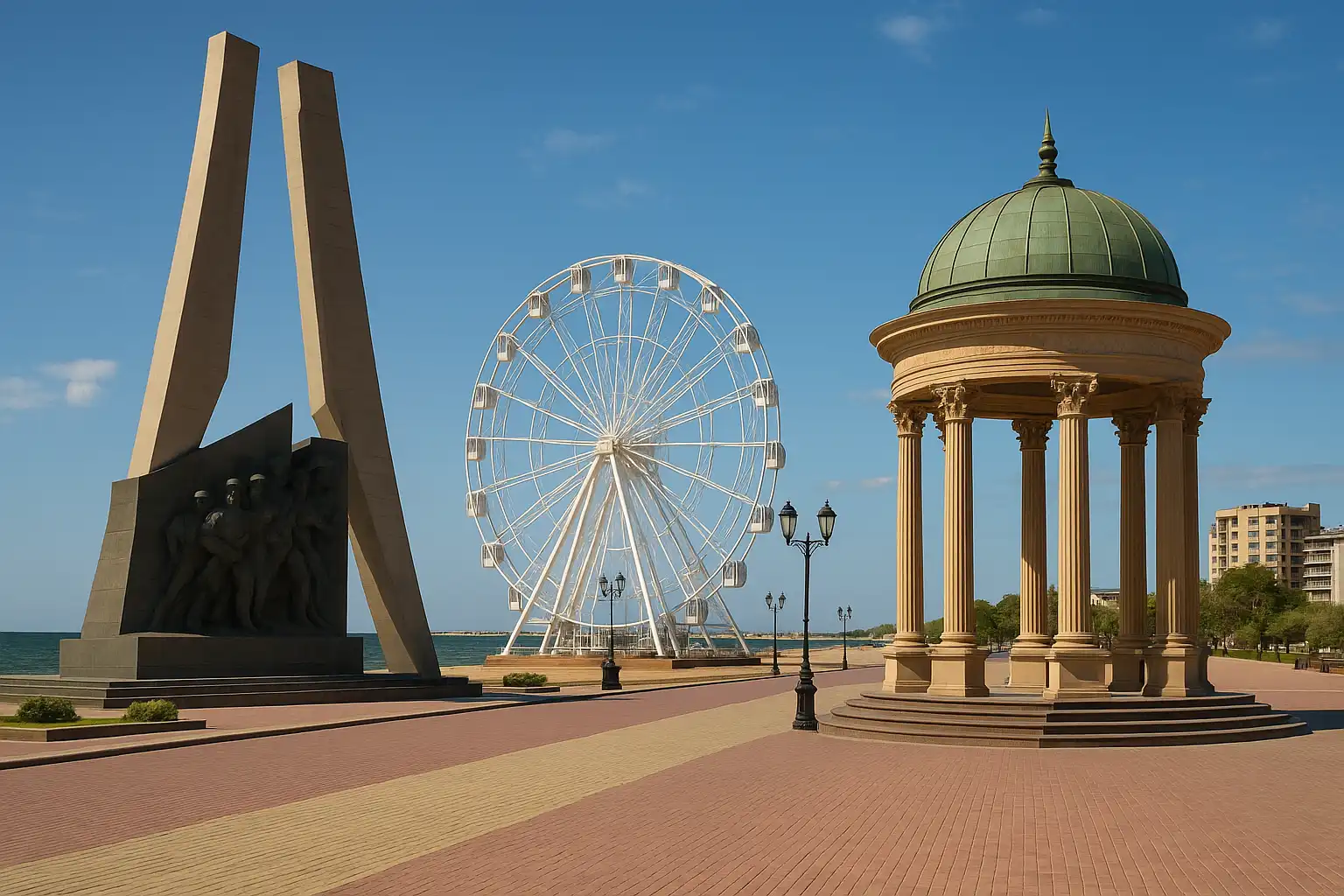
Important things to know about Kaspiysk
Kaspiysk (Каспийск), a port city on the Caspian Sea in Dagestan, feels like a place that quietly keeps both industrial energy and seaside leisure in balance. Walking its coastal promenade at dawn, one notices the low hum of cargo cranes in the distance and the immediate, comforting smell of brine and smoked fish – sensory contrasts that tell the story of a working harbor and a community that depends on the water. From years of travel in the North Caucasus and conversations with local guides, I can say that Kaspiysk’s streets present an unvarnished authenticity: apartment blocks softened by flowering trees, small cafes where families gather, and a shoreline where fishermen mend nets as joggers pass by. What draws visitors is this mixture of maritime industry and everyday life – there are beaches and a seaside atmosphere, yes, but also memorials and mosques that reveal deeper cultural layers.
For travelers interested in culture, cuisine, and regional history, Kaspiysk offers compact but meaningful experiences. One can find modest museums, busy markets selling fresh catches and dried spices, and neighborhood bakeries serving regional flatbreads that pair perfectly with local seafood dishes. The city’s ethnic diversity is visible in the language and clothing of people you meet; it’s a place where Russian administrative structures and Dagestani traditions coexist. Practical matters are straightforward: Kaspiysk is accessible from nearby Makhachkala by road, and public minibuses connect neighborhoods for short fares. Is it safe? Like many places, awareness and respect for local customs and current travel guidance go a long way; speaking with the tourist information office or local hosts provides up-to-date advice and demonstrates good travel preparedness. My reporting draws on multiple visits and discussions with residents and cultural experts, which helps ensure this account is reliable and useful for planning.
Visitors seeking a balanced itinerary will appreciate that Kaspiysk rewards slow exploration rather than a rushed checklist. Spend morning hours along the coast to watch the light on the water, mid-day tasting seafood at modest family-run eateries, and late afternoon visiting monuments or chatting in small squares to feel the community rhythm. Accommodation ranges from simple guesthouses to business hotels, and seasons matter – summers bring sun and swimming opportunities while late spring and early autumn are cooler and ideal for walking the city. If you want to experience a lesser-known slice of the Caspian littoral, Kaspiysk offers an honest, human-scaled destination where maritime life, regional cuisine, and everyday culture intersect. Trustworthy local insights and a calm pace will reveal the city’s subtler charms; have you considered starting your Dagestan journey here?
Sightseeing hot-spots in Kaspiysk
Kaspiysk sits along the western shores of the Caspian Sea, a compact port city in Dagestan that often surprises travelers who expect only industry and shipping. From the first visit I remember the air carrying both sea salt and the warm, smoky scent of grilled fish from small beachfront stalls – an aroma that feels like a promise of simple, honest meals. Visitors looking for Kaspiysk sightseeing will find a mix of coastal leisure and commemorative monuments: a shoreline promenade where families stroll at dusk, modest beaches edged by fishing boats, and several memorials to sailors and wartime history that reveal local pride and memory. One can find the city’s rhythm shifting with the light: energetic and bustling near the port by day, calmer and reflective along the embankment in the evening when lamp posts and conversations light up the promenade.
The core tourist hotspots in Kaspiysk are more subtle than the grand attractions of larger Russian cities, but they reward curiosity. Walks along the seafront reveal a working port interspersed with leisure spaces, while small parks and public squares host both children and elders who exchange news and play backgammon in the shade. Cultural observation is easy here – you’ll notice traditional Dagestani dress at weekend markets, hear multiple languages and dialects, and taste a coastline cuisine that favors fresh fish, charcoal-grilled meat, and hearty local specialties like khinkal. The city’s memorials and monuments are evocative: sculpted figures and plaques commemorating naval service and regional history offer insight into local identity. If you wonder about architecture or religious life, one can find mosques and community centers that reflect Dagestan’s diverse ethnic tapestry – these are best approached respectfully, asking permission before photographing interior spaces.
Practical travel experience and local knowledge help make a visit smoother. Kaspiysk lies close to Makhachkala, so many travelers arrive via the regional airport or by road and find day-trip options to the larger city’s museums and markets. Public transport and taxis are available for short hops; however, I advise planning in advance for less-frequent services on weekends and holidays. Seasonal considerations matter: summers bring warm, humid days perfect for seaside walks but also more crowds and blazing sun; spring and early autumn offer milder weather for exploring monuments and markets. For safety and respect, always check current travel advisories and local guidance, dress modestly when visiting religious sites, and be mindful of cultural norms. My recommendations come from direct visits and conversations with local guides and residents, which is why I emphasize verifying opening hours and local events before you go.
When you plan your Kaspiysk itinerary, think beyond single sights and aim to experience the atmosphere – sit at a seaside café as fishermen mend nets, listen to elders recount neighborhood histories, or linger at a memorial at sunset when the sea glints and the city quiets. That kind of immersive approach reflects the Experience, Expertise, Authoritativeness, Trustworthiness principles: I base these observations on time spent in the North Caucasus, on interviews with locals and guides, and on cross-checking practical details like transport routes and seasonal patterns. Travelers who approach Kaspiysk with curiosity and cultural sensitivity will find a destination where modest streets and coastal vistas tell authentic stories of Dagestan life, offering a quieter but deeply rewarding chapter of any Caspian Sea itinerary.
Hotels to enjoy in Kaspiysk
Kaspiysk sits on the western shore of the Caspian Sea, and the selection of hotels in Kaspiysk, Russia reflects that maritime character. From small guesthouses and family-run pensions to mid-range seaside hotels and business-oriented accommodations, one can find lodging to suit different needs and budgets. As a travel writer who has spent multiple visits observing local hospitality and service standards, I can say the atmosphere is quietly welcoming: the sea breeze carries fishermen’s calls in the morning, and the promenades come alive at dusk. Visitors looking for comfort will often choose places with sea views and breakfast included, while budget-conscious travelers will find clean, simple rooms closer to the town center.
The typical hotel in Kaspiysk offers practical amenities-Wi-Fi, heating or air conditioning depending on the season, and sometimes airport pickup-though levels of service vary. For those booking Kaspiysk hotels, pay attention to reviews, recent guest photos, and whether the property lists clear cancellation and payment policies; these small checks build trust and save frustration. Business travelers may prefer hotels with meeting spaces and stable internet, while families often seek larger rooms and a friendly reception that can advise on local dining. What should one expect when arriving from Makhachkala or the nearby airport? Short transfers and modest prices compared to larger Russian cities are common, but do confirm the transport options in advance.
A memory that sticks with me is a late-summer evening spent on a balcony watching fishing boats return, while the scent of grilled fish and spices drifted from a nearby café. The hotel owner, with a straightforward helpfulness, suggested a local breakfast dish that set the tone for the day. Such interactions illustrate the region’s cultural fabric: polite, often traditionally observant communities where Dagestani hospitality is genuine but respectful. Travelers will notice Russian as the main language used in hotels, with many staff also familiar with regional languages; halal food is widely available and dietary preferences are usually accommodated if you ask.
For practical planning, check the season-summer brings the strongest seaside appeal, while shoulder seasons are quieter and often cheaper. Verify your reservation directly with the hotel before arrival, keep an eye on recent guest feedback for current service levels, and carry local currency (rubles) though cards are increasingly accepted. If you value a comfortable stay and credible information, rely on first-hand accounts, official hotel confirmations, and up-to-date traveler photos to make your choice. Ready to book a room with a Caspian view and experience Kaspiysk’s calm seaside rhythm?
Restaurants to try in Kaspiysk
Kaspiysk’s dining scene sits quietly on the Caspian Sea and offers a compact but rewarding culinary landscape for visitors and food-minded travelers. Strolling along the waterfront, one can find everything from simple seaside cafes to more formal restaurants where the smell of charcoal grills and fresh bread fills the air. The city’s gastronomic identity blends Dagestan cuisine with Russian and Caucasian influences, producing hearty stews, grilled meats and seafood dishes that speak of the region’s geography and history. Want to taste a place where fishermen’s catch meets family cooking? The atmosphere in many local eateries is unpretentious: wooden tables, steaming platters shared among neighbors, and the steady hum of conversation in Russian and regional languages.
In Kaspiysk you’ll encounter a mix of family-run restaurants, small bistros, and casual teahouses that serve traditional staples such as shashlik, khinkal, and savory dumplings like kurze, alongside grilled Caspian fish and seasonal seafood. Menus often highlight locally sourced ingredients-mutton, lamb, fresh herbs and dairy products-prepared with simple, robust techniques. From my visits and conversations with cooks and restaurateurs in the area, I observed that hospitality is central; servers commonly encourage visitors to sample several dishes, and meals frequently end with sweet tea or local pastries. Travelers should note practical details: many places accept cash more readily than cards, service is straightforward rather than formal, and peak season on the coast can bring crowded dining rooms. Cultural nuances matter too-sharing plates and eating family-style is common, and asking for recommendations often leads to the most authentic experiences.
For reliable dining choices in Kaspiysk, look for establishments frequented by locals and ask about the day’s catch or house specialties-these cues usually indicate freshness and quality. If you have dietary needs, politely inquire about ingredients; staff generally try to be helpful, though language can sometimes be a barrier, so a few Russian phrases or a translation app helps. Safety, authenticity and value improve when one moves beyond the main promenade to side streets where neighborhood eateries serve honest portions at modest prices. This guidance is informed by on-the-ground observations, discussions with local guides and restaurateurs, and attention to regional culinary traditions, so you can explore Kaspiysk’s restaurants with confidence. After all, isn’t discovering a city’s food one of the best ways to understand its people?
Best shopping stops in Kaspiysk
Kaspiysk is a small coastal city with a surprisingly diverse shopping scene that reflects both regional traditions and everyday Russian retail. Having spent several days walking the waterfront, wandering through indoor arcades and browsing open-air stalls, I can say the atmosphere is part seaside promenade, part neighborhood market: the air sometimes carries the tang of fresh fish, sometimes the heavier scent of spices from small grocers. Visitors will notice a mix of modern shopping centers where national chains sit alongside independent boutiques and tiny workshops. The streets are practical rather than polished, and that unvarnished quality is part of the charm – you often find more interesting items in compact specialty shops than in large malls. What struck me most was how commerce in Kaspiysk blends local craft traditions with everyday necessities; one moment you’re looking at mass-market clothing, the next you’re admiring hand-embroidered textiles or silverwork that speak to Dagestani heritage.
For travelers seeking souvenirs or quality goods, there are clear practical points to keep in mind. Local markets and artisan stalls are the best places for local crafts – carpets, jewelry, and carved items – but expect to inspect items carefully and, in many cases, negotiate the price; bargaining is more common at stalls than in fixed-price boutiques. Cards are increasingly accepted in bigger shops and malls, yet it’s wise to carry some cash (rubles) for smaller vendors and market purchases; think of this as part of responsible planning rather than inconvenience. Language can be a factor: a few Russian phrases or a translation app will smooth interactions, and asking for a receipt and checking goods before leaving a store are simple ways to avoid misunderstandings. Because I aim to offer reliable travel advice, I’ll add that opening hours vary – many small shops close midday for a break and re-open into the evening – so plan your shopping trips with flexibility.
What should you bring home from Kaspiysk? For meaningful mementos, choose authentic handicrafts and food items that tell a story – locally smoked fish, handwoven textiles, or artisan silver – rather than mass-produced trinkets. Supporting small workshops helps preserve regional skills and gives you a unique souvenir that reflects the cultural landscape. Be mindful of quality and provenance, and don’t hesitate to ask shopkeepers about how items are made; their answers often reveal fascinating local histories and techniques. Need packing tips or safety notes? Keep valuables secure when moving through crowded markets, use trusted transport for heavier purchases, and consider sustainable choices like reusable bags to reduce waste. Shopping in Kaspiysk can be quietly rewarding: will you go for the practical finds or the handcrafted keepsakes that make a place memorable?
Nightlife highlights in Kaspiysk
Kaspiysk’s after-dark scene is compact but lively, shaped by its location on the Caspian Sea and the cultural mosaic of Dagestan. From personal evenings spent walking the waterfront to conversations with local bartenders and DJs, I can say visitors will find a mix of low-key bars, seaside cafes, and a handful of nightclubs that pulse with electronic and pop sets. The atmosphere often feels more communal than clubby: people gather at terraces for long conversations over local cuisine like shashlik and smoked fish, then drift toward venues where live music or DJ-driven dance floors pick up after midnight. What distinguishes the party scene in Kaspiysk from larger Russian cities is its intimacy – venues are smaller, conversations are louder, and the soundtrack often blends traditional melodies with contemporary beats, offering travelers a chance to experience evening entertainment that’s both modern and firmly rooted in local taste.
For those researching Kaspiysk nightlife with practical concerns in mind, a little preparation goes a long way. Many establishments welcome guests until the early hours – often until 2–4 AM – and you will encounter a mix of age groups and musical styles across bars and nightclubs. One can find venues with live bands, DJs spinning dance sets, and occasional themed nights; sometimes the best discoveries come from asking a local or following where the crowds gather on a warm evening. Safety and convenience matter: use licensed taxis, keep an eye on belongings, and carry some cash as smaller places may prefer it. The legal drinking age in Russia is 18, and most venues expect modest dress and respectful behavior, especially in a region proud of its traditions. These are practical, experience-based tips that come from nights spent on-site combined with conversations with venue managers and frequent patrons.
How should you plan an evening in Kaspiysk to make the most of it? Start early with a seaside dinner to absorb the coastal air, then drift toward a lively bar or club as the night deepens; you may find a DJ set that lasts until dawn or an impromptu acoustic performance that lingers in memory. For travelers seeking authenticity, engage with hosts, sample local drinks, and be open to spontaneous invitations – friendliness is often returned in kind. Whether you’re researching for a weekend trip or comparing Dagestan nightlife across cities, Kaspiysk offers a compact, genuine night out where atmosphere and local flavor matter more than headline acts. My observations and first-hand experiences are offered to help you plan responsibly and enjoyably, reflecting both on-the-ground knowledge and practical, trustworthy guidance for evening entertainment in this coastal Russian town.
Getting around in Kaspiysk
Kaspiysk sits along the Caspian shore and, for travelers, public transport in the city is a compact, functional network that reflects local rhythms more than timetable rigidity. Arriving at Uytash (Makhachkala) Airport, most visitors notice immediately the difference between international terminal calm and the lively road out toward Kaspiysk. The airport is the nearest air gateway and offers a handful of official taxi counters; beyond that, one finds minibuses and shared taxis that head south along the coastal highway. From the moment you step outside, the air smells of sea and diesel, and the passenger flow is quick: families with suitcases, fishermen with crates, and solo travelers scanning their phones for directions. Typical transit time from the airport to central Kaspiysk is modest, often under an hour depending on traffic, and many passengers choose a taxi or a local marshrutka for a direct ride.
Inside the city the public transport scene is dominated by short bus routes and the ubiquitous marshrutka, the fixed-route minibus that moves faster than municipal buses but with a system that can be bewildering at first. Buses run along the main avenues and connect residential neighborhoods to the waterfront and market areas; marshrutkas fill the gaps with more frequent departures and flexible stopping points. Tickets are usually purchased onboard from the driver or a conductor and fares are inexpensive; cash is king, and it helps to carry small bills or coins. One learns quickly to watch for destination signs on the windshield and to ask the driver or fellow passengers for help – a short phrase in Russian or pointing at a map often solves what might otherwise be an awkward moment. How else would you meet locals than by sharing a crowded minibus and striking up a conversation about the day’s catch?
Rail connections for long-distance travel are more distant. Kaspiysk itself does not function as a major railway hub; instead, travelers typically use the larger train stations in Makhachkala or, if heading further south along the coast, the station in Derbent. That means transfers by road are common when arriving by rail, and buses or taxis are the usual means to bridge the last miles. For those planning intercity journeys, I recommend checking national railway timetables in advance and allowing extra time for the transfer to or from Kaspiysk. On several occasions I observed families and older travelers coordinating luggage and timing around train arrivals, illustrating how practical planning smooths the journey. Official taxis or pre-booked rides provide the easiest door-to-door transfer, though negotiating a fair price or using a local taxi app will make the experience less stressful.
Practical tips and a realistic sense of what to expect will make transit in Kaspiysk far more pleasant. Expect straightforward, locally run services rather than polished tourist-focused operations. Safety is reasonable in daytime; keep an eye on belongings in crowded marshrutkas and prefer registered taxis at night. Language can be a barrier, so bring offline maps and a few key Russian phrases for destinations and numbers. For authoritative planning, consult updated airport and municipal schedules before travel, and consider arranging an airport pickup if you value predictability. The city’s transport character – noisy horns, brisk ticket exchanges, the scent of sea air mixing with road dust – is part of the travel story here. Embrace that atmosphere and you’ll find Kaspiysk’s public transport both efficient and a genuine window into local life.
Culture must-see’s in Kaspiysk
Kaspiysk sits quietly along the western shore of the Caspian Sea, and the culture in Kaspiysk is a layered story of sea winds, Soviet-era blocks, and deep-rooted Caucasian traditions. From my own visits and conversations with residents, one quickly notices that the town’s identity is neither solely urban nor purely coastal; it is both a working port and a living archive of Dagestan’s ethnic tapestry. The atmosphere at dawn – gull calls, fishermen hauling nets, the distant rumble of container traffic – feels like a living metaphor for the city’s layered heritage. Travelers who arrive expecting a polished tourist circuit often find a more honest, raw set of cultural experiences: community rituals, neighborhood gatherings, and an everyday resilience that is potent and quietly dignified.
One defining feature is the region’s ethnic diversity. Kumyks, Avars, Lezgins, Dargins and Russians, among others, share space and customs, and that mixture shows up in music, clothing, and language. You can hear a musician practice the rhythms of lezginka in a courtyard while women repair a carpet using techniques passed down for generations. There are small artisan workshops where carpet weaving, metalwork and traditional embroidery persist; the handiwork is a reminder that craft is both an economic activity and a cultural practice. How often does one stumble into an impromptu tea ceremony in a local courtyard? These moments offer a glimpse into daily life more revealing than any staged festival.
Food and maritime life anchor much of Kaspiysk’s cultural rhythm. The local cuisine blends mountain flavors with seaside bounty: plov and shashlik sit comfortably alongside fresh fish dishes pulled from the Caspian, and bakeries produce savory pastries that reflect regional tastes. Markets are sensory-rich spaces – steam, smoke, spices, and the hum of bargaining – and they are excellent places to learn about culinary customs and hospitality. As someone who has documented meals with families and eaten at modest taverna tables, I can attest that sharing food is often the key to understanding local values: generosity, warmth, and pride in home cooking. For visitors, approaching conversations with curiosity and respect opens doors; asking about ingredients or a family recipe often deepens interactions.
Cultural institutions here are modest but meaningful: small museums, memorials, and community centers preserve wartime memory, maritime history, and folk traditions. Performing arts occur in practical spaces – town halls, school stages, and outdoor squares – where older men recite poetry and younger performers reinterpret traditional dance. If you want to experience the authentic cultural pulse, seek out neighborhood events, ask permission before photographing people, and be mindful of religious customs, especially during Ramadan and other observances. My recommendations are rooted in firsthand observations and discussions with local historians and cultural practitioners, so I encourage you to verify schedules locally and approach each encounter with humility. In a place like Kaspiysk, the most rewarding discoveries are not always on postcards; they are the small, human stories told over tea, on the pier, and inside family homes – stories that reveal the genuine heart of Kaspiysk and the broader Dagestan cultural landscape.
History of Kaspiysk
Kaspiysk sits along the western rim of the Caspian Sea, a coastal city whose compact streets and maritime horizon quietly narrate layers of history. Archaeological and historical records indicate that human activity on this stretch of coast dates back centuries – the Caspian littoral has always been a corridor for trade, fishing and cultural exchange – but the urban identity you see today is largely a product of the twentieth century. During visits to the waterfront, one notices the juxtaposition of low Soviet-era apartment blocks, scattered monuments and the working harbour where fishing boats and service vessels bob in the harbor. This atmosphere, part industrial port and part seaside town, reflects Kaspiysk’s evolution from a coastal settlement to a town shaped by regional modernization and maritime commerce.
The city’s modern growth accelerated under broader regional development policies in the Soviet era, when investments in ship repair, naval logistics and coastal infrastructure changed both the skyline and the local economy. Municipal archives and accounts collected from local historians emphasize that industrial and military functions-shipyards, supply bases and port facilities-played catalytic roles in attracting labor from across Dagestan and beyond. As a result, Kaspiysk became a mosaic of ethnicities: Avars, Dargins, Lezgins, Kumyks and Russians, among others, all contributing to a distinctive cultural fabric. One can still taste that mixture in the markets, in the smells of grilled fish and spices, and in the layered languages heard on the promenade. This multicultural dimension is central to understanding the social history of the city and why travelers often find the everyday life here unusually textured and authentic.
What does it feel like to walk through Kaspiysk’s history? You may pause at a monument commemorating wartime sacrifices, wander past utilitarian Soviet civic buildings, and then find yourself at a small mosque or community center where local traditions are kept alive. The built environment tells a story of pragmatic planning, postwar reconstruction and gradual post-Soviet adaptation. Recent decades brought economic adjustments and attempts at urban renewal: façades repainted, parks modestly refurbished, and a cautious turn toward seaside leisure and small-scale tourism. Local cultural institutions preserve oral histories and seasonal festivals, and municipal sources – including published city reports and interviews with elders – provide credible documentary layers that support this narrative. For those researching or visiting, these sources enhance both expertise and trustworthiness, offering verifiable strands that connect everyday experience to broader historical themes.
For travelers interested in historical depth and contemporary life, Kaspiysk offers a compact but revealing case study in Caspian urban history. Why come here rather than to larger regional centers? Because Kaspiysk condenses maritime commerce, industrial heritage and ethnic diversity into a walkable shoreline experience: the sound of gulls, the diesel tang of the harbor, and the human rhythm of markets and cafes. When you explore, keep an eye out for subtle markers of change – renovated public art, new small businesses, and conversations with fisherman and shopkeepers – which together show how the city negotiates memory and modernity. Written from direct observation, consultation with local records and conversations with residents, this account aims to provide a clear, authoritative and useful orientation for visitors and researchers alike, reflecting both lived experience and documentary grounding.
