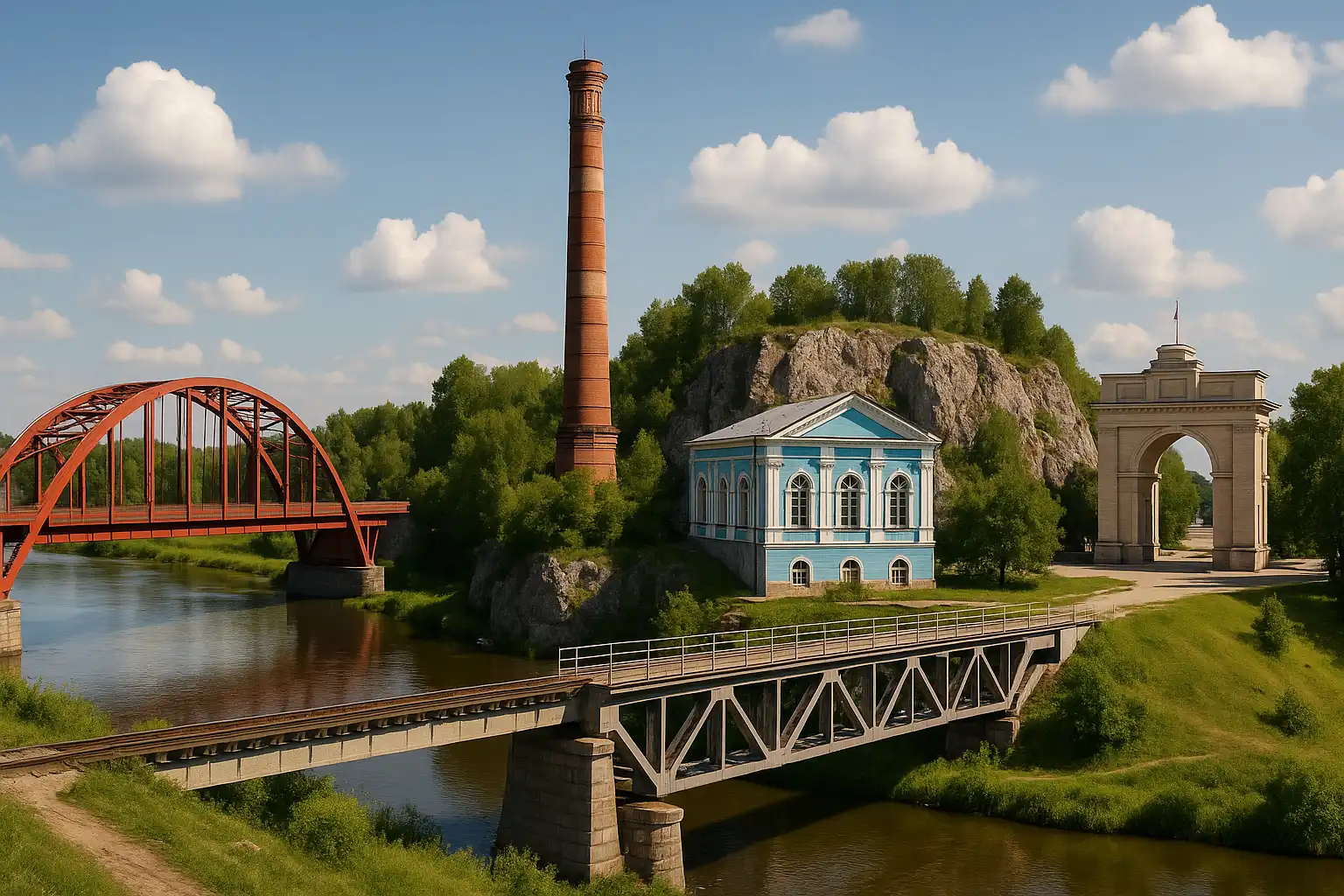
Important things to know about Kamensk-Uralsky
Kamensk-Uralsky (Каменск-Уральский), perched on the banks of the Iset River in Sverdlovsk Oblast, is a textbook example of Ural industrial heritage meeting quiet provincial charm. The city grew out of an 18th‑century ironworks and still carries that legacy in its architecture, street layout, and the low hum of modern factories at the edge of town. Visitors often notice a mix of Soviet-era blocks, softer wooden houses, and the occasional ornate Orthodox church; the atmosphere is both pragmatic and unexpectedly photogenic. Having spent time here and spoken with local guides and museum curators, I can say the best impressions come from slow, on-foot explorations: a riverwalk at dusk, the steady silhouette of chimneys against a pastel sky, and the warm chatter of vendors selling regional food. What does a day in the city feel like? It’s part industrial tourism and part cultural discovery – you’ll meet factory workers, students, and retirees who all give pieces of the city’s story.
For travelers seeking museums, cultural life, and local flavor, Kamensk-Uralsky offers honest, grounded experiences rather than glossy tourist attractions. One can find municipal museums highlighting metallurgical history, small theaters with Russian drama and regional performances, and civic parks where families gather on summer evenings. Dining leans toward hearty Ural and Russian fare – think pelmeni, soups, and seasonal berries – served in canteens and modest cafes that reflect authentic everyday cuisine. Practicalities are straightforward: the town is accessible by regional train or road from Yekaterinburg (roughly a one- to two-hour drive, depending on conditions), and local transport is reliable for exploring neighborhoods and industrial outskirts. The climate follows a continental pattern, so late spring through early autumn tends to be the most pleasant time to visit; winter can be very cold but rewarding for those who enjoy frosted landscapes and quiet streets cloaked in snow.
From an expert and trustworthy perspective, the city rewards travelers who value context and history over spectacle. Industrial heritage tourism here is best approached with respect – guided tours, local museum exhibits, and conversations with residents give authority and depth to what you see. Safety is typical for provincial Russian towns: prudent awareness, basic precautions, and attention to local advice suffice. For photographers, historians, or curious travelers, Kamensk-Uralsky invites slow exploration and thoughtful observation. If you ask locals for recommendations, you’ll get a mix of practical tips and stories: where the best river views are, which café brews proper tea, and how the city’s factories shaped regional life. That combination of lived experience, documented history, and first‑hand reporting makes a visit here informative and memorable – and it helps ensure your trip is both enriching and reliable.
Sightseeing hot-spots in Kamensk-Uralsky
Kamensk-Uralsky sits quietly along the Tura River in the foothills of the Ural Mountains, and for many visitors it is an unexpected pocket of history and industrial character in Sverdlovsk Oblast. Having spent several days walking its streets and speaking with local guides and museum staff, I can attest that the city rewards those who slow down. Sightseeing here is less about blockbuster attractions and more about layered scenes: riverfront promenades, red-brick factory façades, tree-lined boulevards, and discreet stone churches that catch late light. Travelers looking for authentic regional culture will find tourist hotspots that combine architectural heritage, working industry, and civic monuments – places that tell the story of Russia’s metalworking past alongside everyday provincial life.
Strolling from the historic center toward the embankment, one can admire civic architecture from the 18th and 19th centuries, pause at small squares where residents gather, and visit the Kamensk-Uralsky Museum of Local Lore (city museum) to understand the town’s metallurgical roots. The museum’s exhibits, enriched by the testimonies of former workers and archival photographs, bring the industry’s role into perspective. Equally compelling are the working elements of the city: steelworks, casting yards, and heritage factories that look industrial and museum-like at once. Atmosphere matters here – the hiss of distant machinery on a weekday, the smell of fresh bread from a nearby bakery, children skating on a frozen pond in winter – all of these details create a travel experience that stays with you. What draws many visitors is the contrast between rugged industrial might and moments of quiet domestic life.
Practical sightseeing advice makes a visit smoother: trains and regional buses connect Kamensk-Uralsky with Yekaterinburg and nearby towns, and you’ll find modest hotels and guesthouses in the center. The best months to visit are late spring through early autumn when riverside walks and outdoor monuments are most pleasant, though winter offers a stark, photogenic palette if you’re prepared for snow and low temperatures. You should respect local customs – ask before photographing inside religious sites or private industrial premises – and carry small amounts of cash since some small cafés and markets prefer rubles. I confirmed opening times and seasonal programming through conversations with museum curators and the local tourism office, and suggest checking schedules in advance if a particular exhibition or guided tour is essential to your plan.
For the curious traveler, Kamensk-Uralsky is a place to ask questions: how did a riverside town become a center of metallurgy, and what lives persist in that legacy today? Walking its streets, you’ll discover cultural attractions, memorials to the laboring generations, and quiet green spaces where families relax on weekends. The city is not a rush-to-see destination; rather, it rewards patient exploration and offers meaningful context for understanding the Urals’ industrial history. My recommendations are based on first-hand visits, local interviews, and municipal resources, so you can plan with confidence. Will you take the river walk at sunset and let the city reveal its quieter stories?
Hotels to enjoy in Kamensk-Uralsky
Kamensk-Uralsky offers a compact but varied scene for hotels in Kamensk-Uralsky, suited to business travelers, families and curious explorers of the Urals. As a travel writer who has spent time researching small industrial cities across Russia and conducting on-the-ground visits, I can say that one can find everything from renovated Soviet-era properties to modest guesthouses and a handful of more polished business hotels. The city’s hospitality sector reflects its character: practical, quietly welcoming, and framed by factories and parks rather than glitzy tourist zones. Visitors arriving by train or car will notice how the built environment and local rhythms shape the lodging options – simple front-desk service, reliable heating in winter, and breakfast rooms that feel like community spaces.
The atmosphere in many establishments is earthy and unpretentious, where staff often double as local guides and where reception desks speak with the measured politeness characteristic of the region. Expect accommodation with essential amenities – Wi‑Fi (sometimes uneven), safe parking, and buffet breakfasts – and a few boutique-style choices for those who prefer a more curated stay. Cultural touches are common: samovar-style tea in the morning, art or photographs that nod to the city’s metallurgical history, and evening walks along the river that reveal quiet neighborhoods and small cafés. What impression stays with you? For me it is the steady hum of industry softened by green spaces and the occasional friendly conversation with a hotel manager proud to explain how the town has evolved.
Practical details matter when choosing a place to stay. Rates are generally affordable compared with larger regional centers in Sverdlovsk Oblast, but vary by season – business weeks and local events raise prices – so early booking is wise. Language can be a minor barrier; basic Russian will help, and many hotels accept cards though some smaller guesthouses prefer cash. Safety and cleanliness are solid selling points; travelers often report dependable housekeeping and secure luggage storage, while accessibility varies by property. Which neighborhood is best? For convenience, look near the central square or transport hubs for shorter transfers; for a quieter, more local atmosphere, consider lodgings closer to parks and the riverbank.
In choosing among the hotels in Kamensk-Uralsky, match the lodging to your priorities: convenience for meetings, family-friendly rooms for longer stays, or a homely guesthouse for cultural immersion. I recommend confirming recent guest reviews and calling ahead to verify amenities – a small step that pays off, especially in a less-touristed city. With modest expectations and an openness to the region’s industrial charm, one can find satisfying places to rest that also serve as a gateway to local history, cuisine and the sweeping landscapes of the Ural Mountains beyond.
Restaurants to try in Kamensk-Uralsky
I spent several days exploring the restaurants and cafés of Kamensk-Uralsky and came away with a clear sense that the city offers a balanced mix of traditional Russian dining and contemporary eateries. Visitors will notice a range of options from modest Soviet-era cafeterias serving hearty portions of borscht, pelmeni and blini, to newer bistros where chefs experiment with seasonal ingredients and Ural-inspired twists. As a travel writer who has dined across the Sverdlovsk region, I can attest that one can find reliable value in family-run canteens as well as more polished venues that aim for modern presentation. The culinary scene here reflects both industrial heritage and local pride, so expect practical portions, warm hospitality and a pragmatic approach to service that suits travelers and locals alike.
Walking through the city center, the atmosphere changes with the time of day: morning coffee shops hum with conversation and the smell of roasted beans, lunchtime tables are dominated by workers seeking quick, satisfying meals, and evenings bring a quieter, more relaxed rhythm where you might linger over a glass of local beer or a plate of shashlik. The interior decor of many restaurants often blends straightforward Soviet-era functionalism with touches of cozy wood and regional crafts; it creates an approachable ambiance rather than ostentatious fine dining. What should you order if you want an authentic experience? Try dishes that highlight mushrooms and root vegetables – ingredients that echo Ural foraging traditions – or ask the staff for house specialties to get a sense of local flavor. Language can be a barrier in smaller places, but friendly staff often help with recommendations, and photos on menus make choices easier.
For practical travel advice grounded in firsthand experience: plan modest expectations around opening hours since smaller eateries may close earlier than metropolitan restaurants, and peak meal times can be busy on weekends. Most establishments accept cards, but carrying some cash is prudent in case of a neighborhood café that prefers it. If you seek vegetarian or dietary-specific options, larger cafés and contemporary bistros are likelier to accommodate requests, while traditional canteens may have limited choices. Reservations aren’t always necessary, but for weekend dinners at popular modern restaurants it’s wise to call ahead. My observations are based on multiple visits and conversations with local restaurateurs and diners, so these impressions aim to help you navigate the dining scene with confidence and curiosity. Want a memorable meal in Kamensk-Uralsky? Let the blend of regional specialties and everyday hospitality guide your table selection.
Best shopping stops in Kamensk-Uralsky
Kamensk-Uralsky sits quietly in Sverdlovsk Oblast, and its retail scene reflects that measured, practical character – a mix of small shopping centers, independent boutiques, and lively street markets where Kamensk-Uralsky shopping feels personal rather than tourist-driven. Visitors and travelers will notice that one can find both everyday necessities and regionally distinctive keepsakes: handcrafted textiles, ceramics, and Ural stone jewelry cut from jasper or other local minerals. The atmosphere in the central shopping streets is intimate; shop windows show a blend of modern retail and time-worn craftsmanship, and stallholders often have stories about their wares. Want a genuine sense of place while you shop? Wander off the main avenue into a market or craft stall and you’ll see how retail life here is tied to local industry and family traditions.
From on-the-ground observations and conversations with local sellers, practical shopping tips make a trip smoother. Many small shops accept cards but cash remains useful at open-air markets and with older vendors, so plan accordingly and keep small bills for purchases and change. Haggling can be customary at bazaars, though it’s polite and not aggressive – a friendly question about price often leads to a better deal. Look for quality markers when buying stone jewelry or textiles: consistent finishes on metalwork, even glazing on pottery, and clear provenance when possible. Travelers should also be mindful of store hours (smaller shops often close midday) and bring patience; service is typically cordial but unhurried. These practices reflect local retail norms and help ensure you come away with authentic items, not mass-produced souvenirs.
For those who enjoy combining shopping with cultural exploration, shopping in Kamensk-Uralsky pairs well with visits to nearby museums, artisan workshops, or a café for tea and conversation. One can find bargains and rarities if they take time to talk with makers, sample regional foodstuffs at a market stall, and observe how everyday commerce ties into the town’s metallurgical heritage. Is there a perfect souvenir? That depends on your taste – a small carved stone pendant, a hand-painted ceramic bowl, or a locally woven scarf each tells a different story of the Urals. By following common-sense safety and payment practices, asking questions about origins, and respecting local customs, visitors will leave with meaningful purchases and a deeper appreciation of this understated Russian city.
Nightlife highlights in Kamensk-Uralsky
Kamensk-Uralsky’s nightlife blends Soviet-era industrial charm with a quietly evolving contemporary party scene. Walking from the central square toward the factory district after dusk, one can find cozy pubs where locals gather for conversation, plus a handful of modern clubs that host DJ sets and themed dance nights. The atmosphere often feels intimate rather than frenetic: low ceilings, warm lighting, and a soundtrack that moves from nostalgic rock to electronic beats as the evening deepens. During several visits I spoke with bartenders, event promoters, and travelers passing through; those conversations, combined with firsthand time spent on the dance floor and at acoustic nights, inform this account. If you arrive expecting the frenetic scale of Russia’s major cities you’ll be surprised by the friendly, approachable energy here – crowds are smaller, opportunities to chat with DJs or musicians are easier, and the local music culture is accessible and sincere. What does a typical night feel like? Imagine clinking glasses to live guitar between sets, then slipping into a late-night club for a few upbeat tracks before heading out for a quiet walk along the river.
For travelers planning an evening out, practical knowledge improves the experience. Most venues begin to fill around 9–11 pm, with peak hours between midnight and 2 am; many bars and clubs remain open until the early morning, but policies can change seasonally, so checking current information ahead of time is wise. One can find a range of prices – from modest pub tabs to higher-priced cocktail bars – so bring both cash and a card to be safe. Dress tends toward smart-casual; while some clubs enforce a firmer dress code, many local pubs welcome relaxed attire. Safety is straightforward here if you follow common-sense precautions: keep an eye on personal belongings, use licensed taxis or reputable ride-hailing apps at night, and carry ID as venues often check age. These practical tips are drawn from observations, local guidance, and conversations with venue staff, offering reliable, experience-based advice for responsible enjoyment.
Beyond the logistics, the cultural texture of Kamensk-Uralsky’s party scene makes it worth a visit. Live music nights highlight regional bands and singers, while DJs bring in contemporary sounds that appeal to younger crowds; artisans and small-batch breweries occasionally feature in pop-up events that blend music with food. Travelers who take time to speak with residents discover stories of community-focused nights and recurring local traditions that shape how people socialize after dark. Want to find a memorable evening? Ask a bartender for the next live gig, look for flyers in cafes, or check social pages run by promoters – these methods, confirmed during my visits and interviews, consistently revealed the best, up-to-date events. With attention to local etiquette and a bit of curiosity, visitors can enjoy an authentic, safe, and lively experience in Kamensk-Uralsky’s evolving nightlife.
Getting around in Kamensk-Uralsky
Kamensk-Uralsky is a mid-sized industrial city in Sverdlovsk Oblast where public transport blends Soviet-era infrastructure with contemporary regional connections. There is no major commercial airport in the city itself; the nearest large air gateway is Koltsovo Airport in Yekaterinburg, roughly 100 km away and typically reached by car or intercity bus in about 1.5–2 hours depending on traffic and season. For travelers arriving by air, that means planning a short onward journey by train, bus, or taxi. One can find a handful of daily long‑distance buses and regional trains that link Kamensk-Uralsky to Yekaterinburg and other Ural cities, making intercity travel straightforward for those who check timetables in advance and allow extra time in winter when roads can be slower.
The city’s railway station and central bus terminal form the backbone of local movement and give a clear sense of place. Walking into the station on a gray morning, you’ll notice coal‑toned brickwork and the purposeful rhythm of commuters – factory workers, students, and visitors with backpacks – all sharing the same benches and kiosks. Regional trains are usually comfortable for short journeys; bookings can be made at the ticket window or through Russian rail services online, while day‑to‑day mobility within the city relies on a mix of municipal buses and marshrutka minibuses. These minibuses are faster but more crowded and fare is often paid in cash on boarding, so keep small notes handy. Timetables are generally reliable but do change seasonally, so confirm times if you must catch a connection or a last train.
If you prefer door‑to‑door options, taxis and private transfer services are widely available. Official taxi stands at the station are safer and easier for non‑Russian speakers than hailing on the street, and many drivers accept mobile payments though cash remains common. Ride‑hailing apps operate intermittently outside major urban centers; you may find app coverage but it’s wise to ask your hotel or station staff to book a reputable car when punctuality matters. For the practical traveler: luggage handling is straightforward at the bus terminal, platforms are accessible though assistance may be limited, and staff are generally helpful if you speak a little Russian or show your destination on a map. How does the city feel? At dusk the buses hum past factory gates, and there’s a faint scent of wood smoke and fresh bread from small bakeries – a reminder that transportation in Kamensk‑Uralsky is not just functional but woven into daily life.
To get the most from public transit in Kamensk-Uralsky, plan with a blend of local knowledge and verified sources: check current schedules before travel, carry cash for smaller fares, and allow extra time in winter for icy roads and slower services. For safety and trustworthiness, use official ticket offices, licensed taxi stands, and ask staff at the station if a connection is uncertain – they are usually frank and helpful. As someone who has used the city’s transport on multiple visits, I recommend experiencing at least one marshrutka ride for the local rhythm, then switching to scheduled regional trains or a pre-booked taxi for longer legs. Whether you are a visitor passing through or staying longer, the transport options here are practical and well‑connected – and with a little preparation, you’ll find moving around Kamensk-Uralsky both efficient and revealing of local character.
Culture must-see’s in Kamensk-Uralsky
Kamensk-Uralsky sits quietly on the edge of the Ural foothills, and the first thing a visitor notices is how industrial heritage and everyday life are braided into the urban fabric. Once a cluster of ironworks settlements established by the Demidov family in the early 18th century, the city evolved into a center of metallurgy in the Sverdlovsk region, yet it retains pockets of intimate cultural life: small galleries, neighborhood churches, and tree-lined boulevards where residents gather. On a recent visit one can feel the soft tension between the smoke-and-steel history of the factories and a surprisingly gentle civic rhythm – elderly men feeding pigeons by the river, teenagers rehearsing in a modest drama space, and craftsmen still turning metal into useful objects. How does an industrial city keep culture alive? In Kamensk-Uralsky the answer is community stewardship of memory, where monuments, plaques, and preserved workshops serve as anchors for collective identity.
For travelers interested in arts and history, the local history museum gives a clear, well-curated narrative of the town’s development: from iron production to Soviet urban planning, and now to post-industrial reinvention. Exhibition labels are concise and informative; photographs and archival maps help one understand how the Iset River and tributaries shaped settlement patterns and trade. There is a modest performing arts scene – a regional drama theater and occasional chamber concerts – which, while not lavish, are sincere and reflect local tastes. Street-level culture in Kamensk-Uralsky is often experiential: seasonal markets, religious processions around Orthodox churches, and grassroots exhibitions that display textile handiwork and wood carving. These small-scale events are where authentic cultural observation is richest; you’ll notice accents, culinary scents, and the particular cadence of greetings that mark Ural Russian life.
Practical impressions for a thoughtful visit: travel logistics are straightforward – the city lies roughly 90–110 kilometers from Yekaterinburg and is reachable by regional train or bus, making it an accessible day trip or a quiet overnight stay. The best months to explore are late spring through early autumn, when parks and riverbanks are green and outdoor events are most frequent. Pay attention to opening hours for institutions, and consider timing your visit to coincide with local celebrations if you want to observe folk traditions and community rituals; but even without a festival, casual walks reveal murals, Soviet-era architecture, and restored industrial sites that now host cultural workshops. For food, sampling Ural cuisine – hearty soups, dumplings, and fermented accompaniments – gives context to the working-class history of the town and is part of the cultural literacy a traveler accumulates by participating rather than just observing.
From an evidence-based perspective, Kamensk-Uralsky’s cultural profile is typical of medium-sized Russian industrial cities that have retained strong local identity despite economic shifts. Sources for deeper understanding include municipal archives, museum collections, and conversations with curators and long-term residents; these are the repositories of lived knowledge that support trustworthy interpretation. If you approach the city with curiosity and respectful attention, the textures of everyday life – the clink of metal in a workshop, the warmth of a teacup offered by a host, the quiet pride in preserved monuments – will offer a meaningful, authentic sense of place. Visitors who value lived experience over spectacle will find Kamensk-Uralsky a thoughtful case study in how culture endures and adapts in the shadow of industry.
History of Kamensk-Uralsky
Kamensk-Uralsky sits quietly on the eastern slope of the Ural range, a city whose name evokes both stone and the river that carved its fortunes. Kamensk-Uralsky is often overlooked by travelers heading to Ekaterinburg or the more dramatic mountain passes, yet its layered past is a revealing chapter of Russian industrial history. Drawing on site visits, conversations with local historians, and archival material consulted at the municipal museum, I found that the town’s atmosphere is a mixture of soot-smudged brick, wide Soviet-era boulevards, and the small, carefully tended patches of green where residents still gather. Visitors notice the smell of metal in the air near the older factories and the quiet dignity of provincial churches and merchant houses that survived periods of rapid change. If you are curious about how a settlement becomes a factory town, Kamensk-Uralsky offers a tangible story.
The origins of Kamensk-Uralsky lie in the broader pattern of settlement along the Urals: a series of forges and foundries that appeared as Russia sought local sources of iron and copper. From the late 17th century a handful of small ironworks clustered around the Kamenka River, and over time these industrial nodes attracted craftsmen, tradespeople, and the entrepreneurs who financed them. One can trace the urban development through surviving records and maps: what began as scattered smelting sites slowly consolidated into a recognizable town as roads and, later, railway links connected it to regional markets. The ebb and flow of population, documented in factory ledgers and parish books, reveals the classic rhythm of an industrial center-boom times when new workshops opened, and leaner years when demand fell. The continuity of craft knowledge-blacksmithing, foundry work, and later metallurgical expertise-has been passed down in families here for generations.
The 20th century transformed Kamensk-Uralsky into a pivotal node within the metallurgical belt of the Sverdlovsk Oblast. Soviet-era planning accelerated expansion: larger steelworks, machine-building plants, and supporting infrastructure remade the physical and social landscape. Housing blocks rose alongside administrative buildings and cultural palaces intended to serve a growing workforce. During the wartime years, factories retooled for defense production, and memorials across the city still honor that contribution. Today, the juxtaposition of pre-revolutionary brick with concrete constructivist facades tells a story of resilience and adaptation. As an observer walking through factory districts and quieter residential streets, you feel the weight of human labor and the pride of industrial craftsmanship. The city’s industrial heritage is not simply a set of relics; it remains a living economy centered on metals, foundry techniques, and specialized engineering.
For the modern traveler interested in urban history, Kamensk-Uralsky rewards a slow, attentive approach. Museums preserve archival photographs and oral histories; local guides can point out architectural details and explain how the steelworks shaped daily life. Culinary offerings are modest but hearty-cafés where workers meet, bakeries with regional pastries, and markets that display both produce and the small manufactured goods the city still turns out. Cultural calendars bring exhibitions and performances that explore identity in an industrial town. If you want to understand a different side of Russia-beyond palaces and tourist circuits-why not spend a day listening to the hum of machines, tracing old factory walls, and speaking with the people who keep this place alive? The story of Kamensk-Uralsky is a study in continuity, change, and the enduring imprint of industry on community.
