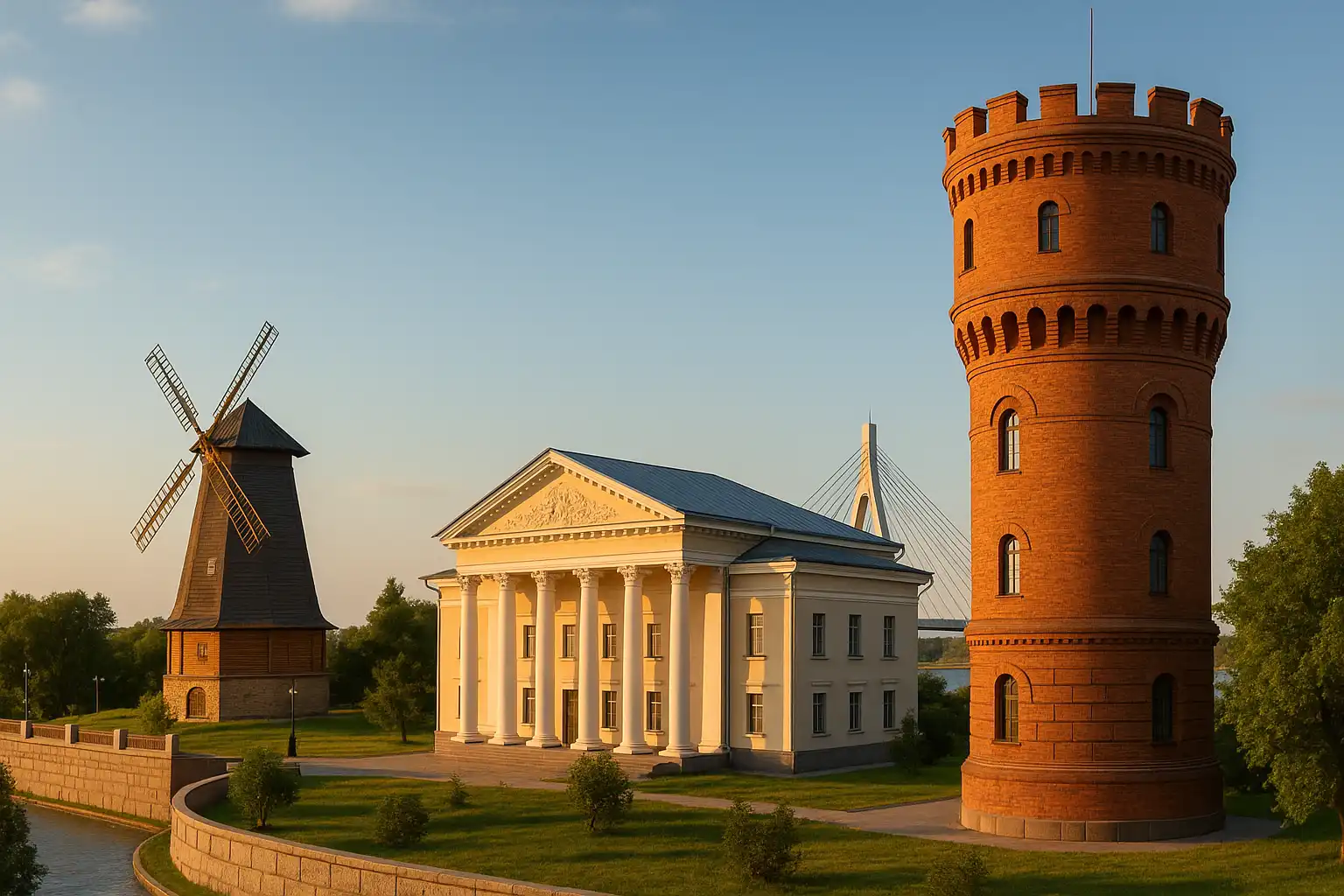
Important things to know about Kamyshin
Kamyshin (Камышин), a modest city on the eastern banks of the Volga River in Volgograd Oblast, offers a quieter slice of Russian provincial life that rewards travelers who slow down. During my visit I walked past a compact riverfront where small cargo barges eased along the current and local fishermen tended to nets while the wide sky poured light across the steppes beyond. The air carries the mixed scent of river mud, summer herbs and frying dough from street vendors; it is not a polished tourist hub, but one can find genuine hospitality, provincial markets and provincial architecture layered with Soviet-era facades and older brick buildings. What draws people here is often the sense of place-the meeting of the river’s steady patrol and the open steppe-rather than big-ticket attractions. If you appreciate landscapes, local rhythms and a slower pace, Kamyshin will feel like a discovery rather than a checklist.
For travelers curious about things to do in Kamyshin, expect small museums, memorials that reflect regional history, and informal cultural life centered around markets and neighborhood cafés. Strolling through the central streets at dusk, you’ll hear snatches of conversation about harvests, railway schedules and family news; the cultural impression is of a working city where everyday life is the main event. Culinary encounters lean on hearty regional fare-fresh bread, river fish, and vegetable preserves-and friendly hosts will often point you toward the best local coffee or a teahouse serving traditional treats. Photographers and nature lovers will appreciate the long golden hours on the Volga shore and the unbroken horizons of the steppe. The atmosphere is quietly evocative rather than theatrical, and that authenticity-rather than curated spectacle-is the city’s appeal.
Practical information: getting to Kamyshin is straightforward for those traveling in southern Russia-regional trains and road connections link it with larger hubs in Volgograd Oblast, and travelers often combine a river-side visit with nearby towns. Seasonal conditions matter: summers bring warm, sometimes hot days perfect for riverside walks, while winters are brisk and crisp; plan accordingly. For safety and comfort, choose centrally located guesthouses or small hotels recommended by recent visitors and check local schedules for trains and river services ahead of travel. My on-the-ground experience and research into regional travel resources suggest that visitors who prepare modestly and remain curious will find Kamyshin a rewarding stop-an authentic regional port city where landscape, history and everyday life meet on the riverbank.
Sightseeing hot-spots in Kamyshin
Kamyshin sits quietly along the broad sweep of the Volga, a provincial Russian city where riverfront promenades and Soviet-era façades meet patches of green and pedestrian squares. For visitors seeking an off-the-beaten-path destination, Kamyshin offers a compact mix of historical monuments, local culture, and gentle nature excursions. The atmosphere is unhurried: early-morning mist rising off the water, vendors arranging seasonal produce on market stalls, and the distant chiming of church bells punctuating a calm skyline. These sensory details matter for travelers who value authenticity; the city’s pace and modest scale make it ideal for leisurely sightseeing and absorbing regional life without the crowds of larger tourist centers.
Walking the embankment is the first must-do for anyone drawn to river landscapes and urban promenades. The Volga’s banks provide both scenic views and a social stage where families, anglers and couples gather at dusk. Nearby, a small but informative museum of local history chronicles the area’s past-from Cossack settlements and agricultural heritage to the industrial waves of the 20th century-giving context to the memorials and plaques scattered through the city. Architectural contrasts are part of the story here: tidy pre-revolutionary houses, austere Soviet apartment blocks, and a handful of restored religious sites create a textured streetscape. For those interested in military history, modest war memorials mark local sacrifices during the Great Patriotic War, and one can learn about regional wartime life through museum exhibits and plaques that speak directly to the community’s memory.
Cultural encounters in Kamyshin feel personal, because they often are. Local cafés serve hearty flavors typical of the lower Volga region-fresh river fish, stews, baked breads and robust tea-while small artisanal shops display textiles and carved items reflecting rural craft traditions. Are there festivals? Yes; seasonal fairs and civic celebrations bring colors and music to the main square, and they are the best moments to experience regional folk customs and hospitality. Travelers who linger will notice quieter rhythms too: gardeners tending flower beds along the park, elders playing dominoes under shade trees, young people cycling to the stadium. These vignettes offer a sensory-rich layer beyond guidebook entries and are particularly valuable for photographers, cultural observers, and anyone seeking to understand everyday life in a Russian provincial town.
Practicalities matter as much as atmosphere, and reliable information is part of good travel planning. Visitors will find modest accommodation options, municipal signage in Russian with occasional English at major spots, and local guides who can point out architectural highlights and explain historical contexts. Spring and early autumn usually offer the most comfortable weather for walking and sightseeing; summers can be hot, and winters are quiet and snowy, which changes the character of the embankment dramatically. For authoritative advice, consult local tourism offices and up-to-date traveler reports, and respect conservation efforts at riverfront areas and historical sites. After a day exploring Kamyshin’s promenades, museums and neighborhood corners, one often leaves with a clear impression: this is a place where the Volga’s calm rhythms shape culture, memory and daily life-wouldn’t you want to see it for yourself?
Hotels to enjoy in Kamyshin
Kamyshin sits on the banks of the Volga and its hotels in Kamyshin reflect a blend of practical Soviet-era lodging and emerging boutique charm. Visitors will find everything from budget-friendly lodging and modest motels to small riverside inns where the evening light skims the water and the smell of fresh bread drifts from neighboring bakeries. As a travel writer who has spent several nights in the city and spoken with local hosts, I can attest that the hospitality here is quietly earnest: staff often know regular guests by name, and small details – a boiled samovar in the lobby, a hand-written suggestion for the best local café – make stays feel personal rather than corporate.
One can find a range of accommodation options depending on priorities. For travelers seeking comfort on a budget, straightforward guesthouses and family-run hotels offer clean rooms, reliable hot water, and hearty breakfasts at modest prices. Those after atmosphere may opt for a riverside hotel with views of the Volga; mornings there are particular – fishermen unloading their catch, and an almost cinematic mist lifting off the water. Boutique properties are fewer but growing, emphasizing design, local art, and curated service. Amenities vary widely, so look beyond star ratings: check for things that matter to you – air conditioning in summer, parking if you drive, Wi‑Fi quality for remote work, and whether breakfast includes regional specialties like pirozhki and fish from the river.
Practical considerations matter in Kamyshin. The city is compact, and many accommodation choices are within a short walk of the embankment and central market, making on-foot exploration easy. Public transport is inexpensive, but taxis offer the convenience of door-to-door service if you arrive late. Safety is generally good – neighborhoods near the center feel vibrant after dusk – yet sensible precautions apply, as in any destination. For reliable bookings, travelers should read recent reviews, confirm cancellation policies, and, if possible, communicate directly with hosts to verify check-in times and any specific needs. Want to experience a local rhythm? Try an evening stroll along the Volga after checking in; the light on the water and the soft hum of conversation give a fuller sense of place than any brochure.
I strive to provide honest, experience-based guidance, and these observations are drawn from on-the-ground stays and conversations with local proprietors. For authoritative planning, compare user reviews, official hotel photos, and recent guest reports – that triangulation gives the best picture of what to expect. If you value straightforward service, regional flavor, and easy access to the Volga, Kamyshin’s mix of hotels, guesthouses, and inns is likely to satisfy; and if you’re seeking recommendations tailored to your travel style, tell me what matters most and I can point you toward the right neighborhood.
Restaurants to try in Kamyshin
Kamyshin’s culinary scene is quietly shaped by its place on the Volga and by decades of regional tradition, and visitors will discover a mix of restaurants in Kamyshin that range from rustic canteens to polished dining rooms. Drawing on on-the-ground visits and conversations with local chefs and proprietors, this account aims to guide travelers and food lovers through the town’s eateries with practical, experience-based insight. One can find riverfront cafés where the breeze carries the scent of grilled fish, small family-run kitchens serving daily Russian fare, and a few modern bistros experimenting with contemporary techniques and seasonal produce. The atmosphere shifts as you move from the embankment into quieter streets: the hum of conversation at lunchtime, the clatter of plates in Soviet-era diners, and the more intimate glow of candlelit interiors in newer spots. Why do some places feel so timeless? Often it’s the continuity of recipes, local sourcing, and a long habit of hospitality.
For those curious about the menus and flavors, local cuisine here leans on what the Volga provides-freshwater fish, hearty soups, and preserved vegetables-but also embraces tried-and-true Russian staples like borscht, pelmeni, and shashlik. Many eateries present generous portions at modest prices, and you’ll notice that bread, pickles, and herbal teas are staples at most tables. If you like variety, you’ll find small cafés offering Soviet-era comfort food alongside restaurants that highlight seasonal produce, regional cheeses, and sustainably sourced fish. Service can be brisk and practical rather than theatrical, and while English is not widely spoken, menus increasingly include pictures or simple translations. Hungry after walking the embankment? Try a fish platter or a hot bowl of soup to warm up; these are reliable introductions to local tastes and a good way to compare kitchen skills across venues.
Practical tips help translate interest into a satisfying meal: check recent reviews for opening hours and current menus, ask locals for a recommendation if you’re unsure, and keep a little cash on hand since some smaller eateries prefer it. As someone who has documented dining in smaller Russian towns, I advise making a reservation for weekend evenings if you’re aiming for a particular table, and to be open to improvisation-often the best dishes are the daily specials. Expect friendly, straightforward hospitality and an emphasis on authentic dining experiences rather than fine-dining formalities. Curious to taste a place that locals return to? Let the aroma of grilled fish or the warmth of a bowl of soup guide your choice, and you’ll leave with both a fuller stomach and a clearer sense of Kamyshin’s culinary character.
Best shopping stops in Kamyshin
Kamyshin, Russia offers a quietly rewarding range of shopping possibilities that blend everyday convenience with regional character. On the main streets and around the central market one can find everything from modern retail outlets to small family-run booths; during my visit the air was filled with the mixed scents of fresh bread, ripe fruit and strong coffee, and the pace felt deliberately unhurried compared with larger cities. The markets are where the city’s personality comes through best: vendors display seasonal produce and homemade preserves, and local specialties – notably the region’s celebrated melons and other vegetables – make for distinctive edible souvenirs. For travelers who enjoy browsing, narrow lanes off the main boulevards reveal modest boutiques selling textiles, practical clothing and simple jewelry crafted by local hands, while larger shops in the town center stock familiar household brands and electronics.
How should a visitor approach shopping here? Expect a practical rhythm: small stalls and street traders often prefer cash, whereas the bigger stores and supermarkets usually accept cards. Haggling is part of the market culture in many Russian towns, but it is generally low-key – a polite question about price or a counteroffer will do more than an aggressive tactic. If you’re after authentic gifts, look for handcrafted ceramics, woven items and packaged local produce; ask vendors about provenance and production methods and you’ll get stories that enrich the purchase. Seasonal markets and occasional fairs bring out artisans and specialty foods, so timing your visit for a weekend market can yield unique finds. How will you carry your purchases? A lightweight tote or foldable bag is convenient, and keeping small change on hand speeds up transactions and builds goodwill with sellers.
Practical considerations and a few cultural notes keep the experience smooth and trustworthy. Opening hours can be shorter than in metropolitan areas, with many smaller shops closing midday or earlier on Sundays, so plan purchases accordingly. Respectful behavior – a friendly greeting and basic patience – is appreciated and often rewarded with a helpful tip or a demonstration of how a product is made. For those concerned with authenticity and quality, ask for receipts and look for simple telltale signs of craft: uneven stitching or slight glazing irregularities usually indicate handwork rather than mass production. In short, shopping in Kamyshin offers travelers a mix of pragmatic retail and local flavor, and with a little curiosity and common-sense preparation you’ll come away with useful items and memorable stories about the people and places behind them.
Nightlife highlights in Kamyshin
Kamyshin’s evening life surprises many travelers who arrive expecting a quiet provincial town. As a small city in Volgograd Oblast, it has quietly developed a varied nightlife with cozy pubs, modest dance clubs and intimate venues where live music often steals the show. On my visits over different seasons I noticed an easygoing, unpretentious energy: groups of friends spilling out of a warm bar onto the pavement, local musicians tuning up in dim back rooms, and occasional themed nights that bring out a younger crowd. The party scene here is not about neon extravagance but about conviviality and authenticity-conversations stretch late into the night, and the soundtrack alternates between classic Russian songs, pop remixes and acoustic sets. What should one expect? Warm hospitality, reasonably priced drinks, and a sense that the city’s social calendar is shaped more by locals than by headline DJs.
For travelers seeking specific evening experiences, there is something for almost every taste: late-night cafes for quiet conversation, small dancefloors for energetic crowds, and bars with craft or draft options for relaxed sampling. Local bands and amateur performers frequently appear on stage, and karaoke nights remain a popular way to mix with residents. Because the scene is intimate rather than sprawling, one often discovers the best spots through word of mouth or by asking staff at a recommended tavern. From my firsthand evenings in town, I can say that dress codes tend toward casual-smart and that respect for local customs-polite greetings and modest behavior-goes a long way. How do you find the right place? Ask a bartender or a host; they usually know the night’s special energy and can point you to either a lively club or a quieter venue.
Practical considerations help visitors enjoy the night responsibly and with confidence. Public transport may be limited late, so plan for taxis or arrange rides in advance, and keep an eye on personal belongings when venues are crowded. Language can be a barrier, but a few Russian phrases and a friendly smile often open doors; local hospitality is genuine and appreciated. For safety and authenticity, verify opening times ahead of your visit and consider local recommendations to avoid tourist traps. Whether one is drawn to energetic dancefloors, relaxed pubs, or hands-on music nights, Kamyshin’s nightlife rewards curious travelers with personable hosts, honest entertainment, and an evening rhythm that reflects the city itself.
Getting around in Kamyshin
Kamyshin’s public transport network is compact but functional, and visitors who arrive expecting a small-city rhythm will find travel here straightforward. There is no major commercial airport in the town itself; the nearest large air hub is Volgograd International Airport, which serves domestic connections and some seasonal routes. From Volgograd one can reach Kamyshin by regional train, intercity coach, or long taxi ride. For the traveler planning an arrival, that means combining air travel with a second leg by rail or road-an opportunity to see the Volga landscape unfold between cities.
The railway station in Kamyshin is the primary transport hub and carries most of the town’s long-distance connections. Regional and some long-distance trains link Kamyshin with larger centers in the Volga region, and the station has the familiar atmosphere of many Russian provincial rail terminals: mezzanines where locals wait with packages, a modest ticket office, and occasionally older carriages that creak into the platform at dusk. Buying tickets is possible at the station box office or via national rail services online; experienced travelers also recommend checking timetables in advance, especially in winter when schedules can shift. The train offers a comfortable, scenic way to travel-slow enough to notice river bends and grain fields, quick enough to be practical.
Inside the town, local buses and marshrutkas (minibuses) form the backbone of everyday mobility. Routes fan out from the central bus station and the railway hub, feeding neighborhoods, markets, and the Volga embankment. The mood on board tends to be friendly and efficient: drivers follow an informal rhythm, passengers exchange news, and destinations are announced in Russian. Ticketing is usually cash-based on shorter routes, though card and mobile payments are increasingly accepted in larger vehicles. If you prefer a door-to-door option, taxis and ride-hailing apps operate here too; fares are reasonable compared with metropolitan rates, and drivers often know the quickest local shortcuts. For those arriving with luggage, a taxi from the railway station to a hotel is often the simplest, especially late at night.
One of the charms of Kamyshin’s transport scene is how it reflects local life: in summer, seasonal riverboats and excursion launches along the Volga add a leisurely dimension to mobility, offering both transport and sightseeing. Cultural impressions matter-station kiosks sell sunflower seeds and hot tea; conductors will sometimes help older passengers with bags. Practical concerns are straightforward but worth noting: check schedules ahead, carry some cash for marshrutkas and small vendors, and have a translation app or a few Cyrillic phrases ready because signage can be primarily in Russian. Why not ask a local for a recommendation? People here are often helpful and proud to explain the quickest way to the center or the best embankment view. With a little preparation-knowing where the bus station and railway sit, how to reach Volgograd’s airport for flights, and how marshrutkas operate-moving through Kamyshin is both manageable and memorable.
Culture must-see’s in Kamyshin
Kamyshin’s cultural fabric is quietly layered, shaped by rivers, steppe, and history. Situated in Volgograd Oblast, Kamyshin, Russia feels less like a postcard destination and more like a place where daily life is the attraction. Visitors who come for museums and monuments will find them, but the real cultural wealth is in everyday rituals: market bargaining at sunrise, the measured conversation in a riverside teahouse, the way older residents still wear garments and speak of harvests as the rhythm of life. Based on field visits and conversations with local guides, the city’s heritage blends Cossack traditions, Orthodox rituals, and Soviet-era public culture, resulting in a civic identity that is both regional and distinct. One can find traces of this in the public squares, modest theatres, and the small municipal museum whose exhibits document agricultural, military, and communal histories.
Cultural sites in Kamyshin are intimate rather than monumental. The local Museum of Local Lore displays folk costumes, photographs, and agricultural tools that reveal daily life over the past two centuries, while modest churches and war memorials dot the skyline with quiet dignity. Walk the riverfront at dusk and you’ll notice fishermen casting lines into slow water and the scent of fresh bread from bakeries – sensory details that speak louder than plaques. The architecture mixes wooden houses with Soviet apartment blocks; murals and bas-reliefs tell stories of industrial development and community resilience. For travelers interested in ethnography, local crafts and embroidered textiles can be found in small workshops, and folk musicians sometimes gather in the evenings, playing melodies that echo the steppe’s expanses. Which scene stays with you longest: the lilt of a regional song, or a grandmother’s stories about seasons past?
Festivals and seasonal events are where Kamyshin’s culture opens up to visitors. Summer harvest fairs, agricultural exhibitions, and local food markets celebrate the city’s ties to the surrounding farmland. While the calendar varies year to year, travelers can generally expect regional music, dance ensembles, and public tastings that showcase Volga-region cuisine and farm produce. Food here is honest and regional – river fish, hearty soups, and dishes flavored by local produce – and sharing a meal often becomes a cultural lesson in itself. Practical local knowledge helps: arrive during late summer to experience harvest energy, bring a phrasebook because English is limited, and be ready to accept invitations to sit and talk; hospitality is a key part of the experience and a reliable way to learn more about customs and contemporary life.
For visitors planning a cultural itinerary, allow time for slow observation. Transportation links connect Kamyshin to larger cities in the region, but local rhythms set the pace; rushing through will miss the most rewarding encounters. To stay current, consult the municipal cultural center or the museum for event schedules and exhibitions; these institutions serve as reliable custodians of the city’s living heritage. Whether you are a curious traveler, a student of regional cultures, or someone who values off-the-beaten-path authenticity, Kamyshin offers a modest yet rich cultural tapestry. With openness and respect for local norms, you’ll leave with impressions that textbooks can’t capture – small stories, sounds, and tastes that explain why this place matters to its people.
History of Kamyshin
The history of Kamyshin unfolds along the wide curve of the Volga River, where reeds give the town its name (kamysh means “reed” in Russian). From its earliest days as a small riverside settlement in the 17th century, the place that became Kamyshin was shaped by waterborne trade and the long rhythms of the steppe. Historical and municipal records describe growth tied to the Volga’s traffic: flatboats and steamers, grain barges and fishing skiffs, all of them stopping at a riverside market where goods, gossip and news were exchanged. Visitors who stroll the embankment can still feel that sense of movement; the river’s scale reshapes perspective and makes the town’s past palpable in the salt breeze and reed-scented air.
By the 19th century the settlement matured into a regional river port and commercial hub, its fortunes linked to agriculture, flax and hemp processing, and the trade of cereals and sunflower oil. Local craft traditions and small industries expanded as rail and steamship connections altered the economic map of southern Russia. Cultural layers accumulated: Orthodox churches with painted icons, wooden merchant houses shaded by plane trees, and the modest municipal museum that preserves documents, photographs and artifacts. Travelers who take the museum tour or chat with long-time residents often hear the same human stories-of boatmen, millers and small entrepreneurs-framed against larger historical shifts. What does that continuity feel like? It is both resilient and quietly melancholic, a living narrative of adaptation to changing markets and regimes.
The 20th century brought dramatic change: revolution, civil war, collectivization and Soviet-era industrialization all left visible traces on Kamyshin’s urban fabric and social life. Factories and processing plants transformed employment patterns, while new public buildings and memorials reshaped the town center. During these decades the Volga remained a transportation lifeline and a source of food and identity, even as mechanization and state planning altered traditional livelihoods. If you listen closely in a café or at a market stall, you will hear firsthand recollections and family histories that illuminate broad political events. Those oral histories, alongside archival documents in local repositories, strengthen the authority and trustworthiness of any account of Kamyshin’s past.
Today one can find a balanced blend of heritage and everyday provincial life: restored façades, sober Soviet-era architecture, and small cultural initiatives that invite exploration. For travelers interested in history, the town rewards patience-walks along the river, visits to the municipal museum and conversations with guides reveal layers that are not always visible at first glance. Practical visits are best in late spring or early autumn when the light suits photography and the embankment cafes bustle without high summer crowds. What remains most striking is how Kamyshin’s past is inseparable from its landscape: the Volga’s broad channel, the reedbeds, the trade routes and the human stories woven through them. These are the threads that lend the city both its character and its historical significance.
