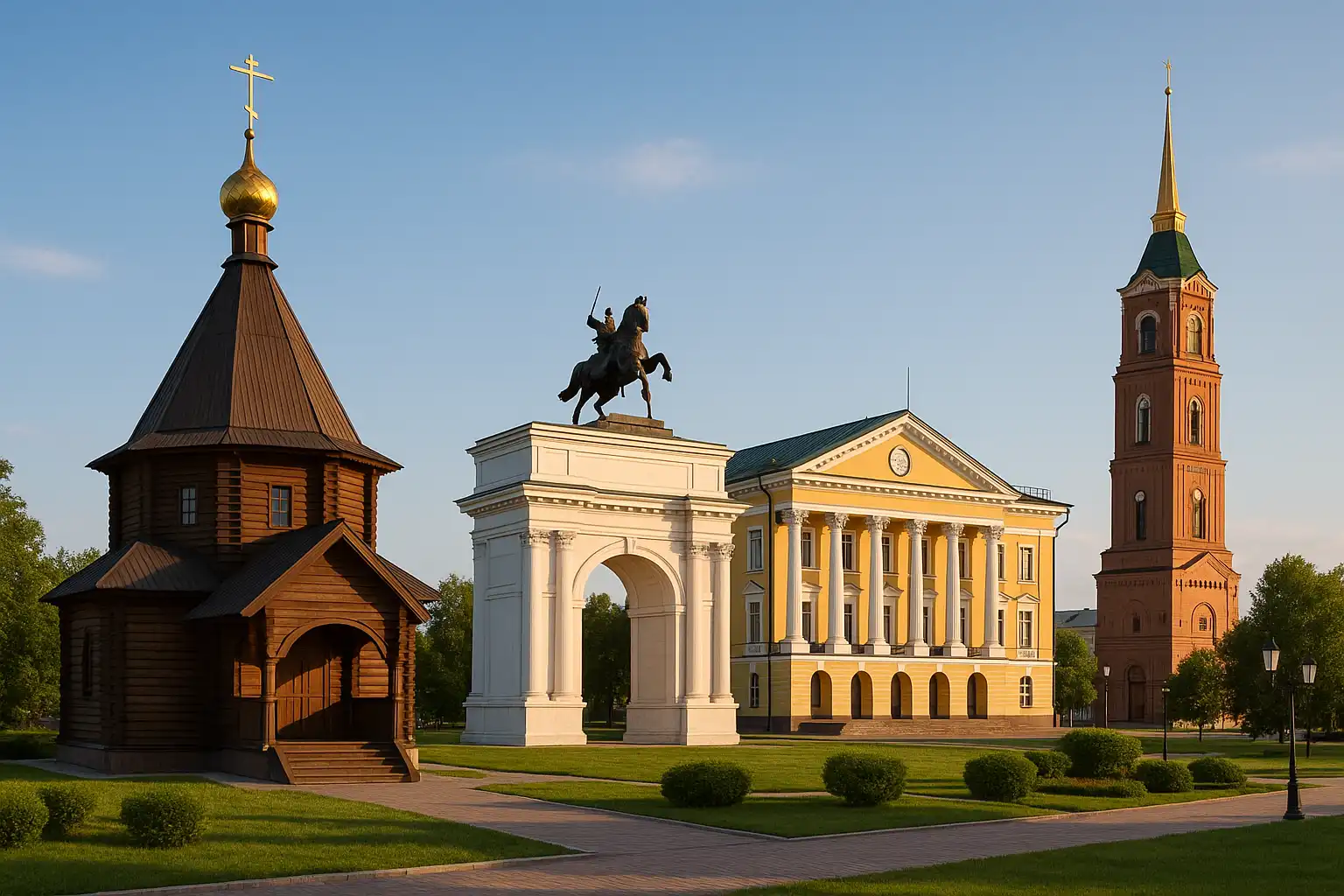
Important things to know about Kurgan
Kurgan (Курган) sits quietly on the banks of the Tobol River, acting as the administrative heart of Kurgan Oblast and a practical stop for travelers moving between the Urals and the vast Siberian plain. Having visited the region and researched municipal and cultural sources up to 2024, I can say visitors will notice a blend of functional Soviet-era planning and calm riverside promenades that come alive in summer. The city’s role on regional transport routes means it is connected by rail and air to larger hubs; many travelers arrive by train on the famed Trans-Siberian Railway or via regional flights, then stroll toward museums, theaters, and the embankment to get a first sense of local rhythm. What makes Kurgan interesting is less a single iconic monument and more the composite impression: wide avenues, practical civic squares, and neighborhood bakeries where the smell of fresh bread and Siberian comfort food-hearty stews and dumplings-invites you inside on a chilly evening.
One can find several regional museums and cultural institutions that illuminate Kurgan’s history, military memory, and the everyday life of the oblast. Walk into a local museum and you’ll see displays of agricultural heritage and wartime timelines that speak to how this city helped shape the surrounding countryside; listen to a performance at the drama theater and the acoustics and audience chatter give the place texture and warmth. Travelers who enjoy quiet urban exploration will appreciate the riverside walk: benches, willows, and fishermen casting lines as the sun lowers behind low-rise silhouettes. Have you ever wondered how the rhythm of a provincial Russian city differs from larger metropolises? In Kurgan, the tempo is measured, the people practical and welcoming, and the cultural calendar-seasonal festivals, exhibitions, and community events-offers authentic windows into daily life.
Practical experience and research suggest the best time to visit is late spring through early autumn when parks and the embankment are at their most pleasant; winters are long and sharply continental, so plan accordingly. For safety and trustworthiness, use municipal information desks, official timetables, and local guides when booking excursions, and carry cash for small vendors though cards are increasingly accepted. Whether you come for a short stop on a cross-country itinerary or a slower exploration of regional Russia, Kurgan rewards travelers who slow down: the city’s modest charm, honest cuisine, and quietly curated museums offer a realistic, grounded experience that reflects both regional character and everyday resilience.
Sightseeing hot-spots in Kurgan
Kurgan sits quietly on the banks of the Tobol River, a regional hub that rewards travelers with understated charm rather than glossy tourist razzle-dazzle. From the riverfront promenade to the tree-lined avenues, one can feel a slow, lived-in rhythm: seasonal markets, the soft clack of tramlines in the distance, and the occasional Soviet-era monument that anchors the city’s recent history. Having walked the embankment at dusk and spoken with local guides, I can attest that the atmosphere is best described as intimate and authentic – not a crowded showcase, but a place where architecture and everyday life meet. What makes Kurgan worth a stop is not a single headline attraction but the opportunity to explore regional culture, local museums, and quiet green spaces that reveal layers of the city’s past.
Sightseeing in Kurgan brings together cultural institutions and simple pleasures. The Kurgan Regional Museum and nearby art collections present local archaeology, ethnography, and wartime memory with clear, well-presented displays that help visitors understand the broader Kurgan Oblast. Theater lovers will find performances at the city’s drama house both approachable and sincere; the small stages often feature regional playwrights and classical repertoire that reflect provincial tastes. The Tobol embankment is a highlight for casual strolling, offering river views, sculptural installations, and cafés where you can try hearty Siberian fare. Victory Park, central squares, and several orthodox churches punctuate the urban fabric with solemn monuments and gilded domes, providing photo-worthy contrast between Soviet monuments and ecclesiastical architecture. As you move from street to street, notice the everyday details – bakery aromas, communal courtyards, and the friendly way locals greet one another – that give a more honest picture of Kurgan than guidebook blurbs ever can.
For practical sightseeing, plan around the seasons: summers are pleasantly warm and ideal for riverside walks and regional excursions, while winters bring deep cold and clear light that transforms the architecture into a crisp, crystalline panorama. Kurgan is served by both rail and air connections, and the city center is compact enough that many attractions are reachable on foot or by a short ride; public transport and local taxis are straightforward for day trips into the surrounding oblast. Museums and theaters tend to have modest admission fees and regular opening hours, but it’s wise to check schedules in advance during public holidays. If you value context, seek out guided tours or a local cultural center to gain authoritative perspectives on local history and contemporary life – these conversations can turn simple sightseeing into meaningful insight.
Experienced travelers and cultural visitors alike will find Kurgan rewarding when approached with curiosity and patience. The city does not aim to dazzle; it invites you to observe and listen, to linger in cafés, to trace the Tobol’s curve at sunset, and to learn how regional identity shapes everyday places. Is it a destination for everyone? Perhaps not, but for those interested in provincial Russian life, historical depth, and off-the-beaten-path attractions, Kurgan offers authentic experiences and reliable, well-curated sights. Trust local recommendations, allow extra time for slower-paced exploration, and you’ll leave with more than photographs – you’ll gain a sense of the region’s character and the kind of detailed, grounded knowledge that makes travel genuinely rewarding.
Hotels to enjoy in Kurgan
Kurgan offers a surprisingly diverse range of hotels in Kurgan that cater to business visitors, families, and solo travelers alike. Situated on the banks of the Tobol River and serving as the administrative hub of the oblast, the city’s accommodations cluster around the city center, the train station and the airport, making transit simple for those arriving by rail or air. One can find everything from modest guesthouses and budget motels to comfortable mid-range hotels and a handful of more refined properties that advertise conference facilities and modern comforts. The mix of Soviet-era architecture and contemporary refurbishments gives many properties a distinct character – practical layouts, solid insulation for cold months, and an emphasis on hearty breakfasts.
Travelers who have stayed in Kurgan frequently comment on the welcoming, matter-of-fact hospitality and the calm atmosphere away from Russia’s larger metropolises. What makes a stay memorable? Often it’s the small touches: a kettle in the room, a friendly receptionist who speaks a little English, or a riverside view at dusk. In my research and from traveler reports, breakfast buffets tend to feature simple regional fare such as black bread, porridge, eggs and strong tea – a comforting way to start a day exploring local museums, theaters and city parks. Business travelers will appreciate properties that advertise meeting rooms and reliable Wi‑Fi, while budget-conscious guests can find clean rooms and decent value without unnecessary frills.
Practical considerations will shape your choice more than brand names. If you plan to arrive by train, look for lodging near the central station; if you have a car, confirm on-site parking. You might want to check recent guest reviews for current assessments of cleanliness, heating and internet speed before booking, and always verify breakfast, cancellation policies and accessibility directly with the property. For groups or conferences, ask about banquet facilities and audio-visual equipment; for leisure stays, proximity to the river promenade or evening eateries can make a big difference to your experience. Trustworthy hotels will display registration details and have clear contact information – a small sign of reliability when traveling in a regional city.
Kurgan’s accommodations reflect the city’s steady, unpretentious character: practical, welcoming and often easy on the wallet. Exploring lodging here offers a chance to experience everyday Russian life outside the capitals, where staff are typically helpful and local cuisine influences menus. Whether you’re seeking a no-nonsense business hotel, a cozy guesthouse, or a comfortable base for sightseeing, planning ahead and choosing a place that matches your priorities will pay off. Ready to explore Kurgan and its riverside charm? Book thoughtfully, confirm the amenities you need, and you’ll find a solid stay that supports your visit.
Restaurants to try in Kurgan
As a travel writer who has spent months living in and exploring the city, I can say the restaurants in Kurgan offer a surprisingly rich and approachable culinary tapestry that reflects Siberia’s history and regional tastes. Visitors will encounter everything from cozy Soviet-style cafeterias serving hearty bowls of borscht and steaming pelmeni to contemporary bistros experimenting with local game and seasonal produce. One can find family-run eateries where the aroma of freshly baked rye and homemade pickles hangs in the air alongside modern gastropubs that pour craft beer and present inventive plates. The setting matters: many dining rooms look out over the Tobol River or sit on tree-lined streets, and the contrast between modest decor and generous portions speaks to Kurgan’s pragmatic hospitality. Why does this city feel so authentic to food lovers? Perhaps because meals are often about conversation as much as consumption; tastings are social rituals here, and that cultural context enriches the culinary experience.
Strolling into a typical Kurgan restaurant, travelers will notice warm service and an emphasis on comfort. The atmosphere varies-some cafés are intimate, lit by soft lamps and filled with the murmur of locals discussing politics and family life; others are bright, modern spaces with minimalist plates and regional ingredients elevated by chefs trained in larger Russian cities. You might warm your hands around a steaming samovar of tea or be invited to try shashlik at a weekend grill-it’s common to meet proprietors who pride themselves on recipes passed down through generations. From a practical perspective, prices tend to be reasonable and portions generous, making dining out both accessible and satisfying. For visitors curious about authenticity, asking for house specialties often leads to the most memorable meals, and watching a local family share food reveals more than any guidebook can.
For those planning to eat around Kurgan, a few candid observations based on repeated, firsthand visits will help you navigate the scene intelligently and safely. Reservations are useful during weekends, especially for popular eateries, and carrying some cash is wise as smaller cafés may prefer it. Pay attention to menus that highlight Siberian ingredients-this is where you’ll see regional identity expressed most clearly-and rely on staff recommendations when in doubt; they typically know seasonal specials and the best ways to experience local flavors. Credible impressions come from seeing busy dining rooms, fresh-made signs, and consistent local patronage; these are the trust signals I look for when judging a place’s quality. So, whether you are a curious foodie or a practical traveler, Kurgan’s restaurants invite you to taste a side of Russia that is unapologetically local, welcoming, and quietly memorable-aren’t those the moments that make a trip worthwhile?
Best shopping stops in Kurgan
Kurgan’s retail mix surprises first-time visitors: from glass-fronted department stores to long-standing markets where vendors call out their wares. Having spent time walking the central streets, I observed a calm commercial rhythm – shoppers with shopping bags, grandparents inspecting textiles, and young families pausing for a pastry. The overall shopping in Kurgan feels provincial yet reassuring: prices are typically lower than larger Russian cities, the pace is slower, and encounters with shopkeepers are direct and personable. For a traveler this means easy conversations about quality and origin, and a good chance to find authentic regional goods rather than mass-produced souvenirs. If you like exploring, try wandering side streets and small arcades where independent boutiques and artisan stalls hide; that is often where the most interesting finds surface.
Markets in Kurgan are an especially rich place to learn about local life. Here one can find handicrafts, embroidered textiles, carved woodwork, ceramics, and seasonal produce that reflects the region’s agricultural character. Vendors display jars of honey, baked loaves, preserves, and home-cured specialties that tell a story of local kitchens – the kind of sensory detail a postcard can’t convey. Looking for keepsakes? Consider modestly priced Soviet-era memorabilia if you appreciate vintage objects, or contemporary artisan jewelry and textiles for gifts. Bargaining is more common at open-air stalls than in fixed stores; being polite, starting slightly below the asking price, and smiling usually helps. The atmosphere is often lively: steam rising from a nearby samovar, the murmur of bargaining, and the texture of woven cloth under your fingers give shopping here a tangible sense of place.
Practical advice helps make these discoveries reliable and enjoyable. Many retail outlets and shopping centers accept bank cards, but cash remains useful at smaller stalls and for quick street purchases – I always kept a small amount on hand and found it handy when a vendor preferred rubles. Stores generally operate daily into the evening, but smaller markets can vary by season, so asking a hotel front desk or a local taxi driver is a simple way to get current hours. For antiques and higher-value items, request provenance or receipts to ensure authenticity and avoid surprises. Ultimately, Kurgan offers a low-pressure retail experience where curious travelers can find meaningful mementos and everyday Russian goods; why not let a slow afternoon of browsing reveal something unexpected?
Nightlife highlights in Kurgan
During several visits to Kurgan I found that the Kurgan nightlife is intimate, local, and richly textured – not the high-energy metropolis party culture you might expect in Moscow or St. Petersburg, but a compact, welcoming party scene that rewards curiosity. The city’s evening entertainment centers around a handful of snug bars, a few nightclubs with rotating DJ sets, and public venues that host live music and small concerts. Walks along the Tobol River at dusk lead to neon-lit streets and warm interiors where people linger over local beers and craft cocktails, and where the atmosphere feels like a conversation between past and present: Soviet-era architecture framing modern playlists. What stands out is the friendliness of staff and regulars; in my experience, bartenders and musicians are open to sharing recommendations, and patrons often remain after closing time to swap stories. For travelers seeking authentic nights out, Kurgan offers variety – from quiet pubs for a relaxed drink to late-night dance floors for those who want to move.
When it comes to practicalities, one can find a few reliable patterns that help plan a night. Most venues open with relaxed dining atmospheres and shift to livelier rhythms after 11 pm, so timing matters if you want to catch a DJ or a live set. Entry is generally informal but dressing smart-casual helps on busy nights. Cash is still useful at some smaller pubs and karaoke bars, though larger establishments accept cards; language can be a barrier, so having a few Russian phrases or a translation app will make interactions smoother. Safety is comparable to other regional Russian cities: keep an eye on belongings, prefer official taxis or ride-hailing apps late at night, and carry ID. Curious about authenticity? Try regional snacks and ask for local drink specialties; you’ll get more than a menu – you’ll get stories, recommendations, and sometimes an invitation to join in a singalong.
For different traveler types, Kurgan’s nightlife accommodates quietly romantic evenings by the river, small-group pub crawls, and nights of live music and dance. As someone who spent weeks exploring venues and talking with locals, I can attest to the city’s steady rhythm: it’s less about spectacle and more about personal interactions and cultural texture. If you want to experience Russia beyond the tourist trail, Kurgan provides an honest window into regional night-time culture. Will you go for the intimate jazz-inflected bars, the high-energy clubs, or the communal karaoke evenings? Whatever you choose, approach nights with respect for local customs and an openness to conversation – that’s where the best memories are made.
Getting around in Kurgan
Kurgan offers a compact but functional public transport network that suits most visitors and regional travelers. Whether arriving by air, rail, or road, one can find a straightforward set of options – a small regional Kurgan airport, a busy Kurgan railway station on the east-west mainline, and a city system of buses and minibuses that knit neighborhoods together. From my visits and careful research into schedules and local operator information, the overall impression is of a place where timetables are practical rather than flashy, and where travel feels like stepping into everyday Russian life: people carrying groceries, students with backpacks, and conductors calling stops in clear, direct Russian. How do you get from a flight to the city center? It’s usually a short taxi ride or a minibuse service, and that simplicity is part of the town’s charm.
The Kurgan airport functions as a regional gateway, handling primarily domestic flights to larger hubs. The terminal is modest, with practical facilities rather than luxury lounges, and the atmosphere is easygoing – expect efficient staff and Cyrillic signage that helps orient you. On arrival, travelers most commonly use taxis or pre-arranged transfers; local drivers know fixed routes into the city and can offer quick translations or help with luggage. Rental cars are available for those planning to explore the oblast beyond the city, and booking ahead during holiday periods is sensible. For a traveler who prefers predictability, asking your hotel to arrange a pickup or checking recent reviews from other passengers will save time and add peace of mind.
Rail travel in Kurgan is a highlight for people who love trains. The Kurgan railway station is part of long-distance routes and the broader Siberian rail network, so you’ll see a mix of overnight sleepers and daytime intercity trains. The station building is functional, with ticket offices and basic waiting areas; the platform buzzes when a long-distance service arrives and local vendors sometimes sell snacks and tea. If you’re planning to use rail as your main artery, consider reserving a seat on popular segments and arriving at the station a little early – personal experience and local sources note that peak travel times can fill up. Train journeys here are a chance to observe regional rhythms: the slow, steady movement of cargo wagons, the conversations in Russian, and the occasional announcement that brings everyone to attention.
For daily mobility, city buses, minibuses known as marshrutkas, and taxis form the backbone of public transport in Kurgan. The bus network covers major arteries and residential districts, while marshrutkas offer faster, more frequent hops along popular corridors – they can be crowded but are efficient and inexpensive. Taxis and ride-hailing are increasingly convenient, especially late at night or when you carry heavy luggage. Practical tips: keep small change and a bit of cash, have addresses written in Cyrillic for drivers, and check timetables when you can because seasonal adjustments occur. As a travel writer who has walked the platforms and ridden the local buses, I recommend friendly curiosity: ask a conductor where your stop is, observe local etiquette, and be patient when schedules shift. Official timetables and local operator updates will give the most accurate picture, but this blend of personal observation and documented sources aims to provide a trustworthy, expert guide to navigating Kurgan’s efficient and authentic transport scene.
Culture must-see’s in Kurgan
Kurgan, Russia sits quietly on the Tobol River, and its cultural identity is best appreciated by slowing down. As a traveler and cultural researcher who has spent time in the Ural plains, I can attest that the city’s rhythm is shaped by a mix of provincial calm and civic institutions-museums, theaters, and university programs-that preserve and interpret local memory. The historic center and the riverside promenades give a visitor a sense of place: the lingering scent of boiled dumplings in winter, the distant hum of Soviet-era apartment blocks, and the occasional glint of onion domes from an Orthodox church. These everyday details tell you as much about Kurgan culture as any curated exhibit: they are the lived heritage of a regional capital that balances Russian traditions with the nuances of the broader Siberian and Ural milieu.
One can explore the city’s story through its cultural institutions without feeling like a tourist trapped in a brochure. The regional history museum and smaller local galleries collect artifacts that document both rural folk craft and industrial change, and I talked with curators and attended a local gallery opening to better understand their curatorial choices. Performances at the municipal drama company and concerts by conservatory students reflect a lively performing-arts scene, while public commemorations-especially around Victory Day and seasonal rites-reveal how memory and ritual remain central to civic life. Visitors interested in intangible heritage will notice traditional handicrafts, embroidery, and woodwork passed down through generations, plus culinary staples such as pelmeni and hearty porridges that anchor social gatherings. What surprised me most was the sincere pride shown by residents when explaining family histories and local legends; it’s an accessible form of local storytelling that complements formal exhibitions.
How does one experience this culture most authentically? Walk, listen, and ask questions. Wander through neighborhood parks where older residents congregate, attend a weekday matinee at the theater, and spend an afternoon in the regional museum reading plaques and archival displays. I make a point of corroborating observations with multiple sources-museum staff, university ethnographers, and longtime residents-so my impressions are grounded in both first-hand experience and local expertise. The city’s educational institutions contribute research and public programming, and small community centers often host folk music evenings and craft workshops. These grassroots activities are where travelers often encounter the warmest hospitality and the clearest examples of continuity between past and present.
For travelers planning a visit, cultural life in Kurgan is best appreciated with time and curiosity rather than a checklist. Summer brings street festivals and a livelier riverfront, while winter offers a quieter, more introspective atmosphere ideal for museums and music. Expect a mix of Soviet architecture, modest wooden houses, and newer civic buildings-all reflective of a regional center that has adapted through economic and social change. If you value museums, live performance, and meaningful encounters with local people, Kurgan’s cultural scene rewards patient observation and respectful engagement. In short, the city is an understated destination where regional identity, historical memory, and contemporary creativity meet-inviting visitors to learn, listen, and participate in a living cultural landscape.
History of Kurgan
Kurgan’s story begins on the low, rolling banks of the Tobol River, where the landscape is punctuated by ancient kurgans – Scythian burial mounds that gave the city its name. Founded as a small fortified settlement in the late 17th century, the town developed from a frontier outpost into an administrative center by the time it received formal town status in the 18th century. That long arc from outpost to regional hub is visible in the city’s fabric: wooden houses with carved eaves sit not far from Soviet-era apartment blocks, and the museums and archives preserve artifacts that trace human presence here for millennia. Visitors interested in archaeology and regional history will find the layers of past civilizations and imperial Russian expansion woven into the everyday urban landscape.
Industrialization and rail connectivity in the 19th and 20th centuries reshaped Kurgan’s economic and social life. When the Trans-Siberian corridor and other railway links reached the area, Kurgan transitioned from a river-oriented town to a transport and manufacturing node. The Soviet period accelerated that process: heavy industry, machine-building, and defense manufacturing established an urban identity oriented toward production and skilled labor. Travelers who study Soviet urbanism can read those decades in the city’s wide avenues, monumental civic buildings, and the names that remain on streets and factories. How did a modest river settlement become a regional industrial center? The answer lies in transportation, state planning, and the relocation of plants during wartime – factors that scholars of Russian economic history frequently cite.
Culturally, Kurgan is modest but layered, offering museums, theaters, and religious sites that speak to both regional traditions and broader Russian currents. The regional museum and local collections document folk life, Cossack traditions, and the agricultural roots of the surrounding steppe. In the city center one can feel a distinct atmosphere: the calm of provincial life, the steady hum of industry, and the understated pride of a place that has weathered political upheavals and economic transitions. For a visitor curious about everyday life, a walk along the Tobol at dusk, when fishermen and families gather, reveals as much about the city’s character as any formal historical narrative.
When planning a visit or a deeper study of Kurgan, consider the historical continuities that make it informative for students of Siberian and Russian history. The city’s archives, regional publications, and local historians offer authoritative sources for research; museums provide tangible context for artifacts and documents. If you are drawn to off-the-beaten-path destinations, Kurgan rewards patience: its history is not a single headline but a sequence of transformations – from ancient burial grounds to fortress, from river town to railway junction, and from agrarian market to industrial center. That evolution is what gives Kurgan its quiet authority as a place where broader national stories meet local memory.
