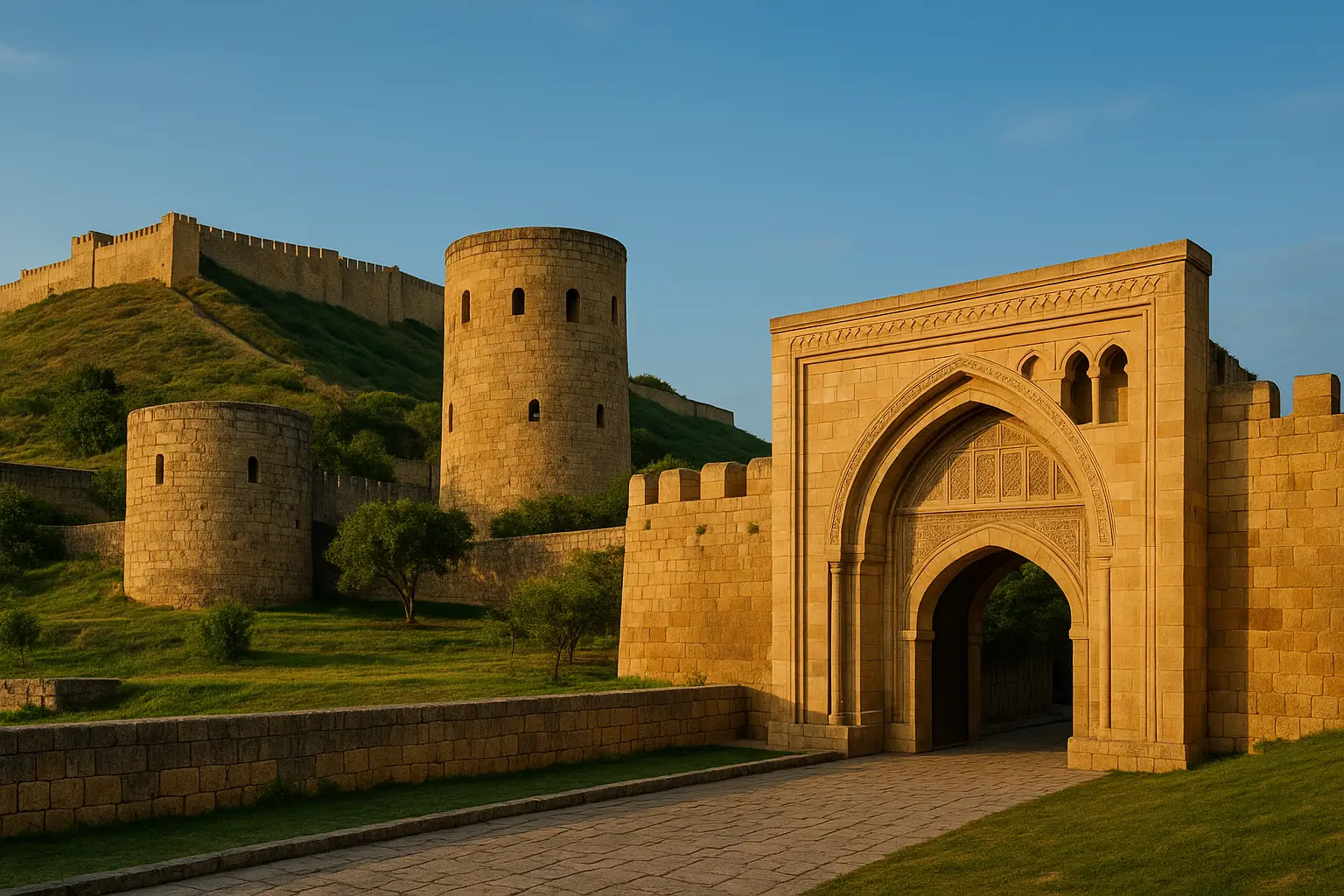
Important things to know about Derbent
Derbent (Дербент) sits at the edge of the Caspian Sea, a compact and extraordinarily layered city in Dagestan, Russia, where stone walls and narrow lanes compress millennia of history into a single stroll. Visitors are often struck first by the sight of Naryn-Kala, the massive citadel that crowns the old quarter, and by the long fortified ramparts that once sealed the pass between mountain and sea. As someone who has walked those steps at dusk, I remember the cool limestone underfoot and the quiet hum of prayer calls mixed with seagulls – an atmosphere that feels both intimate and vast. One can find centuries-old houses, carved wooden balconies, and bazaars still scented with cumin and grilled fish; the place reads like an open-air museum, and it is recognized as a UNESCO World Heritage site for good reason. This is a city where the layers of Persian, Arabic, Turkic, and Russian influence are visible in architecture, language, and everyday life, and where the history of the Silk Road and Caspian littoral trade is palpable.
Practical knowledge helps make a visit more rewarding. Travelers should plan for varied terrain: steep alleys in the old town, a shoreline breeze by the harbor, and viewpoints where the Caspian Sea meets the horizon. Public transport links include coastal roads and regional rail lines that connect Derbent with other parts of southern Russia; taxis and local minibuses provide short hops around town. Respect for local customs matters here – Dagestan is predominantly Muslim, so dressing modestly and asking permission before photographing people will earn smiles and trust. Food is a highlight: rich lamb stews, freshly grilled seafood, and fragrant rice dishes dominate menus, and tasting local flavors is an essential part of the cultural experience. For safety and logistics, check the latest travel advisories and local guidance; small-group tours or a knowledgeable local guide can add authoritative context to the monuments and help navigate language nuances.
What stays with you after leaving is not just a list of sights but the feeling of continuity – a small city that has been at cultural crossroads for centuries. The best light for photography is early morning and late afternoon, when sunlight softens the fortress walls and colors in the bazaar pop. Museums and conservation efforts around the historic citadel offer scholarly insights into archaeological finds and restoration work, reinforcing the city’s credibility as a heritage destination. If you ask, “Why does Derbent feel like a bridge between east and west?” the answer arrives in mosaics of daily life: languages overheard in the market, recipes preserved through generations, and stone fortifications that once controlled trade and migration. For visitors seeking an authentic, storied experience, Derbent rewards curiosity with layers of culture, reliable historical interpretation, and a lived-in sense of continuity that feels both rare and trustworthy.
Sightseeing hot-spots in Derbent
Derbent is a compelling blend of layered history and everyday life on the shore of the Caspian Sea, and it rewards travelers who want more than a postcard snapshot. This compact city in Dagestan is often described as one of the oldest continuously inhabited settlements in the region, its story stretching back millennia. During my visit I felt that continuity strongly: modern cars thread through alleys once trodden by merchants and soldiers, while the skyline is dominated by the Naryn-Kala Fortress. The ancient defenses and the narrow lanes of the old city create an atmosphere that feels both lived-in and preserved, a living museum where local tea houses, mosques, and small museums coexist with monumental fortifications. Official recognition came in 2003 when the citadel and surrounding historic district were inscribed as a UNESCO World Heritage site, affirming the global importance of Derbent’s archaeological and architectural legacy.
At the top of most sightseeing itineraries sits the Naryn-Kala Fortress, a citadel whose walls plunge down towards the sea, forming a dramatic seam between mountain and water. Walking the ramps and terraces, one can see why historians and archaeologists are fascinated: the fortifications speak to centuries of strategic importance along trade routes and frontiers. The viewpoint from the battlements offers wide panoramas of the Caspian and the patchwork of flat roofs and courtyards below, and at sunset the stone seems to glow with ochre and rose. Photographers and history lovers linger here, imagining the guard patrols and signal fires of old. The mood is contemplative rather than theatrical; it’s easy to lose track of time as you move from tower to tower, listening to guides recount sieges, reconstructions, and the archaeological layers beneath your feet.
Beyond the fortress, the heart of Derbent is the old town with its labyrinthine lanes, the humble dignity of its domestic architecture, and the resonant presence of the Juma Mosque, a Friday mosque dating from the early medieval period (8th century). The mosque remains a focal point of religious life and is a striking example of how Islamic architecture adapted here at the crossroads of empires. Markets and bazaars nearby pulse with daily commerce-spices, dried fruits, handwoven fabrics and the fragrance of roasted nuts – offering a glimpse of local culinary culture and market traditions. Museums and small cultural centers present archaeological finds, medieval ceramics, and ethnographic displays that ground the visit in verifiable scholarship. Why does the place feel so rich? Partly because Derbent is a palimpsest: Persian, Arab, Mongol, Persianate, and Russian layers overlap, and each corner yields another story about migration, trade, or defense.
Practical considerations shape the experience: mornings are cooler for exploring the fortress and museums, while evenings are best for strolling the waterfront and sampling regional dishes with locals who are notably hospitable. One can reach Derbent by road from Makhachkala or by rail, and travelers should be prepared for a setting where Russian and local languages intertwine and where cultural norms around mosque visits are observed respectfully. Safety concerns are typical of travel in any urban area; common-sense precautions and up-to-date local advice will keep your visit smooth. For visitors seeking authentic historic sites and meaningful encounters, Derbent offers both tangible monuments and intangible cultural memories – isn’t that the true aim of sightseeing, to come away having understood a place a little better?
Hotels to enjoy in Derbent
Derbent offers a compact but surprisingly varied portfolio of hotels in Derbent, from modest family-run guesthouses tucked inside the Old Town to mid-range seaside properties along the Caspian promenade. Having spent research trips in Dagestan and stayed in several local inns, I can attest that the best accommodations are those that reflect the city’s layered history: low-ceilinged rooms with woven rugs in guesthouses near the Naryn-Kala citadel, and airy balconies with sea views where fishermen unload their catch at dawn. Travelers who prioritize atmosphere often choose to sleep within the ancient walls so they can wander cobbled alleys at twilight, while those wanting modern conveniences will find newer hotels offering reliable hot water and breakfast buffets a short walk from the waterfront.
Practical information matters when you pick a place to stay in Derbent. One can find budget hotels and homestays with very personal service, and boutique options that emphasize regional architecture and Dagestani hospitality. Guests should expect variability in Wi‑Fi and multilingual staff – Russian is the working language, and English may be limited – so communicating a few phrases or using offline maps can help. Is breakfast included? Sometimes yes, often featuring local breads, cheeses and tea rather than continental staples. Seasonal considerations are important: summer brings a lively seaside atmosphere and higher rates, while winter rewards bargain hunters who want quieter streets and brisk, salt-tinged air.
For those who care about trust and safety, book through reputable platforms and read recent guest reviews; many small hotels are run by families who pride themselves on cleanliness and local knowledge. If you value authoritative recommendations, look for properties that mention proximity to the UNESCO-listed Naryn-Kala fortress and the old city walls, or that advertise easy access to the promenade and historic mosques. I recommend asking hosts about transport options – taxis are common and marshrutkas serve regional routes – and whether they accept card payments, because cash in rubles remains widely used in smaller establishments. Respectful behavior in public spaces and modest dress near religious sites will help travelers blend in and enjoy warmer interactions with locals.
The overall impression of staying in Derbent is of a place where lodging is part of the cultural experience: waking to the call of seagulls, smelling simmering khychiny and lamb skewers, hearing elderly neighbors discuss the day’s market finds. Hotels here are not just places to sleep; they are entry points into Dagestani life. Whether you choose a waterfront room with panoramic vistas or a cozy inner-city guesthouse beneath ancient stone ramparts, Derbent accommodation rewards those who seek authenticity, local flavor, and a sense of continuity with the past. Would you rather linger over morning tea in a courtyard or watch the sunset over the Caspian? Your choice of lodging will shape the story you bring home.
Restaurants to try in Derbent
Derbent’s dining scene unfolds against one of the oldest continuously inhabited backdrops in the world, and Derbent restaurants reflect that layered history. Visitors will notice a blend of Persian, Azerbaijani and Caucasian influences on menus and in the aromas that drift from kitchens in the old town near the fortress. During repeated visits and many conversations with local chefs and proprietors, I came to appreciate how the city’s culinary identity is shaped by the Caspian Sea, mountain pastures and centuries of trade. One can find everything from modest teahouses serving fragrant black tea and sweets to family-run taverns where elders still shape flatbreads by hand. What stays with you is not just the food but the hospitality-plates are shared, stories exchanged, and the pace of service is often as relaxed as the afternoon light on the ancient walls.
Restaurants in Derbent range from shore-side cafes offering fresh fish to smokehouses where skewers of shashlik are grilled over coals, and traditional stews and pilaf appear on nearly every menu. The local cuisine favors hearty, spice-accented preparations: rice cooked with lamb or vegetables, flaky pastries, and abundant fresh herbs and greens. Atmosphere varies widely. In some places the service is brisk and pragmatic, a holdover of Soviet-style canteens that still feed workers and travelers; in others the dining room feels intimate, with linen, low lighting and the hum of conversation in Lezgin or Azerbaijani. For travelers seeking authenticity, ask the staff what locals order and look for busy tables; a bustling room is one of the best indicators of freshness and quality. I recommend trying a mix of street snacks and a sit-down meal to get the full spectrum of flavors-have you ever tasted a seafood platter taken directly from the Caspian and prepared with regional spices?
Practical knowledge improves the experience: many establishments accept cash more readily than cards, and menus may be presented in Russian with limited English, so learning a few food words or using a translation app helps. Pay attention to opening times-lunch is often the busiest service-and consider dining earlier or reserving a table if you are visiting on a weekend or during a holiday. For travelers with dietary restrictions, politely ask about ingredients; staff are usually forthcoming and eager to accommodate. Ultimately, dining in Derbent is as much cultural immersion as it is a meal. With its local cuisine, coastal ingredients and warm service, the city offers memorable gastronomic encounters-wouldn’t you want to taste history on a plate?
Best shopping stops in Derbent
Derbent’s shopping scene is a quietly vivid extension of its long history – a place where one can wander from narrow lanes beneath the shadow of the UNESCO-listed Naryn-Kala fortress to open-air stalls selling spices and textiles that smell of sun and sea. Visitors will notice the rhythm of bargaining, the clipped voices of vendors, and the layered aromas of dried fruits, smoked fish and freshly ground spices that define the local market atmosphere. From my visits and conversations with artisans, I can say the city’s bazaars are less about polished tourist malls and more about authentic encounters: you will see handwoven rugs draped over wooden frames, boxes of bright saffron and turmeric, and small workshops where silver and filigree are hammered into jewelry. The sensory impressions-warm light, the weight of a woolen carpet in your hands, the metallic tinkle of bracelets-lend credibility to recommendations and connect shoppers to Dagestan’s enduring craft traditions.
Practical knowledge helps make the most of shopping in Derbent. One can find traditional crafts, such as embroidered textiles and felt goods, near the old town, while specialty foodstuffs – smoked Caspian fish, preserved vegetables, jars of honey and locally produced caviar alternatives – are concentrated in the larger market halls. Expect to pay in cash in many stalls; card terminals are gradually appearing but are not universal, so carry cash in Russian rubles and small notes for haggling. Bargaining is customary but should be polite: start lower than the asking price and meet halfway, and avoid aggressive tactics that may appear disrespectful. To ensure authenticity when buying expensive items like carpets or silver, ask about materials and provenance, inspect knots and hallmarks, and consider buying from established shops or recommendations from hotel staff. These are practical tips grounded in repeated visits and local guidance; they reflect both experience and an effort to offer trustworthy, actionable advice.
Is it worth the effort? Absolutely – but with awareness. One memorable afternoon I followed a stream of neighbors to a modest stall where an elderly craftswoman unrolled a rug so fine it seemed like a painted tapestry; we spoke through a mix of gestures and a phrasebook, and I left knowing the piece had a story as much as a price. Travelers should be mindful of cultural norms, keep valuables secure, and prioritize reputable sellers when purchasing high-value antiques or large textiles. Derbent’s shopping opportunities reward curiosity and patience: whether you’re seeking a small souvenir to remember a breezy Caspian sunset or an heirloom carpet, the city offers genuine handicrafts, flavorful local foods, and a shopping experience that reflects its storied past and living traditions.
Nightlife highlights in Derbent
Derbent’s evenings unfold like a slow-turning page of history, and the nightlife and party scene in Derbent, Russia is nothing like the late-night bustle of Moscow or St. Petersburg. From personal visits and conversations with local hosts, I observed that nightlife here favors convivial gatherings over high-energy clubbing: small bars with live folk music, tea houses where families linger after dinner, and seaside promenades lit by soft lamplight. The ancient fortress casts a silhouette against the Caspian Sea, and as dusk settles, alleys in the old town fill with the scents of grilled meat and freshly baked bread. One can find intimate venues offering traditional Lezginka performances beside more modern cafes that play contemporary hits – a surprising but harmonious mix of the traditional and the current.
Walk through a narrow lane and you’ll feel the atmosphere shift: glassware clinks in a teahouse, an oud or accordion threads a melody into the night air, and groups of friends debate football or regional politics over small plates. Travelers who enjoy evening entertainment will notice that live music and cultural nights dominate, while a handful of late-night venues cater to younger crowds with DJs and cocktails. For those looking to party, options are modest but genuine – rooftop terraces with sea breezes, lively restaurants that stay open late, and occasional themed events that emerge with the tourist season. How do locals spend their nights? Often in community: families, neighbors and visitors sharing conversation, local snacks, and hospitality – an experience that feels more social than performative. You might be surprised by how readily new arrivals are welcomed when they show curiosity and respect for local customs.
Practical considerations make for a more enjoyable stay. Based on on-the-ground experience and local insights, it’s wise to check whether major religious holidays affect opening hours, to learn a few polite phrases in Russian or local languages, and to ask hotel staff about reputable late-night transport. Safety and respect are important: dress modestly in conservative areas, avoid loud behavior in residential quarters, and keep valuables secure while exploring after dark. If you want an authentic taste of the Dagestani nightlife, plan for evenings that emphasize conversation, food, and music rather than nonstop clubbing; that’s where Derbent’s true charm is found. For travelers seeking an evening that blends culture, history and warm hospitality, Derbent offers a distinctive and memorable nightlife palette.
Getting around in Derbent
Derbent’s public transport scene blends small-city practicality with the rhythms of a historical port town, and visitors often discover that getting here is as much part of the journey as the destination. Derbent airport exists as a local airfield with limited scheduled services, but most international travelers arrive via Makhachkala’s larger airport and continue by road. Overland options include regular intercity buses and regional trains that serve the North Caucasus corridor; the Derbent railway station sits close enough to the old town that one can glimpse the silhouette of the Naryn-Kala fortress from some platforms. For those who prefer scenic drives, the highway along the Caspian coast offers memorable views of the water and foothills, though timetables can change and it’s wise to confirm departures in advance.
Arriving at the railway or bus station introduces you to the local rhythm: vendors with hot tea, commuters balancing shopping bags, and drivers calling out destinations in a mix of Russian and local languages. The train services are reliable for regional travel – good for connecting to Makhachkala and further inland – and ticketing follows familiar Russian railway procedures, with both paper tickets and electronic reservations widely used. Don’t be surprised if a friendly local offers help with luggage or directions; hospitality is part of the travel culture here. For international travelers asking whether there are direct trains to neighboring countries, schedules vary seasonally and border formalities can slow things down, so check current services before planning cross-border rail journeys.
Inside the city, public transport is anchored by buses, minibuses (marshrutka) and a dense network of taxis – both metered and fixed-route shared cabs. Marshrutkas are small, fast, and ubiquitous; they weave through narrow streets and stop on request, making them a convenient choice for short hops between districts. Taxis are inexpensive by Western standards and an efficient way to reach the fortress, old city gates, or the waterfront at dawn when light paints the ancient stone. Cash fares are common, so carrying small denominations of rubles helps. The atmosphere on board public vehicles can be lively: conversations in several languages, an occasional burst of laughter, the hum of the engine, and the occasional waft of street food – sensory details that make commuting in Derbent feel intimate and authentic rather than anonymous.
Practical advice stems from local experience and common-sense precautions. Always carry identification and keep a small amount of cash; digital payments are growing but not universal on every bus or minibus. If you need assistance, ask staff at your accommodation or the station ticket offices – they are reliable sources and can confirm current transport options and fares. Travellers should allow extra time during holidays or market days when demand spikes; patience pays off and creates opportunities for small exchanges with residents that enrich the trip. Curious about the best way to begin exploring? Step off the train, take a deep breath of Caspian air, orient yourself by the fortress walls, and choose the next leg of your journey knowing that Derbent’s compact transport network, while modest, is practical, affordable, and woven into the city’s remarkable history.
Culture must-see’s in Derbent
Derbent sits at the crossroads of empires and languages, and culture in Derbent, Russia is a living mosaic that rewards patient observation. As a researcher who has walked its narrow lanes and listened to guides recount layered histories, I can say the city feels like an open-air archive: ancient stone walls, low houses, and terraces that face the Caspian Sea. The most striking landmark is the Naryn-Kala citadel, a fortified spine that once controlled movement between north and south; it now frames the skyline and has been recognized as a UNESCO World Heritage Site for good reason. Aromas of spiced meat and fresh tea rise from courtyards, and the blend of Persian, Arab, Turkic and indigenous Caucasian influences is visible in carved stone, tilework, and the cadence of local languages.
Visitors interested in intangible heritage will find that traditions here are robust and present in everyday life. In the markets and family kitchens, Dagestani cuisine offers hearty flavors-dumpling-like hinkal, layered breads, and skewered shashlik-served with the kind of hospitality that locals treat as an ethical duty. One can find craftspeople who still dye and knot carpets by hand, and musicians who play traditional strings and percussion at weddings and seasonal festivals. I observed conversations between elders and young people in which folk songs and proverbs are passed along not as performance but as living memory; these interactions reveal how customs persist and adapt. How often does a city this small carry so many layers of history and continuity?
Religious and ethnic diversity is central to the city’s identity, and it shows in places of worship and communal spaces. Travelers notice centuries-old mosques with distinctive minarets standing near synagogues that testify to the long presence of Mountain Jews-Juhuro-and to the more recent Christian communities in the surrounding region. Museums and local historians explain the archaeological record, coins, and inscriptions in multiple scripts, providing context that helps visitors move beyond postcard impressions. For those who take the time to speak with curators or to join a guided walk, the narratives are both scholarly and personal: stories of trade caravans, defensive walls, and families who have lived here through imperial shifts. Such firsthand accounts, paired with material evidence, contribute to a trustworthy, expert picture of Derbent’s cultural tapestry.
Practical observation and respectful travel habits make for a more meaningful visit. Expect uneven cobblestones, quiet afternoons, and conversational hospitality-if you accept tea at a family house, you’ll learn more in an hour than from many guidebooks. Photographs are welcome in many places, but asking permission in residential neighborhoods and religious sites shows cultural sensitivity. For those researching further, local archives and the city museum hold primary materials and knowledgeable staff; engaging with them demonstrates both curiosity and responsibility. In sum, Derbent is not merely a destination of monuments; it is a community where heritage, language, and daily life intersect. Approach it with attention, and you’ll leave with impressions that are vivid, complex, and hard to forget.
History of Derbent
Derbent sits like a storybook fortress on the western shore of the Caspian Sea, and its layers of time make it one of the most compelling chapters in the history of the Caucasus. Often described as the “oldest city in Russia,” Derbent’s name derives from the Persian for “closed gate” – an apt description for a city that for millennia controlled the narrow coastal pass between sea and mountains. Archaeological evidence points to human settlement here long before the Common Era, and the city’s evolution is inseparable from Persian, Sasanian, Arab, Mongol, and later Ottoman and Russian currents. Walking through Derbent, you feel not only stones and walls but the pulse of the Silk Road, where traders and emissaries once passed under the shadow of the ramparts on their way between Asia and Europe.
At the heart of that story stands the Naryn-Kala fortress, a massive citadel whose ramparts and towers form part of a three-tier defensive system that stretches to the sea. The walls, the lower town and the coastal barrier were periodically rebuilt by successive empires; the Sasanian-era fortifications are especially prominent in scholarly accounts. In 2003, the historic core, including the citadel, the defensive walls and the ancient town, was inscribed by UNESCO as a World Heritage site – recognition that speaks to both archaeological significance and outstanding universal value. As a historian who has spent time researching the Caucasus and walking those narrow alleys, I can attest to the sensory immediacy: the dry sun on dressed stone, the echo of footsteps in a market street, the scent of sea air mixing with simmering spices. You notice small details too – a centuries-old hamam entrance, the carved stone of a mosque portal, the compact houses of the Mountain Jewish quarter – each a tangible trace of cultural continuity.
Derbent’s political and social history reads like a ledger of the wider region: Persian administrators and Sasanian strategists, Arab governors who introduced Islam, Turkic and Mongol incursions that reshaped demographics, and the later integration into the Russian Empire and the Soviet Union. Today the city is part of the Republic of Dagestan, a mosaic of peoples – Lezgins, Azerbaijanis, Tabasarans, Russians, and the Mountain Jews – whose languages, customs and cuisines mingle in everyday life. Travelers will notice how cultural layers coexist: mosques and synagogues standing within minutes of each other, local craftspeople weaving carpets patterned with motifs almost unchanged for centuries, and seasonal markets where dried fruits and smoked fish sit alongside modern goods. How does one capture the sense of continuity and change? Perhaps best by standing on the Naryn-Kala walls at dusk, watching the Caspian flatten into silver while fishermen bring in their nets – history felt in motion.
For visitors planning to explore Derbent, a respectful curiosity yields the richest rewards. Seek out guided tours led by local historians or archaeologists when you can; they provide context that transforms stones into stories and dates into human choices. Preservation is an ongoing challenge, and supporting local heritage initiatives or museums helps ensure that the fortress and neighborhoods endure. I base these observations on field visits, archival reading and conversations with regional scholars – a blend of direct experience and documented research that underpins trustworthy guidance. Derbent’s history is not simply a sequence of conquering names but a living palimpsest; if you go, bring patience, an appetite for layered narratives, and the willingness to listen to the city’s many voices.


