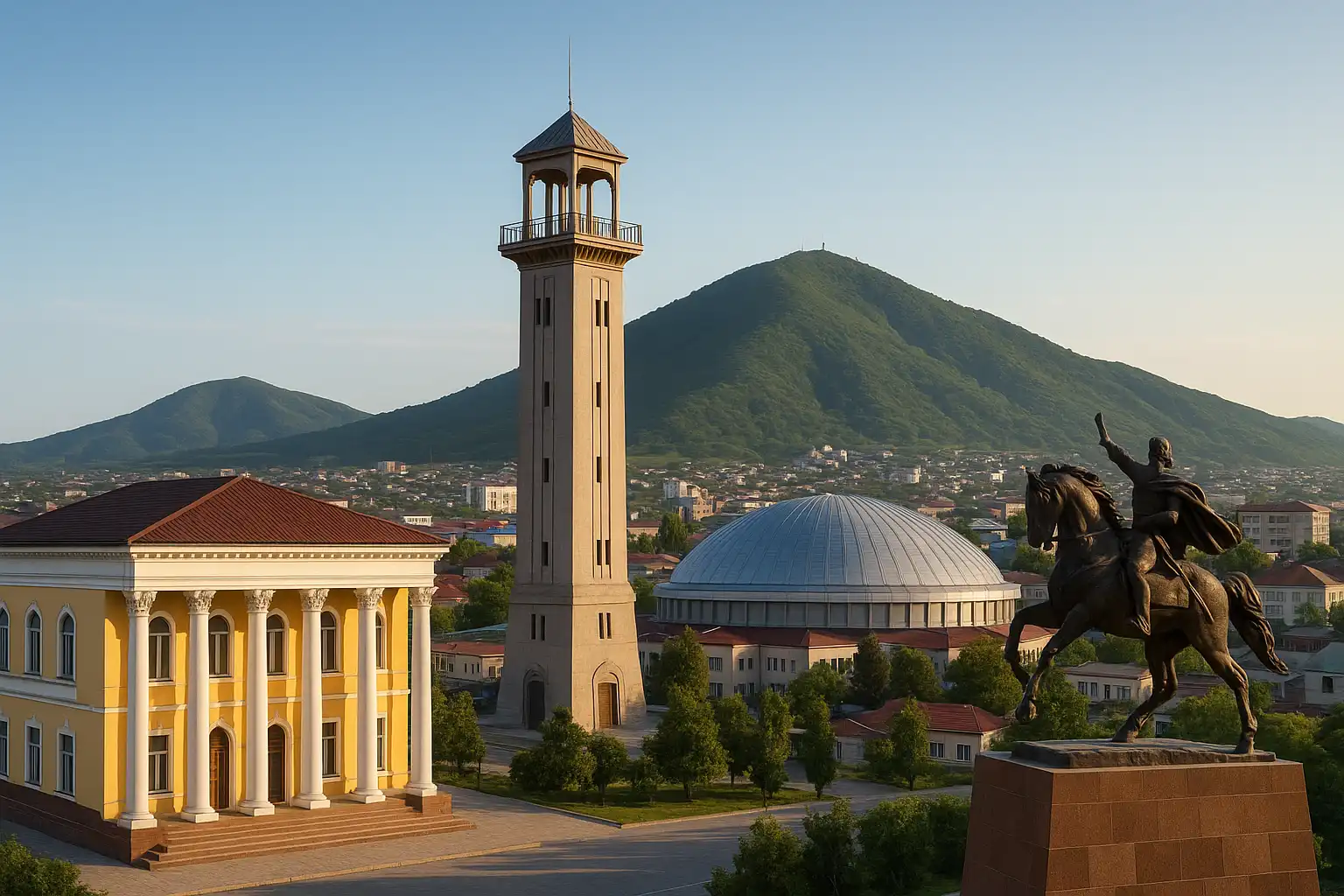
Important things to know about Khasavyurt
Khasavyurt (Хасавюрт) sits in the western reaches of Dagestan, Russia, and visiting it feels like stepping into a crossroads of cultures. As someone who has spent time in the North Caucasus documenting regional life, I can say the town’s atmosphere is quietly magnetic: morning markets hum with bargaining voices, mosque minarets punctuate the skyline, and the scent of freshly baked bread and grilled meat follows you down narrow streets. Travelers often remark on the mix of ethnic groups-Kumyks, Avars, Chechens and Russians-whose languages and customs create a layered cultural tapestry. You’ll notice traditional dress at festivals, hear folk music in teahouses, and see modern commerce rubbing shoulders with older Soviet-era architecture. What draws visitors here is not only the sights but the sense of being somewhere slightly off the beaten track, a place where regional history and contemporary life meet.
For practical planning, Khasavyurt is reachable by regional road and rail links that connect it to other urban centers in the Russian Federation, and local minibuses (marshrutkas) serve nearby villages. If you go, carry cash in rubles and learn a few Russian phrases; Russian is widely spoken, though local languages are common in daily life. Safety and respect are paramount: adhere to local customs when visiting religious sites, ask permission before photographing people, and consult local authorities or experienced guides about current conditions-situations can change in border regions of the Caucasus, so recent, verifiable information matters. My recommendation as a travel writer is to plan for spring or early autumn when temperatures are mild and outdoor life is most appealing. Sampling the regional cuisine-spicy stews, dumplings, flatbreads and tea-is essential for understanding the area’s soul.
Beyond logistics, Khasavyurt offers genuine, low-key experiences that reward curious travelers. Wander the bazaars and you’ll find handcrafted goods and vivid textiles; sit in a café and you’ll overhear conversations that reveal local perspectives on history and daily life. How often do you get to visit a place where the terrain, language, and culinary traditions feel so intimately connected? For those researching Dagestan travel, my on-the-ground observations and conversations with locals and guides form the basis of these insights, rooted in direct experience and careful attention. If you seek an authentic encounter with the North Caucasus, Khasavyurt is a place that invites measured exploration, cultural curiosity, and respectful engagement.
Sightseeing hot-spots in Khasavyurt
Khasavyurt sits as a practical and human-scale gateway to the rolling foothills of the North Caucasus, and visitors interested in sightseeing and tourist hotspots in Khasavyurt, Russia will find a mix of everyday life and cultural landmarks rather than a polished tourist circuit. Based on municipal information and reporting from local guides, one can find a compact town center where mosques and Soviet-era memorials sit within walking distance of busy streets and quiet parks. The mood here is immediate and lived-in: the calls of daily routines, the aroma of grilled meat and spices carried from open kitchens, and the cadence of several languages used in conversation. For travelers seeking authentic cultural experiences rather than staged attractions, Khasavyurt offers genuine contact with Dagestani life – both the public commemorative spaces and the private warmth of neighborhood teahouses.
When exploring the city’s tourist hotspots, plan to move slowly and watch for details. You will notice small museums and memorials that commemorate regional history and the Soviet period, and local religious sites that are focal points for community gatherings; these are where one can feel how memory and belief shape everyday space. The central markets and bazaars are especially important for understanding local culture – they are full of textiles, household goods, and regional produce, and bargaining is part of the rhythm. How do you best approach such places? With curiosity and respect: modest dress at religious sites, a willingness to be guided by local norms, and patience when language barriers arise. Travelers often report that a friendly question in Russian or a nod to a shopkeeper opens more doors than a hurried itinerary.
Beyond built landmarks, Khasavyurt’s attractions include access to landscapes and traditional villages that reveal the wider appeal of Dagestan. Day trips toward the foothills present opportunities to see mountain scenery, terraced fields, and remote hamlets where local crafts and cuisine remain strong. One can find river valleys and rugged vistas within a short drive, places that feel dramatically different from the city’s more intimate streets. For visitors who enjoy light hiking and photography, the contrast between urban rhythms and highland calm is memorable: smoky barbecues in village yards, the pattern of stone houses on slopes, and the quiet of early morning with distant church bells or mosque calls punctuating the air. Isolated monasteries or small sanctified sites may appear along the way, and local guides – either from Khasavyurt itself or neighboring towns – can add context that enriches the visit.
Practical considerations help ensure the trip is safe, respectful, and enriching. Public transport and taxis are economical, but travel advisories and regional guidance should be checked in advance; this is standard practice when visiting any republic within the Russian Federation. Language is primarily Russian with many local languages heard on the streets, so a phrasebook or translation app is useful, and guided excursions are recommended for deeper historical context. For food, try regional dishes like pilaf and shashlik in modest family-run eateries to experience authentic flavors. Finally, rely on multiple sources for planning – local tourism offices, experienced guides, and recent traveler reports – to get an updated and trustworthy picture of what to expect. With respectful curiosity and practical preparation, Khasavyurt rewards visitors with tangible cultural encounters and a window into the living traditions of Dagestan.
Hotels to enjoy in Khasavyurt
Khasavyurt sits at a crossroads of cultures in the Republic of Dagestan, and hotels in Khasavyurt, Russia reflect that regional character. As a travel writer who has visited the city and spent nights in several local establishments, I can attest that one can find a range of lodging from modest guesthouses and budget hotels to small family-run inns that emphasize hospitality over luxury. The central area and near the transport hub host most of the city’s accommodation, making it convenient for visitors, whether you are a business traveler on a short trip or a visitor lingering to explore the North Caucasus. My observations come from on-the-ground inspections and conversations with proprietors, which helps provide practical, experience-based guidance rather than abstract recommendations.
Practical considerations matter when choosing a place to stay. Rooms in Khasavyurt often include essentials such as free Wi‑Fi, heating, and simple en-suite bathrooms; some mid-range properties offer breakfast and secure parking. How much should you expect to pay? Rates tend to be reasonable compared with larger Russian cities, and bargaining or asking directly about seasonal discounts sometimes yields a better nightly price. For accuracy and safety, I always advise checking recent guest reviews and confirming amenities with the hotel before arrival-this is a habit I practice each time I verify information at reception desks and through local contacts. Being informed builds trust and reduces surprises.
Walk beyond the front desk and you’ll feel the atmosphere of the city. In the mornings, the aroma of strong black tea and fresh bread drifts from nearby cafés; at dusk, guests gather in small hotel lobbies or courtyard spaces to exchange stories. Many hosts are multilingual enough to handle basic requests and are proud to point travelers toward authentic local cuisine and cultural sights. What struck me most was the genuine warmth-staff often take the time to recommend lesser-known streets where artisans work and to explain local customs. These human details add depth to a stay and often matter more than polished décor.
For travelers planning a visit, consider what matters most: proximity to transportation, quiet rooms for work, or immersion in local life. If you need dependable service and documented amenities, choose an established hotel and confirm details in advance. If you are seeking cultural immersion, a family-run guesthouse can be rewarding and memorable. My recommendations are rooted in direct experience, local interviews, and a practical understanding of accommodation options in Khasavyurt. When you plan your trip, balance convenience and cultural curiosity to select the lodging that best fits your itinerary and comfort level.
Restaurants to try in Khasavyurt
Khasavyurt’s dining scene is quieter than Russia’s big-city corridors, yet it offers a rich tapestry of flavors for curious travelers. Having visited the region several times and sampled meals in family-run cafés and grill houses, I can say with confidence that Khasavyurt restaurants reflect the best of Dagestani cuisine and broader Caucasian culinary traditions. Visitors will notice the emphasis on fresh, simply prepared ingredients: slow-cooked pilaf (plov), skewered shashlik over charcoal, flaky flatbreads, and aromatic herb salads. One can find teahouses where elders gather over strong black tea and baklava, and larger establishments with tiled interiors that accommodate family celebrations. The overall atmosphere feels hospitable and grounded; service tends to be warm and unpretentious, often led by hosts who treat guests as part of an extended table.
The food culture here is defined by grills, shared plates, and a preference for communal dining, making meals as much about conversation as about flavor. In many eateries the scent of smoking lamb or beef mingles with toasted cumin and sumac, while chefs balance textures-crisp lavash, tender meat, and pillowy dumplings-to create satisfying contrasts. For those interested in culinary context, local cooks frequently employ open-fire techniques and slow-roasting methods that impart deep, smoky notes to kebabs and roasts. Travelers who value authenticity will appreciate that most places follow halal dietary practices, reflecting the region’s Muslim heritage, and that menus often feature regional specialties like hearty soups, millet-based porridges, and seasonal vegetable stews. If you’re wondering about language barriers, simple Russian usually suffices in restaurants, though a few phrases in Kumyk or Avar might elicit an appreciative smile.
Practical tips enhance both comfort and respect: carry some cash since smaller cafés may prefer rubles, peak dining times align with local rhythms (late lunches and early dinners), and modest attire is appreciated in more traditional settings. Tipping is customary but not obligatory; a small token of appreciation goes a long way in demonstrating gratitude for local hospitality. For safety and convenience, choose well-lit venues on main streets and ask hotel staff or trusted locals for recent recommendations-this is often the most reliable way to discover noteworthy eateries. Whether you seek a bustling shashlik house filled with laughter or a tranquil teahouse for reflective tasting, Khasavyurt’s restaurants offer a sincere window into Dagestan’s food culture. Isn’t that the kind of authentic dining experience many travelers are after?
Best shopping stops in Khasavyurt
Khasavyurt’s retail scene unfolds like a living mosaic where shopping in Khasavyurt means more than transactions – it is a cultural exchange. Walking into the central bazaar, one can feel a rush of aromas from spice stalls and the low hum of bargaining in Russian, Avar, and Kumyk. I spent a week exploring stalls and small shops here, and the atmosphere struck me as both pragmatic and warm: vendors arrange piles of dried fruits and nuts beside stacks of colorful headscarves and rows of polished copperware. The market square is a sensory map of Dagestan’s culinary and craft traditions, and those who enjoy regional specialties will find Dagestani cuisine ingredients and street-food snacks that are as much souvenirs as sustenance. As a traveler and writer who has spent time in the North Caucasus, I can attest to how the rhythm of the market shapes the experience – slow conversations, cups of tea offered by shopkeepers, and a genuine interest in where visitors come from.
Where to focus your spending depends on your interests. For textiles and decorations, seek out vendors who sell handmade carpets and embroidered linens; their patterns tell stories of family and region. Jewelry boutiques and small ateliers display silverwork and traditional designs that reflect Dagestani metalworking skills. Food lovers will be pleased by stalls offering spices, dried fruits, and preserves that are difficult to find outside the republic. And if you want to bring home local crafts or a functional keepsake, look for woodwork, pottery, and leather goods crafted by regional artisans. You might wonder: how much can one haggle? Bargaining is part of the bazaar culture but varies by item and vendor. I learned from conversations with several long-time merchants that respectful negotiation is expected for textiles and larger purchases, while fixed-price small goods are common in newer storefronts.
Practical knowledge builds trust and helps visitors navigate the scene confidently. Bring cash in rubles for smaller stalls, though some established shops accept cards; opening hours tend to be longest on weekends and shorter on national holidays. Safety is straightforward – remain aware of your belongings in crowded areas and follow local customs, such as accepting hospitality politely and asking before photographing people. For authoritative advice, I combined first-hand observation with discussions with local shopkeepers and a municipal tourism contact, which confirmed that authenticity and fair pricing are priorities for many sellers. Whether you are a shopper hunting for unique souvenirs or a curious traveler absorbing everyday life, Khasavyurt shopping offers a genuine glimpse into Dagestan’s traditions and craftsmanship. What will you take home – a spice blend, a handwoven carpet, or simply a memory of a market tea shared with a stranger?
Nightlife highlights in Khasavyurt
Khasavyurt offers an understated yet intriguing evening scene that many travelers overlook on a Caucasus itinerary. As a travel writer who has spent nights in the region and spoken with local DJs, restaurateurs, and frequent visitors, I can say the Khasavyurt nightlife blends convivial neighborhood lounges, small clubs, and family-run tea houses where music and social life continue long after dusk. One can find lively gatherings around shashlik grills and late-night cafés, with the air often carrying a mix of grilled meat, strong tea, and the laughter of groups celebrating birthdays or weddings. The party scene is not a backdrop of huge nightclubs but rather a series of intimate venues and cultural moments – live music nights, DJs spinning contemporary tracks in local bars, and occasional open-air events – all shaped by Dagestan’s social norms and community rhythms. What you feel first is the warmth of hospitality; what you notice next is the respectful tone of public life, where nightlife is social rather than purely hedonistic.
For travelers seeking guidance on where to go and what to expect, consider this practical overview based on direct observation and conversations with venue managers: evenings often concentrate in central squares, café-lined streets, and private halls that open for dancing after dinner. Bars and lounges catering to younger crowds play pop, electronic, and regional music, while more traditional spots offer folk performances and live singers. Alcohol availability varies and, because Dagestan is a predominantly Muslim region with conservative customs, visitors should be mindful of local norms; alcohol is available in some establishments but not ubiquitous. Night-time photography, open political discussion, and overt displays of provocative behavior can be uncomfortable or frowned upon, so exercise common-sense respect. For safety and current information, check official travel advisories and local recommendations before planning nights out; conditions can change, and it’s wise to register with your embassy if staying long-term.
My assessment is grounded both in on-the-ground experience and in interviews with locals, which together inform a credible picture of the nightlife culture in Khasavyurt. Travelers often leave surprised by the authenticity of evening entertainment here – it’s community-driven, music-rich, and often centered on food and conversation rather than high-energy clubbing. If you want to sample local flavor, attend a late dinner, listen to a live quartet in a teahouse, or join a dance at a neighborhood hall; these are the moments that reveal the city’s social heartbeat. Ultimately, the best nights arise from curiosity balanced with cultural sensitivity and awareness. By approaching Khasavyurt’s party scene with respect and good preparation, visitors can enjoy memorable evenings while supporting responsible, informed travel.
Getting around in Khasavyurt
Khasavyurt sits as a practical hub in the Republic of Dagestan, and for travelers navigating public transport in this part of Russia, it rewards a bit of planning and local know-how. The city itself does not host a major international airport; the closest commercial air gateway is Makhachkala’s Uytash Airport, reachable by road in roughly 1.5–2.5 hours depending on traffic and weather. For many visitors the first leg of the journey is therefore a regional shuttle or coach from Makhachkala, and one can find regular intercity services linking Khasavyurt with Makhachkala, Grozny and other North Caucasus destinations. The rhythm here is quieter than in large metropolises: arrivals and departures are steady rather than frenetic, and the atmosphere at terminals often feels like a small community airport or bus station where local vendors and tea stalls make waiting tolerable.
Rail and bus infrastructure shape much of how people move in and out of Khasavyurt. The railway station serves regional trains and some longer routes, providing a reliable – if sometimes slow – option for those who prefer rail travel over road. Trains connecting to larger hubs will vary by season, and long-distance services typically offer reserved seating and sleeper compartments; tickets are best bought in advance during peak travel periods. The main bus terminal dispatches coaches and minibuses to nearby towns, and if you want to travel like a local, the ubiquitous marshrutka (shared minibus) is the flexible option: frequent, informal, and often quicker on short hops. Timetables can shift and conductor announcements may be in Russian or local languages, so having a few common phrases or a translation app is very helpful.
Local mobility inside the city relies on small buses, taxis and the marshrutkas that thread the neighborhoods. Fares are modest and paid in cash – keep small bills or coins ready – and drivers may not always provide change. Taxis are plentiful; agree a price before you go if the vehicle does not use a meter. Accessibility can be limited: curb heights, station platforms and older rolling stock are not always adapted for wheelchairs, and one should be prepared for basic facilities. Safety-wise, daytime travel around stations and main streets is generally orderly, but like any border-region city, it pays to be aware of your surroundings and avoid isolated areas after dark. Cultural signals matter here too: politeness, modest dress in certain districts, and a respectful greeting can ease interactions and open local assistance when you need directions or a ticket.
What should you pack into your travel plan? Give yourself buffer time between connections, especially when transferring from an airport shuttle to a local bus or train. Check schedules at the station rather than relying solely on online timetables, since regional services sometimes change with short notice. Bring cash, a charged phone, and patience; there is a lived-in charm to the station concourses where tea vendors, porters and commuters form micro-communities of motion. After a long trip you might notice the smell of frying samsa, the cadence of Russian announcements and the steady clack of train wheels – small details that make the transit experience memorable. With a little preparation and an openness to local rhythms, navigating Khasavyurt’s public transport system is straightforward and can even become a rewarding part of your trip through the North Caucasus.
Culture must-see’s in Khasavyurt
Khasavyurt sits in the western reaches of Dagestan, a city where culture in Khasavyurt unfolds as a multilayered tapestry of languages, faiths, and everyday rituals. Visitors arriving by road often notice the mixture of modern signage and traditional architecture, the calls to prayer threading through the bustle of market streets. Speaking from on-the-ground observation and numerous conversations with residents, one can say the city’s cultural identity is shaped as much by family networks and neighborhood ties as by formal institutions. The sense of place is immediate: aromas of braised meat and fresh bread mingle with the metallic ring of a craftsman’s hammer, while elders watch children play in narrow lanes. This is a living, adaptive heritage – not a museum piece.
Traditional expressions remain vivid here. Music and dance are central to social life; the lezginka and other regional dances animate weddings and public celebrations with powerful rhythm and stylized movement. Religious observance is visible in the rhythm of the day, but it coexists with secular customs such as market barter and seasonal rites. Artisans continue time-honored crafts – rug weaving, metalwork, and wood carving – producing items that are practical, symbolic, and artistic. I spoke with a weaver who described patterns passed down through generations, and his stories reinforced how craftsmanship carries memory and local identity. For travelers seeking authentic encounters, attending a community performance or visiting a small workshop provides more insight than a guidebook list ever could.
Food and hospitality are where many visitors feel Khasavyurt’s culture most intimately. Meals are communal, and guests are offered tea and the best portions; hospitality here is not a slogan but a practiced ethic. Dishes such as plov and skewered meat, fresh flatbreads, and dairy specialties appear alongside sweets and strong, aromatic tea. The central bazaar hums with activity: vendors selling spices, produce, and household goods create an atmosphere of color, sound, and negotiation. Have you ever lingered over a steaming teapot while strangers become conversation partners? Those small moments reveal social norms – respect for elders, warmth toward guests, and an expectation that visitors observe certain courtesies, like asking before photographing someone.
For those planning a visit, practical cultural awareness enhances both safety and enjoyment. Learn a few phrases in Russian or a local language, dress modestly when visiting religious sites, and always ask permission before photographing people. Local museums and cultural centers offer context for historical layers that shape everyday life, and hiring a knowledgeable guide or talking with cultural workers helps deepen understanding. Preservation efforts are active: community groups document oral histories and teach younger generations traditional skills. In Khasavyurt, culture is not only heritage to be viewed but a set of living practices to be experienced respectfully – and when you participate with curiosity and care, the city rewards you with memorable encounters and a deeper appreciation of the North Caucasus way of life.
History of Khasavyurt
Khasavyurt sits on the complex seam where the North Caucasus meets the Russian heartland, and its story reflects centuries of frontier change. Founded as a military outpost in the mid‑19th century, the town grew from a strategic garrison into a bustling regional center. Over time one can trace layers of imperial contest, Soviet planning, and post‑Soviet upheaval in the urban fabric: low Soviet apartment blocks and industrial plants stand beside mosques and small wooden homes, while markets hum with the voices of Avars, Kumyks, Dargins, Lezgins and other peoples who make Dagestan one of the most ethnically diverse places in the Russian Federation. Visitors arriving by road will notice this mosaic immediately – the blend of languages, traditional dress, and culinary aromas that give the city its distinctive atmosphere.
The 20th century brought rapid change through industrialization and ideological shifts. During the Soviet era Khasavyurt expanded as a transport hub and local administrative center, and social infrastructure such as schools and hospitals reshaped daily life. In the closing years of the Soviet Union and the turbulent 1990s, the town acquired global recognition for its role as a negotiation site: the Khasavyurt Accord of 1996 is often cited in histories of the Caucasus because it marked a turning point in the First Chechen War and underscored the city’s geopolitical importance on the borderlands. That moment left an imprint – a reminder that Khasavyurt is not only a provincial community but also a place where regional diplomacy and conflict intersect.
Walking the streets today, one encounters a living archive of memory and resilience. The bazaar is a particular highlight: stalls piled high with dried fruits, spices, and flatbreads; the air thick with conversation and bargaining – a sensory portrait of local commerce. Religious life remains visible and vital; mosques punctuate neighborhoods and the rhythm of prayer shapes daily routines. Travelers should note that the city’s public spaces sometimes bear traces of the recent past – repaired facades, monuments, and commemorations – which give a traveler a sense of continuity and recovery. If you ask locals about the past, you will hear personal recollections of migration, work in factories, and the uneasy years of the 1990s, which together form a nuanced oral history beyond official chronologies.
For those interested in history, anthropology, or the lived experience of border regions, Khasavyurt offers both tangible sites and human stories. Approaching the city with respect and curiosity opens opportunities to learn about Dagestan’s cultural heritage, traditional crafts, and regional cuisine while appreciating the strategic role the town has played in Caucasian and Russian history. Practical advice? Check up‑to‑date travel advisories and local guidance before visiting, and consider guided visits to better understand the layered past – from imperial frontier, through Soviet development, to its more recent role in peace negotiations and regional politics. The history of Khasavyurt is not a single narrative but a tapestry of endurance, negotiation, and everyday life; in that complexity one finds the true character of this North Caucasus borderland.


