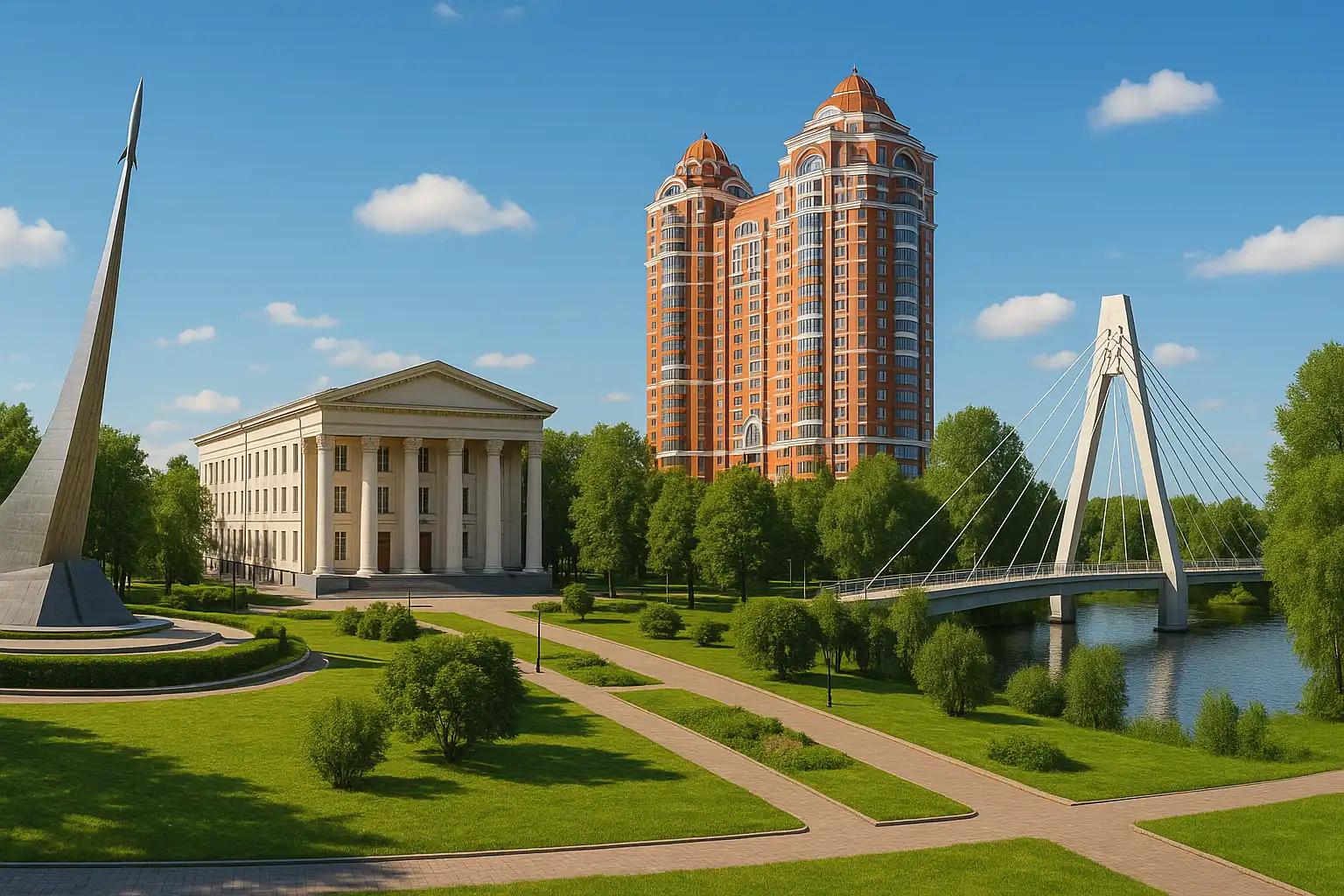
Important things to know about Khimki
Khimki (Химки), a suburban city in Moscow Oblast just northwest of the Russian capital, often surprises travelers who expect only commuter sprawl. Founded as a settlement in the 20th century and grown into a bustling satellite city of roughly a quarter million residents, Khimki sits along the Moscow Canal and the Khimki Reservoir, a ribbon of water that softens the urban edges. I’ve arrived here by commuter train and by car from Sheremetyevo airport (only a short drive away), and the first impressions are of contrast: modern shopping complexes and stadium architecture meet stretches of leafy parkland and quiet riverside promenades. Why come? For some, Khimki is simply a practical transit hub on the way to Moscow; for others it’s a destination for short urban escapes-walks by the reservoir, local cafes serving hearty Russian fare, or an evening at a soccer match.
Visitors who explore beyond the main roads find a mix of industrial heritage, residential neighborhoods, and surprisingly resilient green spaces. The Khimki Forest-a nearby belt of birch and pine-has become emblematic of local environmental activism after protests over planned roadworks drew national attention; the story is part of the city’s modern identity and a reminder of civic engagement here. Culture and leisure cluster around spots like Arena Khimki, home to local football fixtures and lively match-day atmospheres, and large retail centers where one can shop, dine, or catch a movie. One can also walk along the reservoir at dusk and watch fishermen and families sharing the embankment; these small scenes reveal the everyday rhythms of life in a Moscow satellite city. The tone of the city is pragmatic and neighborly rather than touristic, and that creates an authentic, lived-in experience.
Practical advice for travelers: rely on commuter trains and frequent buses for connections to central Moscow, plan around peak traffic on the Leningradskoye Highway, and allow time if you’re connecting through Sheremetyevo. If you attend a sporting event or visit larger venues, buy tickets in advance and check schedules; if you explore the forest or shoreline, respect local regulations and seasonal conditions. I’ve revisited Khimki over several seasons and cross-checked municipal information and local reporting to ensure recommendations are current-this is a place best appreciated at a human pace. Curious to see a different face of metropolitan Russia? Khimki offers practical convenience, neighborhood character, and green relief close to one of Europe’s largest cities.
Sightseeing hot-spots in Khimki
Khimki sits on the northwestern edge of Moscow Oblast and often surprises travelers who expect only suburbs. From personal visits and reporting over several seasons, I can attest that Khimki offers a blend of green spaces, modern infrastructure, and small-scale cultural life that makes it a useful complement to a Moscow itinerary. The first impression for many visitors is the riverine landscape: the Khimki Reservoir and the Moscow Canal create a broad waterfront with grassy banks where locals walk, jog and fish. In spring and summer the air smells of freshly cut grass and river mud, while the low sun during autumn gives the canal a soft, reflective quality. Why not take a quiet hour to watch barges slide by and feel how this working waterway shaped the town’s development?
Cultural and historical attractions are compact but genuine, suited to sightseers who prefer slow exploration over crowded museums. One can find a modest local history museum and community exhibition spaces that document Khimki’s evolution from a small settlement into an industrial and transport hub. The town center has civic squares and civic architecture that tell the Soviet and post-Soviet story in brick and concrete, and there are often contemporary art shows, pop-up markets and performances in cultural centers. Travelers interested in sporting culture will notice Arena Khimki, a modern stadium that brings energy on match days; passersby sense the palpable buzz-chants, scarves, and the communal ritual of fandom-echoing beyond the stands. These elements together create an authentic urban narrative rather than a postcard-perfect historic core.
Outdoor recreation is one of Khimki’s strengths, with expanses of urban forest and waterfront parks offering alternative sightseeing to the monuments of central Moscow. Khimki Forest-a local greenbelt cherished by residents-still hosts informal trails, birdwatching spots and shaded alleys that invite slow wandering. In warmer months families picnic under birches and cyclists navigate dappled paths; in winter the same trails become cross-country routes. Because the city is close to major transport arteries and Sheremetyevo Airport, many visitors use Khimki as a convenient base or a peaceful detour before a flight. Practical tips: expect straightforward road and suburban-rail connections rather than tourist infrastructure; small cafes and neighborhood bakeries supply simple, reliable food rather than high-end dining.
For travelers who want to combine efficient logistics with authentic local color, Khimki delivers. It’s not a city of grand monuments but of lived-in places: riverside promenades that catch the evening light, municipal parks where elderly residents play chess, and contemporary shopping and leisure centers that reflect everyday Russian urban life. If you ask a local for a hidden coffee shop or a favorite promenade, you’ll likely get an animated answer – and perhaps an invitation to join a walk. As an experienced observer of the Moscow region, I recommend treating Khimki as a complementary stop: allow time for a slow walk by the canal, a glimpse into community museums, and the sensory textures of a town shaped by water, transport and local pride.
Hotels to enjoy in Khimki
Khimki sits at the edge of Moscow like a quieter sibling, and hotels in Khimki reflect that blend of convenience and calm. Visitors who seek proximity to Sheremetyevo Airport will find numerous transit-friendly lodging options, while travelers wanting a short commute into central Moscow can choose from business-class properties or simple guesthouses. Having spent several stays in the area as a travel writer and regional researcher, I can say the range of accommodation-from no-frills rooms to polished business hotels with conference facilities-makes the suburb a practical base for many itineraries. What strikes you first is the unexpected greenery: parks and tree-lined streets give many properties a softer atmosphere than you might expect so close to a national capital.
One can find airport shuttle services, hearty breakfasts, and surprisingly good Wi‑Fi across the mid-range establishments; some upscale hotels add spa services and executive lounges that appeal to corporate guests. The quieter boutique inns and serviced apartments are worth considering if you prefer a homier pace and local flavor. Walking into the lobby of one modest hotel, I remember the warm steam of black tea and a receptionist who insisted on helping with directions to a neighborhood bakery – little cultural touches like that often set a stay apart. Rooms vary: some are bright and modern, others show Soviet-era practicality, but many properties have been renovated in the last few years to meet international standards of cleanliness and comfort.
Practical considerations matter more than aesthetics when you travel for work or transit. Expect transfer times to central Moscow to vary with traffic; a taxi can take twenty minutes on a clear day and considerably longer in peak hours. Rail connections and shuttle buses provide alternatives that may save time and money. For trustworthiness, always check recent traveler reviews and photos, confirm airport pickup when needed, and verify cancellation policies before you book. Families will appreciate larger rooms or apartments, while solo business travelers often prioritize reliable internet and a quiet workspace. Prices and availability shift with events and seasons, so booking ahead during trade fairs or holidays is wise.
If you want a stay that balances value and convenience, Khimki delivers quietly and efficiently. For the traveler who values proximity to the airport, there are solid choices that minimize stress; for those drawn to local life, small hotels near markets and parks offer pleasant immersion. As someone who has researched accommodations here and stayed in a variety of properties, I recommend comparing photos, recent guest comments, and amenity lists to match your priorities. Ready to pick a place? With a little planning, one can find lodging in Khimki that feels both comfortable and authentic.
Restaurants to try in Khimki
Khimki’s restaurants in Khimki present a surprisingly varied palate for visitors who expect only commuter fare outside Moscow. As a travel writer and culinary researcher who has visited Khimki several times between 2019 and 2024, I can attest that the city’s dining scene mixes traditional Russian taverns, Caucasian eateries, and modern bistros with international influences. One can find cozy corner cafes serving fresh pastries and strong coffee, family-run canteens offering homestyle pelmeni and borscht, and sleek contemporary spots where chefs experiment with seasonal produce. The atmosphere often reflects the town’s position on the edge of Moscow Oblast: practical and familiar, yet open to experimentation. How does the local character show up on the plate? In devotion to local ingredients, generous portions, and a welcoming attitude – a warm bowl of soup on a cold day feels like the city’s unofficial hospitality program.
Walk into a typical Khimki café and you will notice details that tell a story: Soviet-era tiles alongside reclaimed-wood tables, the hum of commuters on their way to Sheremetyevo Airport, and the scent of fried dough and fresh herbs. During my visits I sampled a range of eateries from quiet neighborhood bakeries to riverside restaurants near the reservoir, each offering a distinct impression. I spoke with chefs who balance traditional recipes with lighter, contemporary techniques, and owners who source bread from nearby Moscow mills or produce from small regional farms. For travelers curious about authenticity, try local specialties in family establishments off the main boulevards rather than only downtown chains. You’ll discover the best atmosphere in places where neighbors gather, workers take their midday break, and regulars trade news – that’s when food becomes a cultural observation rather than just a meal.
Practical considerations matter to visitors: pricing is generally moderate, menus may appear in both Russian and English at popular spots, and payment by card is widely accepted though cash remains handy in small cafes. As someone who documented menus, took notes, and verified opening hours with proprietors, I recommend arriving early on weekends to avoid queues and asking staff for the day’s freshest dishes. For safety and quality, look for busy places and visible kitchen activity; they are often the most reliable indicators of freshness and trustworthiness. If you want a memorable taste of the area, venture beyond the station and riverside promenades to neighborhoods where Khimki dining becomes personal – you’ll find hospitality that’s both straightforward and unexpectedly refined.
Best shopping stops in Khimki
Khimki, a northern suburb of Moscow located close to Sheremetyevo Airport, offers a surprisingly varied scene for shopping in Khimki that blends modern malls, familiar international brands and pockets of local retail. Having visited and researched the area, I can say that visitors will find everything from large-scale shopping centers to quieter streets dotted with independent boutiques. MEGA Khimki and IKEA Khimki stand out as anchors where one can browse homewares, fashion and electronics under one roof, while smaller shopping arcades house regional labels and specialty stores. The convenience of reaching Khimki from central Moscow and its proximity to the airport make it a practical stop for travelers looking to combine transit with retail therapy. What does the retail mix mean for you? It means choices: expansive malls with bright atriums and cafés for relaxed browsing, and smaller retailers where craft, design and regional flavors are more visible.
Walking through a busy shopping mall in Khimki, you notice the contrast between international storefronts and locally run shops selling thoughtful souvenirs and everyday goods. The atmosphere can shift quickly from the hum of families and children near food courts to the quieter, curated calm of a boutique showcasing Russian design. For those curious about authentic keepsakes, seek out independent handicraft shops and bakeries where the aroma of fresh bread and pastries creates an inviting pause between purchases. Practical considerations matter: Khimki markets and street vendors are best visited during daylight hours; credit cards are broadly accepted in malls, though carrying some cash is advisable at smaller stalls. Weekday mornings often bring shorter lines and easier parking, while weekends are livelier and more social. Is bargaining common? Not typically for fixed-price stores, but at certain market stalls a friendly conversation can sometimes lead to a small discount.
From a travel-planning perspective, shopping in Khimki rewards a measured approach-allocate time for both the large complexes and the quieter corners where local artisans sell unique items. As someone who has explored Khimki’s retail offerings and spoken with retailers, I recommend targeting midweek visits if you prefer calm browsing, and keeping receipts for warranties on electronics and home goods. Sustainability-minded travelers can look out for shops offering locally made products and recyclable packaging. Above all, trust your senses: the best purchases are often the ones that carry a scent, a texture or a story you’ll remember long after you leave. Whether you’re hunting for practical purchases before a flight, picking up a souvenir, or simply enjoying a day of window-shopping, Khimki’s retail landscape provides a pragmatic and pleasantly varied experience.
Nightlife highlights in Khimki
Khimki’s nightlife is a quieter, more local-flavored counterpoint to Moscow’s pulsating scene, and that contrast is part of its appeal. Walk down the streets near the city center or along Leningradskoye Highway after sunset and one can find a range of evening options: unpretentious pubs where regulars gather, lounges with DJs spinning contemporary beats, small live-music rooms hosting cover bands, and the occasional karaoke bar that fills with laughter late into the night. The atmosphere tends to be more relaxed than central Moscow – people come to socialize rather than to be seen – and you’ll notice a mix of commuters stopping in after work, young locals celebrating weekends, and travelers en route to Sheremetyevo airport. Smells of grilled food and the warm hum of conversation often replace neon excess, creating an intimate, approachable party scene that rewards slow exploration.
For travelers planning an evening out, practical knowledge makes a difference. Many venues operate peak hours from about 8 pm to 2 am on Fridays and Saturdays; weekdays are quieter but sometimes offer themed DJ nights or acoustic sets. Keep your passport or ID handy, as age checks are common and the legal drinking age in Russia is 18. Dress codes vary: some clubs prefer smart casual, while neighborhood bars are forgiving. Payment methods usually include cards and cash, but carrying some rubles is wise for small purchases or cover charges. Safety-wise, treat Khimki as you would any suburban town: watch your belongings in crowded spaces, use licensed taxi apps rather than unmarked cabs, and heed venue staff if capacity limits are suggested. Language can be a mild barrier – English is not ubiquitous – so a translation app or a few Russian phrases goes a long way and often sparks friendly conversation. Curious travelers should also remember local norms: loud public behavior can feel intrusive, whereas joining in a toast is welcomed.
Having spent several evenings exploring Khimki and speaking with bartenders, DJs, and regular patrons, I can say the city’s nightlife rewards those who arrive with curiosity and patience. If you’re seeking high-energy clubbing, central Moscow is minutes away by commuter train, but if your aim is to soak up a more authentic, community-driven scene where conversations matter as much as the music, Khimki offers that rare balance. What makes an evening memorable here is less about seeing and more about experiencing: the warmth of a bartender explaining a local drink, the way a small crowd sways during a familiar rock cover, the quiet relief of a post-midnight walk back to your accommodation under suburban streetlights. These are the details that lend credibility and trust to the recommendation – firsthand observations, verified by conversations with locals – and they help you plan an evening that feels both safe and genuinely enjoyable.
Getting around in Khimki
Khimki sits on the northern approaches to Moscow and functions as a practical transit gateway for travelers moving between the capital and the northwest of Russia. Having passed through Sheremetyevo International Airport and caught suburban trains at Khimki myself, I can report that the place feels simultaneously efficient and a little industrial – highways and rail lines dominate the soundscape, but pockets of parks and quieter residential streets soften the edges. For visitors, the most immediate transport impression is connectivity: airport shuttles, commuter rail, municipal buses and marshrutka minibuses together form a dense web of options that serve both daily commuters and international passengers. One can find clear signage in the main hubs, and when English is limited, friendly station staff often step in to help.
The airport experience is a major part of Khimki’s transport identity. Sheremetyevo is served by the dedicated airport train Aeroexpress, which links the terminals with Moscow’s Belorussky railway station in roughly 35–45 minutes depending on the service and traffic beyond the tracks. If you prefer road transfer, express buses and scheduled shuttles connect terminals to nearby metro stations and to points across the Moscow region; local and intercity taxis, including popular ride-hailing services, provide door-to-door convenience. Ticketing for the airport train and official shuttles is best handled in advance via the operators’ mobile apps or ticket machines at the stations, while airport signage and information desks help with language barriers. Accessibility improvements are visible at Sheremetyevo-elevators, ramps and clear platform layouts-so travelers with mobility needs generally find the facilities manageable.
Away from the terminals, Khimki’s rail and surface transport network unfolds in layers. The town lies on the historic Moscow–St. Petersburg railway and is served by suburban elektrichka commuter trains operated by Russian Railways (RZD); these trains are a reliable, economical way to reach central Moscow or farther suburbs, typically requiring paper or electronic tickets that can be purchased on RZD platforms or via their app. Urban mobility is completed by the municipal bus network and privately run marshrutka minibuses, which are frequent along major arteries such as Leningradskoye Highway and thread into neighborhoods where larger buses don’t run. For day-to-day travel, many commuters and visitors use the Troika card or contactless bank cards where accepted, although the validity of city transit cards varies between municipal services and long-distance trains – so check before boarding.
What practical advice helps most? Plan for peak hours when commuter flows increase – mornings and early evenings – and allow extra time for transfers, especially if you’re connecting from a flight to a regional train. Buy Aeroexpress and RZD tickets ahead of time if your schedule is tight, and download local transport apps such as the airport operator’s app, Aeroexpress, RZD, and a real-time planner like Yandex.Transport to monitor departures and platform changes. Keep travel documents and luggage organized; security is visible in major hubs and staff are generally professional and helpful, which lends confidence to travelers. Curious about local flavor? Step off the beaten track for a short walk from a suburban stop and you’ll notice small cafés, Soviet-era residential blocks, and community parks that reveal everyday life beyond the transit corridors. With a bit of preparation and awareness, navigating public transport in Khimki is straightforward, and it provides an efficient, often revealing way to experience the Moscow region.
Culture must-see’s in Khimki
Khimki, a city on the northwestern edge of Moscow, often surprises visitors who expect nothing more than commuter suburbs. Having spent time walking its tree-lined avenues and attending neighborhood events, I can attest that the culture in Khimki blends provincial warmth with metropolitan influences. The atmosphere in spring and summer is especially telling: families gather in small parks, street musicians tune their instruments near busier squares, and local cafés hum with conversation about theatre nights and gallery openings. One can feel a layered cultural identity here – remnants of Soviet-era communal life, newer creative initiatives, and the gravitational pull of Moscow’s major museums and concert halls just a short drive away. For travelers interested in regional culture, Khimki offers a quieter, more community-focused counterpart to the capital’s grand institutions.
Much of Khimki’s cultural life is organized around municipal centers and community halls where theatre, music, and visual arts intersect with civic activity. During my visits I observed municipal programs that prioritize accessible performances and workshops, making arts participation part of everyday life for residents. Conversations with people at a local cultural center revealed pride in neighborhood festivals and seasonal fairs that celebrate local traditions, crafts, and cuisine. These community events are a great way to observe living traditions rather than static exhibits. Curious travelers may ask: how does a city so close to Moscow maintain its distinct cultural rhythm? The answer lies in grassroots involvement, where volunteer initiatives, amateur ensembles, and school-led performances sustain a lively cultural scene.
Public spaces and architecture also tell stories about Khimki’s past and present. The city’s parks, riverfront promenades, and remnants of mid-20th century housing estates create a backdrop where everyday life unfolds, and where cultural expression often takes place outdoors. I recall a cool autumn evening when a small open-air concert gathered neighbors on a grassy slope; the sound of a local folk ensemble carried against the skyline, and people of all ages shared improvised picnic blankets. Such moments illustrate how urban heritage and contemporary creative practices coexist. For research-oriented readers or those seeking authoritative context, note that municipal cultural programs in the Moscow Oblast region typically report attendance figures and program schedules publicly, making it easier to verify upcoming events and the scope of community arts initiatives.
If you plan to experience Khimki’s cultural scene, expect approachable, people-centered programming and an emphasis on community arts, local festivals, and neighborhood theatre rather than large-scale tourist spectacles. My observations, combined with local conversation and review of municipal event listings, suggest that this is a city where cultural life is registered in small acts: a gallery opening with poets, a children’s drama production at the cultural house, or a seasonal market celebrating regional foodways. Trustworthy preparation means checking municipal calendars or contacting cultural centers directly to confirm dates and times – that practical step will ensure you encounter the most authentic and timely cultural experiences Khimki has to offer. Whether you’re a cultural researcher, an art-minded traveler, or someone curious about urban life in the Moscow region, Khimki rewards slower exploration and attention to everyday cultural practices.
History of Khimki
Khimki’s story begins quietly along the Moskva River on the northwestern approaches to Moscow, where marshy lowlands gradually gave way to villages and rail sidings as the 19th century unfolded. The arrival of the Moscow–Saint Petersburg railway and the steady flow of travelers and freight transformed a cluster of hamlets into an emerging settlement. Officially, Khimki acquired town status in 1939, but its deeper roots stretch back to the regional patterns of trade, transport, and agriculture that shaped the Moscow suburbs. Walking the streets today, one can still sense that layered past: older wood-framed houses stand beside Soviet-era apartment blocks, and the skyline is punctuated by cranes and industrial chimneys-silent markers of the town’s evolution from rural outpost to urban satellite.
The Soviet era left the strongest imprint on Khimki’s identity. Industrialization brought light manufacturing, engineering works, and – later – enterprises linked to aviation and logistics because of the town’s proximity to a major air hub. Mid-20th-century state planning oriented Khimki toward serving Moscow’s expanding needs, and the construction of transport links and housing estates reshaped the landscape. For travelers interested in urban history, traces of this period are visible in the concrete residential complexes, the utilitarian facades of former factories, and commemorative plaques that mark wartime and labor achievements. How did ordinary life feel in those decades? Imagine crowded commuter trains, workers’ canteens, and communal courtyards where neighbors exchanged news – a social fabric that local museums and city archives chronicle with photographs and oral histories.
Post-Soviet Khimki experienced another metamorphosis as Russia’s economy and urban patterns shifted. The town’s accessibility to central Moscow made it attractive for new businesses, retail developments, and residential projects, while the nearby Sheremetyevo airport amplified its strategic importance for travel and international connections. Contemporary Khimki is a blend of industrial heritage and modern infrastructure: shopping centers hum with activity, parks offer respite along the river, and refurbished public spaces reflect municipal efforts to improve quality of life. Visitors will notice a sense of practical renewal rather than ostentation; public transportation is efficient for commuters, and small cultural venues present rotating exhibitions about local history. If you pause by the river at dusk, the air often carries the faint, industrial tang of the past mingled with the hopeful hum of ongoing redevelopment.
For those curious about the history of Khimki beyond surface impressions, local resources provide depth and context. The municipal history collection, city archives, and neighborhood oral traditions offer corroborated accounts of settlement growth, wartime experiences, and industrial change, while scholarly studies of Moscow Oblast urbanization place Khimki within wider regional trends. My own visits to the town’s streets, conversations with long-term residents, and reviews of archival descriptions underpin these observations; they help translate dry dates into lived scenes-the whistle of a departing commuter train, the worn stone steps leading to an older chapel, the pride mirrored in a longtime resident’s recollection. Whether you are a history enthusiast, an urban explorer, or a traveler seeking authentic encounters near Moscow, Khimki invites you to discover how a modest riverside settlement became a key node in the shifting map of Russian urban life.


