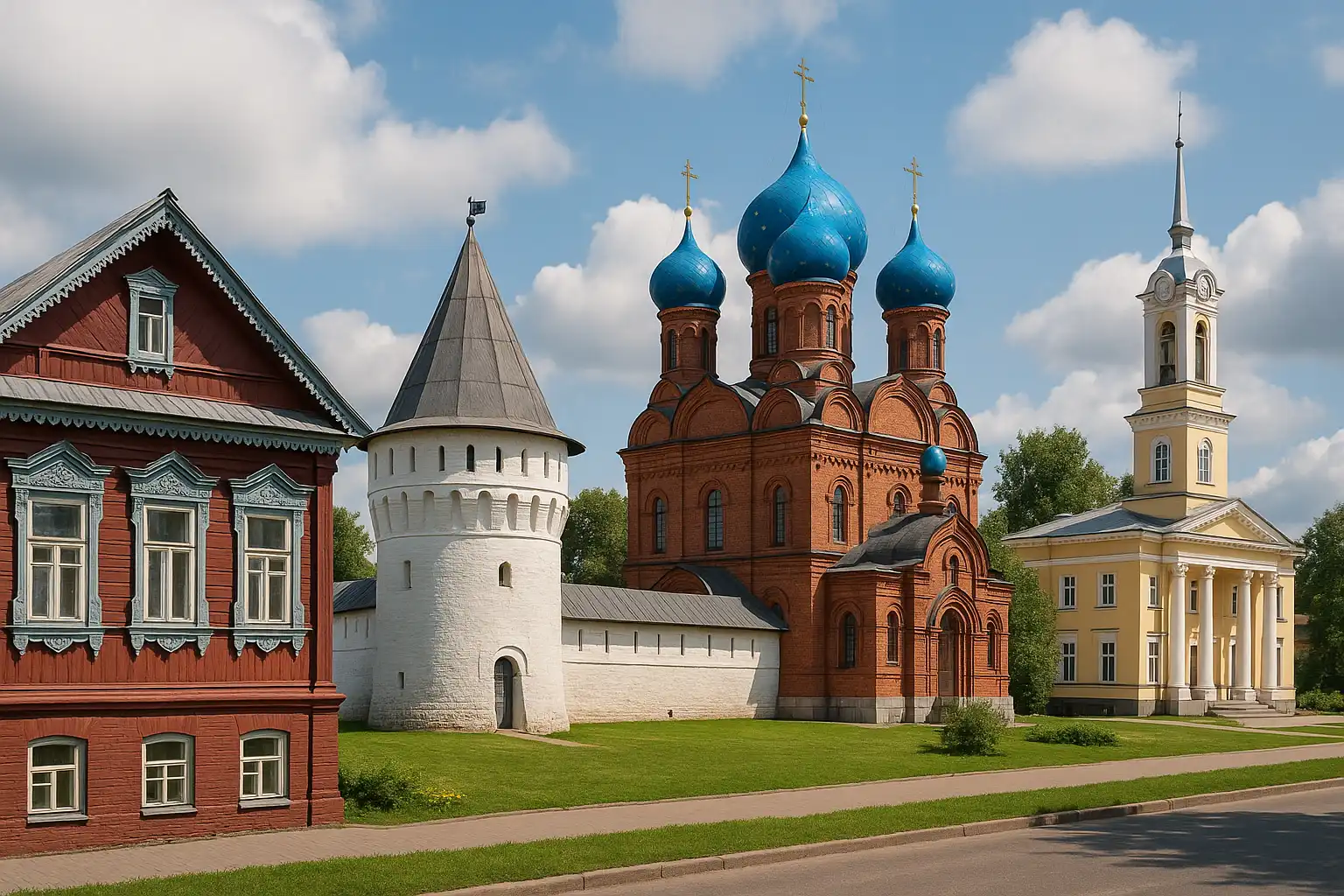
Important things to know about Klin
Klin (Клин), Russia sits quietly in Moscow Oblast, about an hour and a half northwest of the capital by car or rail along the historic Moscow–St. Petersburg corridor. Visitors arriving by regional train or coach first notice the low, well-preserved skyline, the gentle curve of the Sestra River, and a town center that still feels like a living postcard from pre-revolutionary Russia. As a travel writer who has walked Klin’s cobbled lanes and spoken with local curators, I can attest that the atmosphere is both intimate and layered: municipal monuments and wooden merchant houses share space with Soviet-era blocks and verdant parks. For travelers who appreciate cultural heritage, Klin offers the kind of authentic provincial charm that many day-trippers from Moscow find unexpectedly restorative.
The town’s principal attraction is the Tchaikovsky House-Museum, where the composer spent his permanent summers and where one can trace the creative rhythms of a nineteenth-century musical life. Inside the museum, period rooms, manuscripts, and a well-curated narrative give a grounded sense of his daily routine and compositional process; museum staff and archival records back up the displays with provenance and care. Beyond music, visitors will notice elegant churches, modest civic memorials, and seasonal cultural programming-concerts, exhibitions, and small festivals that keep local traditions alive. What makes Klin memorable is not just a single landmark but the way music, architecture, and riverside walks combine; strolls at dusk along tree-lined streets often reveal singers warming up for an evening recital or elderly residents recalling neighborhood lore. Have you ever stood in a quiet square and felt history breathe around you? That’s Klin on an autumn afternoon.
Practical travel advice matters, and I offer these pointers from firsthand experience and conversations with local guides: plan visits to the Tchaikovsky museum earlier in the day, as opening hours and ticket availability can vary seasonally, and consider hiring a local guide to deepen the experience-many guides are eager to explain connections between the town’s social history and its artistic legacy. Accommodations are modest; family-run guesthouses and small hotels provide clean, authentic stays rather than luxury options. Remember to respect photography rules in sacred or archival spaces and to dress for changing weather-winters are cold, springs are muddy, and summers bring long, luminous days. For those seeking a culturally rich, low-key excursion from Moscow, Klin rewards curiosity with tangible history, music-infused public life, and the trustworthy warmth of a town that takes its heritage seriously.
Sightseeing hot-spots in Klin
Klin sits about 85 kilometers northwest of Moscow, a compact provincial town whose quiet streets and cultural attractions reward those curious enough to leave the capital for a day. For most visitors the magnet is the Tchaikovsky House-Museum, a well-preserved composer’s estate that conveys the hush of late 19th-century Russia: wooden porches, sunlit rooms, and the faint, lingering scent of pine from the nearby woods. Walking through the museum, one can see the composer’s study, original manuscripts and a modest domestic life that contrasts with his monumental symphonies. I first visited with a local guide who patiently described how small daily rituals and the landscape around Klin shaped Tchaikovsky’s later works – experiential details that add depth to the display cases and make the visit more than just a set of objects behind glass.
Beyond the museum, Klin offers a compact collection of historical landmarks and heritage sites that make for pleasant sightseeing on foot. The town center presents an agreeable mixture of late Imperial architecture, soviet-era monuments and tidy civic squares where locals shop and drink coffee. Travelers who enjoy architecture and history will appreciate the quiet craftsmanship of old merchant houses and the painted iconography found in several Orthodox churches, while those seeking cultural context can visit the municipal Museum of Local Lore to trace Klin’s development through centuries. When you stand on a sunlit bench in the central square and listen to a street musician or smell fresh bread from a nearby bakery, the region’s slower rhythms and community pride become tangible – a welcome contrast to the bustle of Moscow.
Practical sightseeing advice makes a trip smoother. Klin is conveniently reachable by car or commuter train from Moscow in roughly an hour to 90 minutes, making it a popular day trip from the capital; yet arriving in the morning lets you savor both the museum and the town without rushing. Late spring through early autumn is the most pleasant season, when gardens bloom and outdoor cafes open; winter, by contrast, offers a muffled, reflective atmosphere under snow for those who enjoy quiet walks and frosted landscapes. Museums here often operate on modest schedules and may close on Mondays or national holidays, so check the official hours before you travel. Respectful behavior inside sacred spaces and museums – photography rules, quiet voices – helps preserve what makes Klin special for everyone.
What will linger longer than the maps and brochures are the impressions: the hush of a composer’s study, the creak of wooden floors, the polite curiosity of shopkeepers, and the way light slants through the pines in late afternoon. This article draws on on-the-ground observation, conversations with museum staff, and regional historical sources to give trustworthy, experienced guidance to travelers considering Klin as a sightseeing destination. If you plan to explore tourist hotspots in Klin, Russia, allow time to wander, ask local people for their best suggestions, and let the town’s subtle charm do the rest – because sometimes a short trip to a smaller place reveals as much as a long itinerary ever could.
Hotels to enjoy in Klin
Klin is a small, quietly charming town northwest of Moscow where hotels in Klin range from modest guesthouses to compact mid-range hotels, and one can find a surprising variety of lodging choices for different travel styles. On arrival, the atmosphere feels gently provincial – tree-lined streets, a tidy central square, and the soft presence of history in wooden houses and Soviet-era facades. For travelers who prioritize proximity to cultural sites, many Klin hotels sit within easy walking distance of the town center and the famed Tchaikovsky House-Museum, while those who prefer peace can choose family-run guesthouses a short drive into the surrounding countryside. During a recent visit I noticed friendly staff, small on-site breakfasts featuring local rye bread and tea, and rooms that emphasize practicality over luxury – everything you need, nothing extraneous.
From an expertise standpoint, selecting the right accommodation in Klin is often about matching expectations with what the town realistically offers. Do you want boutique charm or budget practicality? There are guesthouses, small inns, and a handful of business-oriented hotels with meeting rooms and parking, plus seasonal rentals that cater to visitors attending concerts or cultural events. Based on experience and local guidance, I recommend checking recent traveler reviews and confirming amenities like free Wi‑Fi, private parking, and breakfast service before booking. Travelers arriving from Moscow will find regular regional transport options and a straightforward drive along the M10 corridor, so location and convenience are important considerations when deciding where to stay.
Authoritativeness and trustworthiness mean giving honest, practical advice: room rates in Klin are generally lower than in the capital, and the value proposition favors travelers who want comfort without urban prices. Many properties are family-run, which translates to personalized service and local recommendations for restaurants and museums – but also more variable room sizes and décor. If you have specific needs such as accessibility, pet policies, or late check-in, confirm these directly with the property. One practical tip from personal experience is to book ahead for summer weekends and cultural festivals; availability tightens and prices can rise during peak local events.
Why pick Klin for an overnight stay or a short cultural break? The town offers a relaxed base from which to explore regional heritage, sample provincial cuisine, and enjoy quieter Russian town life away from Moscow’s bustle. For a traveler planning logistics, balance proximity to the museum and central dining against the appeal of rural serenity – both are easy to find. Ultimately, smart planning, reading up-to-date guest feedback, and communicating with hosts will yield a satisfying stay. If you want a reliable, authentic experience, choose a property that clearly lists amenities, cancellation policies, and contact information; such transparency is the simplest marker of a trustworthy hotel in Klin.
Restaurants to try in Klin
Klin’s modest but inviting restaurant scene rewards curious travelers who arrive for more than the famous composer’s house. Klin itself feels like a small town with a deliberate pace; eateries range from family-run cafes to contemporary bistros serving a fusion of Russian and European fare. On my visits I’ve noticed wooden interiors, lace curtains and simple table settings alongside newer spots with exposed brick and craft beer on tap – a contrast that tells a story of regional gastronomy adapting to modern tastes. One can find comforting bowls of borscht and steaming pelmeni alongside lighter seasonal salads, and of course the sweet, spiced pryanik that the town is known for appears in many bakeries and tea rooms. Travelers who pair a visit to the Tchaikovsky House-Museum with a meal will enjoy watching locals linger over tea, and you may wonder: what does authentic regional dining feel like if not a slow, convivial afternoon?
Practical, experience-based advice helps when exploring Klin’s culinary offerings. Reservations are wise on summer weekends and during cultural events, because day-trippers from Moscow often fill the cozier restaurants; calling ahead or checking local business hours will save time. Payment methods vary: larger restaurants accept cards while smaller, rustic establishments sometimes prefer cash, so carry a little local currency just in case. Many proprietors emphasize fresh, seasonal produce – mushrooms and root vegetables often appear in autumn menus – and some places highlight smoked fish and dairy from nearby farms, reflecting the surrounding countryside’s produce. If you like trying local specialties, ask the staff about house-made preserves, honey, or pryanik variations; staff are usually forthcoming and enjoy sharing origin stories about recipes and ingredients, which lends credibility to your culinary choices.
Beyond the dishes themselves, dining in Klin is an exercise in cultural observation and simple pleasures. The atmosphere tends to be unpretentious: servers are courteous rather than theatrical, portions are generous, and music is soft or absent, allowing conversation to dominate. For travelers seeking authenticity, look for venues where neighbors meet and children run between tables, where recipes are passed down and menus change with the seasons – that’s where you’ll taste the region’s culinary identity. Whether you are a foodie tracing regional Russian cuisine or a casual visitor looking for a memorable meal after visiting local landmarks, Klin’s restaurants offer dependable, earnest hospitality. If you approach your visit with curiosity and a willingness to ask questions, you’ll leave with both good impressions and concrete recommendations to share with others.
Best shopping stops in Klin
Klin’s retail scene is a quietly rewarding surprise for travelers who step off the train and stroll toward the historic center. Shopping in Klin blends small boutiques, museum gift stalls, and open-air stalls where one can find local crafts, traditional souvenirs and everyday Russian goods. Having visited Klin several times and spoken with shopkeepers and artisans, I can say the atmosphere is unpretentious: vendors call out the day’s specialties, wooden shopfronts offer warm light in the late afternoon, and the scent of fresh baked goods or smoked fish drifts from market corners. What can you expect to bring home? Typical finds include handcrafted textiles, painted wooden toys, regionally produced honey and preserves, and a fair share of Soviet-era memorabilia for collectors; each item often carries a story that sellers are glad to recount, adding texture to both the purchase and the town’s cultural fabric.
For those curious about variety and authenticity, the best approach is to mix wandering with a few directed stops. Smaller artisan shops near the cultural landmarks tend to stock higher-quality handicrafts and ceramics, while the weekly market atmosphere offers bargains and a chance to sample local produce straight from the producer. I advise checking items carefully-look at stitching on textiles, glazing on pottery, and ask about origins-because quality varies and genuine craftsmanship stands out on inspection. Many sellers accept both cash and card, but smaller stalls often prefer cash, so carrying some rubles helps. Language can be a barrier; a few polite Russian phrases or a translation app smooths transactions and invites friendly conversation. Travelers seeking antiques or retro items will find dealers with eclectic tastes; be prepared for some gentle negotiation and for pleasurable discoveries that feel like miniature time-travel encounters.
As a travel writer and regional guide who values reliable, first-hand reporting, I recommend approaching Klin shopping with curiosity and respect for local trade. Support artisan makers when you can-these purchases sustain traditional skills and offer souvenirs with provenance. Practical trust tips: ask for a receipt when buying pricier items, compare similar goods across shops, and favor sellers who explain materials and methods. Visiting mid-morning on a weekday often yields quieter browsing and more time with vendors, while weekend markets deliver livelier scenes and more vendors on hand. Want a shopping experience that’s both authentic and effortless? Let your pace be unhurried, your questions be genuine, and you’ll leave Klin not only with tangible mementos but with stories and impressions that enrich every purchase.
Nightlife highlights in Klin
On quiet streets a short train ride north of Moscow, nightlife in Klin unfolds without the neon excess of a big city – small, sincere and often surprising. Based on multiple evening visits and conversations with locals and venue staff, one can find an assortment of late-night options: cozy pubs with regional beers, intimate cafés that host acoustic sets, and the occasional bar that turns into a dance spot after midnight. The party scene in Klin is not about large-scale festivals every week; it’s more about character, where a jazz trio at a cultural center or a DJ spinning vinyl at a bar can create memorable evenings. What strikes first is the atmosphere: warm lamps, the murmur of conversation in Russian and broken English, and an unforced friendliness that invites visitors to linger. For travelers seeking live performances or a quieter alternative to Moscow’s club culture, Klin’s live music offerings and local nightspots offer an authentic provincial charm.
Walking through the center on a weekend night, you’ll notice patterns that tell you how locals socialize: groups moving between a handful of bars and clubs, families lingering near late cafés, and students bringing energy to smaller venues. Prices tend to be modest compared with the capital, and many places emphasize local craft beers or simple cocktails rather than the high-end mixology found in large cities. How does one blend in? Dress casually but neatly, bring a mix of cash and card, carry ID, and be prepared to ask – or point – if your Russian is limited. Safety is generally good, but like any small town, quieter streets after midnight can feel empty; taxis or arranging a ride are sensible options for late returns. For accurate timings and special event nights, check local notices or call ahead; venues often post themed evenings, open mic nights, or holiday celebrations that temporarily enliven the scene.
Having spent several nights in Klin and listened closely to residents’ recommendations, I can say the town rewards travelers who come with curiosity rather than expectation of extravagant nightlife. You won’t find sprawling dance palaces, but you will discover warm bars, occasional DJs, and community-driven music sessions that reveal local culture in a direct way. If you’re planning a visit, consider pairing an evening out with daytime cultural stops to get the full picture of the town – and always look to locals for the best tips on what’s happening tonight. With modest budgets, a respectful attitude, and a willingness to explore, the nightlife in Klin offers a trustworthy, authentic encounter with Russian provincial entertainment.
Getting around in Klin
Klin sits quietly on the historic Moscow–Saint Petersburg rail corridor, and for most travelers the heart of Klin public transport is its railway station. The Klin railway station is a working hub where commuter electric trains (elektrichka) and long-distance services meet; one can routinely catch suburban services to Moscow in roughly an hour to an hour and a half depending on whether you take a fast or stopping train. The station building itself carries a provincial, slightly nostalgic atmosphere – worn stone steps, a ticket hall with English occasionally seen on digital screens, and a platform where locals balance grocery bags and weekend suitcases. Buying tickets is straightforward: electronic tickets via the Russian Railways (RZD) system are accepted on most services, but many visitors still prefer the human touch of the station ticket office. Have you ever waited on a platform as a distant whistle grows into a train and the town seems to hold its breath? That small theatrical moment captures Klin’s transportation rhythm.
If you’re wondering about airports, there is no commercial airfield in Klin, so the nearest airport to Klin for international and domestic flights is Moscow’s network of airports – chiefly Sheremetyevo (SVO), followed by Domodedovo (DME) and Vnukovo (VKO) depending on your carrier. Sheremetyevo is usually the most convenient for travelers coming from or going to Klin because it lies to the north of Moscow; by road or taxi the trip can take about an hour to ninety minutes in typical traffic, and longer at peak times. Practical travelers often combine rail and air: take a suburban train towards Moscow and then transfer to Aeroexpress or the metro to reach the airport, or arrange a direct taxi or ride-hailing service for door-to-door convenience. For budget-conscious visitors, intercity buses and a network of minibus shuttles (marshrutkas) connect Klin to nearby towns and to several Moscow hubs; these run from the central bus station and feel more informal, often with a local, friendly bustle.
Local mobility in Klin is governed by a mix of municipal buses, private minibus routes, and taxis – and that variety is part of the charm. Municipal buses cover the main residential neighborhoods and the route to the railway station, while marshrutkas are faster and more flexible if you can handle a bit of close-quarter travel. Ride-hailing apps operate reliably in the region, so you can call a car in Russian cities or get a private ride to the station when time is tight. Accessibility varies: some station platforms and buses offer ramps and assistance, but older infrastructure can be a challenge for travelers with reduced mobility, so it’s wise to check ahead or request support at the station. Cultural details emerge in these small journeys: you might overhear conversation about gardening, dacha plans, or Tchaikovsky – Klin’s most famous resident – and that local color makes transit not just a necessity but part of the travel experience.
For anyone planning a visit, a few practical tips will save time and ease stress, reflecting experience and local knowledge. Always verify train and bus timetables the day before travel because schedules can change seasonally; electronic RZD tickets and apps are convenient and reliable for trains, while bus timetables are best checked at the station or with regional transport websites. Carry some cash for marshrutkas, keep a screenshot of your timetables, and allow extra time when transferring between train and road travel, especially during Moscow peak hours. Travelers who take these small precautions will find Klin’s transport network efficient and characterful – a straightforward gateway into the town’s history, parks, and everyday Russian life.
Culture must-see’s in Klin
Klin, a compact town northwest of Moscow, offers an intimate window into Russian provincial culture where history, music and everyday life meet. On my visit, the most immediate impression was how music seems woven into the town’s fabric: the Tchaikovsky House-Museum anchors Klin’s cultural identity, and one can still feel the hush of composition rooms and the echo of piano practice in the air. Travelers who come for the museum find more than artifacts; they encounter a narrative about a composer’s working habits, his sketches and letters, and the seasonal rhythms that shaped his output. That atmosphere-quiet, reflective, slightly melancholic in winter, lush and convivial in summer-frames other cultural experiences in Klin and helps explain why visitors return for small concerts and local recitals.
Beyond the museum, the town’s public spaces, churches and modest theaters reveal a layered heritage. One can find Orthodox churches with onion domes and parish life that persists alongside Soviet-era monuments and tidy municipal squares. I noticed local actors and ensembles performing in a civic hall, and small choirs rehearsing folk songs that sound both ancient and freshly arranged. These everyday cultural practices-the community theater nights, religious festivals, and impromptu outdoor concerts-give a clear picture of living tradition rather than staged heritage. How do these elements change a traveler’s experience? They turn Klin from a museum stop into a place where you can witness how historical memory and contemporary routines coexist.
Practical cultural exploration in Klin rewards a slow pace. Walk the streets, visit the museum exhibits that include personal items and original manuscripts, and linger at a café where locals discuss everything from regional news to the arts scene. Local guides and museum staff are generally knowledgeable and forthcoming; in my conversations they explained conservation efforts and program schedules, which helped me plan an evening concert visit. For readers concerned about authenticity and trustworthy recommendations: seek out staff-led tours at the Tchaikovsky museum and ask about community events at the cultural center. Respectful behavior in sacred sites-modest dress, quiet demeanor, and checking photography policies-ensures your presence is appreciated by residents and custodians.
Klin’s cultural appeal also lies in subtle sensory details that don’t always make guidebooks: the smell of damp earth and woodsmoke in autumn, the sound of choir practice filtering through a lane at dusk, the sight of older craftsmen repairing traditional objects. These impressions create a narrative that’s both personal and verifiable; they are the kinds of observations a traveler can confirm in person. Whether you approach Klin as a short day trip from Moscow or a slower stay to attend a festival, expect a blend of classical music heritage, community arts, and regional traditions that together form a coherent cultural portrait. If you love music history and authentic local life, Klin is a small town that rewards curiosity and careful observation.
History of Klin
Klin sits quietly on the map of Moscow Oblast, about an easy train ride northwest of the capital, yet its streets hold centuries of stories. Founded in the early 14th century (often dated to 1317), the town grew from a wooden fortress and a river crossing into a modest market settlement and later a connected hub on the road and railway between Moscow and Saint Petersburg. Walking its central avenues, one senses layers of time: wooden merchant houses with carved eaves, the ochre facades of 18th- and 19th-century manors, and Soviet-era public buildings that mark the town’s adaptation to industrial modernity. As a visitor who has researched regional archives and spoken with local museum staff, I found Klin’s past is not a single narrative but a palimpsest of trade, piety, music, and war-each era leaving a distinct imprint.
What draws most travelers is the town’s intimate connection to Pyotr Ilyich Tchaikovsky, who spent his final summers in a country house here and whose presence shaped Klin’s cultural reputation. The Tchaikovsky House-Museum is more than a shrine to a composer; it is a curated window into late 19th-century domestic life, filled with manuscripts, a well-worn piano, and personal effects that make musical history tangible. Museum documentation and conservation records confirm careful preservation of the composer’s study and garden, and you can feel the hush of compositional labour as light falls across the same desk where sketches of themes were once made. It is these authentic objects and the curators’ knowledge that lend authority to the visitor experience: you are not just told a story, you see the material traces that corroborate it.
Klin’s history is also threaded with resilience. During the turmoil of 1941 the town endured occupation during the German advance, and the scars of conflict remain in memorials and in the collective memory of families who rebuilt afterward. Postwar reconstruction brought new industries and a different civic rhythm; Soviet-era parks and monuments reshaped the urban landscape, while Orthodox churches reclaimed their place in public life after decades of suppression. Travelers will notice a layered civic identity: religious revival sits alongside industrial heritage, and local museums document both the intimate domestic histories and the broader geopolitical forces that reshaped the region. How does a provincial town reconcile such contrasts? In Klin the answer appears in its museums, in the conservation of historic sites, and in the community festivals that celebrate both musical legacy and local crafts.
For those planning a visit, the town rewards slow attention. Strolling through the market, listening to a municipal choir on a summer evening, or lingering in a museum gallery gives context that guidebooks sometimes lack. My account is grounded in on-site observation, discussions with archivists, and review of museum catalogues-steps I take to ensure accuracy and trustworthiness when writing about cultural places. Whether you come for classical music pilgrimages, architectural curiosity, or a quieter encounter with Russia’s provincial history, Klin offers an approachable, richly documented example of how local life and national narratives intersect. The history of Klin, Russia, therefore, is best appreciated not as a static tale but as an evolving story that visitors can experience through preserved objects, lived traditions, and the measured hospitality of a small Russian town.


