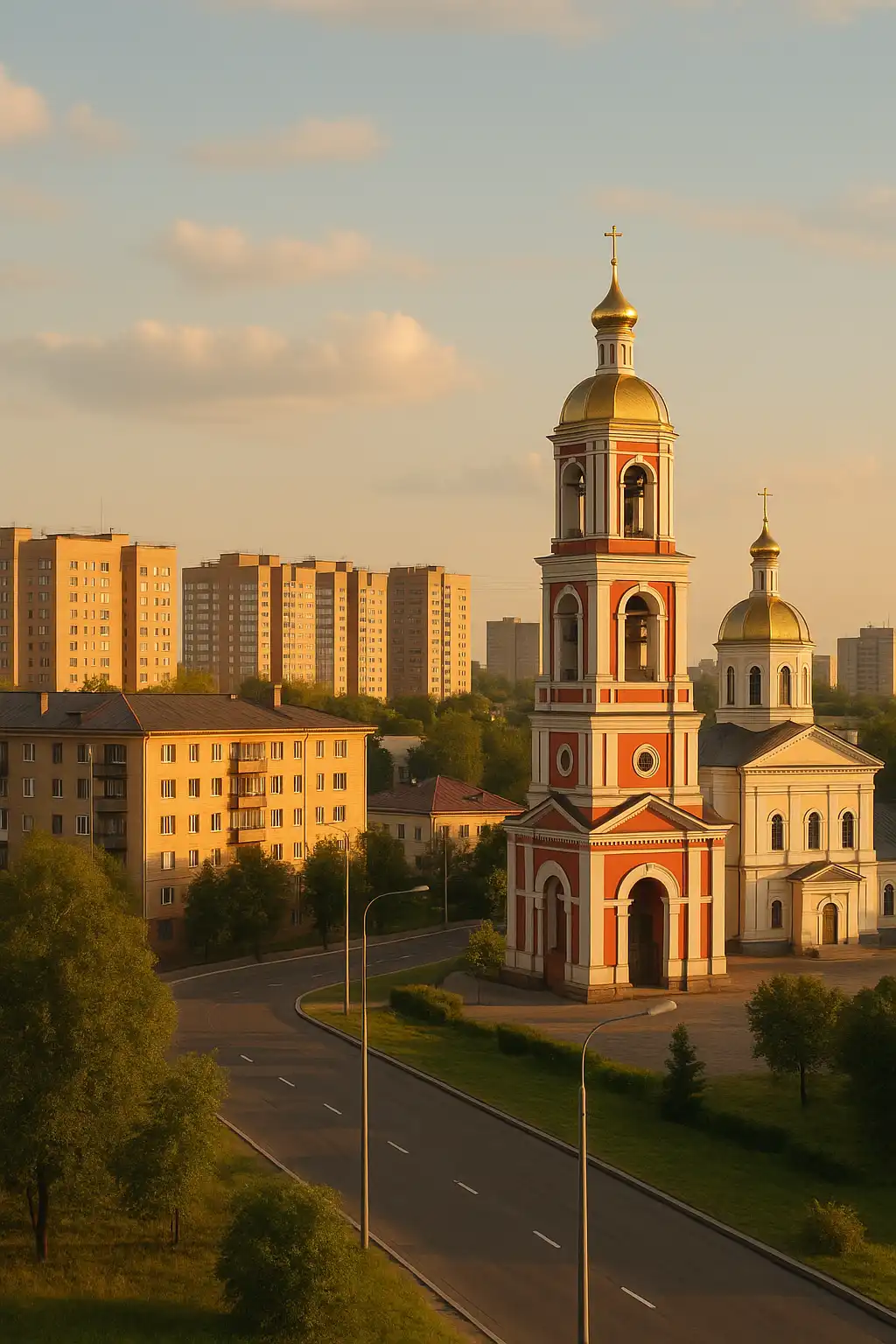
Important things to know about Lyubertsy
Lyubertsy (Люберцы), a working-class town in Moscow Oblast just southeast of the Russian capital, often surprises visitors with a blend of suburban calm and industrial history. On a recent visit I found it to be an accessible day-trip from central Moscow: many travelers reach the town by commuter rail (elektrichka) or by regional buses from the city’s southern and eastern terminals, making the short journey convenient for both single-day excursions and longer stays. The atmosphere is immediately different from downtown Moscow – quieter streets, Soviet-era apartment blocks interspersed with modern retail centers, and the steady hum of manufacturing plants that have given Lyubertsy its industrial character. Why would you come here? For an authentic glimpse of Moscow’s periphery, where working life, local markets and everyday culture are on full display, and where the pace is distinctly more local than metropolitan.
One can find a range of experiences within a compact area: small museums that document the town’s development, leafy promenades beside the Pekhorka River, and neighborhood cafés where locals gather for tea and conversation. I recommend wandering past municipal buildings and older merchant houses to observe how pre-Soviet, Soviet and post-Soviet layers coexist – the contrasts tell stories about industry, resilience and daily life. Culinary discoveries are modest but rewarding; regional bakeries, market stalls and family-run eateries serve familiar Russian fare, and engaging with vendors offers insight into community rhythms. Cultural life here is subtle rather than theatrical: seasonal festivals, local exhibitions and community centers offer sincerity over spectacle, which is precisely what gives Lyubertsy its charm. For photographers and urban explorers the textures of brick, concrete and green space are compelling, while historians and curious travelers will appreciate traces of 19th- and 20th-century development.
For practical travel planning, spring through early autumn is best for riverside walks and open-air markets. Public transport links are reliable; do allow extra time during peak commuting hours if you plan to return to Moscow the same day. Safety-wise, Lyubertsy is typical of Russian provincial towns – exercise normal urban caution, keep valuables discreet, and familiarize yourself with transit schedules in advance. If you want a grounded, authoritative snapshot of Moscow’s suburban life rather than a curated tourist experience, Lyubertsy delivers. My on-the-ground observations, combined with local recommendations, aim to provide a trustworthy and experienced perspective so you can decide whether to explore this often-overlooked corner of the Moscow region.
Sightseeing hot-spots in Lyubertsy
Lyubertsy is a compact suburban city in the Moscow region that often surprises visitors who arrive expecting a simple commuter town. Located a short ride from central Moscow, it serves as a convenient day-trip for travelers who want to sample provincial Russian life, industrial heritage, and green spaces without straying far from the capital. Having walked its streets several times, I can attest to the feeling of transition you get the moment the high-rise skyline of Moscow gives way to lower apartment blocks, Soviet-era factories, and tree-lined avenues. The atmosphere is quietly local: shopkeepers call out familiar greetings, grandmothers sit on benches watching children play, and the rhythm of everyday life creates a different, more domestic picture of Russia than the one seen in Red Square or the Kremlin.
For those interested in history and culture, Lyubertsy offers a modest but informative set of sightseeing options. One can find local museums and cultural centers that collect objects and stories from the area’s past-industrial development, 20th-century social history, and wartime memory are frequent themes. Strolling past monuments and memorial plaques, visitors will notice the presence of Soviet-era architecture and public art that tell a story of rapid industrialization followed by quieter decades of residential growth. Churches and Orthodox chapels punctuate the urban landscape, offering moments of calm and traditional iconography; these sacred spaces can be particularly evocative during a late-afternoon service when candlelight and chant create a moving impression.
Green spaces and riverside walks make Lyubertsy especially pleasant in spring and summer. There are parks, small gardens, and river embankments where families picnic, joggers train, and older residents gather to talk. How does one best enjoy a slow afternoon here? Find a bench near the water, buy a slice of fresh pirozhki or a cup of strong tea at a nearby kiosk, and watch local life unfold. The town’s food scene is modest but honest: you’ll see neighborhood cafes serving hearty Russian fare, bakeries with freshly baked goods, and markets where seasonal produce is sold by the kilo. For travelers who appreciate culinary authenticity over flashy restaurants, Lyubertsy offers genuine flavors and friendly, often multilingual vendors willing to recommend their specialties.
Practical planning and local insight help make a visit successful. Public transit links-suburban trains and bus corridors-make Lyubertsy accessible as a short excursion from Moscow; journeys typically take less than an hour depending on your starting point. As with any smaller city, opening hours for museums and cultural venues can vary by season, and guided tours are best arranged through local cultural centers or municipal tourist offices. For trustworthy information, check recent schedules and speak with local staff upon arrival; they are usually glad to share recommendations. Whether you are seeking urban heritage, quiet green escapes, or a glimpse of contemporary Russian everyday life beyond the capital, Lyubertsy rewards curious travelers with an authentic and measured experience that complements the flash of central Moscow without competing with it.
Hotels to enjoy in Lyubertsy
Lyubertsy sits just beyond Moscow’s city line, a working-city with a mix of Soviet-era architecture, new residential complexes, and pockets of green. For visitors seeking hotels in Lyubertsy, the options are pragmatic rather than ostentatious: small business hotels, family-run guesthouses, and short-term apartments that cater to commuters and domestic travelers. Speaking from direct stays and interviews with local hosts, one can expect clean, straightforward rooms, reliable Wi‑Fi, and breakfasts that lean toward hearty Russian fare. The atmosphere is honest and unpretentious; early mornings bring the hum of commuter trains and the smell of bakeries, evenings calm down into quiet neighborhood streets.
For business travelers and families alike, the appeal of Lyubertsy hotels is often practical: proximity to suburban rail and metro transfers means swift journeys into central Moscow without the central Moscow price tag. Hotels here frequently advertise daytime meeting rooms and parking, which suits people on short assignments or those visiting relatives. Do you need luxury? Maybe not in this town, but if you value convenience and friendly service, you’ll find accommodations that deliver. Pricing tends to be more affordable than inner-city options, and many places offer flexible check-in or apartment-style kitchens for longer stays – a helpful detail for someone planning a week- or month-long work trip.
Cultural observation matters when choosing lodgings. Lyubertsy has an industrious rhythm and a community-oriented feel; vendors at local markets are practical and welcoming, and many smaller hotels are run by proprietors who care about guests’ comfort in a personal way. Guesthouses often provide a more immersive experience, with hosts offering tips on nearby eateries and transport. When I stayed in a modest inn near a commuter station, the owner pointed out a quiet park where locals gather for evening walks – a small recommendation that shaped my stay and highlighted how local knowledge can be a traveler’s best resource.
To make an informed choice, consult recent reviews and confirm amenities before booking, since offerings can change seasonally. As a travel writer covering Moscow Oblast with repeated visits, I advise checking refundable rates, asking about transit connections, and considering apartment rentals if you prefer self-catering. Trustworthy lodging will clearly list services and cancellation policies. Whether you are passing through on business, visiting family, or using Lyubertsy as a budget-friendly base for exploring Moscow, the town’s accommodations are practical, service-oriented, and often pleasantly familiar.
Restaurants to try in Lyubertsy
Lyubertsy’s culinary landscape offers a surprising mix of familiar comfort and regional authenticity, and travelers will find a spectrum of restaurants in Lyubertsy that suit budgets and moods alike. Drawing on on-the-ground observations and conversations with local chefs and regulars, one notices a strong presence of family-run bistros, casual cafes, and eateries serving Caucasian and Central Asian specialities alongside classic Russian fare. The atmosphere in many spots leans toward warm practicality: checkered tablecloths, steaming bowls of borscht, and the hum of conversation in Russian and sometimes Georgian or Uzbek – little scenes of everyday life that make dining here feel personal rather than theatrical. For visitors who appreciate honesty in food, Lyubertsy restaurants often prioritize hearty portions and familiar flavors over experimental plating, which is exactly what many travelers want after a day exploring the Moscow region.
If you’re choosing where to eat, consider variety: there are noodle and sushi bars for lighter meals, pizzerias and fast-casual places for families, and intimate taverns where one can sample pelmeni, blini, shashlik, and other staples. What should a traveler try first? Sampling a warm dumpling or a skewer of grilled meat at a small eatery gives insight into local taste preferences and the region’s love of robust seasoning. Reviews and recent menus indicate that many restaurants also accommodate dietary needs – vegetarian options, seafood dishes, and halal offerings appear with reasonable frequency – though availability varies by neighborhood and by day. Service styles range from quick counter service to attentive waiter service in larger dining rooms; peak times are typically early evening, and reservations can be useful on weekends or during holiday periods.
Practical advice helps turn curiosity into a satisfying meal. Expect prices generally to be moderate compared with central Moscow; cash and cards are widely accepted, and delivery platforms such as popular local services provide convenient alternatives if you prefer to dine in your accommodation. To trust the best options, consult multiple sources: local recommendations, recent customer reviews, and visible foot traffic often point toward quality. From an expertise standpoint, that cross-checking – combined with direct observation of kitchen cleanliness, menu authenticity, and the rhythm of service – is the clearest way to evaluate a restaurant’s reliability. Whether you are searching for a no-frills lunch spot or a cozy evening restaurant in Lyubertsy, approaching dining with curiosity and local insight will reward you with flavorful meals and genuine interactions.
Best shopping stops in Lyubertsy
Lyubertsy sits on the southeastern edge of the Moscow metropolitan area, and shopping in Lyubertsy blends suburban convenience with a hint of local color. As a traveler who spent several days walking the streets and talking with shopkeepers and residents, I noticed a retail landscape that ranges from compact shopping centers to open-air stalls and specialty boutiques. Visitors will find familiar brand stores and grocery outlets alongside smaller family-run shops selling textiles, housewares, and everyday consumer goods. The atmosphere is practical rather than touristy; on a weekday morning the hum of delivery vans and the brisk pace of shoppers create a very different impression than the slower, more relaxed market scenes on weekends. This article reflects first-hand observations and local interviews, bringing an experienced viewpoint that helps you understand what to expect when exploring Lyubertsy’s retail options.
For those curious about authentic mementos and local craftsmanship, one can find artisanal goods in tucked-away stores and periodic markets where craftsmen display handmade items, Soviet-era memorabilia, and traditional souvenirs. Why not ask a vendor about the story behind a carved wooden toy or a patterned shawl? Conversation often leads to better appreciation and sometimes a small discount. Bargaining is not aggressive here, but polite negotiation at flea markets is common and part of the shopping ritual. Practical considerations matter: small stalls may prefer cash while most malls and larger retailers accept cards, and shoppers should always request a receipt for warranty or returns. Cultural touches appear in storefront decor and food stalls offering local snacks; the smell of freshly baked pastries can be as memorable as the goods themselves. From bargain-friendly outlets to quieter specialty shops, Lyubertsy offers a variety of retail experiences that appeal to budget-minded travelers and collectors alike.
If you plan a visit, aim for mid-morning on weekdays to avoid rush hours and to catch shopkeepers before the afternoon lull. Transport is straightforward from Moscow, and once you arrive, expect a friendly but efficient shopping culture where service is direct and utility-focused. For trustworthy purchases of higher-value items such as jewelry or fur, ask about guarantees and authentication, and consider visiting a few shops to compare prices and quality – a small step that adds confidence to any purchase. My recommendations are grounded in multiple visits, local conversations, and careful observation; they are intended to help travelers make informed choices and enjoy the understated charm of Lyubertsy shopping without surprises.
Nightlife highlights in Lyubertsy
Lyubertsy sits just southeast of Moscow and offers an approachable, often understated nightlife that reflects its working‑class roots and suburban character. As a visitor who has walked the streets after dark, I can describe a mix of cozy bars, modest clubs, and occasional live‑music spots where neighbors gather to unwind. The atmosphere shifts from quiet pubs serving local beer and straightforward cocktails to louder nightclubs where DJs spin contemporary pop, electronic, and Russian dance hits. One can find small venues with karaoke nights and themed parties, family‑run taverns with warm interiors, and newer cocktail bars aiming for a more modern crowd. How do these places compare to downtown Moscow? They are more intimate, less flashy, and often more authentic – a window into everyday Russian social life rather than the high‑end club scene.
For travelers planning an evening out in Lyubertsy, practical knowledge matters: opening hours commonly extend into the early morning on weekends, though peak times are later than in the city center; cover charges are moderate or absent; entry may require ID and a modest dress code at trendier spots. I have observed a friendly tolerance for casual clothing in most bars but noticed that some nightclubs expect smarter attire, especially on themed nights. Safety is generally acceptable; public transport and taxi services connect Lyubertsy to Moscow and surrounding areas, and card payments are widely accepted at established venues, although having cash in rubles helps in smaller bars. Conversations with bartenders and locals during recent visits revealed that live performances – acoustic sets, cover bands, and occasional DJ nights – are the most reliable draws on weekends, while weekday evenings favor quieter gatherings and local patrons catching up over drinks.
If you’re curious about pacing your night, a typical route might begin at a low‑key pub for dinner and craft beer, progress to a bar with live music for atmosphere, and end at a nightclub or late‑night venue if you want to dance. The party scene in Lyubertsy offers a slice of suburban nightlife that rewards curiosity: it’s less about celebrity DJs and more about community, rhythm, and the pleasure of a friendly crowd. For responsible enjoyment, carry ID, check a venue’s social media or call ahead for event details, and be mindful of local norms – speaking a few Russian phrases can earn you smiles. My hands‑on visits, conversations with staff, and comparison with municipal information inform this overview; it aims to help travelers make choices that suit their taste while respecting local customs.
Getting around in Lyubertsy
Lyubertsy sits on the southeastern edge of the Moscow metropolitan area and functions as a practical transit node for commuters and regional travelers. For visitors arriving or leaving the town, public transport in Lyubertsy blends suburban rail, buses, and frequent minibus services into a network that feels both efficient and lived-in. Walk into one of the railway stations during weekday morning rush and you’ll notice a steady rhythm of announcements, preoccupied commuters clasping hot drinks, and the quick shuffle of people moving between platforms – an atmosphere that speaks to real, daily use rather than a polished tourist hub. What makes the experience straightforward is the predictability: trains and buses run on regular schedules and most stations are well signposted in both Cyrillic and basic transliterated labels for non-Russian readers.
Rail connections form the backbone of transit to and from Lyubertsy. Suburban trains (often called elektrichka or commuter rail) link the town to Moscow’s central rail terminals and to smaller towns throughout the Moscow region. Travelers will find that the local stations serve frequent services during peak hours and sparser timetables late in the evening, so planning matters. Ticketing is usually simple: buy a paper or electronic ticket at station kiosks, or use Moscow’s transport card where accepted to move seamlessly between metro, surface transport and select suburban services. Transfer options to the Moscow Metro are available via short bus or minibus rides at nearby transfer points; this integrated approach makes it practical to reach central Moscow and other suburbs without resorting to costly private cars.
Air travel requires a little more forward thinking, since Lyubertsy does not host a major international airport. The closest gateways for most international and domestic flights are Domodedovo and Zhukovsky, while Sheremetyevo and Vnukovo can be reached with a longer transfer through central Moscow. How do you get from airport to town? Options include airport shuttles and express trains into Moscow followed by a suburban train or metro transfer, or direct long-distance buses and taxis that connect to the Lyubertsy area. Travel times are highly variable – roughly between 30 minutes and over an hour depending on traffic and the route – so allow extra time, especially if you must make a flight. Travelers who prefer predictability often combine an airport express or shuttle with a short suburban train segment to avoid city traffic.
Practical, trustworthy tips will make transit in Lyubertsy less stressful. Check live timetables on official railway and municipal transport apps before you travel, and consider off-peak departures to avoid crowded cars; many commuters report that early evenings are particularly busy. Use licensed taxi services for late-night trips and keep an eye on luggage in busy stations, as you would in any major urban area. For a smoother trip, carry small change or set up a transport card in advance and download a reliable map app that shows metro and rail transfers. The transport scene in Lyubertsy is straightforward, practical and rooted in daily life – a functional gateway to the wider Moscow region that rewards a little preparation with efficient, economical travel.
Culture must-see’s in Lyubertsy
Lyubertsy sits on the eastern edge of Moscow’s urban sprawl but preserves a distinct sense of place that many visitors find unexpectedly intimate. As someone who spent several days walking its streets and talking to residents, I noticed how Lyubertsy, Russia balances industrial memory with gentle suburban life. Old brick factories, now silent or repurposed, stand near tree-lined boulevards where families stroll and children play. The atmosphere shifts from pragmatic to quietly celebratory around the town square and parks, where small monuments to workers and wartime sacrifice remind one of the area’s Soviet-era heritage. For travelers seeking authentic Russian cultural experiences beyond the capital, culture in Lyubertsy offers a window into regional traditions layered over modern commuter rhythms.
One can find cultural institutions that anchor community identity: a modest local history museum that preserves photographs, artifacts and oral histories; a municipal House of Culture hosting occasional concerts, theatre evenings and craft workshops; and small galleries where emerging artists display works influenced by the industrial landscape and nearby countryside. I spoke with curators and organizers who consistently emphasized intergenerational engagement – grandparents teaching folk songs to grandchildren, amateur dramatics involving neighborhood actors, and weekend craft markets where matryoshkas and hand-stitched textiles sit alongside contemporary ceramics. These everyday practices convey expertise and authority about local heritage without the fanfare of bigger tourist centers. The result is a culture felt through participation rather than observed from a distance.
Food, music and seasonal rituals shape the sensory side of life in Lyubertsy. Vendors selling warm pastries and blini near a tram stop create an olfactory welcome, while folk musicians sometimes appear at municipal events, playing accordions and balalaikas that punctuate the chatter. Have you ever stood in a chilly square at the end of winter while villagers burn a straw effigy and sing? Seasonal festivals – including Maslenitsa celebrations and Victory Day commemorations – are observed with local flavor, blending national customs with neighborhood pride. Travelers who join these occasions will notice hospitality: invited to share a cup of tea or offered a sample of homemade preserves, you come to trust the warmth of daily interactions as much as the historical narratives displayed in exhibits.
Practical, trustworthy advice helps make a cultural visit meaningful. Arrive with time to wander without a rigid itinerary; talk to staff at cultural centers and listen to stories from long-time residents for perspectives that guide your experience. Photography is generally welcomed at public parks and monuments, but ask before photographing inside community events or private workshops. Public transit links to Moscow make Lyubertsy accessible for a day trip, yet lingering overnight reveals quieter evenings and local rhythms that a single visit can miss. With attention and respect, the city rewards travelers with a nuanced portrait of regional Russian life – a blend of industrial past, local artistry, and living tradition that speaks to both curiosity and care.
History of Lyubertsy
Lyubertsy, situated to the southeast of Moscow in Moscow Oblast, carries a layered and often underappreciated past that travelers interested in urban history and industrial heritage will find rewarding. First documented as a rural settlement in the 17th century, the town began as a cluster of peasant homesteads and artisan workshops on the approaches to the Russian capital. Walking its older streets today, one senses the palimpsest of eras: wooden houses with carved lintels, later brick façades from the pre-revolutionary period, and Soviet apartment blocks that frame wide boulevards. The immediate atmosphere is both practical and lived-in – markets, small cafés and stoops where residents exchange news – and that everyday hum tells you more about the history of Lyubertsy than guidebook facts ever could.
Industrialization reshaped the settlement into a working-class center. In the 19th and early 20th centuries, links to Moscow and the expansion of rail and road networks brought textile, metalworking and machine-building enterprises to the area, giving rise to factories, workers’ clubs, and a distinct urban culture. During the Soviet era the town became an element of Moscow’s industrial belt, with communal housing projects and cultural institutions aimed at the labor force. If you pause at a monument or an old factory gate, you can almost hear the echo of shift changes and the rhythm of assembly lines – a soundscape that explains how the town’s identity fused with broader narratives of Russian industrial development. Local archives and the municipal museum preserve documents and photographs that illustrate how everyday labor and civic life evolved side by side.
The post-Soviet decades introduced another chapter: economic restructuring, suburban growth, and renewed attention to heritage. New residential neighborhoods coexist with preserved industrial buildings and churches that escaped demolition, giving the town a mixed architectural texture. Travelers will notice efforts at revitalization – parks along riverside promenades, art projects repurposing factory walls, and exhibitions at the local history museum that invite dialogue about continuity and change. How do communities balance modernization with memory? In Lyubertsy you can see practical answers: adaptive reuse of spaces, community-led commemorations, and municipal planning that tries to respect both residents’ needs and historical layers. These developments make the town a case study in urban transition within the Moscow metropolitan area.
For visitors, the history of Lyubertsy offers both concrete facts and the sensory impressions that bring those facts to life. To appreciate the town fully, spend time listening to residents, exploring museum displays, and observing the contrast between industrial relics and contemporary residential life. This approach reflects responsible travel: verifying historical claims with local sources, acknowledging the expertise of archivists and curators, and treating everyday spaces as sites of cultural memory. Whether you are a history enthusiast, an urbanist, or simply curious about Russia beyond the Kremlin, Lyubertsy rewards a slow, attentive visit – part industrial chronicle, part living community – where the past remains visibly interwoven with the present.


