Introduction
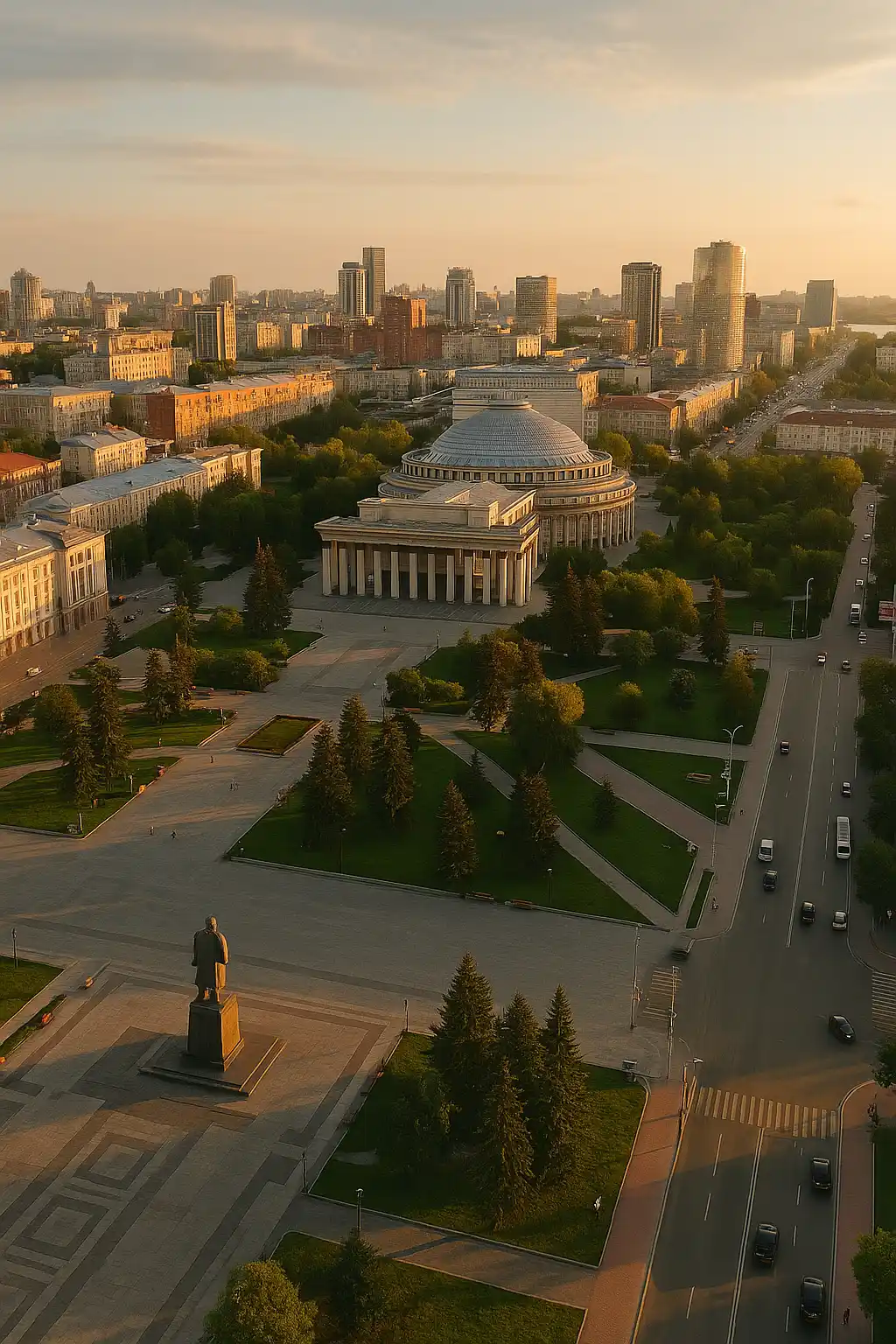
Standing at the heart of Siberia’s largest city, the Novosibirsk Opera and Ballet Theatre (Новосибирский театр оперы и балета) is more than a cultural landmark — it is a symbol of ambition, endurance, and artistic excellence. Known affectionately as the “Siberian Coliseum”, the theatre’s vast dome dominates Lenin Square, embodying both the architectural grandeur of the Soviet era and the refined spirit of modern Russian art.
Located in the center of Novosibirsk, this monumental building has served as one of Russia’s leading performing arts institutions since its opening in 1945. Larger than Moscow’s Bolshoi Theatre, it houses one of the most sophisticated stages in Europe and an orchestra renowned across the continent. Its repertoire — from Tchaikovsky’s Swan Lake and The Nutcracker to contemporary productions — draws both local audiences and international visitors seeking an authentic experience of Russia’s performing heritage.
To enter the Opera and Ballet Theatre is to step into a world where elegance meets endurance. The marble staircases, chandeliers, and acoustically perfect halls evoke a sense of timeless artistry, while outside, the energy of Lenin Square reflects the rhythm of Novosibirsk itself — youthful, intellectual, and constantly in motion.
Surrounded by parks, cafés, and grand Soviet architecture, the theatre stands not only as a stage but as a cultural heart. It is where Siberia expresses its most human qualities — creativity, discipline, and emotional depth — far beyond the clichés of cold and distance. Whether attending a world-class ballet, exploring the building’s architectural marvels, or simply standing before its massive dome under the northern light, visitors quickly realize that this is not just a theatre — it is a statement of what Russia’s spirit can build even in its most distant reaches.
A Brief History of the Novosibirsk Opera and Ballet Theatre
The story of the Novosibirsk Opera and Ballet Theatre is inseparable from the larger history of Russia’s cultural ambition and the transformation of Siberia from a remote outpost into a center of intellectual and artistic life. Its conception began in the early 1930s, when Soviet authorities sought to create a new cultural epicenter east of the Urals — a project that would demonstrate the creative power of the state and the resilience of the Siberian people.
Origins and Construction
The theatre’s foundation stone was laid in 1931, during a period of intense industrial growth in Novosibirsk. The city, then known as the “Capital of Siberia,” was becoming a vital junction of the Trans-Siberian Railway and a growing hub for science, education, and the arts. The government envisioned a structure that would rival Moscow’s Bolshoi in size and prestige — a grand “Palace of Culture” capable of symbolizing Soviet achievement deep in the interior of the nation.
The design was entrusted to architect Andrey Kryachkov, one of Siberia’s leading modernists, working alongside V. S. Maslennikov. Their concept combined neoclassical symmetry with modern engineering, centering on a massive reinforced concrete dome — an architectural innovation for its time. Construction lasted over a decade, delayed by logistical challenges and the harsh Siberian climate, yet continued even through the difficult years of World War II.
The Wartime Completion
The theatre was finally completed in 1944, at the height of the war. While Moscow and Leningrad faced destruction, Novosibirsk became a refuge for artists and institutions evacuated from the west. The Bolshoi Theatre’s performers, the Leningrad Philharmonic, and numerous cultural institutions temporarily relocated here, filling the new building with the finest talents of the era.
The official opening took place on May 12, 1945, just days after the victory in Europe. The first performance — Glinka’s Ivan Susanin — resonated deeply with the patriotic emotions of the time. For Novosibirsk, the theatre was not merely a new venue; it was a monument to endurance and rebirth, standing as the largest theatre building in the USSR and a symbol of hope in post-war recovery.
Architectural Grandeur
The Novosibirsk Opera and Ballet Theatre remains one of the most technically sophisticated theatres in the world. Its domed roof, spanning 60 meters in diameter, covers the main hall without internal supports — a remarkable engineering feat that predates similar Western structures. The building stretches over 11,000 square meters, with more than 1,700 seats, extensive backstage facilities, and underground rehearsal rooms.
Inside, the design blends Soviet monumentalism with refined neoclassical elements — marble columns, crystal chandeliers, and grand staircases. The acoustics, perfected through decades of renovation, are among the best in Russia. The main stage is equipped with multiple hydraulic platforms and rotation systems, allowing complex set changes during live performances.
Insider Fact: The dome’s internal volume — nearly 30,000 cubic meters — equals that of the Pantheon in Rome, making it the largest theatrical dome in the world.
The Theatre in the Soviet Era
Throughout the Soviet period, the Novosibirsk Opera and Ballet Theatre became the cultural flagship of Siberia. It nurtured a new generation of artists who brought Russian classical music, opera, and ballet to audiences thousands of kilometers from Moscow. Touring companies from Moscow and Leningrad often performed here, while the theatre’s resident company gained national acclaim for its technical precision and emotional intensity.
The theatre’s reputation grew further under conductors such as Arnold Katz and choreographers like Natalya Makarova, who later joined the American Ballet Theatre but never ceased referencing her Siberian roots. Productions of Swan Lake, Eugene Onegin, Carmen, and Boris Godunov drew sold-out crowds, establishing Novosibirsk as a cultural capital in its own right.
Post-Soviet Revival
After the collapse of the Soviet Union, the theatre faced financial uncertainty but adapted quickly. Extensive restoration and modernization projects in the 1990s and 2000s preserved its original grandeur while upgrading its technology. The façade and dome were cleaned, the interior refurbished, and the acoustics enhanced to meet international standards.
Today, the Novosibirsk Opera and Ballet Theatre continues to host a rich calendar of performances — from Russian classics to contemporary international works. It also serves as a training ground for young artists from across Siberia and beyond, many of whom have gone on to perform in Moscow, Saint Petersburg, and European theatres.
A Living Symbol of Siberian Culture
For Novosibirsk’s residents, the theatre represents far more than entertainment. It embodies the city’s transformation from an industrial frontier to a cosmopolitan metropolis. Each evening, as the lights of Lenin Square reflect off the theatre’s marble façade, the building becomes a living reminder that culture in Siberia is not imported from the west — it is created, sustained, and celebrated here.
From its wartime origins to its role in today’s artistic landscape, the Novosibirsk Opera and Ballet Theatre stands as proof that even in the farthest reaches of Russia, art has always found its voice — majestic, defiant, and profoundly human.
Key Landmarks and Attractions
The Novosibirsk Opera and Ballet Theatre is not merely a stage — it is a complete world, where architecture, art, and emotion meet under one monumental dome. Each corner of the building, from the sweeping staircases to the quiet rehearsal halls, carries the aura of history and creation. Around it, Lenin Square forms a cultural microcosm of Siberia’s intellectual life, where performance, architecture, and civic pride coexist in perfect symmetry.
The Grand Façade and Lenin Square
Approaching the theatre from Krasny Prospekt, visitors are immediately struck by the harmony of proportion and grandeur. The façade, clad in gray and beige granite, stretches across 100 meters, its neoclassical columns forming an elegant colonnade that commands the entire expanse of Lenin Square. The entrance portico, crowned by a bronze cornice, is flanked by wide stone steps where locals often gather before performances.
At the center of the square stands the monument to Vladimir Lenin, a towering bronze figure facing the theatre — a symbolic conversation between ideology and art. Around the statue, fountains, flowerbeds, and benches create a lively public space that transforms with the seasons: tulips in spring, street performers in summer, golden leaves in autumn, and festive lights during the Siberian winter.
Insider Tip: The best time to photograph the façade is at dusk, when the theater’s soft amber lighting illuminates its columns and the square reflects the glow like a polished mirror of stone.
The Dome – A Siberian Masterpiece
The theatre’s dome remains one of the most remarkable engineering feats in Russian architecture. With a diameter of 60 meters and a height of 35 meters, it covers the entire main hall without a single interior support — a structure once compared to “a frozen wave of concrete.” Its design combined Soviet ambition with avant-garde innovation, representing the optimism of the 1930s and 1940s.
From the outside, the dome seems almost weightless, rising gently above the portico like a silver horizon. Inside, its perfect curvature enhances acoustics and creates a sense of intimacy despite the vast scale of the auditorium. The dome’s inner shell is covered in intricate plasterwork, geometric patterns, and gilded accents that shimmer under soft lighting.
Insider Tip: Stand at the center of the auditorium before the performance begins — even a whisper echoes like music under the dome’s perfect acoustic curve.
The Grand Foyer
Stepping into the main foyer, visitors are met by a world of marble and light. Polished floors, bronze railings, and crystal chandeliers evoke the elegance of the early Soviet classical style. The foyer’s soaring ceilings and symmetrical design give it the solemnity of a palace yet the warmth of a living space.
Along the walls hang portraits of composers, conductors, and dancers who shaped the theatre’s history. Between them, relief panels depict allegorical scenes of music, drama, and dance. From the central hall, broad staircases ascend in graceful curves to the balconies and mezzanines above.
During intermission, guests gather here to sip champagne, discuss the first act, and admire the glittering chandeliers reflected in the polished marble.
Insider Tip: Arrive early — watching the foyer fill with elegantly dressed patrons is a cultural ritual in itself, echoing the city’s reverence for performance.
The Main Auditorium
The theatre’s auditorium is its beating heart. Seating more than 1,700 spectators, it maintains perfect visibility and acoustics from every angle. Rows of crimson velvet chairs encircle the stage like waves of color beneath the great dome. The balconies and boxes, adorned with carved wooden balustrades and gold-leaf ornamentation, evoke the grandeur of imperial theatres yet remain distinctly Siberian in their restraint.
Above, a magnificent chandelier with hundreds of glass pendants hangs from the dome’s center, its light diffusing softly across the hall. The stage itself is vast — 30 meters deep and 18 meters high — equipped with one of the most advanced hydraulic systems in Russia, allowing entire sets to move silently during performances.
When the orchestra strikes the first note, the dome seems to vibrate with sound. The acoustics are so pure that a whisper from the stage can be heard in the upper gallery, a feat of design unmatched even by many European theatres.
Insider Tip: Choose a seat in the first balcony, center section — the best combination of view, sound, and atmosphere.
The Stage and Technical Marvels
Behind the velvet curtain lies a world few ever see: a mechanized stage complex that can lift, rotate, and divide into multiple levels. The backstage area extends underground and horizontally across several wings, allowing seamless scene changes during performances.
During large productions such as Swan Lake or Aida, dozens of technicians coordinate lighting, sound, and movement in real time. The stage’s rotation mechanism, installed during the 2005 modernization, can turn full circle in under a minute — a crucial element for dynamic modern staging.
The theatre also houses rehearsal halls, wardrobe studios, and a ballet school, where young dancers practice daily beneath the echoes of the main stage.
Insider Tip: On certain days, guided backstage tours are offered. Visitors can witness costume workshops and see props from famous productions — from hand-painted backdrops to historical armor used in Boris Godunov.
The Museum of Theatre History
Inside the complex, the Museum of the Novosibirsk Opera and Ballet Theatre documents nearly a century of artistic creation. Costumes, photographs, playbills, and original set designs reveal the evolution of Siberian performance art from the 1930s to the present. Among the highlights are the original ballet shoes of Natalia Makarova and stage props from the theatre’s first Swan Lake production.
Interactive exhibits allow visitors to listen to archived recordings of legendary performances or view 3D reconstructions of stage layouts from different eras.
Insider Tip: Ask the museum staff to show the archive room — a quiet, climate-controlled space preserving rare handwritten notes by early directors and set designers.
The Sculpture Ensemble
Outside, the theatre grounds are adorned with bronze sculptures dedicated to music and dance. The most famous, The Muse of Siberia, stands near the main entrance — a graceful figure holding a lyre, symbolizing the city’s cultural spirit. Other statues depict ballet dancers in motion, their bronze forms capturing the poise and precision of Russian choreography.
In winter, the sculptures are dusted with snow, creating an almost ethereal contrast between the frozen world and the eternal art they represent.
Insider Tip: Visit in the evening after a snowfall — the illuminated sculptures framed by the glowing façade create a surreal, cinematic scene.
Lenin Square – The Cultural Heart of Novosibirsk
Surrounding the theatre, Lenin Square (Ploshchad Lenina) serves as the city’s main gathering place. Framed by grand Soviet buildings and modern cafés, it hosts concerts, festivals, and public events throughout the year. During summer, open-air performances are held here, projecting the opera’s music into the streets; in winter, the square becomes a sparkling wonderland of lights, ice sculptures, and a towering Christmas tree.
Street artists, students, and families mingle freely — a blend of formality and spontaneity that defines Novosibirsk’s cultural energy.
Insider Tip: Stand at the center of Lenin Square after dark — the theatre’s illuminated dome, the statue of Lenin, and the rhythm of life around them form the quintessential image of modern Siberia: proud, creative, and enduring.
The Theatre by Night
When darkness falls, the Novosibirsk Opera and Ballet Theatre becomes a spectacle of light. The façade glows in soft gold tones, the dome reflects the city’s neon hues, and the sound of distant rehearsals often drifts through the cool air. Even those without a ticket linger nearby just to feel the energy — the heartbeat of art pulsing through Siberia’s capital of culture.
Insider Tip: For the best nighttime photo, position yourself near the fountain across Lenin Square. The full dome, lit façade, and statue of Lenin align perfectly, creating one of Russia’s most striking urban views.
Nature and Outdoor Activities
Though the Novosibirsk Opera and Ballet Theatre stands at the very center of an urban metropolis, the soul of the city remains deeply tied to its landscape — the wide Ob River, vast parks, and open Siberian sky that have always framed life in this part of Russia. Around the theatre, nature softens the geometry of Soviet architecture and reminds visitors that even in the heart of Siberia’s largest city, quiet spaces still thrive amid motion and sound.
The Ob River Embankment
A short walk from the Opera and Ballet Theatre leads to the Ob River embankment (Naberezhnaya Reki Obi) — one of the city’s most scenic and beloved areas. The river, one of the longest in Russia, flows gently past Novosibirsk, connecting it symbolically to both the Ural Mountains and the Arctic Ocean.
The embankment offers paved promenades lined with birch trees, flowers, and benches overlooking the broad expanse of water. Couples stroll hand in hand, children play along the steps, and street artists sketch the skyline — the same skyline dominated by the distant dome of the Opera Theatre.
In summer, small boats and ferries depart from the nearby pier for short cruises on the Ob, passing under the city’s graceful bridges. The air smells of pine and river mist; at sunset, the sky glows in shades of gold and violet, turning the theatre’s granite façade into a warm mirror of light.
Insider Tip: For panoramic photographs, head to the Bugrinsky Bridge viewing point at twilight — it offers the best full perspective of Novosibirsk’s city lights shimmering over the Ob River.
Central Park of Culture and Recreation
Just a few blocks east of Lenin Square lies the Central Park of Culture and Recreation (Tsentralny Park), one of the oldest green spaces in the city. Founded in 1925, it remains an oasis of calm amid the bustling avenues of Krasny Prospekt. Tall pines and poplars shade winding paths, fountains sparkle in the summer sun, and small cafés sell tea and pastries to afternoon strollers.
During the warmer months, families gather for open-air concerts, yoga sessions, or small art festivals. In winter, the park transforms into a landscape of snow and laughter — with ice slides, skating rinks, and stands serving hot mulled wine and pancakes.
Insider Tip: Visit in late May or early June when lilacs bloom across the park; their fragrance mingles with the cool river breeze for one of the most enchanting atmospheres in the city.
The City Garden and Theatrical Boulevard
Surrounding the Opera and Ballet Theatre is a green promenade often referred to as the Theatrical Boulevard — a landscaped corridor that connects the theatre to neighboring museums and cafés. Flowerbeds, fountains, and carefully trimmed hedges give it a European charm rarely associated with Siberian cities.
In summer, musicians perform light classical pieces here before evening shows, their melodies drifting toward Lenin Square. Visitors can sit under birch trees with a coffee from one of the nearby kiosks, watching the golden dome reflect the changing sky.
Insider Tip: Arrive an hour before a performance and stroll through the boulevard — it’s where Novosibirsk’s artistic community gathers, from dancers rehearsing quietly to painters sketching the façade.
Zaeltsovsky Park and Forest Zone
For those seeking a deeper connection to Siberian nature, Zaeltsovsky Park offers a vast green retreat about 15 minutes north of the city center. Covering more than 90 hectares, it combines forest, meadows, and riverside trails where one can jog, cycle, or simply listen to the rustle of pine needles.
In summer, locals swim at the park’s sandy beach along the Ob River; in winter, cross-country skiers glide through snow-dusted trails. The park also features a small zoo, an amusement area, and cafés serving hot tea from samovars — a traditional Russian comfort in the cold season.
Insider Tip: Take tram number 13 from Lenin Square to the Zaeltsovsky stop; from there, a short walk leads to one of the park’s most beautiful river viewpoints, perfect for sunrise photos.
The Novosibirsk Botanical Garden
Located within the Siberian Branch of the Russian Academy of Sciences, the Central Siberian Botanical Garden lies about 8 kilometers south of the Opera Theatre and serves as both a scientific center and a tranquil retreat. Established in 1946, it contains over 10,000 plant species, including unique flora from Siberia, Mongolia, and the Altai Mountains.
Visitors can explore winding forest paths, greenhouses filled with orchids and ferns, and open fields of wildflowers. The garden’s diversity reflects the vastness of Siberia itself — from tundra mosses to steppe grasses — each thriving within carefully recreated microclimates.
Insider Tip: Visit in early July, when the peonies and lilies bloom, transforming the gardens into a sea of color. Bring insect repellent in summer and comfortable shoes for long walks.
The Ob Sea (Novosibirsk Reservoir)
About 30 kilometers south of the city, the Novosibirsk Reservoir, locally known as the Ob Sea, stretches across the horizon like an inland ocean. Created by the dam at the Novosibirsk Hydroelectric Station in the 1950s, it quickly became a beloved recreation area. Sandy beaches, pine forests, and picnic zones line its shores, offering a refreshing escape from the urban center.
In summer, sailing, kayaking, and swimming are popular activities, while in winter, the frozen surface hosts ice fishing and snowmobile rides. The contrast between the modern skyline of Novosibirsk and the vast calm of the Ob Sea captures the dual nature of Siberian life — urban dynamism framed by untamed space.
Insider Tip: The resort area of Akademgorodok Beach offers clean sands, cafes, and rental facilities. Combine your trip with a visit to the nearby Science Town (Akademgorodok) to explore its museums and cultural life.
Seasonal Beauty of Novosibirsk
Like much of Siberia, Novosibirsk lives by the rhythm of four distinct seasons — each giving the city and its theatre a different soul.
- Spring: Melting snow reveals green shoots; the city breathes again. Performances at the theatre often celebrate renewal, featuring lighter repertoires and dance festivals.
- Summer: The city hums with life; parks are full, and open-air concerts fill Lenin Square.
- Autumn: The birches turn golden, the air sharpens, and the theatre season begins in earnest.
- Winter: Snow covers the city in silence. The Opera Theatre, glowing against the frost, becomes a beacon of warmth and culture.
Insider Tip: Winter offers a unique visual reward — attend an evening performance, then step outside into falling snow as the theatre’s lights glow through the white air. It’s an image that stays forever.
The Spirit of Balance
What distinguishes Novosibirsk is its harmony between the monumental and the natural. The Opera and Ballet Theatre stands as an anchor of civilization, yet it never feels apart from the landscape that surrounds it. The openness of the Ob, the clarity of the air, and the calm of its parks create a setting where art and nature coexist effortlessly.
For travelers, this equilibrium offers both inspiration and rest — a reminder that Siberia, despite its vastness, remains profoundly human in its beauty.
Food and Dining in Novosibirsk – Opera and Ballet Theatre
In Novosibirsk, dining is an art form that mirrors the rhythm of the city — refined, intelligent, and quietly proud of its Siberian roots. Around the Opera and Ballet Theatre, cafés and restaurants express the city’s dual identity: European grace balanced with the depth and warmth of Russian hospitality. Whether you seek elegant pre-theatre dining, modern fusion cuisine, or rustic Siberian flavors, the culinary landscape reflects the same precision and passion found on stage.
The Essence of Siberian Cuisine
Siberian cuisine grew from endurance. Rooted in the land’s extremes, it celebrates seasonal ingredients, foraged herbs, game meats, and river fish from the Ob and its tributaries. Traditional recipes have been passed down through families who understood the art of nourishment in long winters — simple dishes transformed by patience and authenticity.
Typical Siberian dishes include:
- Pelmeni (пельмени): Hand-folded dumplings filled with minced beef, pork, or venison, traditionally frozen outdoors and cooked in broth.
- Ukha (уха): Clear fish soup prepared with perch, pike, or sturgeon, simmered with root vegetables and herbs.
- Shchi (щи): Cabbage soup rich with sour cream, dill, and sometimes beef.
- Rassolnik (рассольник): Pickle-based soup with barley and veal — a dish of warmth and nostalgia.
- Siberian pies (пироги): Stuffed with mushrooms, cabbage, or berries, often baked for holidays.
Insider Tip: For an authentic taste of local life, order pelmeni with a small glass of sour cream and vinegar — the way it’s eaten across Siberia.
Fine Dining Near the Theatre
The area around the Opera and Ballet Theatre is one of the most elegant culinary districts in Novosibirsk. Many restaurants here are popular among artists, musicians, and theatre-goers, blending atmosphere with exceptional food.
1. Beerman & Pelmeni
Located on Lenin Square, this stylish restaurant combines Siberian classics with European presentation. Its open kitchen serves pelmeni stuffed with venison, salmon, or mushrooms, paired with house-infused vodkas. The modern interior — polished wood, soft lighting, and large windows — makes it ideal for pre-theatre dinners.
Insider Tip: Try the “trio pelmeni sampler,” offering three regional variations — a subtle culinary map of Siberia.
2. La Traviata
Named after Verdi’s opera, La Traviata is one of the city’s finest Italian restaurants, just steps from the theatre’s main entrance. Its atmosphere — white linen, classical music, and quiet conversation — feels perfectly synchronized with the opera’s artistic spirit. Signature dishes include risotto with chanterelles, duck breast with berry sauce, and delicate desserts crafted in minimalist style.
Insider Tip: Book a table near the window for a view of the theatre dome illuminated at night.
3. Chashka Café
A cozy modern café favored by students and artists. Known for its excellent coffee, homemade pastries, and friendly staff, Chashka offers a relaxed spot to discuss performances or read before a matinee.
Popular items include syrniki (cottage cheese pancakes), honey cake (Medovik), and Siberian berry tarts.
Insider Tip: Try the “taiga tea” — an herbal infusion of pine needles, thyme, and lingonberry leaves.
4. Restoran 112
One of Novosibirsk’s most refined venues, Restoran 112 lies a short walk from Lenin Square. It offers modern Russian and French fusion cuisine, with creative presentations and impeccable service. The tasting menu often includes reimagined classics like elk tartare, roasted pike-perch with celery puree, and desserts infused with cedar syrup.
Insider Tip: The restaurant’s sommelier curates Russian wines from the Krasnodar and Crimea regions — rare finds outside Moscow or Saint Petersburg.
5. Akademiya Coffee & Books
A hidden gem near the theatre’s northern side, this literary café embodies Novosibirsk’s intellectual soul. Visitors sip cappuccinos among shelves of poetry and art books, sometimes accompanied by live piano music. It’s a favorite haunt for local journalists and ballet dancers between rehearsals.
Insider Tip: Try the honey-lavender latte with a slice of Napoleon cake — light, aromatic, and distinctly Russian.
The Theatre Intermission Tradition
Attending an opera or ballet in Russia is a ritual, and so is the intermission. In the foyer of the theatre, small counters serve sparkling wine, chocolates, and pastries during the break between acts. Guests chat softly, balancing crystal glasses as chandeliers shimmer overhead.
This intermission tradition, preserved since the 1940s, remains an integral part of the cultural experience. For many locals, it is as important as the performance itself — a celebration of refinement, connection, and rhythm.
Insider Tip: Pre-order your drink at the start of the performance; queues form quickly once the curtain falls.
Street Food and Local Markets
For a glimpse of Novosibirsk’s daily flavor, explore the city’s Central Market (Центральный рынок), about 15 minutes from Lenin Square. The atmosphere is vibrant — vendors calling out prices, aromas of baked bread, and colorful stalls filled with Siberian produce.
What to taste:
- Kulebyaka: A layered fish pie with dill and rice.
- Pirozhki: Fried or baked pastries stuffed with cabbage, potato, or jam.
- Kvass: Traditional fermented bread drink served chilled.
- Smoked fish: Pike, perch, and omul brought from the Ob region.
Small stands also sell fresh berries in summer — raspberries, lingonberries, and cloudberries gathered from the nearby taiga.
Insider Tip: Visit early morning when the market is calm, and vendors gladly share stories behind their goods.
Cafés with a View
If you wish to combine relaxation with scenery, a few nearby cafés offer panoramic views of Lenin Square and the Opera Theatre:
- Sky Lounge (Hotel DoubleTree by Hilton): Rooftop views, modern cocktails, and elegant dishes with city lights below.
- Vesna Café: Overlooks the square from the second floor of a historic building; serves light meals and desserts.
- Kukhnya Café: Trendy space known for vegan options and warm atmosphere.
In the evening, the theatre glows in gold and blue beneath the Siberian sky — a backdrop that turns every coffee or dinner into a scene from a painting.
Late-Night Dining and Winter Comfort
After the curtain falls, the nearby restaurants stay open late, accommodating theatre-goers and performers. In winter, dishes take on heartier tones — beef stroganoff, dumplings in broth, and baked potatoes with mushrooms fill the menus. Warm drinks like sbiten’ (spiced honey beverage) or mulled wine are popular companions to the city’s frost.
Some establishments, particularly around Sovetskaya Street, even host post-performance gatherings with live jazz or poetry readings. Here, the arts and gastronomy merge seamlessly, continuing the performance spirit into the night.
A Taste of Culture
Dining in Novosibirsk is not about excess; it is about precision and sincerity. Like the performances within the Opera Theatre, the food balances discipline and emotion — flavors that are deliberate, layered, and profoundly rooted in place.
Whether it’s the simplicity of pelmeni shared in a small café or the elegance of dinner beneath chandeliers, each meal reflects the same Siberian artistry that fills the theatre’s stage. To eat here is to taste the city’s soul — strong, refined, and quietly luminous under the northern lights.
Shopping in Novosibirsk – Opera and Ballet Theatre
Shopping in Novosibirsk, especially around the Opera and Ballet Theatre, reveals a city that blends Siberian authenticity with urban creativity. Here, visitors encounter a mix of elegant boutiques, art shops, and local markets that reflect both the city’s intellectual character and its deep connection to regional craftsmanship. Each purchase — whether a silk scarf printed with ballet motifs or a jar of taiga honey — carries the quiet poetry of Siberia’s identity: refined, natural, and enduring.
Bookstores and Cultural Shops
Novosibirsk is a city of readers, and nowhere is that clearer than in the elegant bookstores surrounding Lenin Square. A few steps from the Opera Theatre, these shops offer everything from fine art monographs to classic Russian literature, with shelves filled by both Soviet-era publishers and modern independent presses.
Dom Knigi (House of Books) on Krasny Prospekt remains the city’s most beloved bookstore. Established in 1959, it retains its original wooden counters, marble floors, and mezzanine balcony. Visitors can browse editions of Pushkin, Dostoevsky, and Chekhov, alongside contemporary Siberian authors whose works explore life along the Ob River.
Insider Tip: Ask the staff for books by Viktor Astafyev or Valentin Rasputin — their prose captures the soul of the Russian North like few others.
Nearby, the Opera Theatre’s own gift kiosk sells art books, commemorative programs, and recordings of the company’s legendary performances. It’s an ideal stop for collectors seeking authentic memorabilia.
Souvenir Boutiques and Artistic Keepsakes
Within walking distance of the theatre, small boutiques offer handmade goods that reflect Siberia’s balance between artistry and restraint.
Typical finds include:
- Amber and malachite jewelry inspired by the colors of the Ob River.
- Wool scarves and shawls woven from local fibers, warm enough for Siberian winters yet elegant for evening wear.
- Ceramic miniatures of the Opera Theatre, painted in turquoise and gold tones mirroring its dome.
- Wood-carved figurines representing ballet dancers, musicians, and Siberian folklore characters.
Many of these items are crafted by regional artists trained in Novosibirsk’s art institutes. Each carries the subtle precision of a hand accustomed to cold climates and disciplined beauty.
Insider Tip: Visit the Souvenir Gallery on Ordzhonikidze Street, a short walk from the theatre, where artists often display limited-edition crafts unavailable elsewhere.
The Central Market – Everyday Siberia
For travelers who prefer authenticity to ornament, the Central Market (Tsentralny Rynok) remains the city’s beating commercial heart. Its stalls, filled with colors and aromas, capture the essence of daily life in Novosibirsk.
Here you’ll find:
- Pine nuts and cedar oil, symbols of Siberian health.
- Wild honey from the taiga, thick and fragrant with linden and buckwheat.
- Dried herbs and teas, including blends of thyme, mint, and cloudberry leaf.
- Local textiles, such as linen table runners embroidered with floral motifs.
- Wooden spoons and birch boxes, both functional and artistic.
The atmosphere is lively yet orderly — traders greet visitors warmly, offering samples of cheese or honey. This is where Siberia feels closest to its roots: hardworking, generous, and deeply connected to the land.
Insider Tip: Arrive early, around 9 a.m., to avoid crowds and enjoy conversation with merchants, many of whom have sold at the market for decades.
Fashion and Modern Design
Beyond tradition, Novosibirsk has developed a small but vibrant scene of local designers and concept stores, reflecting its modern identity as Siberia’s creative capital. Along Krasny Prospekt and adjacent streets, boutiques showcase minimalist clothing, eco-friendly materials, and experimental jewelry.
Highlights include:
- Sibirica Studio: Contemporary clothing line blending natural fabrics with understated cuts — inspired by the simplicity of the Siberian landscape.
- Atelier Yulya Pavlova: Handcrafted accessories using local wool, silk, and wood in muted colors.
- Kukhnya Concept Store: Focused on sustainable design, offering ceramics, home décor, and small artworks by emerging Siberian artists.
These stores appeal to travelers seeking meaningful souvenirs rather than mass-produced trinkets. Each object feels personal — a small reflection of Novosibirsk’s understated elegance.
Insider Tip: Ask if items are locally made; many shops feature designers from Akademgorodok, the nearby “Science Town,” where art and innovation often meet.
Opera-Inspired Memorabilia
The Opera and Ballet Theatre itself has become a motif in local art and design. Postcards, posters, and vintage playbills depicting its iconic dome are sold across the city. Some workshops craft jewelry and brooches modeled after ballet slippers, treble clefs, or the theatre’s façade, offering elegant reminders of the performance experience.
During festival seasons, special pop-up kiosks appear in front of the theatre selling programs, vinyl recordings, and autographed photographs of the principal dancers and conductors. Collectors often seek these items for their historical and artistic value.
Insider Tip: During the annual Opera and Ballet Festival (late spring), the theatre’s foyer hosts a temporary art fair where local craftsmen exhibit works inspired by classical music and stage design.
Seasonal Markets and Winter Fairs
In December and January, Lenin Square transforms into a winter village filled with wooden stalls and festive lights. This New Year’s Fair is among the most atmospheric in Siberia — a combination of craftsmanship and celebration. Visitors can browse hand-knitted mittens, carved ornaments, and sweets while listening to carols drifting across the snow-covered plaza.
Traditional goods include:
- Honey cakes (pryaniki) shaped like the theatre’s dome.
- Wool slippers decorated with floral embroidery.
- Hand-painted wooden toys and snowflake ornaments.
- Hot mulled wine and spiced sbiten’, served from steaming samovars.
Insider Tip: Visit after dark — the theatre’s glowing façade and the smell of cinnamon and pine turn the square into a living postcard of Siberian winter.
Antiques and Retro Finds
For those fascinated by history, several small antique shops along Sovetskaya Street and Michurina Street sell Soviet-era memorabilia — enamel pins from ballet premieres, propaganda posters, and porcelain figurines of ballerinas. Though modest in scale, these stores preserve tangible fragments of Novosibirsk’s artistic past.
Insider Tip: Always negotiate gently; most antique sellers value conversation and genuine interest more than price haggling.
A Market of Meaning
Shopping in Novosibirsk is not about luxury but authenticity — the pursuit of objects that carry memory and soul. Around the Opera and Ballet Theatre, the act of buying becomes an act of connection: to history, to artistry, and to the people who shaped this city from its earliest days.
Every shawl, book, and handmade trinket echoes the same spirit that fills the theatre’s stage — craftsmanship born of discipline, beauty rooted in endurance. When visitors leave with these small tokens, they carry more than souvenirs; they carry a fragment of Siberia’s quiet, luminous heart.
Day Trips from Novosibirsk – Opera and Ballet Theatre
The Novosibirsk Opera and Ballet Theatre may be the city’s cultural heart, but the landscapes and settlements beyond its dome reveal the full depth of Siberia’s character — intellectual, untamed, and quietly majestic. Within a few hours’ travel, visitors can explore a world of contrasts: pine forests and lakes, scientific towns and ancient churches, all connected by the steady rhythm of the Ob River. These day trips allow travelers to balance the elegance of the theatre with the raw beauty and intellect of its surroundings.
Akademgorodok – The City of Science and Soul
Located 30 kilometers south of Novosibirsk, Akademgorodok (Академгородок) stands as one of the most unique communities in Russia — a place where laboratories meet pine forests, and science coexists with art. Founded in 1957 by the Siberian Branch of the Russian Academy of Sciences, it was designed as a self-contained city for researchers, artists, and thinkers.
Winding streets are lined with tall pines and mid-century villas, while cafés, bookshops, and art galleries give it a university-town charm. The House of Scientists (Дом учёных) regularly hosts concerts, lectures, and chamber recitals — often featuring musicians from the Opera Theatre. The acoustics are excellent, and the intimacy of performances offers a striking contrast to the grandeur of Lenin Square.
Visitors can also explore the Museum of Siberian Geology, stroll along the Akademgorodok Beach on the Ob Sea, or relax in one of the bohemian coffeehouses that dot the district.
Distance: 40 minutes by car or minibus (marshrutka).
Insider Tip: Visit in early autumn when the pine forests turn golden — Akademgorodok feels like a university nestled inside a painting.
The Ob Sea (Novosibirsk Reservoir)
Stretching for over 200 kilometers, the Novosibirsk Reservoir, affectionately called the Ob Sea, was created in the 1950s after the construction of the hydroelectric dam. Today, it’s a favorite weekend escape for locals seeking fresh air and water views.
The northern shore near Akademgorodok offers sandy beaches, picnic areas, and boat rentals, while further east, the Berdsk Bay region provides more secluded coves for swimming and camping. The contrast between the calm water and the distant hum of the city creates an atmosphere of rare peace.
In summer, sailboats glide across the water, while in winter, ice fishermen dot the frozen surface. Locals joke that the “Ob Sea” is Siberia’s answer to the Mediterranean — a playful exaggeration that nonetheless captures its importance to Novosibirsk life.
Distance: 45 minutes by car from the city center.
Insider Tip: For sunset views, head to the pier near Akademgorodok Beach — the reflection of the setting sun over the frozen or rippling water is unforgettable.
Berdsk – The Quiet Riverside Town
South of the Ob Sea lies Berdsk (Бердск), a small town founded in the 18th century and rebuilt after its original settlement was flooded by the reservoir. Today, Berdsk combines quiet charm with a growing arts scene. Its Berdsk Historical Museum and Church of the Transfiguration provide insight into both pre-revolutionary and Soviet Siberia, while its riverside promenade offers some of the region’s most peaceful views.
The town is also known for its small workshops producing handcrafted wood furniture, ceramics, and icons — subtle souvenirs that reflect rural craftsmanship. Cafés overlooking the water serve homemade pastries and tea brewed with local herbs, offering an idyllic afternoon respite.
Distance: 1 hour by car or commuter train.
Insider Tip: Visit in spring when migratory birds return to the riverbanks — the sound of their calls mingling with church bells feels like a hymn of renewal.
Koltsovo – The Gateway of Innovation
About 15 kilometers southeast of Novosibirsk, Koltsovo is not a typical tourist destination but a fascinating window into modern Russian innovation. Home to one of the country’s major biotechnology research centers, the settlement is often called Siberia’s Silicon Valley. Visitors with an interest in science and architecture will appreciate the contrast between its sleek laboratories, landscaped parks, and the surrounding birch forests.
The Koltsovo Innovation Park occasionally opens for public tours, showcasing laboratories, design hubs, and exhibitions about Russia’s scientific heritage. Despite its futuristic purpose, the area retains a calm, community-like atmosphere.
Distance: 25 minutes by car.
Insider Tip: Combine Koltsovo with a stop at the Novosibirsk Zoo on the way — one of the largest in Russia, famous for its open habitats and conservation projects.
The Novosibirsk Zoo – A Natural Refuge
Located about 6 kilometers north of the Opera Theatre, the Novosibirsk Zoo (Новосибирский зоопарк имени Ростислава Шило) covers more than 60 hectares and houses over 10,000 animals from 700 species. Beyond its scale, what sets it apart is its integration into the surrounding pine forest, creating a natural environment rather than an artificial enclosure.
The zoo is particularly known for its white tigers, snow leopards, and Amur tigers, symbols of Siberia’s wild beauty. Educational programs and conservation efforts make it a meaningful visit for families and travelers interested in ecology.
In winter, the zoo becomes a wonderland — snow covers the enclosures, and steam rises from heated ponds where birds continue to swim through the cold.
Distance: 20 minutes by car or tram.
Insider Tip: Visit early morning or late afternoon for the quietest experience — the light filtering through the pines gives the zoo a cinematic serenity.
Toguchin – Rural Traditions and Folk Art
For those wanting to step further into rural Siberia, the small town of Toguchin (Тогучин), about 150 kilometers east of Novosibirsk, offers a vivid glimpse into provincial life. Known for its traditional wooden houses and handcrafts, Toguchin’s artisans specialize in birch-bark weaving, embroidery, and metal engraving.
The Toguchin Museum of Local Lore displays folk costumes, agricultural tools, and archival photos illustrating how settlers adapted to the harsh climate. The surrounding countryside, dotted with lakes and birch groves, is perfect for quiet walks and photography.
Distance: 2.5 hours by car.
Insider Tip: Plan your visit during local fairs (usually in late summer) to see artisans at work — the air fills with music, smoke from grills, and laughter echoing across the fields.
The Monastery of the Virgin in Chernorechenskoe
Approximately 70 kilometers west of Novosibirsk, in the village of Chernorechenskoe, lies the Monastery of the Virgin, a restored Orthodox convent surrounded by fields and forest. Established in the late 19th century, it was closed during the Soviet period and revived in the 1990s. The small stone church and adjacent wooden bell tower form a serene ensemble rarely visited by tourists.
Pilgrims come to light candles and draw water from the nearby spring believed to have healing properties. The tranquility of the site contrasts beautifully with the modern dynamism of Novosibirsk — a reminder that Siberia’s spirituality endures quietly, far from the stage lights.
Distance: 1.5 hours by car.
Insider Tip: Bring a shawl or head covering if entering the church, and plan for a picnic under the birches nearby — silence here feels sacred.
Seasonal and Thematic Excursions
Depending on the time of year, Novosibirsk offers specialized day trips that reflect both its climate and its culture:
- Winter: Dog-sledding tours in the forests north of the city; ice fishing on the Ob Sea.
- Spring: Birdwatching and photography in Berdsk Bay.
- Summer: River cruises and open-air folk festivals in Akademgorodok.
- Autumn: Harvest fairs and culinary tours featuring mushrooms, berries, and honey.
Insider Tip: For a truly immersive local experience, join one of the short opera outreach tours occasionally organized by the theatre, where musicians perform in Akademgorodok or riverside parks — bringing art back to nature.
The Journey Beyond
Every journey from Novosibirsk reveals a different face of Siberia. Akademgorodok speaks of intellect, Berdsk whispers of faith, the Ob Sea reflects endless horizons, and small villages keep alive the simplicity of generations past.
Yet all roads, inevitably, lead back to the Opera and Ballet Theatre, whose dome seems to hover over the city like a compass of culture. Whether you spend a day among scientists, monks, or fishermen, the return to that glowing architectural heart reminds you that Novosibirsk is not just a place to visit — it is a place to understand.
Practical Information
Visiting the Novosibirsk Opera and Ballet Theatre offers not only an encounter with world-class performance but also a glimpse into the cultural rhythm of Siberia’s most dynamic city. With its blend of grandeur and accessibility, the theatre welcomes both devoted art lovers and curious travelers. The following information ensures a seamless, rewarding visit to Russia’s largest stage east of the Urals.
Location and Setting
The theatre dominates Lenin Square (Ploshchad Lenina), the very heart of Novosibirsk. Surrounded by neoclassical buildings, fountains, and manicured gardens, it forms the visual centerpiece of the city.
Address: 36 Krasny Prospekt, Novosibirsk, Russia
Coordinates: 55.030° N, 82.920° E
Landmarks nearby include the Lenin Monument, the Novosibirsk Philharmonic Hall, and several elegant cafés ideal for pre- or post-performance visits.
How to Get There
By Air
- Novosibirsk Tolmachevo International Airport (OVB) lies about 18 kilometers southwest of the city center.
- Taxis and rideshares (Yandex Go) take 30–40 minutes to reach the theatre.
- Airport buses (routes 111E or 312) run to the city center and connect with the metro at Ploshchad Garina-Mikhaylovskogo station.
By Train
- Novosibirsk-Glavny Railway Station, one of the main stops along the Trans-Siberian Railway, is 2 km from the theatre.
- A short taxi ride or two metro stops (change at Sibirskaya to Ploshchad Lenina) bring you directly to the theatre’s square.
By Metro
- The Ploshchad Lenina Metro Station is directly beneath Lenin Square — exit signs point toward the Opera Theatre.
- Metro tickets cost about 30 RUB; stations are clean, safe, and operate until midnight.
By Bus or Tram
- Multiple city buses and trams serve the central area, but walking from the metro is often faster and more scenic.
Theatre Hours and Ticketing
- Box Office Hours: Daily from 10:00 to 19:00 (with lunch break 14:00–15:00).
- Online Booking: Official theatre website supports English and Russian; tickets can also be purchased via authorized cultural portals.
- Performance Schedule: Seasons run from September through June, with summer reserved for open-air concerts and guest performances.
- Ticket Prices: Range widely (approx. 500–3,500 RUB), depending on the seat and production. Ballets and premieres often sell out weeks in advance.
Insider Tip: For premium performances like Swan Lake or Eugene Onegin, book 2–3 weeks ahead. Balcony seats often provide the best view of the stage and dome interior.
Best Time to Visit
Theatre season coincides with the most atmospheric months in Novosibirsk:
- Spring (April–May): Warm weather returns; ideal for combining culture and walks along the Ob River.
- Summer (June–August): Fewer performances but more open-air events and festivals.
- Autumn (September–October): Peak season for ballet and opera; mild temperatures and golden foliage.
- Winter (November–March): Magical ambiance — snow-covered streets, festive lights, and classical winter productions like The Nutcracker.
Best Overall Period: Late September to early December, when the repertoire is rich and the city glows with crisp Siberian light.
Dress Code and Etiquette
Russian theatre culture values elegance and respect. While formal attire is not strictly required, most visitors dress smartly — evening dresses, shirts, and jackets are common.
- Punctuality: Arrive 20–30 minutes early; latecomers may need to wait until intermission.
- Phones: Strictly silent during performances.
- Applause: Traditionally, Russians clap in rhythm at curtain calls; standing ovations are reserved for exceptional performances.
Insider Tip: Bring a light shawl or jacket — Siberian evenings can cool quickly, even in summer.
Guided Tours
The theatre offers architectural and backstage tours several times a week, providing access to areas normally closed to the public. Tours include:
- A walk through the main stage and rehearsal halls
- Visits to costume and props workshops
- Insight into the building’s history and technical innovations
Tours are conducted in Russian, but English-speaking guides can be arranged with advance notice.
Insider Tip: Combine a morning tour with an evening performance — the contrast between the quiet backstage world and the grandeur of showtime is unforgettable.
Accommodation
Novosibirsk offers a wide range of lodging options, many within walking distance of the theatre.
Upscale:
- DoubleTree by Hilton Novosibirsk: Modern design, rooftop bar, panoramic views.
- Marins Park Hotel: Central location, comfortable rooms, near the railway station.
- Resident Hotel: Boutique comfort with spacious suites and artistic décor.
Mid-Range & Budget:
- Azimut Hotel Siberia: Reliable and close to transport links.
- Funkey Hostel: Youthful and clean, perfect for solo travelers.
- SleepBox Hostel: Modern capsule-style accommodation near the metro.
Insider Tip: Request a room facing Lenin Square — the view of the illuminated Opera Theatre at night is breathtaking.
Local Transportation
- Metro: Fast, reliable, and safe; ideal for reaching major landmarks.
- Taxis and Apps: Yandex Go and Maxim are efficient; cashless payment available.
- Walking: The city center is pedestrian-friendly, especially around the theatre, parks, and the river embankment.
- Bicycles and Scooters: Seasonal rentals appear near Lenin Square and the embankment in summer months.
Safety and Atmosphere
Novosibirsk is one of Russia’s safest large cities. The theatre district, in particular, is well-lit and patrolled. Locals are polite and helpful, though English is not widely spoken outside hotels and restaurants.
- Keep small bills for taxis and street purchases.
- Always cross streets at designated pedestrian lights.
- During winter, wear shoes with good traction — sidewalks can be icy.
Insider Tip: Theatre evenings often end after 22:00; if you plan to walk back to your hotel, enjoy the quiet — the city feels serene and cinematic under the snow.
Connectivity and Communication
- Wi-Fi: Available in most hotels, cafés, and public areas.
- Mobile Networks: Reliable 4G coverage citywide (MTS, Beeline, Megafon).
- Language: Russian predominates; a few signs and menus offer English translations. Learning a few phrases like “Здравствуйте” (Hello) or “Спасибо” (Thank you) is always appreciated.
Practical Theatre Tips
- Arrive early to explore the foyer and photo exhibits documenting the theatre’s history.
- Keep your ticket stub — it doubles as a small souvenir and is required for re-entry.
- Cloakrooms are mandatory; coats and large bags must be checked before entering the auditorium.
- Programs (in Russian) are sold in the lobby for a modest fee.
Insider Tip: Ask for a “буклет на английском” (booklet in English) — the theatre occasionally prints bilingual summaries of major performances.
Emergency and Essentials
- Emergency Number: 112 (for all services).
- Currency: Russian Ruble (RUB).
- Voltage: 220V, plug types C/F.
- Medical: Pharmacies (apteka) available near Lenin Square; English-speaking doctors can be found at Novosibirsk Regional Hospital.
Seasonal Theatre Events
Annual highlights include:
- Siberian Ballet Festival (February–March) – celebrating Russian and international ballet traditions.
- Opera of the 21st Century (May) – contemporary productions and modern interpretations.
- Summer Music Nights (July) – outdoor performances in front of the theatre under the open sky.
Each event reaffirms Novosibirsk’s status as Siberia’s cultural capital — a place where art does not pause for geography or weather.
Insider Tips & Local Experiences
The Novosibirsk Opera and Ballet Theatre is more than an architectural masterpiece — it is the pulse of the city’s cultural life. For locals, evenings at the theatre are woven into their personal rhythm, a cherished ritual of art, conversation, and quiet pride. Travelers who immerse themselves in this atmosphere discover that Novosibirsk’s sophistication is never loud; it reveals itself through detail, warmth, and discipline.
The Pre-Theatre Ritual
In Novosibirsk, attending the opera is not a spontaneous activity but a deliberate ceremony. Patrons arrive early, dressed with understated elegance. Outside, the square fills with murmurs, coats, and perfume in the crisp air. The cloakroom ritual begins — a polite exchange of greetings, a small bow to the attendant, and a sense of anticipation that builds before the first note sounds.
Locals often meet for dinner or coffee nearby, discussing which conductor will perform or which ballerina has returned to the stage. This combination of seriousness and social grace gives the theatre a living intimacy that few venues maintain.
Insider Tip: Arrive at least half an hour early to watch the foyer slowly come alive — it’s a performance of its own.
Conversations with Locals
Novosibirsk residents are deeply proud of their theatre. Striking up conversation — in a café, bookstore, or even at intermission — often leads to stories of legendary performances or anecdotes about artists who trained here before achieving national fame.
Many speak of the theatre as a symbol of faith in culture’s endurance through Soviet hardships and Siberian winters alike. Ask about the early post-war years, and you will hear tales of singers performing despite power outages, or dancers practicing by candlelight.
Insider Tip: Mention the 1945 premiere of Ivan Susanin — most locals see it as the defining moment of Novosibirsk’s cultural awakening.
Hidden Corners of the Theatre
Though the public sees only the grand façade and auditorium, there are secret spaces that embody the theatre’s soul. A side entrance on Ordzhonikidze Street leads to rehearsal studios where young ballet students train daily. The quiet echo of piano keys, the sound of soft shoes on wooden floors — these are the sounds of tomorrow’s performers.
Another little-known spot is the rooftop terrace, occasionally opened for press events. From here, the view stretches over Lenin Square to the Ob River beyond, with the dome’s curve glowing like silver beneath the evening sky.
Insider Tip: If you attend a special performance or festival, ask discreetly whether the terrace is accessible — it offers one of the most cinematic views in all Siberia.
Experiencing the Theatre by Season
Each season gives the Opera Theatre its own personality:
- Spring: The square awakens with blossoms, and matinee audiences fill the foyer with light chatter.
- Summer: Open-air concerts on Lenin Square turn the theatre into an outdoor stage; the air smells of linden trees and rain.
- Autumn: Premiere season — golden leaves scatter over marble steps, and the repertoire deepens with classic Russian dramas.
- Winter: Snow drifts against the columns, lights glow from within, and the theatre feels like a lantern in the frost.
Insider Tip: In December, watch The Nutcracker surrounded by snow outside — the alignment of music and weather is magical.
Meeting the Artists
Novosibirsk’s artists often mingle casually with their audience. After performances, it’s not uncommon to see singers or dancers leaving through the side door, stopping briefly to sign programs or share a few words. Their humility reflects the theatre’s community spirit — fame here remains grounded in discipline.
Occasionally, small post-performance discussions or Q&A sessions are organized, especially during festivals or youth programs.
Insider Tip: If you speak even a little Russian, a simple “Спасибо за выступление” (Thank you for the performance) is deeply appreciated.
Café Culture and Night Walks
After evening shows, the streets around Lenin Square transform. The air is cool, quiet, and electric with reflection. Locals drift toward late-night cafés — La Traviata, Beerman & Pelmeni, or the intimate Chashka Café — still discussing the choreography or the orchestra’s precision.
From there, a short stroll through the square reveals the theatre dome mirrored in wet pavement or snow. Street musicians sometimes play softly near the fountain, echoing melodies from the performance that has just ended.
Insider Tip: Order a dessert and linger — watching the crowd disperse is the final act of the night’s performance.
Festivals and Community Life
Throughout the year, the theatre anchors a series of festivals that extend its cultural reach. The Siberian Ballet Festival, the Opera of the 21st Century series, and Summer Music Nights draw artists from across Russia and Europe. During these events, the building becomes a hive of creativity — rehearsals spill into the foyer, temporary exhibitions line the hallways, and the entire city hums with artistic energy.
Locals often volunteer as ushers or organizers, seeing these festivals as civic celebrations rather than elite gatherings.
Insider Tip: Plan travel around festival dates — the entire downtown transforms into an open gallery of music and motion.
A Local’s Reflection
Ask any Novosibirsk native what the Opera and Ballet Theatre means to them, and the answer rarely concerns architecture or fame. It is, they’ll say, a mirror of Siberia’s inner world — serious, modest, but filled with quiet fire. For decades, people have come here through blizzards and power cuts, through political upheaval and peace, always to sit beneath the dome and listen.
The theatre is not a monument to art; it is art as endurance.
Insider Tip: If you visit only once, choose an evening when the orchestra plays Tchaikovsky. In those moments, as the music swells under the great dome, Siberia itself seems to breathe.
Living the Theatre Beyond the Stage
For the traveler who listens closely, Novosibirsk offers more than a visit — it offers initiation. Spend a day walking the Ob embankment, visit a local rehearsal, dine at a café where artists gather, and return to the theatre at night. What begins as sightseeing ends as belonging.
The lights dim, the conductor raises his hand, and the audience falls silent. In that hush lies the essence of the city — precise, patient, endlessly alive.
Conclusion
To stand before the Novosibirsk Opera and Ballet Theatre is to understand Siberia in its most elevated form — a place where endurance becomes art, and distance transforms into grace. Rising at the heart of Lenin Square, the theatre embodies everything that Novosibirsk represents: ambition shaped by resilience, culture born of quiet determination, and beauty crafted under northern skies.
Built in the 1930s, opened during the final days of war, and thriving through every social and political era since, this immense structure has never ceased to evolve. Its dome, the largest of any theatre in Russia, shelters not just performers and audiences but the very idea that art can flourish anywhere — even thousands of kilometers from Moscow’s glittering boulevards. The fact that such magnificence stands here, deep in the Siberian plain, is itself a statement of human will.
Inside, every element feels alive with history. The marble steps have carried generations of dancers and dreamers; the chandeliers still shimmer as they did on opening night. The stage, vast yet intimate, echoes with Tchaikovsky’s strings and Verdi’s passion. And above it all, the dome — that architectural miracle — gathers sound and light into one perfect, resonant harmony.
Yet the power of the theatre is not only in its architecture or repertoire. It lies in the relationship between the building and its people. For locals, an evening performance is an act of belonging. They arrive through snow or rain, greet the ushers by name, and sit beneath the lights in a shared silence of expectation. In those moments, the city becomes a single organism — thousands breathing in rhythm to the overture.
The theatre has outlasted regimes, reforms, and fashions, but its purpose remains unchanged: to remind Siberia that greatness is not imported; it is created from within. Today, its productions travel the world, its ballet troupe garners international acclaim, and yet its true triumph lies at home, where the square outside still fills with children, students, and musicians who see it not as a monument but as a companion.
Around it, Novosibirsk thrives — in cafés humming with conversation, in bookshops filled with warmth, in the still air of the Ob River at dusk. Culture here does not separate from life; it shapes it. The Opera and Ballet Theatre stands as the axis around which the city turns, giving it rhythm, dignity, and purpose.
Visitors who come here expecting a provincial curiosity discover instead one of Russia’s most authentic cultural experiences. What they find is a theatre equal in scale to the Bolshoi, yet distinct in soul — a monument not to power but to persistence.
Why visit the Novosibirsk Opera and Ballet Theatre? Because it is the heart of Siberia’s humanity — monumental, precise, and profoundly moving. Because under its dome, music becomes memory, and dance becomes the language of survival. And because in this place, far from the centers of empire, Russia’s truest artistry continues to shine — not loudly, but with a steady, enduring light that no distance can dim.
For every traveler crossing Siberia, this theatre is more than a destination. It is a revelation — proof that culture needs no capital to be eternal.


