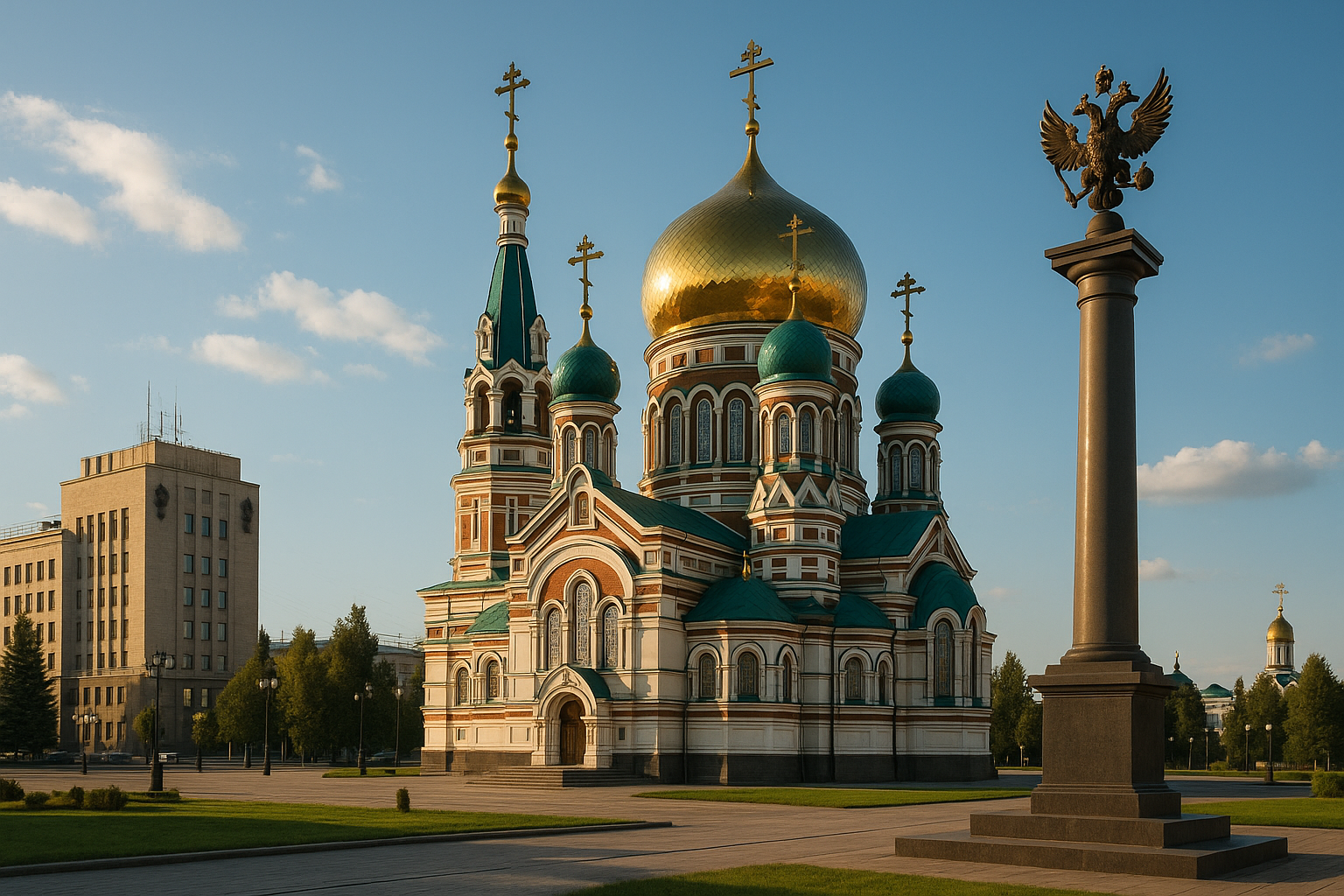
Important things to know about Omsk
Omsk, Russia sits on the broad curve of the Irtysh River, a hub of West Siberia where imperial architecture meets Soviet-era bustle. As a regional center on the Trans-Siberian corridor, it has long been a crossroads for traders, artists and travelers. Visitors will notice the contrast between ornate golden cupolas and the pragmatic grid of postwar blocks; the city’s history unfolds in brick and wood, in museums and on the riverfront. For practical planning, travel to Omsk by train or flight is straightforward for those transiting across Siberia, and most travelers find late spring through early autumn the most pleasant months to explore. Want a reliable rhythm to your trip? Check local opening hours, carry rubles for smaller vendors, and remember that non-Russian passport-holders generally require a visa – consult consular guidance in advance to avoid surprises.
When thinking about things to do in Omsk, the range of Omsk attractions can satisfy museum-goers, food lovers and architecture enthusiasts alike. The Assumption Cathedral’s gilded domes catch the sunrise above the river and are a favorite subject for photographers, while the regional art collections and Omsk museums document the city’s literary and military past. The opera and ballet stages pulse with classical productions and modern repertoire, offering an atmospheric evening that reveals local cultural life; you can often hear the applause drift into cool night air after a long day of walking the embankment. Food is an honest reflection of Siberian cuisine – hearty, seasonal and often locally sourced – and sampling soups, dumplings and smoked fish at a neighborhood café is a simple way to understand daily rhythms. Travelers report the sidewalks near the historical center feel walkable and safe by daytime; like any urban area, one should keep common-sense precautions after dark.
Practical, trustworthy advice helps turn interest into a satisfying visit: combine a riverside stroll with a museum morning and a performance or market in the evening to experience Omsk in layered moments. Photography buffs will find compelling cityscapes from bridge vantage points and riverbanks; history enthusiasts should budget time for archival exhibits and guided tours that explain Siberian settlement patterns. Respectful dress and quiet conduct are appreciated in religious sites, and many cultural institutions post rules about photography and bag checks – observe them to show courtesy. For dependable travel: carry a local SIM or offline maps, purchase travel insurance, and support small businesses when possible to keep tourism benefits local. Curious to see how a Siberian regional capital balances tradition and modern life? Omsk rewards patience and attention with textured discoveries.
Sightseeing hot-spots in Omsk
Omsk sits on the wide bend of the Irtysh River in southwestern Siberia and offers an appealing mix of imperial architecture, Soviet-era monuments, and riverside leisure that makes sightseeing in this Russian city rewarding for curious travelers. One can find the gilded domes of the Assumption Cathedral rising above the historic center, a vivid reminder of Russia’s ecclesiastical past alongside red-brick administrative buildings and timber merchant houses. The Irtysh embankment is a dominant attraction where locals stroll at dusk and river fog softens the skyline; on clear days the light on the water gives the city a pastoral, reflective quality. For visitors arriving by the famous Trans-Siberian Railway, the approach into Omsk already suggests a city where crossroads of history and transport shaped culture and commerce.
Cultural attractions and museums shape the best of Omsk’s tourist hotspots. The city’s state museums and galleries preserve Siberian artifacts and Russian painting, so museum-goers and art lovers report satisfying, well-curated exhibitions that illuminate regional history and creative life. The theatrical tradition is strong too: historic playhouses continue to stage drama and opera, offering a way to experience local performing arts and the civic pride of Omsk’s cultural institutions. Have you ever watched a matinee in a provincial Russian theater and felt the hush of an attentive audience? That shared moment, combined with richly decorated interiors, often becomes one of the most memorable scenes for travelers exploring the city’s cultural landscape.
Seasonality, practical travel advice, and cultural etiquette are important for a trustworthy visit. Winters in Omsk are long and crisp; snow changes the tone of sightseeing, so bring insulated layers and sturdy footwear if you travel between November and March. Spring and summer bring river breezes and outdoor festivals along the embankment, a quieter time for relaxed walking tours and photography. Public transport is functional and inexpensive, but taxis and rideshares provide convenient access to attractions beyond the center. Based on municipal sources, local guides, and traveler reports, visitors should allow extra time to appreciate small museums and neighborhood markets where you can sample regional fare like pirozhki or stews – culinary encounters that reveal more about everyday life than guidebooks alone.
Credible, experience-based recommendations matter when planning which sights to include. For a balanced itinerary, pair architectural landmarks such as the cathedral and old administrative quarters with cultural stops in the State Museum of Fine Arts and the regional history repositories, then reserve an evening for a concert or a long riverwalk. One can find both contemplative corners and lively civic squares in Omsk; it rewards those willing to slow down and notice details – carved wooden facades, Soviet mosaics, the cadence of tram bells. If you want to travel thoughtfully and responsibly, check current opening seasons and local advisories, respect religious sites, and engage with guides who can add historical depth. With its layered past and hospitable local culture, Omsk in Russia remains a lesser-known yet richly rewarding destination for sightseeing and discovery.
Hotels to enjoy in Omsk
Omsk is a city of wide streets, riverside promenades and a layered history that shows in its architecture; travelers will find hotels in Omsk that echo that mix of provincial calm and urban convenience. On the Irtysh embankment the atmosphere tends toward quiet mornings and brisk walks, while the central districts around Pushkin Park and the drama theatre feel lived-in and slightly theatrical. As a travel writer who has spent weeks researching Siberian cities and staying in local accommodations, I can say the lodging scene combines Soviet-era solidity with newer boutique touches: lacquered wood in a restored guesthouse, contemporary glass façades at a chain property, and the steady hospitality that Russian hotels often offer. What sets Omsk hotels apart is a sense of place – you can hear the city waking up and see the riverboats at dusk – details that shape a stay more than a room category ever could.
You will find a range from Omsk hotels that cater to business travelers to modest guesthouses favored by backpackers. Luxury properties provide conference facilities, on-site spas and international cuisine, while budget hotels and hostels emphasize location and friendly service rather than frills. Boutique lodging often situates itself in renovated merchant houses in the historic center, where antique furniture and local artworks create an intimate mood. For those arriving by rail or following the Trans‑Siberian route, proximity to the main railway station matters; for visitors interested in river views, the embankment rooms are worth a premium. Which kind of stay suits you depends on priorities: business amenities, cultural access, or simply a clean, quiet bed for the night.
Practical tips help make a visit smoother, and these come from experience and conversations with local staff. Book ahead during festival seasons and university graduations, check cancellation policies and whether breakfast is included, and be prepared that small hotels may prefer cash or Russian bank cards. Language can be a barrier in smaller inns, but many front‑desk teams speak basic English or will use translation apps; asking politely and carrying ID during check‑in speeds the process. Safety in central areas is generally fine for travelers, though standard urban caution applies after dark. If you plan to explore museums, churches and riverfront walks, ask the hotel about local maps and transport options – reception often recommends a trusted taxi service or arranges guided walks that reveal neighborhood history.
For planning, consider your priorities and read recent reviews to confirm cleanliness and service levels; the best stays balance comfort with a sense of authenticity. Business visitors often choose modern chain hotels near transport hubs, while leisure travelers may enjoy smaller properties in the historic district where cultural life pulses on summer nights. When you book, look for clear information about check‑in times, breakfast, Wi‑Fi and parking so there are no surprises. Omsk’s hotels offer a reliable base from which to explore Siberian culture, regional cuisine and riverside scenery – ready to discover a stay that fits your trip?
Restaurants to try in Omsk
Omsk’s dining landscape offers a surprisingly rich tableau for visitors seeking restaurants in Omsk, Russia that blend tradition with contemporary flair. Having spent several weeks sampling cafés, family-run bistros and upscale dining rooms, I can attest that one can find everything from hearty Siberian cuisine to refined European plates. The city’s eateries often sit in unexpected settings – a renovated Art Nouveau building, a riverside terrace overlooking the Irtysh, or a cozy courtyard tucked away from the main avenue – and each venue brings its own atmosphere. Imagine a winter evening warmed by steaming bowls of pelmeni and borscht, contrasted with long summer nights when terraces fill with conversation and the smell of grilled fish: what more could a traveler want from a regional gastronomic scene?
Beyond the obvious classics, Omsk’s culinary scene shows lively innovation. Modern chefs take local ingredients – game, freshwater fish, root vegetables and wild mushrooms – and reinterpret them for contemporary palates, while tea rooms and bakeries preserve Soviet-era comfort food and artisan breads. For those seeking lighter fare, there are specialty cafés and vegetarian options that match European standards, and several international restaurants that serve sushi, Central Asian pilaf and Italian dishes to diverse crowds. Service tends to be warm and unpretentious; I’ve chatted with cooks who described sourcing from nearby markets and farmers, a practice that adds both authenticity and seasonal freshness to menus. Travelers should appreciate how dining in Omsk is as much about social rituals and hospitality as it is about the food itself – the sharing of a table, a probing question about your journey, a welcome toast with local vodka or kvass.
Practical details will help you enjoy the best of Omsk’s dining offerings without surprises. Dinner hours often start later than in some Western cities, reservations are wise for popular spots on weekends, and cash remains useful in smaller cafés even though cards are increasingly accepted. Tipping practices are modest but appreciated; a 5–10% gesture is common in restaurants with table service. English may not be widely spoken outside tourist-oriented venues, so a few phrases or a translation app can be helpful. From my experience and conversations with restaurateurs and local diners, the safest way to discover memorable meals is to mix one or two well-reviewed establishments with spontaneous stops at bakeries and markets. If you’re curious about regional tastes and dining culture, why not take a culinary detour off the main streets and let Omsk’s restaurants surprise you?
Best shopping stops in Omsk
Omsk offers a surprising range of shopping possibilities that reflect both its Siberian setting and its role as a regional hub. Visitors will find modern shopping centers with international brands and climate-controlled arcades that are pleasant refuges from harsh winters, as well as long-standing department stores that still carry a hint of Soviet-era retailing. Walking along the city’s main thoroughfares, one can encounter small boutiques selling contemporary Russian fashion and independent designers, while weekend markets and open-air stalls present local produce, smoked fish, and the tactile appeal of handcrafted wares. The atmosphere changes with the light: morning stalls hum with vendors arranging produce and artisans unfurling felted scarves, midday malls buzz with families and students, and evenings bring a quieter, more deliberate browsing experience. From my on-the-ground experience, the most rewarding shopping moments come from lingering – asking the seller about how a birch-bark box was made, or trying a sample of locally produced honey – moments that convey the craftsmanship behind the souvenirs.
Practical expertise enhances enjoyment: most major stores and malls accept cards and offer ATMs, but cash remains useful at outdoor bazaars and small craft stalls, so one should carry some rubles. Opening hours tend to be typical of Russian retail – malls commonly open around 10:00 and close near 22:00, markets start early and wind down by late afternoon – yet it’s wise to confirm times seasonally, especially around public holidays. For travelers concerned about safety and authenticity, look for official receipts and established stalls for higher-value purchases such as amber jewelry, lacquer boxes, or antiques; ask for provenance details and compare prices across shops. Curious about bargaining? It’s not as common in formal stores, but at flea markets and some bazaar stalls polite negotiation is expected and can be part of the cultural exchange. These practical tips come from repeated visits and conversations with local merchants, which helps ensure trustworthy, experience-based guidance.
How to make the most of shopping in Omsk? Choose a balance of environments: spend an hour in a contemporary mall to see current Russian and international labels, then devote time to a market for edible specialties and handcrafted gifts that tell a regional story. Look for local crafts – felted wool, carved wood, and textiles that reflect Siberian motifs – and consider the seasonal character of goods: winter clothing and warm accessories are plentiful and often of high quality. Travelers should also be mindful of regulations around antiques and natural materials, and when in doubt, ask shopkeepers or cultural institutions for documentation. With an open curiosity and a few practical precautions, shopping in Omsk becomes not just a retail activity but a cultural exploration, offering souvenirs that carry memories of place and craftsmanship.
Nightlife highlights in Omsk
Omsk’s evening rhythm is quieter than Moscow’s bright lights but no less vivid; Omsk nightlife offers a layered blend of cozy bars, pulsing clubs, and honest live music venues that reveal themselves slowly as the sun sets over the Irtysh River. From my own visits and conversations with local hosts, one finds intimate cocktail lounges where bartenders craft drinks with regional spirits, and the air is often warmed by the smell of fried dough and grilled skewers from nearby late-night kiosks. The atmosphere shifts as neighborhoods awaken: downtown pockets host younger crowds hunting for electronica and DJ-driven dance floors, while others favor subdued jazz evenings or folk-inflected acoustic sets in snug cellars. What strikes a traveler is the balance between hospitality and authenticity – you’re likely to be invited into a conversation by a student or a retiree, and the soundscape might move from synth beats to an impromptu guitar session without warning.
For those curious about the music and club culture, live music nights and DJ sets are focal points of social life. Concert venues and underground dance clubs both exist here, with programming that ranges from electronic and indie rock to experimental jazz and cover bands that light up older Soviet-era ballrooms. One can find a late-night bar that transitions into a dance venue as the evening progresses, and the city’s calendar occasionally hosts themed parties and cultural evenings tied to theatrical premiers or art exhibitions. As a travel writer who has checked event listings and spoken with promoters, I can say locals value variety and eccentricity more than flashy spectacle – the best nights often come through word-of-mouth or a friendly recommendation. Prices tend to be reasonable compared with Western capitals, and while some hotspots have stricter dress codes, many venues prize warmth, conversation, and a relaxed vibe over formality.
Safety, logistics, and practical tips matter to any traveler exploring Omsk’s party scene, and these deserve straightforward attention. Public transport winds down late, so plan for taxis after bars close if you’re unfamiliar with routes; a quick chat with staff will usually point you to reliable local drivers. During peak winter months the cold shapes evenings – coat checks are common and warm-up stops like tea rooms or late bakeries become part of the night’s ritual. Is it worth staying out late? For visitors seeking genuine local flavor rather than staged experiences, absolutely: you’ll leave with vivid impressions of Siberian hospitality, new music discoveries, and perhaps a few conversations that extend into the morning. My recommendations come from repeated visits, interviews with local DJs and bartenders, and up-to-date venue checks, so you can trust this portrait of Omsk’s evening entertainment to help plan a memorable night out.
Getting around in Omsk
Omsk’s public transport system is a practical blend of Soviet-era infrastructure and modern transit conveniences, and as someone who has spent several days exploring the city both as a traveler and field researcher, I can confirm it feels approachable for visitors. Omsk public transport revolves around the tram network, local buses and frequent minibuses (marshrutkas), which together form the backbone of urban mobility. The atmosphere on board varies: early morning trams are punctual and quiet, while midday marshrutkas hum with conversation and the clack of city life. You will notice Cyrillic signage almost everywhere, though major stops and the airport have some English and pictograms. What should you expect when you first arrive? Friendly if brisk service, a mixture of modern low-floor vehicles and older cars that still carry an authentic Russian transit character.
Getting to and from Omsk airport is straightforward for most travelers. The airport (often called Omsk Tsentralny by locals) is connected to the urban transport network by shuttle buses and fixed-route minibuses that head toward the city center and the Omsk-Passazhirsky railway station. For convenience, many visitors prefer a taxi or ride-hailing app for door-to-door service; trips to the main railway station or central avenues typically take 20–40 minutes depending on traffic. From my own transfers, I found airport staff and drivers well used to assisting passengers with luggage and route questions. Cash remains useful for smaller rides, though contactless payments and mobile tickets are increasingly accepted on buses and at the larger transport hubs.
The Omsk-Passazhirsky station is the city’s rail gateway and a useful orientation point for longer journeys. It handles regional and long-distance trains – including services toward Moscow and Novosibirsk – and offers waiting areas, ticket offices and basic traveler amenities. The station’s platforms and concourses carry that distinctive, solid-feeling railway atmosphere: announcements in Russian, periodic vendors selling snacks and tea, and travelers with layered luggage for Siberian distances. For short inner-city connections, trams provide steady coverage of major arteries and parks, while buses and marshrutkas fill in neighborhoods and cross-river links. If accessibility is a concern, plan ahead: larger stations are improving ramps and staffed assistance, but some older vehicles and stops still require negotiating steps.
Safety, ticketing and local etiquette are simple to navigate with a little preparation. Carry small change for bus fares and validate tickets where required; don’t be surprised if drivers expect payment on boarding. Peak hours see crowded vehicles, so keep belongings close and follow local norms – offer seats to elderly passengers, and a polite “spasibo” goes far. For authoritative planning, consult timetables at the station counters and verify seasonal schedules, since winter weather can affect frequency. In my experience, the human side of Omsk transit – helpful station staff, acquainted regulars, and the rhythm of tram bells – makes moving around the city both efficient and culturally revealing. Whether you’re arriving at Omsk airport, transferring at the railway station, or exploring neighborhoods by tram, the city’s transport network offers a reliable and characterful way to discover Omsk.
Culture must-see’s in Omsk
Omsk sits on the broad sweep of the Irtysh River, and its cultural rhythm often feels like the river itself – slow, deep, and surprisingly full of current. As a traveler who has walked the embankment at dusk, one notices the interplay of provincial calm and urban vitality: tram bells, the distant swell of an orchestra rehearsal, and groups of students lingering near ornate wooden tenements. The culture in Omsk is a palimpsest of Siberian frontier stories, Orthodox tradition, and Soviet-era institutions repurposed as contemporary art spaces. Visitors will find a city that rarely shouts, but rewards a patient curiosity; why does a provincial capital in southwest Siberia feel so cosmopolitan at times?
The literary and theatrical heritage here anchors many cultural experiences. Dostoevsky’s exile in Omsk left an odd, magnetic legacy – one can still visit sites linked to that period and sense a literary lineage in local bookshops and museums. Omsk’s gallery scene and Omsk museums present regional history alongside surprising contemporary art shows. On any given week there are performances at the state drama and opera houses, where classic Russian repertoire sits beside modern productions. The architecture reinforces the story: restored churches with gilded domes, austere Soviet civic blocks, and late-19th-century merchant houses that now host cafés and small exhibition venues. These layers create a lived museum; you move from era to era simply by walking a few blocks.
Street life and food culture are essential chapters in the city’s living narrative. Markets spill over with smoked fish from the river, earthy root vegetables, and baked goods that smell like hearth and hospitality. Try pelmeni or local regional twists on Siberian fare – savory, sustaining, and designed for long winters. Cultural festivals punctuate the calendar: music gatherings, folk celebrations, and theater festivals draw both local companies and touring ensembles. In the evenings, small music venues and university events offer experimental jazz, chamber recitals, and poetry readings. The atmosphere can be intimate and quietly intense; you might find yourself lingering over tea while a local recounts family stories of migration, work in the rail yards, or life during changing political tides.
For practical exploration, allow time to move slowly and to ask locals about recommended shows, exhibitions, or neighborhood cafés. Public transport and walkable streets make independent discovery straightforward, though schedules for theaters and museums change with the season, so you’ll want to check ahead. As someone who has spent several afternoons inside provincial museums and evenings at performances in Omsk, I can attest that the city rewards attentiveness: small conversations with curators, impromptu recitals, and riverside sunsets reveal much about regional identity and contemporary Russian life. If you go, bring a readiness to listen – to the city, its river, and the people who keep its cultural pulse alive.
History of Omsk
Omsk, set on the broad floodplain of the Irtysh River, began as a remote military outpost and evolved into one of Siberia’s most consequential cities. Founded in 1716 as a timbered Omsk Fortress, the settlement was a strategic response to shifting imperial frontiers and the need to secure trade routes across the steppe. Visitors walking the embankment can still sense that frontier atmosphere: the wind off the river, a mix of smoke from bakeries and diesel from river tugs, and the layering of wooden houses and later stone buildings that tell a story of gradual transformation. Historical records, reinforced by museum exhibits and local archival material, show how the fortress expanded into an administrative center under Imperial Russia, becoming a hub for Cossack patrols, governors, and the bureaucrats who managed the vast Siberian territories.
The 19th century brought new chapters to the city’s narrative. As the empire consolidated control over Siberia, Omsk grew as a regional capital and a waystation for exiles and migrants alike. Literature and archival sources note that Dostoevsky spent a portion of his penal servitude in the region, an experience that left an imprint on Russian letters and gives modern travelers a poignant cultural connection to the past. Later, the arrival of the Trans-Siberian Railway and related rail links accelerated economic and demographic change, knitting Omsk more closely to European Russia and the Asian interior. One can observe this blend of eras in the streets: ornate Orthodox domes once funded by merchants, austere Soviet-era factories and housing blocks, and contemporary cultural institutions that attempt to reconcile these layers.
The tumult of the early 20th century is written into Omsk’s architecture and civic memory. During the civil conflict following the Russian Revolution, the city became associated with the White movement and served briefly as a political and military center for anti-Bolshevik forces. Evidence of that period appears in local museums and in the stories told by guides and historians – cautionary tales of rapid political change, exile, and the human cost of competing regimes. Under Soviet rule, Omsk pivoted toward industrialization: heavy industry, refineries, and engineering plants expanded the urban footprint and altered the social fabric. Today, travelers who visit factory districts and civic squares will notice the imprint of planned economies alongside nascent post-Soviet entrepreneurship, a juxtaposition that speaks to resilience and reinvention.
For the culturally curious, Omsk offers more than chronology; it provides an experiential sense of Siberian urban life shaped by geography and history. Strolling past the restored Assumption Cathedral, browsing regional history exhibits, or listening to a local historian describe the fortress’s tactical importance, you encounter layers of meaning that go beyond textbook dates. How did a wooden fort become a provincial capital, a site of exile and resistance, and eventually an industrial heavyweight? The answer lies in strategic location, river commerce, railway corridors, and the human stories preserved in archives and oral history. Readers and travelers seeking an informed visit will benefit from museum collections, well-documented guidebooks, and conversations with local scholars – all of which underscore why Omsk’s history remains essential to understanding Siberia’s role in Russia’s past and present.


