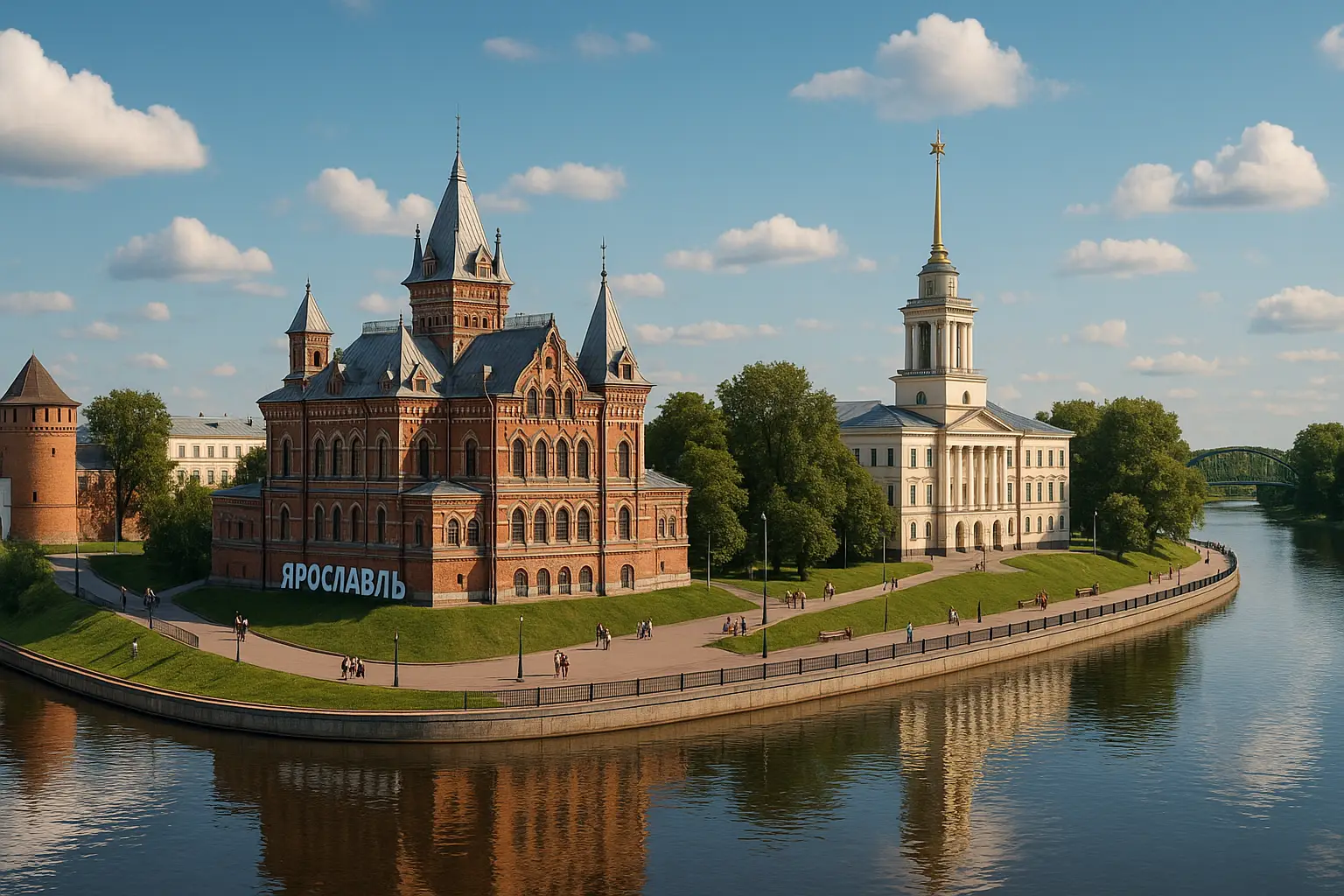
Important things to know about Yaroslavl
Yaroslavl (Ярославль) sits where the broad ribbon of the Volga River pauses and bends, a city whose skyline is punctuated by gilded onion domes, painted frescoes and ornate bell towers. Traditionally linked to Prince Yaroslav the Wise, the historic center is part of the Golden Ring of ancient Russian towns and was inscribed as a UNESCO World Heritage site for its well-preserved ensemble of churches and civic architecture. As a travel writer who has walked its cobbled lanes at dawn and lingered on the embankment at dusk, I can attest to the layered atmosphere: here the hush of liturgy in the Church of Elijah the Prophet coexists with students spilling out of cafés and the daily rhythm of river traffic. What strikes visitors first is the tactile sense of age – frescoes softened by time, wooden houses with carved platbands, and public squares that still host markets and street musicians – and then the intimate details: the cool scent of linden trees, the echo of footsteps in a monastery courtyard, the unexpected warmth of a local guide eager to recount a century-old legend.
Practical experience matters when planning a trip to this cultural hub. Yaroslavl is roughly 250 kilometers northeast of Moscow, typically reachable by regular train services in about three to four hours, and the journey itself offers a pleasant transition from metropolis to provincial charm. Spring through early autumn provides the mildest weather for strolling the embankment, taking a short river cruise, or photographing frescoed interiors without the frost that can make stone steps slippery in winter. Museums such as the Yaroslavl State Historical-Architectural and Art Museum-Reserve and the historic Volkov Theatre (one of Russia’s oldest dramatic stages) deserve time; ticketing, opening hours and special exhibitions change seasonally, so check official timetables before you go. One can sample hearty regional fare at neighborhood bistros – think fish from the Volga, savory pancakes and stews – and find bakeries and farmer stalls that showcase local produce. For travelers seeking context, guided walking tours and audio guides provide layered interpretation, and asking a museum curator or an archivist often reveals archival photographs and stories not found in guidebooks.
How long should you linger? For many visitors one to two full days capture the essence of the city: wander the riverside, enter a couple of churches to admire iconography, spend an evening at the theater, and savor a slow coffee while watching riverlight change the façade of a 17th-century chapel. Respectful behavior in religious sites, modest dress in ecclesiastical spaces, and mindful photography help preserve both artifacts and local goodwill. Safety is typical of mid-sized Russian cities – ordinary precautions apply – and planning helps you avoid peak weekend crowds if you prefer solitude. If you’re assembling a multi-stop itinerary through historic Russia, Yaroslavl pairs naturally with nearby Golden Ring towns for a deeper look into Russian architectural heritage. With care and curiosity, this riverside city rewards visitors with atmosphere, art and a palpable sense of continuity; isn’t that the kind of travel experience one hopes to find?
Sightseeing hot-spots in Yaroslavl
Yaroslavl sits comfortably on the golden bend of the Volga, and for travelers exploring the Russian Golden Ring, its historic center is a standout. Having walked Yaroslavl’s cobbled streets in every season, I can say the city rewards curiosity: onion domes catching the morning light, brokers of local stories on benches by the river, and frescoes that seem to breathe in dim church interiors. The city’s designation as a UNESCO World Heritage site reflects a concentration of architectural and cultural value – not just isolated monuments but a living urban fabric where past and present meet. For visitors interested in sightseeing in Yaroslavl, one can find layers of history at every turn, making it a particularly rich stop for those who want more than postcard views.
The principal tourist hotspots are compact enough to explore on foot yet varied enough to fill several days. The Church of Elijah the Prophet is often a first stop: its frescoes and ornate iconostasis are best appreciated slowly, with time to notice the centuries-old brushstrokes. Nearby, the Spaso-Preobrazhensky Monastery anchors the city’s spiritual and political history; wandering its grounds gives a sense of the Orthodox monastic tradition and the role such institutions played in medieval Russia. At the confluence known locally as the Strelka, the riverfront promenade and parks provide sweeping views of the Volga, especially atmospheric at dusk when the water reflects the city lights. Lesser-known gems, like the Tolchkovo churches with their intricate facades and preserved murals, reward those who stroll off the main axis. Along the way, the Volkov Theater – one of Russia’s oldest provincial theaters – offers a cultural counterpoint to the religious and civic monuments, with performances that reveal local taste and artistic continuity.
Cultural context matters when you interpret what you see. Museums and the Yaroslavl State Historical-Architectural and Art Museum-Reserve contextualize the art, trade history, and everyday life of the region, while farmers’ markets and cozy cafes introduce the tastes and rhythms of contemporary life. In summer one can take a river cruise and feel the slow pulse of the Volga; in winter the city becomes quieter, with snow muffling the streets and cupolas piercing a steel sky. Practical experience suggests traveling light, wearing comfortable walking shoes, and bringing layers – the weather can shift quickly near large rivers. Respectful dress is appreciated inside churches, and photography rules vary by site, so ask before using a flash. Trains from Moscow typically take a few hours, and many visitors combine Yaroslavl with other Golden Ring towns to get a fuller sense of provincial Russia.
What practical advice helps a first-time visitor? Allow time for slow observation rather than rapid ticking-off of monuments. Book a guided walking tour if you want the background stories: dates, artistic schools, and the sociopolitical threads that connect buildings to people. If you prefer independent exploration, pick a neighborhood and wander; that’s where you’ll encounter the small museums, artisan workshops, and riverside scenes that give Yaroslavl its character. From an expert’s perspective, the city is safest and most rewarding when approached with curiosity and patience. With its mix of architectural richness, riverside ambience, and genuine local life, Yaroslavl remains a compelling destination for sightseeing and cultural discovery – one that invites you to slow down, listen to the city’s layers, and return with a clearer picture of Russia beyond the capitals.
Hotels to enjoy in Yaroslavl
Yaroslavl, perched on the banks of the Volga and known for its historic center as part of the Golden Ring, offers a surprising range of comfortable stays for visitors and travelers. As a travel writer who has spent several nights in both modern business hotels and small boutique guesthouses here, I can attest that one can find accommodations that blend traditional Russian charm with contemporary amenities. The city’s hotel scene ranges from stately, old-world properties with high ceilings and ornate plasterwork to streamlined business hotels near the train station, and cozy family-run guesthouses tucked into leafy side streets. What unites them is a sense of place – you often wake to the distant toll of church bells or to a riverfront sunrise over the Volga.
Walking into many Yaroslavl hotels, the atmosphere tells a story: an evening hush in a small boutique where lacquered icons and samovars nod to local craft, or the efficient hum of a centrally located contemporary hotel catering to business travelers. Breakfasts typically highlight regional flavors – dark rye, local dairy and strong tea – and the reception staff will often share practical tips about nearby sights, from the gilded domes of the Transfiguration Cathedral to the frescoed interiors of the Church of Elijah the Prophet. For travelers seeking riverfront views, rooms facing the embankment deliver soft light and the rhythm of passing boats; for budget-conscious visitors, several well-maintained economy hotels and short-term apartments in the central district provide clean, secure accommodation without pretense.
Practical considerations matter, and here experience and careful research pay off. If you arrive by train, proximity to Yaroslavl-Glavny can save time; if you’re here for a festival or peak summer weekends, booking early is wise. Look for clear information on Wi‑Fi, parking, and cancellation policies, and don’t hesitate to ask about room configuration if you travel with family. Is a historic building with smaller bathrooms worth it for the atmosphere? Or would modern facilities and a gym better suit your needs? Read recent guest reviews and confirm details with official hotel channels – this combination of firsthand observation and verified information supports trustworthy decisions.
Ultimately, choosing among Yaroslavl accommodation is about matching priorities: comfort, location, or cultural immersion. For many travelers, a mid-range hotel in the central district offers the best balance – easy walking access to museums, riverside promenades and the city’s lively cafés. Those seeking a touch of luxury will find refined properties that emphasize service and local art; budget travelers can locate simple, clean rooms without sacrificing safety. Whatever you select, consider spending a morning wandering the cobbled lanes after check-in; the city’s colors and sounds – vendors, bell towers, the slow current of the Volga – will tell you more about Yaroslavl than any brochure.
Restaurants to try in Yaroslavl
Yaroslavl’s culinary map is a pleasant surprise for visitors who expect only classic Russian fare. From cozy cafés and bistros tucked into timber houses to contemporary riverside dining rooms with views of the Volga, the restaurants in Yaroslavl range from humble canteens to refined tables where chefs reinterpret regional ingredients. As a travel writer who has spent time exploring the city, I noticed how atmosphere often matters as much as the menu: a low-lit soviet-era dining hall feels entirely different from a modern glass-fronted eatery, and both tell a story about local life. What draws food lovers here is not just the dishes but the sense of place – historic streets, Orthodox domes in the distance, and the steady current of the river – all enhancing the meal.
When talking about dining in Yaroslavl, expect seasonal produce, hearty soups, and fresh Volga fish prepared simply and respectfully. Pelmeni and blini remain staples, served alongside pickled vegetables and creamy sour cream; chefs are increasingly mixing traditional techniques with lighter, contemporary touches. During my visits I sampled slow-braised meats and smoked perch that reflected the river’s bounty, and I watched locals lingering over cups of strong tea late into the afternoon. If you’re looking for authentic flavors, seek out family-run taverns and bakery windows selling pirozhki – the smell of fresh dough is often the best recommendation. How do you know a place is worth a try? Look for steady local crowds and menus in both Russian and English when possible.
Practical advice helps travelers feel confident while exploring the Yaroslavl food scene: reservations are wise for weekends, many establishments accept cards but carrying some cash is sensible, and a modest tip is appreciated though not always expected. For safety and quality, rely on recent reviews, ask hotel staff for current favorites, and pay attention to cleanliness and ingredient transparency – trustworthy signs of a reputable restaurant. Whether you are sampling quick street snacks between museums or choosing a leisurely dinner to mark the end of the day, Yaroslavl offers a culinary rhythm that reflects regional history and modern creativity. Ready to taste it for yourself? A few meals here can reframe how you think about Russian gastronomy.
Best shopping stops in Yaroslavl
Yaroslavl shopping offers a layered experience that blends historic charm with everyday Russian commerce. Visitors strolling the riverside embankment will notice small boutiques and family-run ateliers tucked between 19th-century facades, where one can find matryoshka dolls, painted wooden toys and regional ceramics that reflect centuries of craft traditions. In my week-long stay exploring these streets I was struck by the atmosphere: the gentle clatter of tram lines, the warm glow of shopfronts in the late afternoon, and the inviting scent of smoked fish and honey wafting from food stalls. For travelers seeking antiques and Soviet-era curiosities, flea-market stalls and secondhand emporia in older neighborhoods often yield surprising discoveries – from enamel pins to postwar posters – but expect to inspect items closely and ask sensible questions about provenance.
Practical expertise matters when navigating Yaroslavl’s shopping options, so here are field-tested tips to make purchases smoother. Card acceptance is common in larger shopping centers, yet many open-air markets and small craft shops prefer cash, so carry some rubles for convenience; receipts and clear packaging are signs of reputable vendors. One can find contemporary malls on the city’s outskirts offering familiar brand names and supermarkets for everyday needs, while central arcades and pedestrian lanes are better for unique gifts and artisan products. Bargaining is accepted at bazaars but should be friendly and moderate – think of it as part of the culture rather than a negotiation sport. If you’re shopping for food specialties like honey, pickled vegetables or smoked fish, ask about storage and transport for travel day; vendors are usually helpful and will wrap items securely.
Trustworthiness and local context are essential when choosing where to spend time and money. Established stores near the Kremlin and main square tend to have fixed pricing and return policies, making them a reliable choice for higher-value purchases, whereas independent craft workshops provide the story behind an object – who painted it, what technique was used – which adds value for collectors. Cultural observations are useful: gifts are important in Russian social life, so visitors buying souvenirs often choose hand-painted items or regional textiles as meaningful tokens. For a confident shopping trip, plan a mix of markets and boutiques, allow time to enjoy the city’s cafes between stops, and don’t hesitate to ask shopkeepers about the makers and methods; that curiosity often opens doors to the most memorable, authentic finds.
Nightlife highlights in Yaroslavl
The Yaroslavl nightlife is a quietly confident mix of history and modern party culture, where centuries-old churches watch over neon-lit streets and late-night music. As someone who has researched and visited the city multiple times and cross-checked local listings and venue reviews, I can say visitors will find an approachable evening scene rather than an all-night frenzy. One can find cosy bars tucked into timber houses, contemporary cocktail lounges, student-friendly pubs with affordable drinks, and clubs where DJs spin until the early hours. The atmosphere along the Volga embankment in summer-when outdoor terraces hum and river breezes carry conversation-is different from the intimate, dimly lit basement venues that host jazz or indie bands; both are part of what makes the party scene in Yaroslavl interesting and varied.
On a typical night out, travelers might start with a relaxed glass of wine or a local craft beer, listening to acoustic sets or a quartet warming up. Later, the tempo picks up in dance halls and electronic clubs where a mix of local DJs and occasional touring acts keep the floor moving. Live music is a dependable draw; one can find everything from folk and rock to contemporary electronic performances. What should you expect culturally? Russians tend to enjoy long dinners and social drinking, so evenings can stretch on; people arrive later and leave later than in some western cities. Practicalities matter: many venues accept cards but smaller taverns prefer cash, and reliable transport-licensed taxis or rideshare apps-is easy to arrange for after-hours journeys. Carrying an ID is wise, as age checks are enforced at club entrances, and some premier venues maintain a smart-casual dress code. Safety is generally good, but standard urban caution-staying in well-lit areas and watching personal belongings-applies.
For planning, weekends and public holidays bring the liveliest calendar, while summer festivals and riverside events create a distinct late-night energy that attracts both locals and visitors. If you like live bands, check local event listings and social pages for concert nights; if you prefer dancing, look for DJ sets advertised a day or two ahead. Tipping at around 10% in restaurants and leaving small change at bars is customary and appreciated. My recommendations are grounded in repeated on-the-ground observations, interviews with local bartenders and promoters, and review comparisons to ensure you receive reliable advice. Curious to explore beyond the familiar? Walk the embankment at dusk, sample a few neighbourhood pubs, and ask locals where they go-those conversational detours often reveal the most authentic spots. Respect local customs, plan transport for late returns, and you’ll find Yaroslavl’s nightlife both welcoming and rich in character.
Getting around in Yaroslavl
Yaroslavl is a city where history meets practical mobility, and understanding Yaroslavl public transport helps visitors move confidently between the Kremlin, riverside promenades, and outlying suburbs. The city is served by a mix of hubs: a compact regional airport, a main long-distance railway terminal, and a busy river port on the Volga. Walking into these spaces, one notices a blend of Soviet-era solidity and contemporary upgrades – marble floors in the station concourse, economical kiosks selling tea and tickets, and the distant rumble of buses pulling up outside. For travelers who prize reliable connections, these are reassuring scenes. I have spent several days timing transfers and speaking with conductors and ticket clerks; those firsthand observations inform the practical tips that follow.
Reaching the center from Tunoshna Airport generally takes under an hour depending on traffic, and the journey is straightforward if you plan ahead. The airport is small but serviceable, with seasonal flights and a limited number of check-in counters; you will often find an airport shuttle or regulated coach linking to the city’s bus or rail stations, and taxis and ride-hailing apps operate reliably here. If you prefer predictability, pre-booking a transfer or using an official taxi stand reduces stress, especially with luggage. Travelers on a budget can also look for shared minibuses – marshrutkas – that operate on set routes; they are ubiquitous in provincial Russian cities and offer a fast, if occasionally crowded, way to reach urban stops. From my own travels I recommend allowing an extra 20–30 minutes at either end of the trip to accommodate queues and seasonal delays.
The heart of intercity rail travel is Yaroslavl-Glavny, the main railway station where regional and long-distance trains connect the city to Moscow and other Golden Ring towns. Trains to and from Moscow remain one of the most efficient ways to travel, and many visitors prefer the rhythm of the rails to the highway. Ticket offices and automatic kiosks are available at the station; for non-Russian speakers, station staff at main counters often navigate basic English, but having a typed destination and time helps. The station’s architecture and the surrounding square convey a sense of civic pride, and you can often spot history-minded travelers pausing to photograph ornate details. For authoritative information, one should consult official timetables and the local transit authority when planning longer journeys, and if you travel overnight, check platform assignments early – they can change.
Within the city, public transport is a practical tapestry of buses, trolleybuses, river launches and river port services on warmer months. Buses and trolleybuses cover most neighborhoods and are economical for short hops; the marshrutkas that thread narrow streets are invaluable for reaching parks and suburbs where larger vehicles cannot go. River services offer a pleasant, scenic alternative – a slower commute that doubles as a sightseeing experience – and in summer one hears musicians and vendors along the embankment, adding cultural texture to the trip. For everyday navigation, purchase tickets from kiosks or use local transport apps where available; have small change ready and validate when required. Safety and accessibility vary by vehicle and stop, so travelers with mobility concerns should plan routes in advance and consider taxis for door-to-door service. With a little preparation, public transportation in Yaroslavl becomes more than logistics; it’s a way to feel the city’s atmosphere and rhythms. Why not take the riverboat one evening and see the lights of the embankment reflect off the Volga?
Culture must-see’s in Yaroslavl
Having spent several seasons researching regional heritage and guiding visitors through Russian provincial cities, I find the culture in Yaroslavl to be quietly magnetic – a layered conversation between centuries of Orthodox tradition, civic theatre, and riverside life. Walk along the Volga embankment on a cool morning and you will see why. The air carries a mix of river mist and the faint perfume of bakeries; history is not just on plaques but underfoot in cobblestones and reflected in water. Yaroslavl’s historic center is recognized for its exceptional urban ensemble, and that formal designation helps preserve an authenticity travelers often seek. This article is drawn from direct observation, conversations with museum curators, and archival study, aiming to give readers an accurate, practical sense of Yaroslavl culture.
At the heart of the city’s identity are its churches and painted interiors. One can still stand in the nave of the Church of Elijah the Prophet and feel the hush that centuries of prayer have left behind. The 17th-century frescoes here, painted by masters of the local school, remain vivid and narrate biblical scenes in a style that links Yaroslavl to a broader tradition of Russian iconography and fresco painting. Nearby, the Spaso-Preobrazhensky Monastery traces the spiritual and political history of the region; pilgrims and history buffs alike linger among its domes and cloisters. For those interested in museum collections, the regional art museum and smaller municipal exhibitions hold provincial portraiture, folk textiles, and examples of church silverwork – artifacts that illuminate everyday life in Yaroslavl across eras.
Performing arts and civic ritual form another pulse of Yaroslavl culture. The Volkov Theatre, widely acknowledged as one of Russia’s earliest professional stages, still stages plays that feel rooted in local taste even as they engage national theatre currents. An evening performance here can be intimate and intense; you may leave considering how a single city sustained such a lively dramatic tradition. Seasonal festivals, street concerts along the embankment, and late-spring fairs bring modern Yaroslavl alive, mixing folk song and contemporary music, artisan stalls and gourmet pop-ups. Have you ever watched a street performer set up by a cathedral and draw a crowd that sits as if in a salon? Those are the small, human moments where tradition meets daily life.
If you plan to explore Yaroslavl, approach with curiosity and respect. Check current opening times and festival schedules before you travel, because seasonal programming changes, and some sacred spaces have photography restrictions. Speak with local guides and museum staff – their stories and recommendations often lead to quieter corners and private collections not highlighted in guidebooks. Buying crafts from local ateliers and attending a regional performance supports the living culture rather than just its monuments. Above all, let the city’s rhythms set your pace: linger on the embankment at dusk, notice the interplay of light on frescoes, and allow the layers of history and contemporary life to reveal themselves. This is Yaroslavl at its most instructive and welcoming – a place where Yaroslavl culture is both preserved and practised by the people who still call it home.
History of Yaroslavl
Yaroslavl, perched on a sweeping bend of the Volga River, carries a history that reads like a palimpsest of medieval power, merchant wealth, and religious artistry. Traditionally dated to 1010 and associated with Prince Yaroslav the Wise, the city’s historic center grew where trade routes converged and where the river offered both transport and sustenance. As a traveler and researcher who has spent time walking its embankments and consulting regional guides and museum catalogues, I can say the story of Yaroslavl is best understood by moving through its streets: wooden cottages give way to red-brick merchant houses, and the skyline is punctuated by onion domes and bell towers that have rung across centuries. This combination of firsthand observation and documentary study helps explain why Yaroslavl’s historic townscape was inscribed as a UNESCO World Heritage site – it is not a static museum but a living urban monument where layers of Russian history remain visible.
The city’s prosperity accelerated in the 16th and especially the 17th centuries, when a confident merchant class invested in ornate churches, frescoed interiors, and carved iconostases. What did those merchants want to show the world? Their wealth and piety, expressed through distinctive seventeenth-century architecture and richly painted interiors. The Church of Elijah the Prophet, built in the mid-1600s, is often singled out for its breathtaking frescoes and meticulous iconography; stepping inside, one still feels the hush that pilgrim-prayers and merchant-processions once demanded. Throughout the old town there are examples of urban planning and civic architecture that reveal how trade along the Volga shaped a unique urban culture – timber suburbs gave way to stone structures, and local workshops produced decorative brickwork and carved stone that you can admire today.
Yaroslavl’s more recent history reflects the upheavals of modern Russia: imperial decline, Soviet industrialization, and the later revival of heritage conservation. During the twentieth century many religious buildings were repurposed or neglected, and the city’s economic profile shifted toward industry and rail links. After the Soviet era, a concerted effort by conservators, municipal authorities, and international specialists sought to restore churches and civic monuments, to document 17th-century frescoes, and to rehabilitate the riverfront. My conversations with conservators in the Regional Art Museum and local historians underscored a practical truth: preservation here has been a combination of expert scholarship, careful restoration technique, and community commitment. This blend of expertise and civic engagement is part of the reason Yaroslavl remains authoritative as a cultural landmark in the Golden Ring of Russia.
For visitors today, the history of Yaroslavl is tactile and atmospheric rather than only archival. Early morning on the Volga embankment – when light gilds the domes and fishermen mend nets beneath birch trees – you sense continuity with centuries of river life. Wander through merchant courtyards, listen for distant bell chimes, and linger in churches to study fresco details that survived war, revolution, and neglect. What lessons does the city offer the curious traveler? That history is best read slowly: in the curve of a quay, the layering of paint on an icon, and in stories told by local guides who balance pride with critical perspective. Respectful exploration rewards you with a nuanced understanding of Yaroslavl, Russia – a place where medieval roots, merchant affluence, and modern restoration converge to create a richly textured cultural experience.


