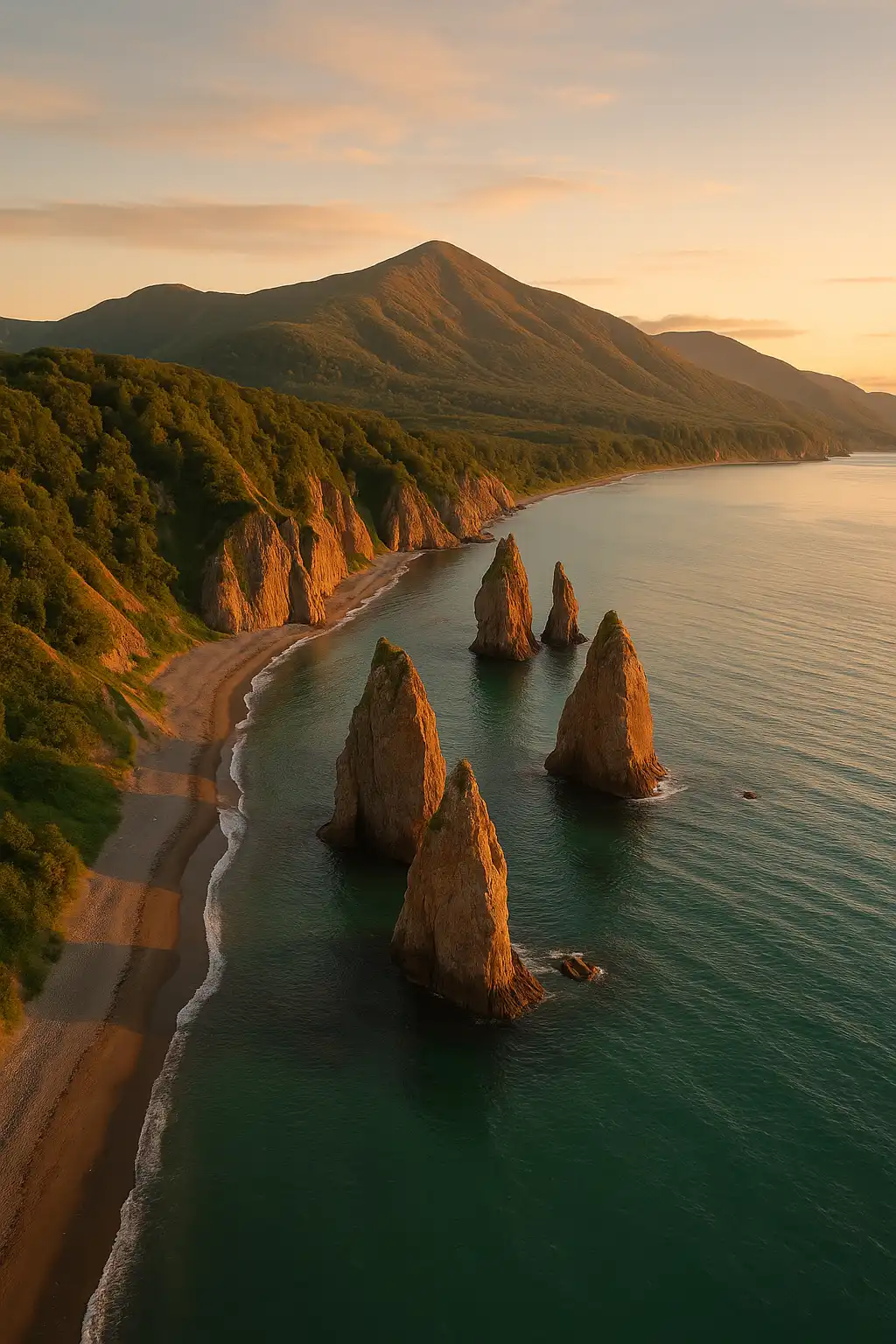
Introduction
Stretching like a slender crescent between the Sea of Okhotsk and the Sea of Japan, Sakhalin Island is Russia’s largest island and one of its most mysterious travel destinations. Lying just north of Japan’s Hokkaido, it forms a bridge between Asia’s two great cultures — Russian and Japanese — while preserving a natural wilderness that remains almost untouched by time. With its volcanic peaks, hot springs, dense forests, and rugged coastline, Sakhalin is a place where Siberia meets the Pacific and where every landscape tells a story of movement, endurance, and beauty.
The island spans nearly 1,000 kilometers in length, yet only about half a million people call it home. Its capital, Yuzhno-Sakhalinsk, serves as both gateway and contrast — a lively regional center surrounded by mountains, with ski slopes, museums, and traces of its complex Japanese past. Beyond the city lie fishing villages, oil towns, and endless forests inhabited by bears, foxes, and migrating birds.
What makes Sakhalin truly remarkable is its dual identity. For centuries, it has stood at the intersection of cultures — home to indigenous Nivkh and Ainu peoples, contested by Russian and Japanese empires, and now rediscovered as one of Russia’s last frontiers for adventure and cultural exploration. Travelers find here not only scenic beauty but also deep history, warm hospitality, and a sense of authenticity that few destinations can still offer.
To visit Sakhalin is to stand between worlds — Asia and the Arctic, modernity and tradition, sea and mountain — and to feel the quiet pulse of a land shaped by both resilience and grace.
A Brief History of Sakhalin Island
The history of Sakhalin Island is as layered and dynamic as the tides that shape its rocky coasts. For centuries, it has stood at the crossroads of cultures, empires, and migrations — a place where the Arctic winds meet the Pacific currents and where ancient peoples forged their lives in harmony with nature long before maps gave the island a name. Its story reflects resilience and adaptation, from the indigenous tribes who called it home to the explorers, settlers, and traders who later fought to define its borders.
The Indigenous Peoples and Early History
Long before Russia or Japan arrived, Sakhalin was inhabited by indigenous peoples such as the Nivkh, Ainu, Evenk, and Oroch. These communities lived by fishing, hunting, and reindeer herding, establishing small settlements along the island’s rivers and coasts. The Nivkh, in particular, considered Sakhalin the heart of their ancestral land, calling it “Karafuto” in their own language, meaning “the land of great waters.”
Archaeological findings show that humans lived here as early as 20,000 years ago, adapting to harsh winters and short summers. The island’s resources — salmon, seals, berries, and seaweed — sustained life, while its isolation preserved unique languages and traditions. The Ainu of southern Sakhalin shared strong cultural links with their counterparts in Hokkaido, creating a bridge of exchange across the La Pérouse Strait long before any national borders existed.
Russian Exploration and Imperial Interest
Sakhalin entered recorded history in the 17th century, when Russian Cossacks exploring the Far East encountered its shores. Early explorers such as Ivan Moskvitin and Vladimir Atlasov mapped parts of the coast, but the island remained largely unknown until the 18th century.
In 1643, Dutch navigator Maarten Gerritsz de Vries sailed along Sakhalin’s eastern coast, mistakenly believing it to be part of the mainland. Later, in 1808, Russian explorer Gennady Nevelskoy confirmed that Sakhalin was indeed an island, separated from the continent by the Amur Liman and the Tatar Strait. His expedition established the first accurate geographic understanding of the region, laying the groundwork for Russian expansion.
By the mid-19th century, the Russian Empire began establishing settlements and penal colonies on Sakhalin, seeing it both as a strategic outpost and a place of exile. In 1855, the Treaty of Shimoda between Russia and Japan allowed both nations to occupy Sakhalin without formal boundaries — a fragile arrangement that would later spark conflict.
The Japanese Era and Cultural Exchange
The Treaty of Saint Petersburg (1875) changed the balance of power: Russia gained full control of Sakhalin in exchange for ceding the Kuril Islands to Japan. However, following the Russo-Japanese War (1904–1905), Japan reclaimed the southern half of Sakhalin under the Treaty of Portsmouth.
From 1905 to 1945, southern Sakhalin, known as Karafuto Prefecture, became a thriving Japanese colony. The Japanese built railways, schools, temples, and fishing industries, transforming towns like Toyohara (now Yuzhno-Sakhalinsk) into modern settlements. The legacy of this period remains visible today in architecture, infrastructure, and even place names — a unique layer of cultural memory that distinguishes Sakhalin from any other region in Russia.
This era also saw complex interactions between the Japanese settlers and the local Nivkh and Ainu populations. While many indigenous communities were displaced, others adapted, learning Japanese and participating in trade. Cultural blending, though often unequal, left behind a shared heritage of art, cuisine, and craftsmanship that continues to shape Sakhalin’s identity.
Soviet Control and Transformation
The tides turned again during the final stages of World War II. In August 1945, the Soviet Union declared war on Japan and swiftly occupied southern Sakhalin and the Kuril Islands. Japanese residents were repatriated, and the region was incorporated into the Soviet Far East. Toyohara became Yuzhno-Sakhalinsk, the new administrative center of Sakhalinskaya Oblast’.
The postwar decades brought industrialization and migration. Thousands of workers from across the Soviet Union arrived to develop fishing industries, build railways, and extract oil and gas, which remain vital to the regional economy today. Towns such as Korsakov, Nevelsk, and Kholmsk grew rapidly, connected by the island’s railway spine and ports that linked Sakhalin to mainland Russia and Japan.
During the Cold War, Sakhalin became a closed and strategic zone, home to military bases and border guards. Foreigners were rarely allowed entry. The tragic Korean Air Lines Flight 007 incident in 1983, when a civilian plane was shot down near Sakhalin, underscored the region’s geopolitical sensitivity. For decades, its natural beauty remained hidden from the outside world.
Post-Soviet Revival and Modern Sakhalin
With the collapse of the Soviet Union in 1991, Sakhalin entered a new era. Economic reforms and the discovery of vast offshore energy reserves transformed it into one of Russia’s most important regions for oil and gas production. International projects such as Sakhalin-1 and Sakhalin-2 brought foreign investment and global attention, while infrastructure and tourism slowly developed.
Today, Yuzhno-Sakhalinsk is a cosmopolitan hub blending Russian resilience with traces of Japanese refinement. Visitors can walk streets lined with sakura trees, ski on snowy slopes, and explore museums preserving the island’s dual heritage. Yet beyond the capital, Sakhalin remains wild and untamed — a realm of fishing villages, mountain passes, and coastal cliffs where nature still reigns supreme.
The island’s story is one of constant renewal. Each wave of history — indigenous, Japanese, Russian, Soviet — has added layers of identity, creating a culture unlike anywhere else in Asia or Europe. To understand Sakhalin is to grasp the beauty of contradiction: an island shaped by struggle and separation, yet unified by its enduring spirit and natural grace.
Key Landmarks and Attractions
The beauty of Sakhalin Island lies in its contrasts — the meeting of East and West, mountain and sea, wilderness and modernity. From the Japanese-era landmarks of Yuzhno-Sakhalinsk to the untouched cliffs of Cape Giant and the marine sanctuaries of Moneron Island, every corner of Sakhalin tells a story of nature’s strength and human persistence. Below are the island’s most remarkable attractions, blending cultural, historical, and natural significance for travelers who seek to uncover this unique Russian frontier.
1. Yuzhno-Sakhalinsk City and the Regional Museum
The capital of Sakhalin is more than just an administrative center; it is the cultural heart of the island. Nestled between the Susunai mountains and lush valleys, Yuzhno-Sakhalinsk offers a fascinating mix of Russian and Japanese influences.
The city’s most iconic landmark is the Sakhalin Regional Museum, housed in a former Japanese building dating back to 1937. Its architecture — a blend of Japanese pagoda style and Art Deco — immediately stands out. Inside, exhibits trace the island’s complex past, showcasing artifacts from indigenous Nivkh and Ainu cultures, Japanese colonial times, and Soviet industry.
Why visit: It’s the perfect introduction to Sakhalin’s multi-layered identity.
Insider tip: Visit in the afternoon to catch the sunlight reflecting off the museum’s tiled roof and explore the landscaped Japanese-style garden behind the building.
2. Gorny Vozdukh Ski Resort
Just a few minutes from Yuzhno-Sakhalinsk city center rises Gorny Vozdukh (“Mountain Air”), one of the best ski resorts in the Russian Far East. Originally developed during the Japanese era, the resort has been modernized with new lifts, equipment rental, and panoramic trails.
In winter, the slopes offer excellent skiing and snowboarding with views stretching across the city and Aniva Bay. In summer, the resort becomes a hiking and paragliding paradise, with trails leading to forest lookouts and alpine meadows.
Why visit: A rare chance to ski while overlooking the Pacific Ocean.
Insider tip: The night slopes are illuminated until late — locals often enjoy evening skiing followed by hot meals at the summit café.
3. Cape Giant (Mys Velikan)
On the island’s southern coast near Okhótskoye village lies Cape Giant, one of Sakhalin’s most breathtaking natural wonders. Towering sea cliffs, rock arches, and giant basalt formations sculpted by waves form a dramatic coastline that rivals any in the Pacific.
The site feels otherworldly: sea birds circle the cliffs, and waves crash with thunderous rhythm against pillars that resemble mythological guardians. A short hiking trail leads from the forest to panoramic viewpoints overlooking the Sea of Okhotsk.
Why visit: For photographers and nature lovers, it’s the most spectacular coastal landscape on the island.
Insider tip: Visit early in the morning for calm weather and soft light — the cliffs glow golden under the sunrise.
4. Tyuleny Island (Seal Island)
Off the eastern coast of Sakhalin, Tyuleny Island is a protected marine reserve and one of the largest seal rookeries in the North Pacific. Thousands of northern fur seals and Steller sea lions gather here each summer to breed.
Access to the island is restricted to guided eco-tours and scientific expeditions, but boat trips from Nevelsk or Korsakov allow visitors to observe the wildlife from a respectful distance.
Why visit: It’s one of Russia’s premier destinations for Arctic marine wildlife observation.
Insider tip: The best season is July–August, when seal pups are visible and sea conditions are calm.
5. Moneron Island – Russia’s Underwater Paradise
Located southwest of Sakhalin, Moneron Island is a nature reserve celebrated for its crystal-clear waters and rich marine life. Once a secret Soviet military outpost, it is now known as one of Russia’s best diving locations.
Divers encounter coral reefs, sea anemones, kelp forests, and colorful fish — rare sights in northern waters. Above water, steep cliffs, waterfalls, and meadows filled with wildflowers make Moneron an ecological treasure.
Why visit: It’s Russia’s only marine natural park and a biodiversity hotspot.
Insider tip: Only 100–200 visitors are allowed annually, so permits and guided tours must be arranged in advance from Nevelsk or Kholmsk.
6. Lake Busse
Near the village of Starodubskoye, Lake Busse is a shallow lagoon famous for its rich seafood — mussels, scallops, and crabs harvested by local divers. Its calm, mirror-like waters reflect the sky, creating a serene atmosphere perfect for relaxation.
Many visitors come for the seafood picnics offered on the lakeshore, where fresh shellfish are cooked in simple, traditional style.
Why visit: A perfect blend of nature, gastronomy, and local culture.
Insider tip: Summer weekends often feature small food festivals celebrating the local catch — an ideal opportunity to meet residents and try authentic Sakhalin flavors.
7. Korsakov Port and Seaside Promenade
Korsakov, one of Sakhalin’s oldest towns, sits on the southern coast facing Hokkaido. Founded in 1853 as a Russian outpost and later developed under Japanese rule, the town remains an important fishing and shipping hub.
The seaside promenade offers sweeping views of Aniva Bay, dotted with fishing vessels and cranes. Nearby stands the Korsakov Local Museum, where exhibits detail the town’s Japanese colonial architecture and its transformation into a modern port.
Why visit: For travelers interested in Sakhalin’s cross-cultural maritime heritage.
Insider tip: Climb the observation hill behind the port for a panoramic view of the bay — especially stunning at sunset.
8. Cape Aniva and the Aniva Lighthouse
Few places embody Sakhalin’s mystery like Cape Aniva, a remote headland marking the island’s southeastern tip. Perched atop a rocky outcrop surrounded by crashing waves is the legendary Aniva Lighthouse, built by the Japanese in 1939.
Abandoned after decades of service, the lighthouse stands as a haunting monument to human determination in one of the harshest marine environments on Earth. Its cylindrical concrete tower rises 31 meters above sea level, guiding ships through dense fogs and treacherous currents.
Why visit: The lighthouse is a symbol of Sakhalin’s endurance and one of Russia’s most iconic maritime landmarks.
Insider tip: Access is possible only by boat or guided off-road expedition. Bring waterproof gear — the weather here changes rapidly.
9. Okha and the Northern Oil Fields
In the far north of Sakhalin lies Okha, the center of the island’s oil industry. While primarily an industrial settlement, its surrounding landscapes of tundra, marshes, and beaches offer unique charm.
The Okha Geological Museum showcases the development of Sakhalin’s petroleum projects, while nearby coastal cliffs provide ideal spots for watching migratory birds and seals. The sense of isolation here is profound — endless horizon, wind, and sky.
Why visit: To witness Sakhalin’s economic heartbeat and experience the solitude of the far north.
Insider tip: If you travel this far, bring binoculars for birdwatching — this region lies on the East Asian–Australasian Flyway, one of the world’s great migration corridors.
10. Kholmsk and the West Coast
Facing the Sea of Japan, Kholmsk is Sakhalin’s main western port, known for its steep hills and scenic coastal drive. The Kholmsk Railway Station, built during Japanese rule, is one of the island’s most photogenic remnants of Karafuto architecture.
Visitors can explore nearby beaches, climb observation hills, or take the ferry that connects Kholmsk with Vanino on mainland Russia — one of the few direct links between Sakhalin and the continent.
Why visit: For a glimpse of Sakhalin’s daily life and easy access to rugged coastal views.
Insider tip: Try the local seafood at the port cafés — simple, fresh, and unforgettable.
11. Nevelsk and Its Sea Cliffs
South of Kholmsk, the small town of Nevelsk is known for its fishing heritage and dramatic sea cliffs. Offshore, a famous sea lion rookery draws photographers and wildlife enthusiasts. The town’s Harbor Lighthouse, still operational, stands as a local landmark and offers a window into Sakhalin’s maritime soul.
Why visit: For close encounters with Steller sea lions and spectacular coastal photography.
Insider tip: Visit in late summer when the sea lions gather in large numbers and the sunsets cast golden reflections across the bay.
12. Dolinsk and the Taranay Hot Springs
Inland from Yuzhno-Sakhalinsk lies Dolinsk, a tranquil town surrounded by forests and rivers. Just outside town are the Taranay Hot Springs, natural thermal pools popular with locals seeking relaxation and health benefits.
In winter, the contrast of hot water and falling snow creates a magical atmosphere, while in summer, the springs make a soothing end to a day of hiking or exploring.
Why visit: For rejuvenation and a glimpse of rural island life.
Insider tip: Visit on weekdays to avoid crowds — weekends attract many residents from Yuzhno-Sakhalinsk.
From ancient capes and mountain trails to coastal towns steeped in layered history, Sakhalin’s landmarks reveal the island’s dual character: wild and refined, distant yet inviting. Each site — whether natural or manmade — offers an experience rooted in authenticity, shaped by the sea and the memories of those who have called the island home.
Nature and Outdoor Activities
The essence of Sakhalin Island lies in its nature — vast, wild, and elemental. Mountains rise abruptly from the sea, rivers cut through dense taiga forests, and coastlines stretch for hundreds of kilometers without human footprints. For those who seek adventure, Sakhalin offers one of Russia’s most diverse landscapes: alpine ridges, volcanoes, wetlands, hot springs, and marine sanctuaries all within reach of a few days’ travel. Whether hiking in summer or skiing in winter, visitors find that every trail and shoreline tells a story of natural power and quiet resilience.
The Susunai and Tonino-Anivsky Mountain Ranges
Running parallel to the southern part of the island, the Susunai Range and Tonino-Anivsky Ridge dominate the skyline around Yuzhno-Sakhalinsk. These forested mountains are easily accessible yet feel entirely untamed. In summer, hiking trails lead through birch and cedar forests alive with bird calls and the scent of wild herbs. In winter, deep snow transforms the slopes into pristine white wildernesses for backcountry skiing and snowshoeing.
The peaks offer sweeping views of Aniva Bay and the distant Pacific. The highest summit, Mount Vavay, reaches about 1,600 meters and provides an unparalleled panorama of the island’s south.
Insider tip: Local hiking clubs in Yuzhno-Sakhalinsk organize guided treks to the peaks — ideal for those unfamiliar with the terrain or local wildlife.
Lakes, Rivers, and Waterfalls
Sakhalin is rich in freshwater ecosystems that mirror the sky and nourish its forests. Among the most beautiful is Lake Tunaicha, southeast of Yuzhno-Sakhalinsk. The lake stretches over 30 kilometers, surrounded by reeds, pine forests, and sandy beaches where herons and eagles can often be seen.
Farther north lies Lake Nevskoye, a vast mirror-like expanse in the central plains. Rivers such as the Poronai and Naiba are famous for salmon spawning runs — a spectacular sight each autumn as the fish turn the water red with movement.
The island’s waterfalls, though less known, are hidden gems. The Ilya Muromets Waterfall near Dolinsk cascades nearly 15 meters down moss-covered rock walls, creating a misty oasis within the forest.
Insider tip: The best time to explore lakes and rivers is June to September, when the weather is stable and mosquitoes are minimal.
The Poronaysky Nature Reserve
At the heart of the island lies the Poronaysky Nature Reserve, covering more than 56,000 hectares of pristine ecosystems. Established in 1988, it protects rare species of birds, plants, and mammals that thrive in Sakhalin’s temperate rainforests and coastal wetlands.
Visitors can join eco-tours led by rangers to observe Steller’s sea eagles, Sakhalin musk deer, and brown bears. The wetlands serve as crucial nesting grounds for migratory species traveling between Asia and Alaska.
Insider tip: Entry requires advance permission from the reserve’s administration. Book a guided visit from Yuzhno-Sakhalinsk or Poronaisk to ensure compliance with conservation rules.
Hiking to Cape Svobodny and Cape Giant
The southern coast of Sakhalin offers some of the most stunning coastal trails in the Russian Far East. The hike to Cape Svobodny begins near Starodubskoye village and passes through forests, cliffs, and meadows filled with wildflowers. The trail ends with sweeping views of the sea and the towering rock pillars of Cape Giant (Mys Velikan) nearby.
Along the way, travelers may spot sea eagles circling above or seals basking on the rocks below. The wind carries the scent of salt and pine, blending sea and forest into one endless horizon.
Insider tip: The weather changes quickly — always carry waterproof gear and sturdy footwear. Local guides can assist with navigation and safety.
Moneron Island Marine Park
As one of the most remote and beautiful places in the Sakhalin region, Moneron Island is a paradise for divers and ecotourists. The water clarity reaches up to 30 meters, revealing coral-like anemones, sea stars, and kelp forests teeming with life. Above the surface, steep cliffs and waterfalls give the island an almost mythical appearance.
Diving, snorkeling, and coastal photography tours operate under strict environmental guidelines. Visitors must travel from Nevelsk by boat, and overnight stays are available in small eco-lodges.
Insider tip: The diving season lasts from July to September. Bring underwater cameras — Moneron’s vibrant colors are unlike any other Arctic marine habitat.
Wildlife Watching and Birding
Sakhalin is part of the East Asian–Australasian Flyway, making it one of the best birdwatching regions in the Russian Far East. From spring to autumn, millions of migratory birds stop on the island, including rare species such as red-crowned cranes, black storks, and sandpipers.
On the coasts, travelers can spot Steller sea lions, fur seals, and occasionally gray whales. Inland, forests shelter bears, foxes, sables, and lynx, though sightings are rare and best undertaken with local naturalists.
Insider tip: Bring binoculars and visit during May–July for nesting season, especially around the Poronaysky wetlands and the northern coastal plains near Okha.
Off-Road Adventures and the Northern Wilderness
For those seeking true isolation, northern Sakhalin offers a sense of remoteness that few places can match. The tundra plains around Okha and Nogliki extend to the horizon, punctuated by rivers and marshlands rich in wildlife. Off-road expeditions using 4×4 vehicles or snowmobiles take travelers through this vast landscape, often following tracks once used by oil explorers or reindeer herders.
Camping under the northern lights, fishing for Arctic grayling, or exploring abandoned Soviet outposts creates an atmosphere of timeless solitude.
Insider tip: Hire experienced local drivers — road conditions vary and mobile coverage disappears within minutes of leaving town.
Hot Springs and Natural Baths
The island’s volcanic history has blessed it with numerous hot springs, many hidden deep within the mountains or forests. Among the most accessible are the Taranay Hot Springs near Dolinsk, where mineral-rich waters bubble up naturally. Others, such as the Lesogorskoye Springs near Korsakov, offer rustic outdoor pools surrounded by snow in winter.
Bathing in these springs is a cherished local ritual, especially after a long day of hiking or skiing. The water, rich in magnesium and sulfur, is said to relieve fatigue and joint pain.
Insider tip: Visit at dusk — soaking while watching the sun set over the valley is a quintessential Sakhalin experience.
Winter Activities – Skiing, Snowshoeing, and Ice Fishing
Winter transforms Sakhalin into a serene white world. From December to April, heavy snowfall blankets the island, turning forests into quiet sanctuaries and lakes into ice fields.
At Gorny Vozdukh, skiers and snowboarders enjoy well-groomed slopes and modern lifts. For those seeking solitude, snowshoeing through the taiga or ice fishing on frozen lakes such as Tunaicha or Busse offers a more meditative experience.
Insider tip: February and March provide the best snow quality and daylight balance. Locals celebrate winter festivals featuring reindeer sleigh rides, folk performances, and traditional hot fish soup served outdoors.
Sea Kayaking and Coastal Exploration
During summer, the calmer western and southern coasts of Sakhalin are ideal for sea kayaking and boating. Paddlers can explore sea caves, uninhabited coves, and beaches accessible only by water. Popular routes include the coastline near Kholmsk and Aniva Bay, where cliffs rise dramatically above turquoise water.
Kayaking tours often combine camping, fishing, and wildlife watching, offering a holistic experience of Sakhalin’s maritime spirit.
Insider tip: Always check tides and currents — the waters around Cape Aniva and Cape Giant are known for strong surges. Guided tours provide safety and navigation support.
The Magic of the Midnight Sun and Northern Lights
Sakhalin’s location along high northern latitudes means that daylight patterns shift dramatically through the year. In June and July, the sun barely sets, creating long golden evenings ideal for hiking and photography. In contrast, the northern lights sometimes grace the skies during winter nights, especially in the clear, dry air around Okha.
Witnessing either phenomenon — the endless glow of summer or the ethereal green shimmer of auroras — connects visitors to the primal rhythm of the island itself.
Insider tip: For aurora viewing, head to northern settlements with minimal light pollution and bring a thermal camera or long-exposure equipment.
The Call of the Wild
Sakhalin’s nature is not about grandeur alone — it is about immersion. It’s in the quiet rustle of birch leaves, the distant roar of waves against cliffs, the scent of pine after rain. Every journey, whether along a trail, a frozen river, or a windswept coast, reminds visitors that this island remains one of the few places where the Earth still feels ancient and unspoiled.
Here, adventure does not mean adrenaline but awareness: the slow discovery of space, silence, and the elemental beauty of the far Pacific frontier.
Food and Dining in Sakhalin Island
The cuisine of Sakhalin Island is as diverse as its history and landscape — a meeting of sea and forest, Russia and Japan, tradition and innovation. Surrounded by rich fishing grounds and blessed with fertile land, Sakhalin has developed a culinary culture rooted in simplicity, freshness, and respect for ingredients. Here, food is more than sustenance; it is a reflection of life between two worlds — Siberian endurance and Pacific refinement.
Every meal tells a story. Fishermen return with crabs and scallops caught that morning; cooks in Yuzhno-Sakhalinsk prepare ramen next to borscht; and local grandmothers still dry seaweed on the shore as their ancestors once did. To taste Sakhalin is to taste the rhythm of the island itself — salty air, cold rivers, and warmth shared around a table.
The Essence of Sakhalin Cuisine
Because of its location and climate, Sakhalin’s cuisine is dominated by seafood, wild plants, and game. The proximity to Japan has left a lasting influence on cooking techniques and flavors — soy sauce, miso, and tempura coexist with rye bread, sour cream, and smoked fish.
Traditional Sakhalin cooking emphasizes purity and freshness rather than heavy seasoning. Meals often combine contrasting textures — soft crab meat with crisp kelp, rich salmon with pickled vegetables, or wild mushrooms served alongside sea urchin.
Locals believe food should reflect nature’s balance: salty from the sea, earthy from the forest, and sweet from the berries.
Signature Local Dishes
1. Sakhalin Crab (Краб Сахалинский)
The star of the island’s cuisine is undoubtedly the king crab, caught in icy waters and prized for its sweet, tender meat. Often steamed or lightly boiled, it is served with lemon, butter, or soy dipping sauce.
Insider tip: Try it at local markets in Yuzhno-Sakhalinsk or in coastal restaurants in Korsakov — it tastes best fresh from the day’s catch.
2. Scallops and Sea Urchins
The Sea of Okhotsk yields some of Russia’s best shellfish. Sakhalin scallops are grilled, baked, or served raw in sashimi-style dishes. Sea urchins (uni) are considered a delicacy, enjoyed raw or as sushi toppings, especially in restaurants with Japanese chefs.
3. Salmon and Caviar
Salmon runs define Sakhalin’s seasons. From late summer to autumn, rivers teem with fish, and locals prepare them in countless ways — salted, smoked, grilled over open flame, or cooked into soups like ukha. Red caviar is a common breakfast topping, spread generously on buttered bread or blini.
4. Yukola (Юкола)
A traditional preserved fish dish, yukola consists of salmon or chum fish air-dried in the open air, then rehydrated and cooked. Originating with indigenous Nivkh and Evenk peoples, it was vital for survival during long winters. Its smoky, chewy flavor remains popular among locals.
5. Reindeer and Venison Dishes
In northern Sakhalin, reindeer meat is a staple — roasted, stewed, or made into sausages. Its lean texture and rich taste pair perfectly with berries and mushrooms.
6. Seaweed and Kelp Salads
Sakhalin’s coastlines are lined with edible kelp, locally called laminaria. Lightly boiled and seasoned with vinegar, soy, or sesame oil, it appears in salads served as side dishes across the island.
7. Sakhalin Ramen and Japanese Fusion Dishes
Japanese culinary traditions thrive in Sakhalin. Restaurants often serve ramen, donburi, katsu, and sushi alongside Russian staples. Broths are made with local seafood and seasoned with miso, creating a unique northern twist on Japanese comfort food.
The Role of Indigenous and Regional Traditions
The Nivkh, Ainu, and Evenk peoples of Sakhalin left an enduring mark on the island’s food culture. Their approach to cooking focused on respect for natural resources — no part of a hunted animal or caught fish was wasted.
They smoked and dried fish for winter storage, used animal fat for cooking, and fermented berries and plants for vitamins. Even today, many rural families continue these traditions, blending ancient techniques with modern flavors.
Insider tip: Visit small family-run eateries in Dolinsk or Poronaisk, where menus feature dishes inspired by indigenous recipes — smoked fish, wild berry jams, and herbal teas brewed from taiga plants.
Cafés, Restaurants, and Dining Experiences
Yuzhno-Sakhalinsk – The Island’s Culinary Capital
As the main urban center, Yuzhno-Sakhalinsk offers a surprising variety of restaurants ranging from fine dining to cozy cafés.
- Kukhmisterskaya – Known for its Russian–Japanese fusion menu. Try crab dumplings, seafood soups, and homemade pickles.
- Tokyo Sushi & Grill – A favorite among locals for authentic sashimi and tempura made with Sakhalin ingredients.
- Sakhalin Fish Market Café – Casual and fresh, located near the central fish market. Guests can select their seafood and have it cooked on the spot.
- Varenichnaya No.1 – For those craving Russian comfort food: dumplings, soups, and hearty stews with local ingredients.
Insider tip: Many restaurants feature seasonal menus — autumn brings mushroom dishes, while spring highlights wild herbs and greens.
Coastal Dining – Korsakov, Kholmsk, and Nevelsk
The island’s port towns offer the freshest seafood, often served in humble, family-owned eateries.
- In Korsakov, small harbor cafés serve boiled crab with beer and seaweed salads while watching fishing boats unload their catch.
- Kholmsk features several casual taverns offering fried smelt and homemade pickled vegetables.
- Nevelsk is known for grilled seafood skewers and smoked salmon available directly from fishermen.
Insider tip: Avoid overpacked tourist spots — look for places where locals eat. These often have handwritten menus and the best flavors on the island.
Northern Simplicity – Okha and Nogliki
In the north, where the climate is harsher, food becomes heartier. Visitors will find reindeer meat, wild mushrooms, and fish soups enriched with barley or potatoes.
Insider tip: Ask for stroganina, thinly sliced frozen fish eaten raw with salt and pepper — a delicacy among locals that captures the spirit of Arctic dining.
Markets and Street Food
Markets on Sakhalin are lively, colorful, and filled with the scent of the sea.
- Yuzhno-Sakhalinsk Central Market – The best place to experience local food culture. Vendors sell dried fish, caviar, homemade jams, and kelp snacks. Sampling is common, and many stalls offer ready-to-eat seafood.
- Dolinsk Farmers’ Market – Specializes in honey, wild berries, and taiga herbs.
- Korsakov Fish Pier – A must-visit for street-style seafood — freshly grilled scallops, crab legs, and smoked salmon.
Insider tip: Try pirozhki stuffed with crab or salmon — a perfect quick snack combining Russian pastry with Sakhalin flavor.
Beverages and Local Specialties
1. Taiga Herbal Teas
Brewed from wild herbs such as thyme, fireweed, and pine buds, these teas are aromatic and restorative — often served after meals.
2. Local Beer and Vodka
The Sakhalin Brewery in Yuzhno-Sakhalinsk produces craft beers infused with regional flavors like sea salt or wild honey. Vodka remains the traditional companion to seafood feasts, often flavored with cranberry or cedar nuts.
3. Seaweed Wine and Infusions
A uniquely Sakhalin creation, this mild alcoholic beverage combines coastal herbs and seaweed for a mineral-rich taste reminiscent of the ocean breeze.
Seasonal Food Culture
Sakhalin’s calendar is defined by its natural cycles:
- Spring (April–June): Wild herbs, young nettles, and green onions appear. Fishermen return with the first smelt and flounder.
- Summer (July–August): The season of abundance — berries, mushrooms, shellfish, and salmon. Outdoor barbecues by the sea are a local tradition.
- Autumn (September–October): Mushroom season peaks; locals fill baskets with chanterelles, porcini, and milk caps. The markets overflow with pickles and preserves.
- Winter (November–March): Meals become hearty — soups, baked fish, and smoked meats dominate. Many families prepare dried seafood and salted vegetables to endure the long cold.
Insider tip: Join locals in seasonal festivals — crab celebrations in June, mushroom gatherings in September, and fish fairs in autumn — to experience Sakhalin’s living food traditions.
Culinary Etiquette and Experience
Sakhalin dining is friendly and unpretentious. Meals are slow, communal, and often shared. Guests are expected to try everything offered — refusing food can be seen as impolite. Toasting is an art form, and vodka shots are usually accompanied by heartfelt wishes for health, friendship, or good weather at sea.
At Japanese-style restaurants, politeness is equally valued: remove shoes when required, bow slightly when thanking staff, and avoid tipping excessively.
Insider tip: For the most authentic experience, accept invitations to family meals or community picnics. Home-cooked Sakhalin dishes — especially freshly boiled crab or homemade ukha by the riverside — capture the island’s warmth better than any restaurant.
The Taste of an Island Between Worlds
The food of Sakhalin is more than a reflection of its geography; it is a symbol of coexistence. Russian hearth traditions blend with Japanese precision, indigenous knowledge meets global flavors, and every meal bridges past and present.
Eating on Sakhalin means savoring the sea’s generosity, the forest’s depth, and the hospitality of people who have learned to thrive at the world’s edge. Whether it’s a bowl of hot soup after a winter hike or a platter of scallops on a summer evening, each taste tells the same story — that in this far eastern corner of Russia, life is sustained not by luxury but by balance, gratitude, and connection.
Shopping in Sakhalin Island
Shopping on Sakhalin Island is unlike anywhere else in Russia. Here, commerce and culture are intertwined — shaped by isolation, maritime heritage, and a blend of Russian, Japanese, and indigenous traditions. You won’t find vast malls or global luxury brands, but you will find authenticity: handmade crafts, sea-inspired souvenirs, and items that tell the story of this remote Pacific land. From fish markets humming with life to quiet workshops where artisans carve ancestral symbols into wood and bone, Sakhalin offers treasures that reflect both its history and its spirit.
Local Markets – The Heart of Everyday Life
Markets remain the pulse of Sakhalin’s towns. More than shopping spaces, they are social meeting points where locals gather to exchange goods, gossip, and laughter.
Yuzhno-Sakhalinsk Central Market is the island’s largest and most vibrant. A stroll through its covered aisles reveals the island’s bounty — freshly caught fish, dried seaweed, jars of honey, handwoven baskets, and homemade jams from taiga berries. Vendors proudly display red caviar, crab legs, and scallops, often offering samples to curious visitors. The air smells of smoked salmon and pickled kelp, an unmistakable scent of coastal life.
Smaller markets in Dolinsk, Poronaisk, and Korsakov offer similar experiences, with fewer tourists and more local character. These places reflect the island’s rhythm — slow, personal, and filled with genuine human connection.
Insider tip: Arrive early in the morning when fishermen bring in the freshest catches. Always carry cash, as card payments are rarely accepted at stalls.
Souvenirs of the Sea
It’s impossible to separate Sakhalin’s identity from the sea. Many of its best souvenirs come directly from the water.
- Dried and Smoked Fish: A beloved local snack. Varieties include salmon, flounder, and smelt, often sold in vacuum-sealed packs for easy transport.
- Seaweed (Laminaria): Packaged kelp used for soups and salads — rich in minerals and a symbol of Sakhalin’s coastal diet.
- Caviar and Seafood Preserves: Available in markets and specialized stores, these are quintessential Sakhalin gifts. Red salmon caviar is most popular, while rarer black caviar is sold seasonally.
- Shellcraft and Coral Jewelry: Artisans in Nevelsk and Korsakov create jewelry from seashells, driftwood, and sea glass, turning simple materials into elegant mementos.
Insider tip: When buying seafood products, check for certification seals to ensure freshness and legal exportability.
Indigenous Art and Handicrafts
The indigenous Nivkh and Evenk peoples of Sakhalin have a rich artistic tradition centered around natural materials — wood, bone, and leather. Their crafts are more than decorative; they carry deep spiritual meaning.
Nivkh carving often features motifs of animals — bears, fish, and birds — representing harmony between human and nature. These carvings, usually made from reindeer antler or whalebone, are small but exquisite, ideal for collectors.
Textile arts are equally captivating. Women’s cooperatives in villages like Val and Noglik produce embroidered clothing, beaded jewelry, and fur-trimmed accessories inspired by ancient designs. Patterns often symbolize rivers, winds, or protective spirits.
Insider tip: Buy directly from artisans when possible. Many indigenous artists rely on tourism for income, and purchases directly support cultural preservation. Always ask before photographing the artists or their work.
Japanese-Era Antiques and Relics
Sakhalin’s unique history as a former Japanese territory (1905–1945) has left behind a treasure trove of cultural relics. Antique enthusiasts can sometimes find ceramic dishes, woodblock prints, coins, and household items from the Karafuto period in local flea markets or specialty shops in Yuzhno-Sakhalinsk.
Small antique stalls near the railway station often sell Japanese-style teacups, lacquerware, and old postcards showing Toyohara (the Japanese name for Yuzhno-Sakhalinsk) in its colonial days. Some pieces are genuine prewar antiques; others are replicas crafted in homage to the island’s layered past.
Insider tip: Be cautious with export regulations. Authentic antiques over 100 years old may require official clearance before leaving Russia.
Museums and Cultural Shops
Many of Sakhalin’s museums operate small souvenir corners featuring books, handicrafts, and replicas of historical artifacts.
- Sakhalin Regional Museum Shop: Offers high-quality prints of Japanese-era photos, indigenous art replicas, and books in Russian and English.
- Museum of Local Lore in Korsakov: Known for its collection of maritime souvenirs — model ships, old navigational tools, and artistic maps.
- Art Gallery in Yuzhno-Sakhalinsk: Features contemporary Sakhalin artists whose work often draws on the island’s landscape and multicultural identity.
Insider tip: These shops are ideal for finding meaningful, educational gifts rather than mass-produced souvenirs.
Modern Boutiques and Island Products
Yuzhno-Sakhalinsk’s city center also has a growing scene of boutiques and eco-stores that celebrate local craftsmanship. Many specialize in natural cosmetics, clothing, and design inspired by island aesthetics.
- Sakhalin Made: A popular concept store promoting locally produced goods — from seaweed-based skincare to handmade candles scented with pine and salt air.
- Taiga Aroma: Offers essential oils and soaps crafted from wild Siberian herbs and berries.
- Sakhalin Souvenir Factory: Produces magnets, postcards, and miniature lighthouses modeled after the famous Aniva Lighthouse.
Insider tip: Ask for gift sets featuring locally made cosmetics — sea salt scrubs, cedar balms, and berry creams are favorites among visitors.
Books and Cultural Keepsakes
For travelers who want to take home knowledge rather than objects, Sakhalin offers several literary souvenirs.
Bookstores in Yuzhno-Sakhalinsk carry Russian and translated editions of Anton Chekhov’s “The Sakhalin Island” (Ostrov Sakhalin), the author’s classic 1895 travelogue documenting his journey through the island’s prison settlements. Reading it after exploring the region adds profound historical perspective.
Local photography books and maps published by the Sakhalin State University Press capture the island’s modern face — its landscapes, wildlife, and people — making them ideal coffee-table mementos.
Insider tip: Combine a book purchase with a visit to Chekhov Street, where a statue commemorates the author’s journey across Sakhalin.
Natural and Wellness Products
Sakhalin’s pristine environment produces a range of natural goods sought by both locals and visitors:
- Wild Berry Jams and Honeys: Made from cloudberries, lingonberries, and blueberries collected in the taiga.
- Herbal Teas: Infused with fireweed, rosehip, and pine buds.
- Cedar and Birch Products: Oils, balms, and soaps with the scent of the northern forest.
- Sea Salt and Mud Masks: Extracted from coastal lagoons and known for their mineral content.
These make excellent gifts and reflect the island’s dedication to eco-friendly living.
Insider tip: For the freshest selection, visit farmers’ markets in late summer and early autumn, when seasonal products are at their peak.
The Joy of the Unexpected
Part of the charm of shopping in Sakhalin lies in its unpredictability. You may walk into a small shop and discover an artist selling hand-painted stones, or find a fisherman offering dried salmon from his morning catch. The island rewards curiosity and openness; its best finds often come from chance encounters rather than planned purchases.
Insider tip: Learn a few Russian phrases such as “Сколько стоит?” (“How much does it cost?”) and “Спасибо” (“Thank you”). Even simple words can turn a transaction into a friendly exchange.
Sustainable and Ethical Shopping
With tourism slowly growing, it’s essential to support responsible trade that benefits local communities and protects the environment. Choose handcrafted items over mass-produced imports, and avoid buying animal-based souvenirs (ivory, fur, or coral) unless verified as sustainable.
Many young Sakhalin entrepreneurs are now creating eco-friendly brands using renewable resources and traditional designs, blending respect for heritage with modern aesthetics. Supporting them helps preserve both nature and culture.
A Marketplace of Memory
Shopping in Sakhalin is not about acquiring things — it’s about carrying home a fragment of the island’s story. A jar of wild berry jam speaks of taiga summers; a carved bone pendant embodies the wisdom of indigenous ancestors; a weathered Japanese coin whispers of a shared, complex past.
Every item bought here holds a connection to the people and the land. That connection — tangible, honest, and rooted in place — is the most meaningful souvenir of all.
Day Trips from Sakhalin Island
Exploring Sakhalin Island itself is a journey through an extraordinary blend of sea, forest, and culture. Yet beyond its main towns and landmarks, the island offers countless day-trip opportunities that reveal its deeper character — quiet fishing communities, wild headlands, hidden hot springs, and offshore islands that feel frozen in time. Each destination carries its own rhythm, shaped by the sea’s temperament and the enduring patience of those who live close to it.
Whether you prefer rugged coastal hikes, historical excursions, or encounters with local traditions, these day trips from Yuzhno-Sakhalinsk and other regional centers showcase the island’s authentic, unfiltered beauty.
1. Moneron Island – The Emerald of the Sea of Japan
A journey to Moneron Island is one of the most unforgettable experiences in Sakhalin. Lying about 40 kilometers southwest of Nevelsk, this tiny island is Russia’s first marine park — a haven for wildlife and a paradise for divers.
Accessible by boat tours during summer, Moneron is famed for its turquoise waters, steep cliffs, and abundant marine life. Seals rest on the rocks, while underwater, divers encounter kelp forests, sea anemones, and bright coral-like formations that seem almost tropical.
Travel time: 2–3 hours by boat from Nevelsk (weather permitting).
Highlights: Diving, birdwatching, waterfall hikes, sea kayaking.
Insider tip: The sea around Moneron can be rough; trips depend entirely on weather. Plan a flexible schedule and bring motion sickness tablets if needed.
2. Cape Aniva and the Aniva Lighthouse
Located at the southeastern tip of the island, Cape Aniva is home to one of Sakhalin’s most haunting landmarks — the Aniva Lighthouse. Built by Japanese engineers in 1939 on a narrow rocky outcrop surrounded by powerful tides, it once guided ships through the treacherous waters of the Sea of Okhotsk.
Today, the lighthouse stands abandoned, its concrete tower weathered by decades of wind and sea spray. Visiting it feels like stepping into a scene from another era — a mix of history, isolation, and awe.
Travel time: 4–6 hours round trip from Yuzhno-Sakhalinsk (off-road vehicle + boat).
Highlights: Lighthouse ruins, coastal cliffs, panoramic sea views.
Insider tip: Join a guided expedition with local operators — access is possible only via 4×4 and boat, and weather conditions can change rapidly.
3. Lake Tunaicha and Lake Busse
For a peaceful escape into Sakhalin’s natural world, the twin lakes Tunaicha and Busse offer ideal day excursions from Yuzhno-Sakhalinsk.
Lake Tunaicha is vast, framed by pine forests and sandy shores where herons and eagles nest. In contrast, Lake Busse is smaller but famous for its shellfish harvesting and seafood picnics. Visitors can watch divers collecting scallops and taste freshly cooked mussels along the shore.
Travel time: About 1.5 hours from Yuzhno-Sakhalinsk by car.
Highlights: Birdwatching, kayaking, fishing, seafood feasts.
Insider tip: Rent a small boat or kayak to explore the inlets. The calm surface and reflections make it a dream for photographers.
4. Korsakov and Aniva Bay
Just a 45-minute drive south of Yuzhno-Sakhalinsk lies Korsakov, one of Sakhalin’s oldest towns and a major fishing port. A day here offers a glimpse of local maritime life and history shaped by both Russian and Japanese influences.
Stroll along the seaside promenade, visit the Korsakov Local History Museum, and enjoy a seafood lunch while watching ships come and go from Aniva Bay. The nearby hills offer gentle hiking trails with sweeping views of the coastline.
Travel time: 1 hour by car from Yuzhno-Sakhalinsk.
Highlights: Port life, seafood dining, historical buildings, sea views.
Insider tip: At sunset, the bay glows with soft pink light — perfect for photography.
5. Dolinsk and the Taranay Hot Springs
For relaxation surrounded by nature, the Taranay Hot Springs near Dolinsk provide the perfect retreat. The mineral-rich waters bubble up naturally, forming pools surrounded by forest and mountain slopes. Locals have been bathing here for generations, believing the springs promote healing and rejuvenation.
Travel time: 1.5–2 hours by car from Yuzhno-Sakhalinsk.
Highlights: Outdoor hot springs, mountain scenery, forest walks.
Insider tip: Visit in winter for a magical contrast — steam rising through falling snow. Bring your own towel and swimwear, as facilities are minimal.
6. Kholmsk and the West Coast
Facing the Sea of Japan, Kholmsk is a port town that serves as a window into Sakhalin’s western side. The journey there — a winding mountain road offering ocean views — is worth the trip alone.
Explore Kholmsk’s railway station, one of the few remaining Japanese-era buildings, and the harbor lighthouse overlooking the sea. On clear days, the ferry to the Russian mainland departs from here, linking Sakhalin with Vanino in Khabarovsk Krai.
Travel time: 2 hours by car from Yuzhno-Sakhalinsk.
Highlights: Coastal drives, port views, Japanese architecture, local cafés.
Insider tip: Try the grilled smelt or crab soup at a harbor-side eatery — simple and delicious.
7. Nevelsk and Sea Lion Watching
A little farther south of Kholmsk lies Nevelsk, famous for its Steller sea lion rookery. These massive creatures gather along the rocky shore, basking in the sun or playing in the waves. It’s one of the best wildlife viewing spots on the island and an unforgettable sight for nature enthusiasts.
Visitors can also explore the Nevelsk Lighthouse and the fishing port, where boats return daily with fresh salmon and flounder.
Travel time: 2.5 hours from Yuzhno-Sakhalinsk.
Highlights: Sea lions, coastal cliffs, maritime life.
Insider tip: Bring binoculars and visit in August or September, when sea lion activity peaks and daylight lasts long into the evening.
8. Chekhov Trail and Yuzhno-Sakhalinsk Heritage Route
For those interested in literature and history, Yuzhno-Sakhalinsk offers a day route inspired by Anton Chekhov, who visited Sakhalin in 1890. His journey, recorded in The Sakhalin Island, exposed the harsh realities of penal life in the region.
The Chekhov Trail includes:
- Chekhov Museum – documenting his expedition and its impact on Russian literature.
- Chekhov Monument – a peaceful park statue honoring the author.
- Former Prison Settlement Site – now an open-air historical complex.
Travel time: Half-day walking or short taxi route within Yuzhno-Sakhalinsk.
Highlights: Literary heritage, Russian history, cultural context.
Insider tip: Read a few chapters of The Sakhalin Island before visiting — the experience becomes far richer with Chekhov’s own words echoing through the landscape.
9. Starodubskoye Village and Cape Giant
For adventure seekers, Starodubskoye serves as the gateway to Cape Giant (Mys Velikan), one of Sakhalin’s most striking natural landmarks. The trail leads through forests and meadows before opening to towering sea cliffs and basalt arches sculpted by wind and waves.
The hike is moderate but deeply rewarding, offering endless photo opportunities and a profound sense of solitude.
Travel time: 2–3 hours from Yuzhno-Sakhalinsk by car and foot.
Highlights: Hiking, coastal cliffs, sea photography.
Insider tip: Pack snacks and water; facilities are minimal. Morning departures ensure calmer winds and better light.
10. Okhotskoye and Local Villages
The village of Okhotskoye, located on the island’s east coast, offers an authentic glimpse of rural life. Fishermen mend their nets on the shore, children ride bicycles along unpaved roads, and the smell of woodsmoke lingers in the air.
Visitors can join locals for fishing trips, seafood tastings, or simply stroll along the quiet beach. The sense of timelessness is palpable — this is Sakhalin as it has always been.
Travel time: 3 hours by car from Yuzhno-Sakhalinsk.
Highlights: Village life, fishing culture, community hospitality.
Insider tip: Bring small gifts like sweets or tea for hosts — gestures of appreciation are deeply valued in village communities.
11. The Kuril Islands Connection (via Korsakov or Yuzhno-Kurilsk)
For travelers with more time, excursions to the southern Kuril Islands (Kunashir and Iturup) are possible via Korsakov Port. Though not technically part of Sakhalin proper, these islands belong to the same region and share its volcanic origins and cultural diversity.
Iturup Island features stunning volcanic craters, hot springs, and the white pumice cliffs of White Rocks (Kita-no Misaki). Kunashir Island is home to Tyatya Volcano and the scenic Cape Stolbchaty basalt formations.
Travel time: Multi-day ferry trip (2–3 days each way).
Highlights: Volcanic landscapes, island culture, rare wildlife.
Insider tip: Ferries operate seasonally (usually June to October) and depend on weather. Book tickets and accommodation well in advance through official channels.
12. Forest and River Fishing Trips
Fishing is part of Sakhalin’s soul, and many locals happily share the experience with visitors. Guided day trips along the Poronai River, Naiba River, or Tym River offer the chance to catch salmon, grayling, and trout in crystal-clear waters surrounded by pine forests.
Most tours include campfire cooking, where the catch is grilled or made into ukha, a traditional fish soup flavored with herbs and a splash of vodka.
Travel time: 2–4 hours from Yuzhno-Sakhalinsk depending on location.
Highlights: Fishing, river scenery, local camaraderie.
Insider tip: Late August to mid-September is peak salmon season. Bring waterproof boots and insect repellent.
The Freedom of the Open Island
Each day trip on Sakhalin offers something distinct — a different rhythm, a different piece of the island’s soul. Whether standing at the base of the Aniva Lighthouse as waves crash around you, floating silently across Lake Tunaicha, or listening to the hum of a fishing village at dusk, travelers find that time here expands.
The distances may be long, the weather unpredictable, but those are part of the experience. To explore Sakhalin is to embrace its vastness, to let its landscapes unfold slowly, and to discover that every journey — even just a few hours beyond the city — reveals another side of this rare and remarkable island.
Practical Information
Traveling to Sakhalin Island is both an adventure and a reward in itself. Its remoteness may seem intimidating, but with a bit of planning, reaching this far eastern destination and exploring it comfortably is entirely possible. What awaits is a region of pristine nature, modern infrastructure in key towns, and a spirit of genuine hospitality — the kind that makes visitors feel not just welcomed, but remembered. This section provides all the essential details for planning a trip to Sakhalin, from transport and accommodation to climate, costs, and local customs.
How to Get to Sakhalin Island
By Air
The easiest and most common way to reach Sakhalin is by air. Daily flights connect Yuzhno-Sakhalinsk (UUS) — the island’s capital and main transport hub — with several major Russian cities, including Moscow, Saint Petersburg, Khabarovsk, Vladivostok, and Novosibirsk.
- Moscow to Yuzhno-Sakhalinsk: Flight time about 8–9 hours (direct, Aeroflot or Rossiya Airlines).
- Vladivostok to Yuzhno-Sakhalinsk: About 2 hours.
- Khabarovsk to Yuzhno-Sakhalinsk: 1 hour 30 minutes.
Yuzhno-Sakhalinsk Airport is modern and efficient, with English signage, ATMs, car rental offices, and taxis available upon arrival.
Insider tip: When booking domestic flights, allow for flexible dates — weather delays are possible, especially in winter or during typhoons in late summer.
By Sea
A more adventurous option is the ferry between the Russian mainland and Sakhalin. The Vanino–Kholmsk Ferry operates year-round (weather permitting), connecting Vanino in Khabarovsk Krai to Kholmsk on Sakhalin’s west coast.
- Crossing time: Approximately 16–18 hours.
- Ferries: Equipped with passenger cabins, cafeteria, and car transport decks.
- Booking: Must be arranged in advance, especially during summer.
This route is particularly scenic and offers a chance to experience the remoteness of Russia’s Far East firsthand.
Insider tip: The ferry can be delayed by storms. Always keep one buffer day on each end of your itinerary.
By Train and Ferry Combination
For a true trans-Russian experience, travelers can take the Trans-Siberian Railway or BAM (Baikal–Amur Mainline) to Khabarovsk or Vanino, and from there, continue by ferry to Sakhalin. The combined trip takes several days but is deeply rewarding — a journey through Russia’s geographic and cultural vastness.
Insider tip: Train–ferry combinations are ideal for travelers seeking immersion rather than convenience. Make sure to coordinate ticket schedules carefully.
Getting Around the Island
By Car
Renting a car in Yuzhno-Sakhalinsk gives visitors maximum flexibility. Roads between major towns — Yuzhno-Sakhalinsk, Korsakov, Dolinsk, Poronaisk, Kholmsk, and Nevelsk — are paved and in good condition. In contrast, northern and interior routes can be rough and require 4×4 vehicles.
- Car rentals: Available at the airport and in downtown Yuzhno-Sakhalinsk.
- Fuel: Widely available in southern regions; limited in the north.
Insider tip: GPS navigation apps work offline if maps are downloaded in advance. Carry paper maps for remote areas with no signal.
By Bus and Shared Taxi (Marshrutka)
Bus routes connect most southern towns, with regular departures between Yuzhno-Sakhalinsk, Korsakov, Dolinsk, and Kholmsk. Marshrutkas (shared minibuses) operate frequently and are inexpensive.
For long-distance travel to Poronaisk or Okha, buses are less frequent and can be affected by weather.
Insider tip: Always check departure times at bus stations the day before — schedules change seasonally and often informally.
By Train
Sakhalin’s narrow-gauge railway system is a legacy of Japanese infrastructure and covers several southern towns. Though slow and limited in scope, train travel offers a nostalgic glimpse of the island’s past.
- Route example: Yuzhno-Sakhalinsk to Nogliki (overnight).
- Comfort: Basic sleeper compartments; bring snacks and water.
Insider tip: The railway gauge is gradually being modernized to Russian standards, so routes may occasionally close for renovation.
By Organized Tours and Expeditions
For remote destinations such as Cape Aniva, Moneron Island, or northern Sakhalin, joining guided tours is recommended. Local operators handle logistics, permits, and safety — crucial in areas with limited infrastructure.
Insider tip: Choose small-group tours that employ local guides; their knowledge of weather, wildlife, and culture adds immeasurable value.
Climate and Best Time to Visit
Sakhalin’s climate is maritime continental — humid, cool, and unpredictable. The island experiences long winters and short, mild summers.
Winter (November–April): Snow blankets the island, making it perfect for skiing at Gorny Vozdukh and winter festivals. Temperatures range from –15°C to –5°C.
Spring (May–June): The landscape awakens with wildflowers and migrating birds, though weather can still be chilly and damp.
Summer (July–September): The most popular season for travelers. Days are long and mild (15–25°C), ideal for hiking, diving, and seafood festivals.
Autumn (October): Crisp air, vivid colors, and mushroom season make it a photographer’s dream.
Best time to visit: July to early September, when weather is stable, seas navigable, and national parks accessible.
Insider tip: Fog is common in summer, especially near the coast. Bring layers and waterproof gear regardless of season.
Accommodation
Sakhalin offers a range of lodging options, from modern hotels to rustic guesthouses and eco-lodges.
Yuzhno-Sakhalinsk:
- Mega Palace Hotel: Four-star comfort with panoramic views, spa, and restaurants.
- Paradise Resort Hotel: Ideal for longer stays, combining wellness facilities and excellent service.
- Budget options: Hostels and small family hotels with clean, simple rooms.
Other towns:
- Kholmsk and Korsakov: Small hotels and inns, often catering to business travelers and fishermen.
- Dolinsk and Poronaisk: Modest guesthouses, ideal for short stays or transit.
- North Sakhalin (Okha, Nogliki): Basic but welcoming lodgings for explorers or workers.
Insider tip: Book early during summer, when domestic tourism peaks. In rural areas, confirm if your accommodation has hot water and heating — these can be seasonal.
Prices and Daily Budget
While travel to Sakhalin is not cheap due to its remoteness, daily expenses can be managed sensibly.
- Accommodation: Mid-range hotels from €50–€90 per night. Guesthouses from €25–€40.
- Meals: Local cafés €10–€15 per person; upscale dining €25+.
- Transport: Bus fares under €2; taxis within Yuzhno-Sakhalinsk €5–€10.
- Tours and excursions: Guided day trips €80–€200, depending on location.
Insider tip: Credit cards are accepted in cities, but always carry cash for rural areas and markets. ATMs are limited outside the capital.
Safety and Health
Sakhalin is considered very safe for travelers. Crime is rare, and locals are friendly and helpful. The greatest risks come from nature — weather, wildlife, and remoteness.
- Outdoor safety: Always inform someone of your itinerary before hiking or exploring remote areas.
- Wildlife: Bears are present in forests; make noise while walking and carry bear spray when camping.
- Health: No vaccinations required, but carry basic medicine. Medical facilities are adequate in Yuzhno-Sakhalinsk but limited elsewhere.
Insider tip: Mobile coverage is reliable in southern towns but disappears quickly in wilderness regions. Download offline maps and bring a power bank.
Permits and Regulations
Most areas of Sakhalin are open to foreign travelers, but some northern regions and border zones require special permits due to their proximity to Japan and military sites.
- Restricted zones: Moneron Island, Kuril Islands, and certain northern coastlines.
- Permits: Can be arranged through local tour operators or the regional administration.
- Processing time: 4–6 weeks.
Insider tip: Always carry your passport and migration card. Copies are not accepted at checkpoints.
Communication and Internet
Wi-Fi is common in hotels and cafés in Yuzhno-Sakhalinsk. Mobile providers such as MTS, Megafon, and Beeline offer 4G coverage in urban areas.
- SIM cards: Available at the airport or shopping centers (bring your passport).
- Coverage: Excellent in southern areas, weak in the north and interior.
Insider tip: For long journeys, download translation apps and offline dictionaries — English is not widely spoken outside the capital.
Money and Currency
The currency is the Russian Ruble (RUB). Exchange services are available at the airport, banks, and major hotels. ATMs accept Visa and Mastercard.
Insider tip: Exchange rates are generally better in Yuzhno-Sakhalinsk than in smaller towns. Avoid changing large sums at remote kiosks.
Local Customs and Etiquette
Sakhalin residents are proud of their island and its multicultural history. They are polite but reserved; once trust is earned, hospitality becomes warm and generous.
- Handshakes are common greetings.
- Removing shoes indoors is standard practice.
- Punctuality is appreciated, though flexibility is understood in bad weather.
- Small gifts (chocolates, tea, or souvenirs from your country) are always welcome when visiting homes.
Insider tip: Avoid sensitive discussions about politics or border disputes with Japan — the subject remains complex for many locals.
Language
Russian is the main language. Japanese and Korean are spoken by some older residents, a legacy of prewar and postwar communities. English is limited but improving in tourist services.
Useful phrases:
- Hello – Zdravstvuyte (Здравствуйте)
- Thank you – Spasibo (Спасибо)
- Please – Pozhaluysta (Пожалуйста)
- How much? – Skol’ko stoit? (Сколько стоит?)
- Beautiful – Krasivo (Красиво)
Insider tip: Learning even a few words in Russian greatly enhances communication and goodwill.
Connectivity and Travel Infrastructure
Transportation infrastructure on Sakhalin has improved steadily. Roads between main towns are reliable, and fuel stations, cafés, and repair services are widely available in the south. However, distances are long, and wilderness dominates much of the island. Travelers should plan routes carefully and check fuel and lodging availability before departure.
Insider tip: Local travel apps and forums (like SakhalinLife or VK groups) often share up-to-date information on road conditions and tour availability.
The Practical Beauty of Sakhalin
Traveling through Sakhalin demands preparation, but the reward is total immersion in a world where nature, history, and humanity intersect on their own terms. Here, logistics are part of the adventure — the ferry ride through fog, the mountain road that opens suddenly to a sweeping bay, the quiet night sky above a remote guesthouse.
Once you understand its rhythm, Sakhalin reveals a rare gift: the feeling of genuine exploration in a modern world that so rarely offers it. With good planning, curiosity, and respect for the land, you’ll find not just an island — but an experience that stays long after the journey ends.
Insider Tips & Local Experiences
To truly understand Sakhalin Island, one must experience it not merely as a tourist destination but as a living, breathing world — a place of rhythm, community, and quiet beauty. Beyond its striking landscapes and historical landmarks, the island reveals its soul through the people who call it home, the traditions they preserve, and the daily rituals that blend sea, forest, and sky. These insider tips and experiences go beyond guidebooks; they open the door to the Sakhalin known by locals — intimate, authentic, and deeply human.
Embrace the Island’s Pace
Sakhalin moves at its own tempo. Life here is shaped by weather and distance; appointments bend to storms, and plans shift with the sea. Locals call this rhythm “островное время” — island time. Learning to adapt to it is the first step to enjoying your visit fully.
Take time for slow walks through markets, long meals with conversation, or unplanned detours down forest roads. The beauty of Sakhalin is rarely found in haste — it reveals itself to those who linger.
Insider tip: Don’t over-schedule. Leave gaps in your itinerary for spontaneous encounters, as the best moments often happen when you least expect them — a fisherman offering smoked salmon, a family inviting you for tea, or a sunset that keeps you rooted in silence.
Join Local Festivals and Seasonal Celebrations
Despite its remoteness, Sakhalin celebrates the changing seasons with enthusiasm and community spirit. Joining these gatherings provides an intimate glimpse of island life and culture.
- Maslenitsa (February–March): A colorful farewell to winter featuring pancakes, bonfires, and outdoor games. Town squares fill with laughter and folk songs as locals welcome spring.
- Day of the Fisherman (July): Celebrated across coastal towns such as Korsakov and Nevelsk, this event honors the region’s maritime traditions with parades, seafood tastings, and live music by the sea.
- Seafood Festivals (Summer): From crab to salmon, these food fairs showcase the island’s best flavors. Look for small community festivals around Aniva Bay and Lake Busse.
- Autumn Harvest Fairs (September): Markets overflow with mushrooms, berries, and homemade preserves — a sensory feast that marks the transition into winter.
- Winter Ice Festivals (January): In Yuzhno-Sakhalinsk, ice sculptures, reindeer sled rides, and light shows transform the city into a glittering Arctic playground.
Insider tip: Always check local event calendars. Many festivals are community-driven and not widely advertised online, but hotels and tourist offices can provide up-to-date information.
Experience Life by the Sea
The sea defines Sakhalin — its mood, its livelihood, its cuisine. To feel the island’s pulse, spend a day in a fishing village.
In Nevelsk, watch sea lions lounging near the port and fishermen unloading their morning catch. In Korsakov, join locals for a seafood picnic or a boat ride through Aniva Bay. Near Okhotskoye, families often gather by the shore in summer, grilling fish and sharing stories late into the evening.
Insider tip: Bring a small gift if you’re invited to join a local family for a meal — chocolates, fruit, or tea are appreciated gestures. Islanders take hospitality seriously; guests are treated as friends, not strangers.
Soak in a Hot Spring in the Snow
There are few pleasures more satisfying than sitting in a steaming hot spring while snow falls silently around you. The Taranay Hot Springs near Dolinsk and Lesogorskoye Springs near Korsakov are among the best spots to enjoy this quintessential Sakhalin experience.
Locals visit year-round, especially in winter, to relax tired muscles after skiing or hiking. The mineral water is said to have healing properties for the skin and joints.
Insider tip: Visit in late afternoon and stay until dusk — watching steam rise under a twilight sky is pure magic. Bring your own towel and avoid strong perfumes or lotions before entering the water, as the springs are ecologically sensitive.
Explore the Island’s Soviet Heritage
Traces of Sakhalin’s Soviet past are visible everywhere — from old railway stations to mosaics depicting industry and labor. These remnants tell stories of resilience and ambition in one of the USSR’s most remote regions.
Visit the Sakhalin Regional Museum in Yuzhno-Sakhalinsk for a curated overview, then walk the city streets to find murals, abandoned industrial sites, and memorials. The Okha Oil Museum in the north showcases how the region’s resources shaped modern Sakhalin.
Insider tip: Photographers will find endless inspiration in these forgotten relics — especially the contrast between decaying Soviet architecture and the island’s wild nature reclaiming it.
Try a Fishing or Foraging Trip with Locals
Fishing is not just a hobby here — it’s part of the island’s identity. Many locals are happy to share their favorite rivers or coastal spots with travelers.
Join a guided fishing trip on the Poronai River or spend a day harvesting wild berries and mushrooms in the taiga. Summer brings blueberries, cloudberries, and cranberries, while autumn is prime for porcini and chanterelles.
Insider tip: When foraging, always go with someone familiar with local flora — many mushrooms look similar but can be toxic. Locals are proud to share their knowledge and usually appreciate genuine curiosity.
Stay Overnight in a Village Guesthouse
For an immersive experience, consider spending a night in a rural guesthouse (agro-tourism stay). Villages such as Val, Dolinsk, and Poronaisk have family-run lodgings that offer home-cooked meals, wood-heated saunas, and walks through nearby forests.
This experience brings you closer to Sakhalin’s everyday life — collecting water from wells, heating stoves, and eating meals made from local ingredients.
Insider tip: Bring small tokens from your homeland, such as postcards or local sweets. Islanders often exchange gifts as a gesture of friendship and remembrance.
Visit Indigenous Cultural Centers
The indigenous Nivkh, Evenk, and Orok peoples continue to play an important role in Sakhalin’s cultural mosaic. Their traditions of storytelling, carving, and reindeer herding have survived centuries of change.
The Nivkh Cultural Center in Yuzhno-Sakhalinsk regularly hosts exhibitions and performances. Smaller workshops in Noglik and Val allow visitors to learn about traditional crafts, music, and food.
Insider tip: Always ask permission before photographing people or sacred objects. Show respect for local customs — many traditions have deep spiritual meaning.
Sample Authentic Homemade Cuisine
While restaurants offer refinement, true Sakhalin flavors come alive in home kitchens. Locals often prepare fish soup (ukha) outdoors, boiled over open fires and served with bread and vodka. Others make pirozhki filled with crab, seaweed, or mushrooms — simple but unforgettable.
If you’re invited into a home, meals will be abundant and heartfelt. Expect toasts, laughter, and many refills. Refusing food is impolite; try at least a small portion of everything offered.
Insider tip: To earn goodwill, compliment the cook and participate in toasts — each carries a wish for happiness, health, or friendship.
Wander Without a Plan
Sakhalin rewards curiosity. A casual stroll can lead to encounters you’ll remember for years: a street musician playing near the market, a retired sailor eager to share tales from the sea, or children offering you wild berries from their baskets.
The island’s towns are small and safe; even wandering aimlessly becomes a form of discovery. The slower you go, the deeper you connect.
Insider tip: Carry a small notebook or digital recorder. Locals love storytelling, and you’ll often hear legends of shipwrecks, bears, or spirits of the sea. These oral histories are part of Sakhalin’s charm.
Respect Nature and Its Power
Sakhalin’s wilderness is both breathtaking and fragile. Mountains, lakes, and coasts are not playgrounds but living ecosystems — home to bears, foxes, and countless bird species. Travelers are expected to behave with care.
- Never litter or light fires outside designated zones.
- Keep a safe distance from wildlife.
- Follow marked trails where available.
- Leave natural materials (rocks, shells, plants) untouched.
Insider tip: Locals believe that if you take something from nature, you must give something back — even a small gesture like leaving a pebble or a word of gratitude. This simple act reflects a deep respect for the island’s balance.
Attend a Local Sauna (Banya)
No visit to Russia is complete without experiencing a banya — a traditional steam bath. On Sakhalin, banyas are social spaces as much as wellness rituals. You’ll find them in hotels, private homes, and even in small villages.
The routine includes alternating between steaming in hot air, cooling off in cold water, and sipping herbal tea (or sometimes vodka). It’s relaxing, cleansing, and a great way to connect with locals.
Insider tip: Accepting a banya invitation is considered a sign of friendship. Bring swimwear or a towel, but most locals use lightweight linen sheets.
Capture the Light — A Photographer’s Paradise
Sakhalin’s light changes constantly — mist in the morning, gold in the afternoon, violet at sunset. Photographers will find endless inspiration, from coastal cliffs and fog-drenched lighthouses to markets alive with color and texture.
Best spots for photography:
- Cape Aniva at dawn.
- Lake Tunaicha during sunset.
- Moneron Island’s underwater gardens.
- Yuzhno-Sakhalinsk city lights after rain.
Insider tip: Bring a waterproof camera bag and extra batteries. Cold temperatures and humidity can drain devices quickly.
Living the Sakhalin Way
The true magic of Sakhalin is not in its monuments but in its moments — a shared cup of tea, a walk along a windswept shore, a sudden clearing of fog revealing the sea. The island’s beauty lies in its honesty: nothing here is staged for tourists, yet everything feels deeply real.
Locals often say, “Сахалин выбирает сам” — “Sakhalin chooses you.” It’s a phrase that reflects the island’s mysterious pull. Some come for a visit and leave; others find themselves returning again and again, drawn by something they can’t quite name.
To experience Sakhalin like a local means embracing that feeling — to be part of its rhythm, its silence, and its generous, resilient spirit.
Conclusion
To travel to Sakhalin Island is to cross not only great distances, but also boundaries of perception — between land and sea, East and West, memory and discovery. This long, narrow island in the Pacific, suspended between Russia and Japan, holds within it the essence of the frontier: wild yet welcoming, distant yet deeply human. Its landscapes — from fog-draped mountains to tranquil lakes, from roaring surf to whispering taiga — remind visitors that nature still rules here, and that beauty often hides in simplicity.
Sakhalin’s history is one of complexity and endurance. Once a crossroads of empires and an exile colony during the Tsarist era, it later became a vital part of Soviet industry and today stands as a living testament to resilience. Japanese temples, Soviet mosaics, and modern Russian cities coexist quietly across its terrain. Yet beneath every layer of history runs a current of continuity — the voices of the indigenous Nivkh and Evenk, the steadfast fishermen, and the families who have called this place home for generations.
Culturally, Sakhalin is a dialogue rather than a statement. Its cuisine blends the flavors of two nations; its art echoes both Siberian myths and island minimalism. Locals may seem reserved at first, but their warmth runs deep. A shared meal of crab and soup beside the sea can turn strangers into friends. Time slows down here — conversations stretch, weather decides the rhythm, and each sunrise feels earned after long travel and patient waiting.
Nature, however, is Sakhalin’s truest voice. It hums in the rustle of birch leaves, sings through the gulls above Aniva Bay, and roars in the surf that crashes endlessly against the cliffs of Cape Giant. Whether hiking through cedar forests, soaking in hot springs under falling snow, or watching sea lions play at Nevelsk, visitors come to feel part of something elemental — not a destination, but a living world that invites humility and wonder.
For adventurers, Sakhalin offers freedom; for artists, inspiration; for seekers, perspective. Its contrasts — harsh winters and gentle summers, isolation and connection, simplicity and depth — reflect the contradictions of life itself. And perhaps that is why the island lingers in memory long after one leaves it.
To visit Sakhalin is to witness the coexistence of strength and stillness, to stand at the edge of continents and realize that the world, vast as it is, still holds places untouched by noise.
In the end, Sakhalin does not promise perfection — it offers authenticity. And that is its rarest gift. For those who come with open eyes and patience, the island will answer not with spectacle, but with truth: the quiet, enduring beauty of a place where nature still decides, history still breathes, and the human spirit still listens.
