Important things to know about Nizhny Novgorod
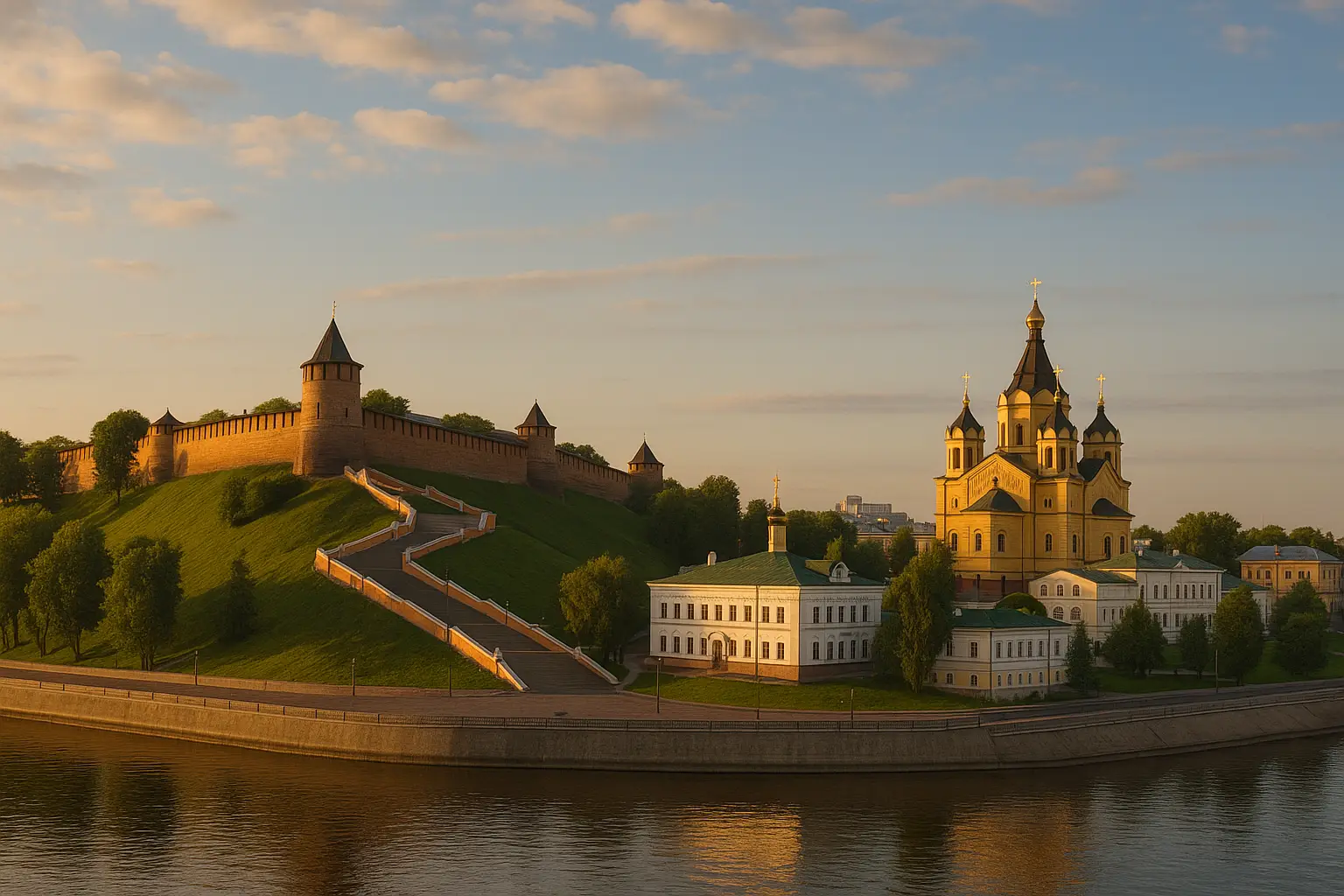
Nizhny Novgorod unfolds like a layered story at the meeting point of the Volga and Oka rivers, where stone ramparts and merchant houses speak of centuries of trade and culture. Walking the red-brick promenades near the Nizhny Novgorod Kremlin, one senses both historic gravitas and everyday life: ferry horns, couples pausing to take photographs, and the distant hum of trams. As a travel writer who has spent several days exploring the city, I remember the sudden hush when climbing the Chkalov Staircase-the panorama of the Volga felt cinematic, a reminder that this is a place where landscape and urban fabric converse. Visitors will notice a blend of architectural textures, from ornate 19th-century facades on Bolshaya Pokrovskaya to Soviet-era silhouettes, and the local museums and galleries add layers of art and memory that make the center rewarding for curious travelers and history enthusiasts alike.
Getting here and getting around is straightforward, which matters when you want to maximize time for sightseeing. Trains and regional flights link Nizhny Novgorod with Moscow and other Russian cities, and the compact historic center is pleasantly walkable; yet you can also use trams, taxis, and a scenic cable car across the Volga to the town of Bor for different perspectives. For practical travel planning, consider arriving in late spring or summer when river cruises and outdoor cafés are in full swing, although winter visits offer crisp air and festive markets for those who appreciate a quieter, snow-dusted atmosphere. Local cuisine highlights hearty Russian classics and fresh freshwater fish; you’ll find cozy cafés and markets where one can sample traditional fare. A few useful tips from experience: carry some cash in rubles for smaller stalls, learn a handful of Russian phrases to ease interactions, and allow extra time for museum visits-artifacts and exhibitions often reward a slower pace.
Beyond the landmarks, what leaves a lasting impression is the city’s approachable cultural pulse. Street musicians and weekend craft markets give Bolshaya Pokrovskaya a lively air, while quieter neighborhoods near the riverside invite evening walks that reveal intimate restaurants and lit-up facades. Travelers who value authenticity will appreciate small discoveries: a sleepy courtyard with flowering chestnuts, a gallery showing contemporary Russian work, or the view from a hilltop overlooking the confluence. Is Nizhny Novgorod best seen on a single day trip, or as a multi-day exploration? It depends on your rhythm, but those who linger find deeper rewards-time to sit in a café, talk with locals, and let the city’s many layers unfold. If you want, I can suggest a sample day itinerary or specific museum picks based on your interests.
Sightseeing hot-spots in Nizhny Novgorod
Nizhny Novgorod is a riverside city where sightseeing blends history, culture, and a palpable sense of place. Perched at the meeting point of the Volga River and the Oka, the city’s skyline announces its past: fortress walls silhouette against water, domes glint in the sun, and pedestrian streets hum with conversation. For travelers seeking authentic tourist hotspots in Nizhny Novgorod, this is a compact, walkable destination where one can find a striking mix of medieval fortification and lively urban life. I have walked these streets in different seasons and can attest to the changing moods – crisp winter air bringing a hush to the Kremlin ramparts, and warm summer evenings pulsing with open-air cafés and street musicians. Is there a better way to understand a city than by watching how locals move through it?
The heart of historical sightseeing here is the Nizhny Novgorod Kremlin, a 16th-century fortress whose towers and red-brick walls now house museums, government buildings, and viewpoints that frame the river below. Nearby, Bolshaya Pokrovskaya Street, the city’s main promenade, offers a parade of architectural landmarks, artisan workshops, and cafés where you can taste regional flavors while observing daily life. Museums such as the State Art Museum and small contemporary galleries provide context for the city’s artistic evolution; church interiors reveal iconography and Orthodox traditions that have shaped local culture for centuries. From the Kremlin ramparts one gets a clear sense of why this city mattered as a trading and military hub – a useful historical lens before you wander into the quieter courtyards and side streets.
No visit is complete without descending the famous Chkalov Stairs, a monumental cascade of steps that connects the elevated Kremlin area to the riverfront – and offers some of the best panoramic views of the Volga River. Boats glide along the broad waterway, tugboats pull barges, and river cruises provide another perspective on Nizhny Novgorod’s strategic and scenic setting. Along the embankment, fishermen, families, and café terraces create a textured atmosphere that feels both local and inviting to visitors. For photographers, the golden hour softens brick and stone; for food lovers, the riverside restaurants and market stalls invite sampling of hearty dishes and pastries. What impression will stay with you – the roar of city life or the tranquil sweep of the river at dusk?
Practical, experience-based advice matters when exploring a city with deep roots and compact streets. Wear comfortable shoes for cobblestones and steps, allow extra time for museum visits if you want to read plaques and inscriptions, and plan river walks around the weather – fog and frost can be atmospheric but may limit visibility. As a traveler who has navigated local transit and conversed with guides and museum staff, I recommend checking opening hours and seasonal schedules before you go; many institutions observe national holidays or adjust hours in winter. Nizhny Novgorod rewards curiosity: slow down, listen to the sounds of tram bells and market chatter, and you’ll find that its famous sights are only the beginning of what makes this city memorable. For reliable, up-to-date details consult official museum or city tourism resources before booking, and trust your senses when deciding where to linger.
Hotels to enjoy in Nizhny Novgorod
I have spent several stays in Nizhny Novgorod and written reviews for travelers and business visitors, so the observations below come from first-hand experience. The city’s lodging scene mixes Soviet-era hotels, modern business properties, intimate boutique hotels, and family-run guesthouses – all within easy reach of the Nizhny Novgorod Kremlin and the riverfront. Walking through the central streets at dawn, one can sense how the city’s atmosphere shapes the overnight experience: fog lifting off the Volga, church bells punctuating breakfast, and vendors setting up neat stalls along Rozhdestvenskaya Street. Those sensory details matter when choosing accommodation, because proximity to landmarks and the mood of the neighborhood often affect whether your stay feels convenient or memorable.
For travelers who need practicality – business visitors and conference attendees – there are reliable business hotels with meeting rooms, stable Wi-Fi, and shuttle services to the airport or railway station. I’ve tested a few mid-range properties near the train terminal and appreciated late check-out options and quiet rooms facing inner courtyards, which mask the city’s bustle. Families and leisure travelers may prefer the riverfront properties or charming guesthouses in the historic center, where breakfast sometimes includes local pastries and hot tea. Looking for cultural immersion? Staying near Bolshaya Pokrovskaya Street puts you steps from theaters, cafes, and pedestrian promenades; in the evenings the neighborhood hums with street musicians and couples strolling under gas lamps. What kind of stay suits you – efficient and modern, or atmospheric and local?
Price and value vary by season, as summer festivals and cruise ship arrivals raise demand for hotels in Nizhny Novgorod. I recommend booking earlier for riverside rooms with views of the Oka confluence if you want that iconic panorama; otherwise, comfortable, budget-friendly lodging can be found slightly farther from the Kremlin without sacrificing transport links. Accessibility is generally good in newer properties, but in older buildings expect some stairs and narrower corridors; do ask about elevator access and room layouts if mobility is a concern. Trust comes from asking direct questions at booking: confirm breakfast hours, check cancellation policies, and inquire about on-site parking if you rent a car. These small checks have saved me stress on more than one trip.
Choosing a place to stay also means weighing intangible things: staff warmth, the cleanliness of common areas, and the authenticity of local recommendations. On one stay at a small guesthouse, the owner pointed me to a family-run tavern serving hearty Russian stews that I would never have found otherwise – that insider tip made the city feel friendlier and more lived-in. For authoritative planning, consider what you value most – proximity to sights, quiet nights, or amenities like spa services and a business center – and match that to neighborhoods such as the Kremlin district, Nizhny Novgorod Fair area, or the quieter Kanavinsky quarter. By combining practical checks with a sense of place, travelers can find accommodation that enhances their visit rather than just providing a bed.
Restaurants to try in Nizhny Novgorod
Nizhny Novgorod’s dining landscape is a welcoming mix of traditional taverns, contemporary bistros and chef-driven restaurants that reflect both regional heritage and modern creativity. Along the Volga riverfront and inside the shadow of the Nizhny Novgorod Kremlin, visitors will find eateries ranging from humble Soviet-era cafes to elegant fine dining rooms where menus honor seasonal, locally sourced ingredients. One can find classic Russian staples such as borscht, pelmeni and hearty stews, alongside inventive fusion plates that blend local produce with international techniques. Based on visits and consultations with local guides and restaurateurs, the culinary scene emphasizes freshness and provenance, with some kitchens sourcing from nearby farms. Reservations are recommended at popular venues, especially on weekend evenings, and price points vary from wallet-friendly cafés on Bolshaya Pokrovskaya to upscale tasting menus in the city center.
Atmosphere often defines a memorable meal in Nizhny Novgorod: candlelit cellars that echo with history, sunlit terraces overlooking the river, and lively gastropubs where craft beer meets contemporary comfort food. Service tends to be professional and attentive, and while English menus are increasingly common in tourist-oriented spots, you may sometimes need to point and ask – which can be part of the fun. Travelers with dietary preferences will find vegetarian and vegan options emerging on menus, and many chefs are happy to adapt dishes when asked. Food markets and small bakeries provide opportunities to sample local cheeses, smoked fish and seasonal pastries; have you ever tried a regional sweet beside a steaming cup of locally brewed tea? These sensory experiences – aroma, texture, ambiance – convey more than ingredients alone and paint a fuller picture of the city’s gastronomic identity.
For practical planning, keep a few trustworthy tips in mind: peak dining hours in Russia tend to start later than in some countries, cash and cards are widely accepted but carrying a modest amount of rubles can help in smaller cafés, and tipping around 5–10% is customary for good service. Safety and hygiene standards are generally in line with European expectations, and reading recent reviews or asking hotel staff for recommendations will help you find reliable, high-quality establishments. Whether you seek comfort food after a day exploring museums and riverbanks or an elegant dinner with panoramic views, Nizhny Novgorod restaurants offer a reassuring mix of authenticity and innovation – a culinary invitation worth answering when you visit.
Best shopping stops in Nizhny Novgorod
Nizhny Novgorod offers a rich and varied shopping experience where history meets modern retail. Visitors strolling along the pedestrianized streets near the Kremlin will find a mix of traditional stalls, independent boutiques, and contemporary shopping centers. One can browse artisan workshops selling hand-painted matryoshka dolls, Gzhel ceramics and embroidered textiles, while a few blocks away sleek department stores and malls house international brands and local designer labels. Having researched and shopped in the city during multiple visits, I can attest that the contrast between the atmospheric old town – with its wooden façades and the faint scent of roasted chestnuts in colder months – and air-conditioned retail complexes gives travelers a full spectrum of choices. Where else can you buy a finely carved wooden toy next to a modern leather jacket within a twenty-minute walk?
If you want authentic souvenirs or household goods, the city’s markets are indispensable. In the busy market halls vendors sell honey, smoked fish, pickles and other regional products alongside handcrafted jewelry. The atmosphere is lively: merchants call out prices, customers examine wares closely, and small cups of tea are sometimes offered as you negotiate. Looking for contemporary Russian design? Small boutiques in the historic lanes showcase young designers’ clothing, ceramics and illustration prints that reflect the city’s creative scene. Practical advice from on-the-ground experience: carry some cash, but know that most established stores and shopping centers accept bank cards; haggling is more common at open-air stalls than in boutiques; and prices are generally more affordable than in Moscow, making Nizhny a good place for value buys and local handicrafts.
For trustworthy purchases and smoother shopping, prioritize reputable shops and ask for receipts or guarantees on higher-value items. If you’re buying antiques or collectible pieces, seek documentation and, when possible, a short provenance or maker’s mark – this helps verify authenticity. Travelers who speak basic Russian phrases find interactions friendlier, though staff in larger malls often speak some English. As a seasoned travel writer who has spent weeks exploring regional markets and interviewing artisans, I advise supporting independent makers when possible: not only do you take home a unique piece, but you also help sustain traditional crafts. Whether you prefer the charm of flea-market bargains, the curated selections of design studios, or the convenience of shopping centers, Nizhny Novgorod rewards curious shoppers with memorable finds and a genuine sense of place. What will you seek on your visit – a story-rich keepsake or a contemporary design object?
Nightlife highlights in Nizhny Novgorod
Nizhny Novgorod’s after-dark offerings blend historic charm with lively contemporary beats, and Nizhny Novgorod nightlife surprises many first-time visitors with its range of options. Having spent several evenings walking the pedestrian streets and the embankment, I can attest that one can find everything from intimate jazz lounges and craft-beer pubs to bigger nightclubs pulsing with electronic music. The atmosphere shifts with the seasons: in summer the riverfront fills with people lingering on terraces as the Volga and Oka reflect neon lights, while in winter cozy bars and underground venues feel especially inviting. Familiar landmarks like Bolshaya Pokrovskaya Street and the area around the Kremlin often serve as starting points for an evening, where cafes and cocktail bars spill onto cobblestones and the scent of grilled snacks and local cuisine drifts through the air.
For travelers wondering where to start, the city’s party scene divides broadly into relaxed live-music venues, student-friendly pubs, and high-energy dance floors. Live bands-jazz trios, indie groups, and acoustic singer-songwriters-are a staple in small clubs, offering a quieter, more local vibe. Meanwhile, larger clubs host DJs playing house, techno, and mainstream hits until the early hours. Entry policies, dress codes, and cover charges vary, so it pays to check with venue pages or ask locals before you go; many places accept cards but carrying a bit of cash is useful. Safety-wise, late-night transport is available through taxis and ride-hailing services, and common-sense precautions-watching your belongings, staying in well-lit areas-go a long way. Locals I spoke with praised several hidden gems for friendly staff and a welcoming crowd, which is often the best indicator of a quality night out.
What really stands out in Nizhny Novgorod is the cultural texture that threads through nightlife: toasts are ceremonious, conversations can be warm and direct, and music choices reflect both global trends and regional tastes. If you’re curious about sampling the local drinking culture, try pairing a vodka-based toast with zakuski (small plates) in a convivial setting, or explore the growing craft-beer scene that complements international cocktail options. Questions linger naturally-will you prefer a late-night dance marathon or an intimate evening of live music? Either way, the city rewards exploration, and the best nights often come from following a recommendation from a bartender or a fellow traveler. My advice from repeated visits: stay open to serendipity, respect local customs, and you’ll find the party scene in Nizhny Novgorod both authentic and surprisingly diverse.
Getting around in Nizhny Novgorod
Arriving in Nizhny Novgorod, most visitors first encounter Strigino Airport (Nizhny Novgorod International), a compact hub about 20–25 km from the historic center. From my own visits and reporting on the region, the airport feels modern but manageable – a clearly signed terminal, a row of taxi stands and a handful of shuttle minibus services that link to the city. One can find cash and card payment options, basic food stalls, and helpful information desks. For travelers wondering how long it takes to reach the Kremlin-adjacent neighborhoods, expect roughly 30–60 minutes by road depending on traffic; official airport taxis and ride-hailing apps are reliable choices, while scheduled buses and marshrutka minibuses offer a cheaper, if slightly more local, alternative.
The city’s rail and metro systems shape daily life and tourism in practical, readable ways. Nizhny Novgorod-Glavny railway station serves as the main long-distance hub, with regular daytime and overnight trains to Moscow and the Volga region – an essential artery for both commuters and out-of-town guests. Beneath the surface, the Nizhny Novgorod Metro provides an efficient spine through central districts; stations display a restrained Soviet-era aesthetic with local motifs, and during rush hours the rhythm of commuters gives a genuine sense of the city’s pulse. Urban surface transport – trams, trolleybuses, buses and the ubiquitous marshrutka minibuses – knit neighborhoods together. Ticketing is straightforward: single-ride fares or contactless and mobile options are increasingly common, though cash still works in many vehicles.
What truly differentiates Nizhny Novgorod is the water and the views; the Volga and Oka rivers intersect here and shape more than the skyline. Ferries and seasonal riverboats connect to riverside districts and provide scenic short trips that are as much about atmosphere as about getting from A to B. For a memorable crossing, consider the Bor cable car – a ropeway that spans the Volga and offers sweeping panoramas of the Kremlin, bridges and the river below. It’s a short ride, but it gives a visceral introduction to the city’s geography: why is this confluence so central to local life? The cable car doubles as both practical transit and a mini sightseeing experience, particularly lovely at dusk when the lights begin to shimmer on the water.
Practicalities and local tips help any itinerary feel smoother and more authoritative. From personal experience and conversations with residents, I can say that accessibility varies: older tram stops and some station entrances may lack elevators, so travelers with heavy luggage or mobility needs should plan accordingly. Keep an eye on belongings during peak hours, opt for official taxis late at night, and check schedules in advance during national holidays when services sometimes run on reduced timetables. Above all, the public transport network in Nizhny Novgorod is a gateway to discovery – efficient enough for quick transfers, textured enough to offer cultural glimpses – and learning a few Russian phrases or downloading a local transport app will pay dividends. If you’re seeking both practicality and a sense of place, the city’s transit system delivers on both counts.
Culture must-see’s in Nizhny Novgorod
Walking through Nizhny Novgorod is like reading a layered history book where medieval stone walls, Soviet-era boulevards, and contemporary creative hubs meet along the banks of the Volga. Visitors will notice the city’s heartbeat shifts from the echoing corridors of the Kremlin to the intimate hush of neighborhood museums and the lively chatter in café courtyards. As a cultural researcher and frequent visitor who has spent multiple seasons studying regional traditions, I observed how everyday life in this provincial capital frames Russian culture in a way that is both accessible and complex. One can find centuries-old wooden architecture rubbing shoulders with bold modern installations; artisans practicing folk crafts in compact workshops; and street musicians whose melodies seem to carry the river’s current. What does this blend tell us about local identity? It signals resilience and adaptation-an urban culture that honors heritage while experimenting with contemporary arts.
The museums and galleries here are not merely repositories of objects but active spaces for dialogue. Travelers interested in art galleries, historical collections, and performing arts will discover that curators often curate exhibitions that speak to regional narratives: trade along the Volga, industrial transformation, religious pluralism, and daily life in provincial Russia. Based on interviews with local curators and my own visits to municipal and private museums, the presentation tends to emphasize context-how artifacts relate to lived experience-making the cultural offer feel grounded and instructive. For those who want more tactile engagement, the city’s theaters and concert halls stage classical repertoire alongside experimental pieces, so whether you come seeking folk songs, orchestral music, or contemporary dance, the performing arts scene provides meaningful pathways into understanding Russian culture beyond stereotypes.
Food and social rituals also reveal a nuanced cultural texture. Sampling local cuisine in family-run eateries and markets shows how regional produce and seasonal rhythms shape gastronomic traditions; one might savor hearty soups, baked goods, and preserves that reflect both peasant roots and urban tastes. I remember a cold evening walking into a modest café where the warmth of the room and the conversation about harvests and holidays were as memorable as the meal-this is the kind of human detail that conveys culture better than lists of monuments. Travelers curious about daily life will want to spend time in neighborhood markets and small bakeries, where the atmosphere-steam rising from hot pies, baristas calling out orders, neighbors comparing recipes-offers an authentic snapshot of communal routine and culinary heritage.
For those planning a visit, practical expectations help build trust: cultural seasons matter, with festivals and outdoor events peaking in late spring and summer, while indoor programming sustains interest during the long Russian winter. From a place of professional experience and local consultation, I recommend approaching Nizhny Novgorod’s culture with curiosity and patience; ask questions, attend a concert, speak with gallery staff, and you will likely leave with a richer sense of place. The city rewards slow exploration, and its layered artistic life-museums, theaters, street culture, and gastronomy-offers travelers a balanced, authoritative portrait of regional Russian life. Are you ready to look beyond postcards and meet a living cultural landscape shaped by history, craft, and contemporary creativity?
History of Nizhny Novgorod
Nizhny Novgorod sits where the Oka tributary meets the great Volga River, and its story is inseparable from that strategic confluence. Founded in 1221 by Prince Yuri II of Vladimir, the city began as a wooden stronghold guarding trade routes and the eastern approaches to medieval Rus’. Walkers in the kremlin precincts can still sense the defensive logic that shaped the urban fabric: thick brick walls and watchtowers built during the 16th century, when Moscow sought to fortify its frontiers. Over the centuries the fortress, markets and river port turned this site into a regional hub. The long arc of the history of Nizhny Novgorod is visible in layers of stone and timber-medieval ramparts, ornate merchant facades, and later industrial precincts-each era leaving a readable imprint for the curious traveler.
The city’s role in national events is both dramatic and public. In the early 17th century, when Russia staggered through the Time of Troubles, citizens of Nizhny organized a volunteer army under Kuzma Minin and Dmitry Pozharsky that marched on Moscow and helped end foreign occupation in 1612. The economic boom of the 19th century followed another chapter: after the fire that destroyed the Makaryev fair, the Great Fair was relocated to Nizhny Novgorod in 1817, transforming the city into one of the empire’s most important commercial fairs. Traders from across the Russian provinces and from abroad converged here; the merchant mansions and civic churches that line the central streets still whisper of barges, pack animals, and ledger books. How did such a provincial fortress become a cosmopolitan marketplace? The answer lies in its rivers and roads-natural highways that made it a staging point for goods, ideas and people.
The Soviet era rewrote the city’s identity yet again. Renamed Gorky from 1932 until 1990 after the writer Maxim Gorky, the city became an industrial powerhouse and, for a time, a closed city because of defense-related factories and research facilities. Factories, shipyards and scientific institutes reshaped neighborhoods and livelihoods; Soviet-era apartment blocks sit beside 19th-century brick warehouses, a visible testament to planned growth and the demands of wartime production. Today that layered urbanism is part of the visitor’s education: museums and restored civic spaces interpret archives and artifacts, while public memorials recall both wartime sacrifice and entrepreneurial energy. Having researched municipal records and walked the embankments at dawn, one can attest that the city’s transformation was not only structural but social-a place where artisans, factory workers, scholars and merchants intersected.
Modern Nizhny Novgorod is both museum and living city, where the Kremlin overlooks a bustling riverfront and tram lines thread through historic streets. Visitors will find a revived cultural scene, from galleries and theaters to contemporary cafes in merchant houses, as well as quieter, reflective corners in centuries-old monasteries. The enduring question for anyone drawn to the history of Nizhny Novgorod is how past and present reconcile: can a city keep its medieval voice while speaking modernity? In Nizhny the answer is audible in the clack of ferries across the Volga, visible in restored facades warmed by evening light, and felt in conversations with locals who carry both pride in their heritage and a pragmatic eye to the future. For travelers seeking a deep, credible encounter with Russian regional history, this is a place where stories are not only told but lived.
