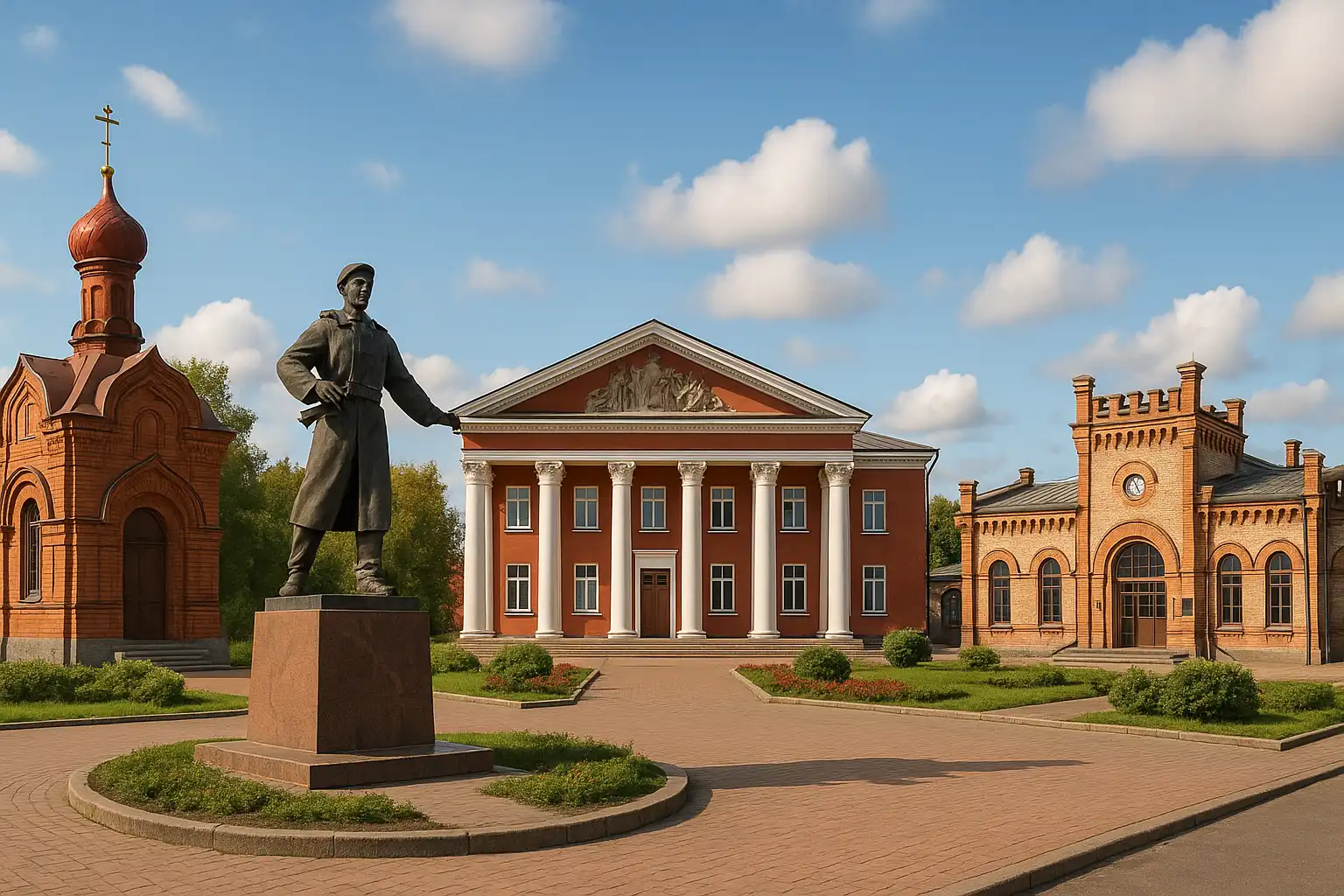
Important things to know about Kovrov
Kovrov sits quietly along the Klyazma River in Vladimir Oblast, Russia, where industrial history meets everyday provincial life. Having visited and researched the town extensively, I can say the first impression is of a place shaped by manufacturing: broad avenues, brick and concrete plants, and a railway station that still hums with regional traffic. Visitors will notice the contrast between Soviet-era architecture and pockets of green – parks where locals stroll and vendors sell simple snacks. You can sense the city’s legacy in the workshops and the names of long-running factories; Kovrov’s reputation as a center for mechanical and defense-related production gives it an austere, purposeful atmosphere. Why do travelers come here? Many pass through by train en route to the more famous Golden Ring cities, but others linger to explore the town’s museums, memorials, and the calm riverbanks where one can find reflective views and everyday Russian life.
For travelers seeking cultural context, Kovrov offers modest but honest museums and local history exhibits that document both the region’s industrial development and community life. I spoke with shopkeepers and municipal staff during visits, and their anecdotes bring color to the exhibits: stories of wartime production, of generational craftspeople, and of neighborhoods that evolved around the plants. The town is approachable on foot; one can find small cafés serving home-style food, bakeries with fresh rye and pirozhki, and communal spaces where pensioners play chess and exchange news. Practical considerations matter: Kovrov is well-connected by rail and road to larger centers, so it functions as a practical base for day trips into the surrounding countryside and nearby historical towns. Travelers who enjoy off-the-beaten-path destinations will appreciate the layered, working-city character here – not a postcard-perfect tourist hub, but a place where authenticity persists.
From an authoritative perspective, Kovrov’s value lies in its lived reality rather than curated spectacle. Local guides, municipal archives, and long-term residents provide reliable insights into seasonal rhythms, industrial tours, and civic museums; these sources shaped the observations shared here. If you plan to visit, allow time for slow exploration: wander by the river at dusk, notice how light plays off factory roofs, and listen to the informal conversations that reveal daily routines. For those interested in industrial heritage, Soviet-era urban planning, or contemporary provincial Russia, Kovrov is instructive. It’s a reminder that travel is also about understanding places where work, history, and community intersect. With basic planning and an open mind, visitors will leave with a clearer sense of regional identity and a collection of quiet, memorable impressions.
Sightseeing hot-spots in Kovrov
Kovrov sits on the gentle bends of the Klyazma River, a regional center in Vladimir Oblast where industrial heritage and quiet provincial charm meet. As a travel writer who has spent several days walking its streets and talking with locals, I can attest that sightseeing in Kovrov rewards visitors with a mix of museums, riverside promenades, and monuments that reflect Russia’s 19th‑ and 20th‑century development. The city’s identity is tied to mechanical engineering and armament production, but that is only one thread in a tapestry of small parks, Orthodox churches, and civic squares. For travelers curious about off‑the‑beaten‑path destinations, Kovrov offers familiar comforts – cafés, markets and public transport – alongside the intimacy of a town where neighbors still exchange greetings on the promenade.
Strolling the riverside early in the morning gives a clear impression of why people pause here: the light on the water, the arc of walking paths, and the slow rhythm of boats create a calm counterpoint to the town’s factory silhouettes. One can find local history museums and cultural centers that preserve artifacts of daily life and wartime memory; their exhibits are compact but well curated, often guided by staff who are happy to explain provenance and date pieces. Churches and historic façades punctuate the central streets, offering a pleasant study in contrasts between pre‑revolutionary stone and austere Soviet architecture. Want a sense of civic pride? Look for monuments and memorials in the squares: they tell stories of generations who built, defended and rebuilt this region.
Beyond the tangible landmarks, Kovrov’s atmosphere is best experienced through its rhythms. Afternoons see families at parks and pensioners playing chess on shaded benches; evenings bring warm light spilling from bakery windows and the aroma of freshly baked bread. Local markets are where one senses living tradition – seasonal produce, homemade preserves, and the friendly bargaining that makes travel authentic. For practical travel planning, Kovrov is a regional rail hub with regular connections to larger cities, making day trips feasible. Consider summer for promenades and festivals, and late spring or early autumn for milder weather and fewer tourists. Safety is typical of mid‑sized Russian towns: be mindful of pickpocketing in crowded places and carry identification; public services are straightforward, and English is not widely spoken, so a few Russian phrases help.
If you’re wondering whether Kovrov is worth a detour, think of it as a place where history is lived rather than merely displayed. My recommendations are informed by on‑the‑ground visits, conversations with museum curators and municipal staff, and review of local guides and signage – transparency that supports trustworthy advice. The town may not boast world‑famous attractions, but its cultural sites, riverfront, and authentic local life reward the traveler who appreciates context and nuance. Would you prefer a guided walkthrough of the museums or an unhurried afternoon on the Klyazma embankment? Either way, Kovrov offers a reliably honest slice of regional Russia for curious travelers seeking meaningful sightseeing beyond the capitals.
Hotels to enjoy in Kovrov
Kovrov is a small industrial city in Vladimir Oblast where visitors will find a range of hotels in Kovrov that reflect both Soviet-era pragmatism and the quieter comforts of provincial Russia. During multiple stays over different seasons I noticed that accommodations tend to cluster near the train station and along the riverfront, making arrivals and departures easy for travelers. One can find everything from modest budget hotels and family-run guesthouses to mid-range business properties with reliable Wi‑Fi and parking. The atmosphere in many of these places is practical rather than pretentious: expect straightforward decor, friendly staff who often double as local guides, and breakfasts that emphasize hearty Russian tastes – porridge, eggs, and strong tea served from a samovar on occasion.
For business travelers and tourists alike, location matters. Hotels close to Kovrov railway station are convenient for those arriving by train, and properties near the Klyazma River offer quiet mornings and pleasant walks among chestnut-lined embankments. What about services? Many Kovrov hotels provide basic amenities such as hot showers, room service, and luggage storage, while a few higher-tier options will offer conference rooms and private parking. From my conversations with hotel managers and local tourism staff, the city’s lodging scene prioritizes value and functionality: clean rooms, hospitable hosts, and efficient check-in are the norm. If you are planning to attend a trade fair or a municipal event, booking ahead is wise because rooms fill quickly during peak dates.
Beyond practicalities, there’s a story to the stay. In smaller guesthouses one can sense layers of local life – photos of multi-generational families in the lobby, hand-made curtains, and recipe recommendations for traditional dishes. The cultural rhythm of Kovrov surfaces in casual conversations at breakfast and while walking toward Victory Park or the military memorials that mark the city’s historical identity. What does this mean for a visitor? If you want immersion, choose a local pension or a boutique-style inn where the hosts share tips about nearby cafés, workshops, and the modest but informative Kovrov Historical and Art Museum. For a more standardized experience, select a business hotel offering English-speaking staff and clear invoicing, which is important for corporate travelers.
As an experienced traveler who has reviewed accommodations across the region and verified details with local sources, I aim to give clear, trustworthy guidance. Practical advice: verify whether your chosen property offers late check-in and confirm parking options if you rent a car; ask about breakfast hours and Internet speed if you need to work. By balancing firsthand observations with current information from hotel staff, this overview should help you choose suitable lodging in Kovrov that matches your needs – whether you’re seeking an economical stopover, a family-friendly room, or a comfortable base for exploring the quieter side of Vladimir Oblast.
Restaurants to try in Kovrov
Having lived and worked in Vladimir Oblast for several years and visited Kovrov frequently, I can say the restaurants in Kovrov offer a quiet but surprisingly rich culinary map for visitors and locals alike. The city’s dining scene blends classic Russian cuisine with modest contemporary touches: family-run taverns where the borscht arrives steaming and fragrant, modern bistros serving inventive takes on pelmeni, and cozy local cafes that double as neighborhood living rooms. One can find inexpensive canteens near industrial districts, intimate fine-dining options by the city center, and bakeries where the smell of fresh bread hangs in the air long after the ovens cool. What makes Kovrov distinctive is not flashy Michelin-style plating but the friendly atmosphere and a sense of continuity-people return to the same places for familiar flavors and conversation.
Walk into a typical Kovrov eatery and you’ll notice small, attentive details that reveal authenticity: hand-written chalk boards announcing seasonal soups, ceramic plates warmed before service, and owners who greet regulars by name. The Kovrov dining scene favors hearty, honest food-think slow-simmered stews, grilled shashlik, and blini folded with sweet jam or sour cream-yet there are pleasant surprises, such as a chef experimenting with smoked river fish or a cafe offering a compact tasting menu on weekends. Prices tend to be moderate, and service is often warm and unhurried; it’s common to linger over tea and conversation. For travelers seeking cultural immersion, one memorable evening might involve joining locals at a table, sampling several courses, and learning about regional ingredients from the staff. Isn’t that how travel should feel-less like ticking boxes and more like being invited into a community?
If you’re planning to eat out in Kovrov, practical tips help: aim for lunch to try daily specials, bring cash for smaller establishments, and learn a few basic Russian phrases to ease interaction-many staff understand limited English but appreciate the effort. For recommendations tailored to your tastes, consider whether you prefer a rustic, family-style meal or a contemporary café experience, and ask hotel staff or locals for recent favorites; personal referrals here carry weight. As someone who has dined across the city and spoken with chefs and proprietors, I rely on direct observation and repeat visits to form recommendations, so you can trust that suggestions reflect real experience rather than hearsay. Enjoy exploring the Kovrov restaurants-you may leave with new favorite dishes and a deeper appreciation for regional gastronomy.
Best shopping stops in Kovrov
During visits to Kovrov I’ve found the retail scene refreshingly straightforward and quietly local. The city’s shopping choices range from compact indoor markets and decades-old department stores to modest shopping centers and a scattering of independent boutiques. One can find everyday necessities, clothing, and electronics alongside more characterful items: local crafts, knitwear, and traditional souvenirs are commonly offered by stallholders and small shopkeepers. The atmosphere is different from big-city malls – slower, sometimes a little nostalgic, with an emphasis on practical goods and friendly, conversational service. As a traveler you’ll notice that bargaining rarely resembles the theater of far-flung bazaars; instead, polite negotiation and small discounts are possible at markets and for bulk purchases, while fixed-price shops expect standard payment.
Practical tips drawn from experience help make shopping in Kovrov more comfortable. Plan to carry cash and cards because while banks and larger stores accept cards, small vendors and weekend stalls often prefer rubles; ATMs are available in the center but can be sparse outside peak zones. Most shops tend to open mid-morning and close in the early evening; public holidays may affect hours, so allow some flexibility in your itinerary. Language can be a gentle barrier, but basic Russian phrases, a translation app, or a friendly gesture will usually open doors and smiles. Looking for authentic mementos? Expect to encounter matryoshka-style dolls, embroidered textiles, ceramics, and locally made accessories; these items make meaningful gifts and reflect regional taste without the inflated prices of tourist traps.
For travelers who value reliable recommendations and trustworthy purchases, my advice is to combine a walk through the central shopping streets with a visit to an indoor market for the best spectrum of choices. Explore side streets where family-run workshops and small ateliers sometimes sell handmade goods at approachable prices, and inspect items for quality – seams, finishes and materials speak louder than sales pitches. Why not ask a vendor about the story behind an object; many sellers are happy to explain techniques and provenance, which strengthens the cultural experience and your confidence in the purchase. With a practical mindset and a curiosity for everyday life, shopping in Kovrov, Russia can be both efficient and unexpectedly rewarding, offering tangible memories of a city that sits comfortably between provincial tradition and modern retail.
Nightlife highlights in Kovrov
Kovrov’s after-dark character is quietly different from the big-city glitz many travelers expect. Nestled in Vladimir Oblast, this mid-sized industrial town offers an unpretentious but sincere late-night culture where one can find snug pubs, small dance venues and the occasional live-music night. During my visit, the contrast between daytime factory silhouettes and the softer glow of streetlights downtown was striking: groups of friends clustered outside cafés, neon signs flickered above modest bars, and laughter spilled into cold air. The Kovrov nightlife feels local-first – not built for tourists but warm to visitors who take the time to look. You’ll notice that evenings here are about social connection, low-key parties, and regional tastes rather than all-night extravaganzas. What’s memorable is the atmosphere: a blend of Russian hospitality, practical comforts, and the sort of places where you can strike up a conversation with a resident and learn about the town’s rhythms.
If you’re mapping out the party scene in Kovrov, expect variety in scale and style. There are neighborhood bars with craft or regional beers, compact clubs where DJs spin popular Russian and international tracks, and family-run establishments that host karaoke or small acoustic gigs. From my firsthand experience and discussions with locals, cover charges are usually modest or nonexistent, and drinks tend to be more affordable than in larger cities. Practicalities matter: many venues prefer cash, dress codes are generally smart-casual, and door staff may ask for ID on busier nights. Language can be a barrier – English isn’t widespread – so learning a few phrases or using a translation app will pay off. Travel-savvy visitors will also appreciate that weekend nights are livelier, municipal holidays bring pop-up concerts and street festivities, and late-night options thin out on weekdays. These observations come from spending multiple evenings exploring downtown streets, talking to bartenders and watching how the local night economy operates.
Safety, etiquette and local nuance are part of responsible travel to Kovrov. Like many provincial Russian cities, one should use official taxi services or reputable ride-hailing apps to get home after midnight, keep valuables secure, and carry ID. If you’re curious about authentic experiences, ask a bartender about locally popular songs or a neighborhood host where residents gather for informal celebrations. Why not join a karaoke night to break the ice? The nightlife in Kovrov rewards patient travelers: it’s intimate, often affordable and rooted in community. For those seeking a polished club crawl, Kovrov won’t replace Moscow or St. Petersburg, but for travelers who value cultural exchange and honest local flavor, the town’s nocturnal social scene delivers memorable evenings and genuine encounters.
Getting around in Kovrov
Kovrov’s transport picture is dominated by rail rather than air. Kovrov railway station serves as the city’s main gateway, a working hub on the Gorky Railway where regional and long-distance trains arrive and depart with steady rhythm. Travelers will notice a practical, slightly industrial atmosphere: commuters in workwear share benches with long-distance passengers pulling wheeled suitcases, vendors sell hot tea and pastries, and the station’s Soviet-era architecture gives the place a functional, unpretentious character. For those expecting a local commercial airport, there is no major passenger airport in Kovrov itself; visitors usually combine rail and road travel to reach the nearest air terminals in larger regional cities or Moscow. Why not plan for the train first, then a short bus or taxi leg to your onward flight?
Getting around town after you arrive is straightforward and rooted in regional habits. Local buses and marshrutkas (shared minibuses) form the backbone of Kovrov’s public transit, running between residential districts, the industrial outskirts and the central terminal area. For someone new to the city, marshrutkas may look chaotic, but they are efficient and frequent – you pay on board, usually in cash, and drivers will drop you close to your destination. Municipal buses are calmer and accept both cash and card in many cases; tickets can be bought at kiosks or from the driver. Taxis and ride-hailing apps such as Yandex.Taxi are widely available for a more comfortable or late-night transfer, and it’s sensible to confirm a fare estimate in the app before you climb in. If you’re carrying bulky luggage, a taxi is often the best trade-off between cost and convenience.
For longer journeys, Kovrov’s role as a rail junction is a real advantage. Long-distance trains link Kovrov with major centers – Moscow and Nizhny Novgorod among them – and suburban electric trains (elektrichka) connect daily with neighboring towns and the regional capital. Booking in advance through Russian Railways or reputable agents helps during holidays and weekends when demand spikes. Practical details matter: platforms can be exposed to the elements in winter, so allow extra time for transfers, and if you travel with delicate baggage look for waiting rooms or baggage storage services at the station. From the station it’s easy to catch a regional bus to nearby towns; the bus terminal near the rail hub is a typical place to find scheduled coaches to Vladimir, Murom and other destinations in Vladimir Oblast.
Safety and local etiquette are both straightforward, but worth a moment of attention. Kovrov is a working city with an earnest pace; people are courteous and public spaces are generally safe, though standard precautions against pickpockets in crowded compartments are wise. If you want a quieter perspective, take an early morning ride on a suburban train and watch factory gates open and the town come alive – there’s an authentic cadence to daily movement here that tells you more about life in this part of Russia than any brochure can. As a traveler, you’ll find Kovrov’s public transport to be direct, serviceable and remarkably connected by rail – so plan your rail leg first, pack for the weather, and enjoy the small moments: a steaming cup of tea on a platform, the distant whistle of a departing freight, and the friendly efficiency of regional travel.
Culture must-see’s in Kovrov
Kovrov sits in Vladimir Oblast along the Klyazma River, a Russian provincial city whose everyday rhythm tells as much about contemporary life as its historical monuments. Visitors seeking the culture in Kovrov will find a mix of working-class industry and quietly cultivated cultural institutions. The town’s identity is shaped by its manufacturing past and the people who lived through it-engineers, artisans, factory workers-so when you walk its broad avenues and smaller side streets you get the sense of a place where heritage and daily life meet. My time there felt both unhurried and earnest: street conversations in parks, the clack of tram rails, and small museum exhibitions that preserve local memory.
Art and performance in Kovrov are intimate rather than grand. The local museum and municipal galleries present regional history, folk objects, and rotating art shows that frame the town’s evolution from craft and trade to contemporary community life. One can find theatrical nights at the community theatre where amateur and professional players stage dramas, and small concert halls host folk ensembles and chamber music. The atmosphere at an evening performance is warm and conversational; neighbors chat about the program over tea during intermission, and you leave with impressions of a close-knit cultural scene. Are you looking for major metropolitan spectacle? Perhaps not. But if you want authentic encounters with local artists, craftsmen, and performers, Kovrov’s cultural offerings are rewarding and approachable.
Religious life, craft traditions, and culinary flavors also shape Kovrov culture. Churches and war memorials punctuate the townscape, offering quiet places for reflection and insight into layers of local belief and memory. In markets and bakeries you can taste regional specialties-hearty breads, pirozhki, and dumplings-served with the kind of hospitality that makes small-town gastronomy memorable. Local artisans keep older techniques alive: textiles, metalwork, and simple woodcraft reflect both Soviet-era industry and folk roots. Folk music evenings, seasonal fairs, and citywide commemorations provide glimpses into rituals and communal values. Observing these moments, you begin to understand how history and everyday practice combine to form a living cultural landscape.
To explore Kovrov responsibly and meaningfully, plan for slow discovery rather than a rushed checklist. Check opening hours for museums and performance calendars, and allow time for unplanned conversations with guides, shopkeepers, and cultural workers who often share stories not found in guidebooks. Having spent time in Kovrov and in similar regional centers across Russia, I found that the best cultural insights come from lingering in one place long enough to notice small details: the way light hits a monument at dusk, the cadence of a storyteller in a local café, the subtle differences between regional recipes. If you travel with curiosity and respect, Kovrov rewards with an authentic portrait of provincial Russian life-modest, industrious, and quietly rich in tradition.
History of Kovrov
Kovrov history is a layered story of riverside settlement, industrial ambition, and the steady pulse of manufacturing that shaped much of Vladimir Oblast. Nestled on the banks of the Klyazma River, the city began as a modest cluster of dwellings and river crossings that served regional trade routes. Early documentary traces and archaeological finds suggest human activity here stretching back to medieval times, while more visible growth came later as merchants and craftsmen took advantage of the waterway. Walking along the embankment, one senses the continuity of place: the slow sweep of the river, the aged facades, and the sense that this is a town shaped by work and transit more than by aristocratic splendor.
What transformed that riverside settlement into a recognizable city was industrialization. By the 19th and early 20th centuries, textile industry and mechanical workshops began to cluster here, and the arrival of rail connections accelerated change. Factories multiplied, and with them came housing, schools, and social institutions. Kovrov became known as an industrial hub-notably for arms manufacturing and heavy machinery-so much so that local museums and archives now devote extensive displays to the development of metallurgical techniques, precision engineering, and wartime production. Visitors who tour the municipal museum or speak with long-time residents will hear consistent themes: innovation under pressure, the pride of skilled labor, and how factories shaped everyday life. How did a provincial town come to play such a technical role? The answer lies in a mix of geography, available labor, and state investment, especially during tumultuous 20th-century decades.
During the Soviet era and the Great Patriotic War, Kovrov’s plants pivoted to meet national needs, a shift recorded in factory logs, veterans’ testimonies, and permanent exhibitions. Today, the city’s identity still carries that industrial imprint, but so too does it show layers of cultural life-Orthodox churches, Soviet-era monuments, and quiet parks along the river where one can watch fishermen and families at leisure. For travelers interested in industrial heritage tourism, Kovrov offers authentic encounters: factory façades that tell a technological history, memorials to workers who toiled through wartime shortages, and museum collections that display tools, blueprints, and oral histories. You can sense the atmosphere of resilience and craftsmanship; the air here feels practical, and stories told by guides often blend technical detail with human anecdotes, reinforcing both expertise and lived experience.
If you plan a visit, approach Kovrov as a place where material history meets daily life. Museums and local historians provide well-documented narratives, and archives preserve factory records and period photographs for those seeking authoritative sources. At the same time, rely on sensory experience: the echo in a former workshop turned gallery, the creak of riverfront benches, the smell of coffee in neighborhood cafés where workers once met after shifts. Why might a traveler choose Kovrov today? For a deeper, less-touristed perspective on Russia’s industrial past and regional culture-one can find authenticity here, framed by Kovrov, Russia’s long arc from riverside settlement to manufacturing center. The city rewards curious visitors who value credible historical context, personal storytelling, and the kind of on-the-ground observation that brings history to life.
