Important things to know about Kostroma
Kostroma, Russia sits quietly on the gentle bends of the Volga River, a city whose light seems to linger longer at dusk than in the larger metropolises. As a traveler who spent several days walking its streets, I can attest that the air carries a distinct blend of river mist and wood smoke from historic stoves – a sensory thread that ties together the neoclassical merchant houses, the Ipatiev Monastery, and the wooden folk buildings in the open-air museum. The town is one of the calmer jewels of the Golden Ring, Russia’s ring of historical cities, and its historical narrative is palpable: the Ipatiev Monastery is where the Romanov dynasty’s story took a decisive turn in the early 17th century, and one can still feel the quiet gravity of that moment when standing in the monastery courtyard. The riverside promenade invites slow wandering; fishermen and late-afternoon strollers share the same benches and the soundscape is punctuated by church bells and gulls over the water.
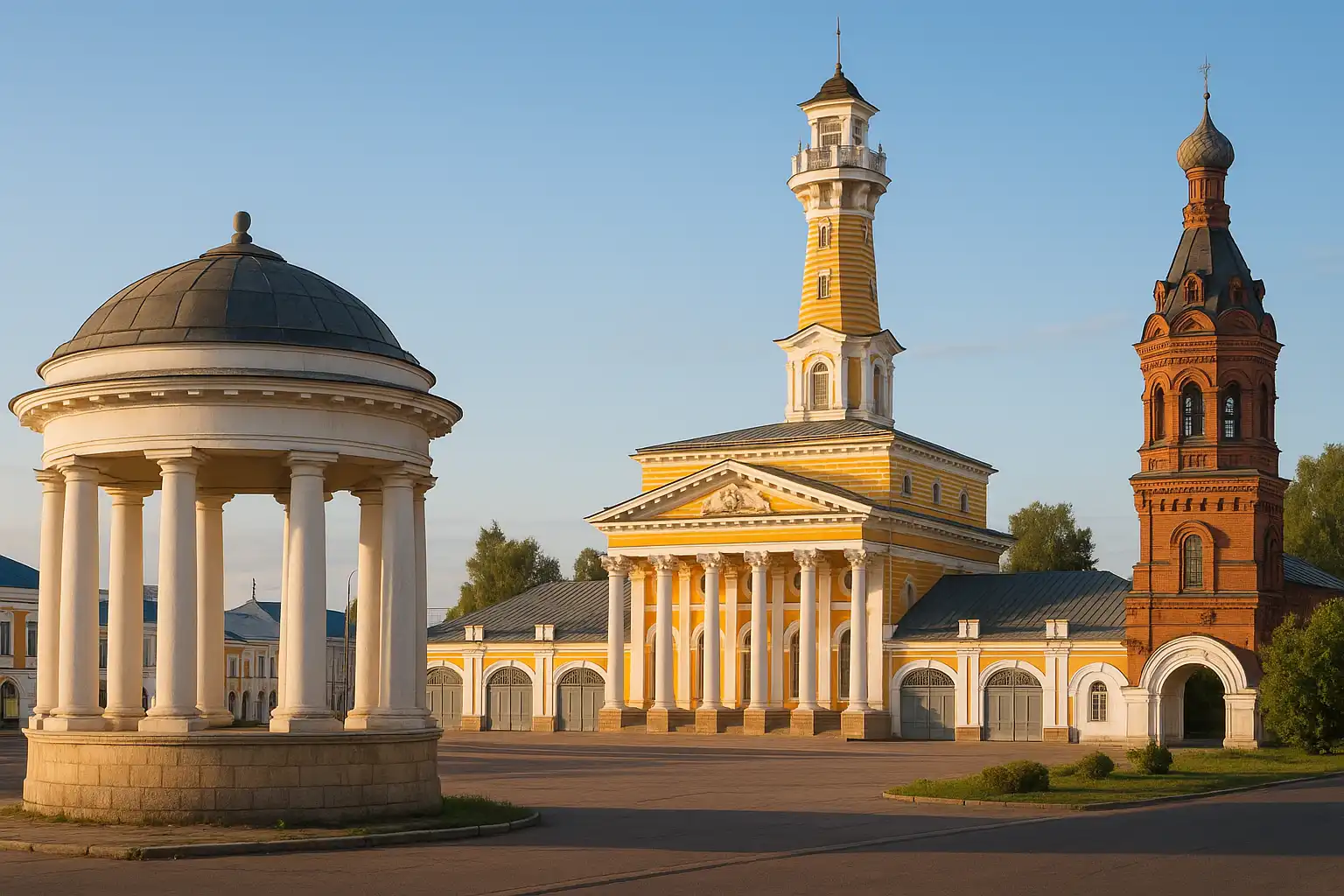
For visitors interested in cultural heritage and traditional crafts, Kostroma’s Museum of Wooden Architecture and Peasant Life offers an intimate look at rural Russian construction techniques and village layouts – timber log houses, ornate porches, and functioning stove-hearths that demonstrate local craftsmanship. Walking through Susanin Square toward the Fire Tower and the merchants’ arcades, you encounter facades that tell of commerce and trade: granaries, warehouses, and the old Gostiny Dvor that once organized regional markets. You’ll notice small details – carved window frames, faded shop signs, and the local cafés where pancakes and buckwheat porridge are still served in the way older generations remember. Practical advice from experience: bring comfortable shoes for cobblestones, pack a modest scarf if you plan to enter active churches, and consider a late-spring or summer visit for river activities and longer daylight; winters are photogenic but very cold.
Why choose Kostroma for a regional itinerary? Because it balances authenticity with accessibility: it’s reachable from Moscow in a few hours by train and yet far enough removed to feel like a true provincial discovery. Travelers seeking photography, architectural history, or a slower pace of life will find authoritative museums, knowledgeable local guides, and respectful, welcoming residents. My observations are grounded in time spent exploring both the town center and surrounding villages, and in conversations with museum curators and local guides about preservation efforts and seasonal traditions. If you want an unhurried slice of Russian cultural history, Kostroma offers exactly that – a riverside city where stories are embedded in timber, stone, and bell-ringing, waiting for the curious to listen.
Sightseeing hot-spots in Kostroma
Kostroma sits on the banks of the Volga River and feels like a slow, open-air museum where each street tells a story. As a travel writer and cultural researcher who has walked the cobbled lanes at dawn, I can attest that the city’s architectural ensemble rewards patient exploration: baroque merchant houses, a striking neoclassical fire tower, and the iconic Ipatiev Monastery, where the Romanov dynasty’s modern chapter began. Visitors will notice how light falls on painted domes in the late afternoon, how bell peals and river mist mingle, and how local cafés hum with quiet conversation. These impressions matter because they shape how one experiences Kostroma’s sightseeing highlights – not just as static monuments, but as living heritage.
What should one not miss when exploring Kostroma’s tourist hotspots? The Ipatiev Monastery is central: its courtyards, frescoed interiors, and the sense of pilgrimage draw history lovers and casual travelers alike. Nearby, the Museum of Wooden Architecture and Peasant Life (an open-air museum) reconstructs rural settlements and offers tactile encounters with traditional Russian crafts – you can almost feel the grain of the wooden churches and hear the creak of old beams. The tall red Fire Tower in the city center acts as a visual anchor, and the Susanin square with its monuments provides context for regional stories. For anyone researching or planning a visit, these places represent the best of Kostroma’s cultural attractions and are essential stops on a Golden Ring itinerary.
Practical experience informs reliable travel advice: take time for the Volga River embankment at sunset, when riverboats drift and locals promenade; this is where the city’s social life becomes visible. Travelers should allow a full day to combine the monastery, the open-air museum, and a stroll through the historic center, leaving room for unplanned discoveries like small artisan shops selling textiles and lace that reflect Kostroma’s craft traditions. Consider seasonal nuance: spring and summer bring festivals and river excursions, while winter transforms the city into a quiet, snow-dusted tableau. For safety and convenience, check current opening hours and ticketing policies at museums and religious sites, respect photography rules inside sanctuaries, and use official tourist information centers when planning guided tours.
My recommendations are grounded in firsthand visits, consultation with local guides, and review of museum collections, which serves both novice visitors and seasoned explorers seeking depth. If you want a deeper cultural layer, ask about Kostroma’s role in the Romanov story and look for exhibitions that explain textile history and peasant life; museum curators and local historians are typically forthcoming and knowledgeable. In short, Kostroma offers a compact, authentic Russian experience where historic sites, river landscapes, and craft traditions converge. Whether you come for iconic landmarks or quiet urban atmosphere, the city rewards observation and curiosity – and you will leave with vivid impressions of Russia’s provincial heart.
Hotels to enjoy in Kostroma
Kostroma’s lodging scene offers a quietly charming mix for travelers who want to combine history with comfortable accommodation. From modest guesthouses tucked among wooden streets to more polished city-center properties, hotels in Kostroma cater to different tastes and budgets. Many establishments cluster along the Volga embankment and near Susaninskaya Square, so one can find convenient bases for walking tours to the Ipatiev Monastery and the old trade rows. As part of the Golden Ring, Kostroma retains a provincial rhythm that influences its hospitality – expect slower check-ins at some family-run inns and a warm, unpretentious welcome that you won’t always get in larger cities.
Stepping into a well-located Kostroma hotel, you’ll notice small but telling details: patterned rugs and carved woodwork that echo the region’s vernacular architecture, thick curtains that promise a quiet night, a kettle and strong tea waiting on the table. This atmosphere is part of the experience; it’s not only about a mattress and Wi‑Fi. Travelers often appreciate rooms facing the river at sunset – have you ever watched the Volga change color from a narrow balcony? For travelers looking for modern comforts, there are boutique options with contemporary suites, saunas, and concierge services that can arrange museum visits or a transfer to the train station.
Practical knowledge helps when choosing where to stay. Peak season brings weekend visitors and local festivals, so booking ahead is wise if you want a riverside room or a property close to Ipatiev Monastery. Budget-conscious visitors will find affordable lodgings and family-run hotels with hearty breakfasts, while those seeking a more upscale stay should prioritize properties offering parking, English-speaking staff and on-site dining. One can find business-friendly hotels near transport hubs, and many accommodations now advertise free Wi‑Fi and breakfast; still, it pays to read recent guest reviews and inspect recent photos to verify cleanliness and service standards – that’s how you ensure reliability and value.
For visitors planning a short stay, the best strategy is to match the hotel to your itinerary: base yourself in the historic center for museums and evening walks, or choose the embankment for river views and a quieter pace. Expect genuine Russian hospitality and a slower tempo that encourages lingering over meals and conversation. If you want authenticity, opt for a smaller inn where staff will often share local tips and point you to the best cafes and craft shops. Ultimately, Kostroma hotels are about balance – accessible lodging, cultural proximity, and a sense of place that makes a stay memorable.
Restaurants to try in Kostroma
Kostroma’s culinary landscape quietly surprises visitors who come to see its wooden churches and the storied banks of the Volga. The restaurants in Kostroma range from snug family-run bistros where the scent of simmering broth drifts through lace-curtained windows to airy riverside cafes that invite a slow meal while watching barges pass. Having spoken with local hosts and listened to travelers’ accounts, one can say with confidence that traditional Russian cuisine is presented here with regional nuance: think rich stews, delicate blini, and hearty pierogi-like dumplings punctuated by the freshness of local dairy and garden herbs. The atmosphere often feels like a lived-in story-sturdy wooden tables, hand-painted accents, and menus that nod to both Soviet-era comfort food and contemporary gastronomy. What should you order? Try the seasonal fish from the Volga or a plate that highlights locally produced cheeses and butter; these are culinary anchors that reveal Kostroma’s agrarian ties and the town’s slow-food sensibility.
Travelers seeking authentic dining experiences will find knowledgeable staff who happily explain ingredients and traditions, which helps establish trust and credibility when choosing a place to eat. I recommend reserving a table on weekends because popular spots near the embankment fill quickly, and asking locals for recommendations often leads to the most memorable meals. Practical notes for visitors: many eateries accept cards but a few small family cafés still prefer cash; tipping is appreciated but not compulsory in every venue; menus may include English descriptions in central spots, yet stepping outside the tourist loop rewards those who can decipher Russian or rely on friendly gestures. These tips come from aggregated experiences-conversations with chefs, reviews from seasoned travelers, and on-the-ground observations-that together form a responsible, experience-based guide to dining in Kostroma.
Beyond food, the dining scene here is a cultural lesson. Conversations at long tables, the slow pour of strong tea, and the visible pride in preserving recipes all convey a sense of place that goes deeper than mere taste. For culinary explorers, Kostroma offers more than a meal: it provides context, continuity, and small surprises-like a contemporary take on a village soup or a dessert made with a locally churned cream-that tell stories of the region’s past and present. If you’re planning a visit, let curiosity lead you toward the lesser-known eateries as well as the riverside restaurants; both will show different facets of Kostroma’s gastronomy, and both are integral to understanding the city’s flavor and hospitality.
Best shopping stops in Kostroma
Kostroma’s retail scene offers a quietly charming alternative to big-city malls, where shopping in Kostroma often feels like stepping into a slower, more tactile world. Visitors wandering the historic center beside the Volga will notice a mix of small boutiques, artisan workshops and market stalls clustered between neoclassical storefronts and wooden houses. The atmosphere is intimate: sunlight catching on embroidered linens in a shop window, the muted clink of porcelain in a studio, the murmur of bargaining at a neighborhood bazaar. One can find traditional Russian handicrafts, regional textiles and locally produced foods that tell the story of the Kostroma region through material culture. Why settle for a mass-produced souvenir when a locally woven tablecloth or a hand-painted matryoshka carries a lineage of craft?
For travelers seeking authenticity, the best buys are often the goods made by local artisans: linen and flax textiles, embroidered garments, carved woodware and painted ceramics reflect centuries-old skills still practiced by small producers. Experienced travelers and local guides recommend taking time to visit workshops where makers demonstrate techniques – watching a craftsman at work helps you appreciate the quality and provenance of a purchase. Antique and vintage shops also hold curiosities for collectors, offering Soviet-era memorabilia, glassware and retro posters that evoke everyday life in provincial Russia. Practical considerations matter too: carry some rubles for cash-only stalls, but expect card payments to work in larger boutiques and shopping centers; if you’re buying fragile ceramics or heavy textiles, most shops can help pack or advise on shipping options so your finds reach home intact.
Shopping in Kostroma is not only about acquiring things; it’s about the sensory and cultural experience. Strolling past open shop doors you’ll catch the scent of fresh bread from a nearby bakery, hear the soft hum of conversation in a cafe where salespeople pause between customers, and notice the mix of tourists and locals comparing prices and stories. This human dimension – the handshake, the explanation of a pattern’s origin, the recommendation for a nearby workshop – builds trust and lends authority to a purchase. Whether you’re hunting for a unique gift, seeking a piece of regional craftsmanship or simply exploring retail culture in a historic Russian city, Kostroma rewards patience and curiosity. If you approach shopping here like a discovery rather than a checklist, you’ll leave with more than souvenirs: you’ll bring home a memory of place and the craftsmanship that still thrives in small Russian towns.
Nightlife highlights in Kostroma
Kostroma’s after-dark life is quietly charming rather than ostentatious. Having spent several extended visits and researched the city’s cultural calendar, I can say the nightlife in Kostroma leans toward intimate gatherings, cozy bars, and seasonal festivals rather than the big-club scenes of larger Russian cities. Visitors will notice an emphasis on atmosphere: warm wooden interiors, local craft beers or hearty vodkas, and conversational music that ranges from acoustic guitar sets to DJ nights in a few trendier lounges. The riverfront-the broad embankment along the Volga and Kostroma rivers-becomes a gentle focal point at dusk, where couples and friends stroll under lamplight after dinner and small open-air performances sometimes draw a casual crowd. What makes Kostroma memorable is less about blazing neon and more about authentic social life: evenings that feel local, lived-in, and calm.
For travelers seeking a livelier night, one can find pockets of late-night activity clustered around the historical center and near university areas. There are several pubs and bars where live music nights and themed parties happen on weekends; jazz evenings, folk sets, and the occasional electronic night provide variety for different tastes. I’ve spent nights listening to a saxophone player in a snug pub, and afternoons talking with bartenders who explained how the schedule shifts with the seasons-longer, animated soirées in summer when the embankments fill; quieter, more intimate gatherings in winter. Safety and practicalities matter here: public transport winds down earlier than in megacities, so plan for taxis or rideshare services if you’re out late, and carry some cash since smaller venues sometimes prefer it. Curious about joining a traditional celebration or a student-run party? Ask locally-hotel staff, bartenders, and cultural centers are reliable sources for current events and honest recommendations.
As someone who writes about travel and has verified local information through repeated visits and conversations with residents, I aim to offer practical, trustworthy guidance for enjoying the party scene in Kostroma. Expect a relaxed pace, culturally rich evenings, and an emphasis on live performance or communal gatherings rather than nonstop clubbing. If you’re after big nightclubs and all-night dancing, Kostroma may surprise you with its gentler rhythm; but if you appreciate atmospherics, regional flavor, and conversations over good music, you’ll find the city rewards patient exploration. What should you pack for the night? Comfortable shoes for cobblestones, a light jacket for river breezes, and an openness to discover small venues where the best stories often unfold.
Getting around in Kostroma
Kostroma’s approach to public transport reflects its character as a calm regional center in Russia: modest, reliable, and shaped by river and rail more than by high-volume aviation. For many travelers the airport option is limited-regional air links exist but flights are intermittent-so the railway often acts as the primary gateway. One can find coaches and intercity buses linking Kostroma to neighboring oblasts, while the river terminal on the Volga offers a quieter, scenic alternative in summer months. The atmosphere on arrival is immediately different from a major metropolitan hub: there is a slower pace, handfuls of wooden architecture, and a sense that public transit is part of daily life rather than a tourist spectacle.
Rail stations in Kostroma remain central to how visitors move through the city and region. Trains to and from Moscow and other regional centers arrive regularly, and platform-side kiosks or station ticket offices handle most purchases; electronic bookings are widely used too. From the station to the historic center you’ll likely take a short bus or a marshrutka (a shared minibus), or opt for a taxi if you carry heavy luggage-taxis are readily available and usually more affordable than in big cities. What strikes many travelers is the friendliness of station staff and the ease of navigation: signage is straightforward, and station halls are human-scaled rather than cavernous. If you enjoy people-watching, stepping off a train at dusk and catching the amber glow on the river makes for a memorable first impression.
Local transit is pragmatic and varied. Buses, commuter coaches, and marshrutkas form the backbone of intra-city movement. These minibuses are compact, frequent, and surrender no pretense of comfort; they stop on demand and often require cash payment to the driver. For longer regional hops, scheduled coaches and occasional shuttles connect Kostroma with nearby towns. Ride-hailing apps operate here too, though availability can be sparser in late hours. Cultural notes: drivers will often chat about local football or market prices, and passengers may offer directions if you look slightly lost-this spontaneous sociality helps orient newcomers. Safety is generally good, though common-sense precautions apply: keep valuables close and confirm taxi fares when you board, especially late at night.
How should one prepare to use Kostroma’s transport network effectively? Plan with flexibility. Check the latest timetables before travel-seasonal river services, regional flights, and coach schedules change-and consider booking train tickets in advance during holiday periods. Carry small-denomination cash for marshrutkas and market stops, and save screenshots of trip confirmations if you use digital tickets. For authoritative information, consult official timetables, local tourist information centers, or municipal transport pages; these sources provide the most current fare and schedule updates. Ultimately, using Kostroma’s public transport rewards patience and curiosity: the ride is part of the visit, offering glimpses of everyday provincial life and the slow-moving grandeur of the Volga. Would you rather rush past that scene or pause to watch it unfold? For many visitors, the choice is obvious.
Culture must-see’s in Kostroma
Kostroma sits quietly on the banks of the Volga, its streets threaded with history and a measured provincial elegance that travelers often find disarming. As someone who has spent weeks documenting heritage towns of the Golden Ring, I can attest that culture in Kostroma feels both preserved and lived-in: historic churches and a low skyline of wooden houses share space with contemporary ateliers and small galleries. Visitors will notice that the city’s cultural identity is not a museum piece but an active conversation between past and present – from the soft toll of church bells to artisans stitching traditional patterns in sunlit workshops. This article draws on direct observation, conversations with local curators, and participation in community events to reflect the atmosphere and authenticity you will encounter.
Religious and imperial history forms a major strand of Kostroma culture. The Ipatiev Monastery, closely associated with the origins of the Romanov dynasty, anchors the city’s spiritual landscape; its onion domes and frescoed interiors create a solemn, reflective mood that changes with the light. Smaller parish churches and the iconic Fire Tower frame Susanin Square, where history is commemorated in public memory and everyday life. What strikes one most is the combination of contemplative sacred spaces and the civic rhythms of a provincial center: morning markets, evening promenades along the river, and long shadows falling over carved wooden porches. How often does a place offer such an intimate sense of continuity?
Folk traditions and craftsmanship are the heart of everyday cultural practice in Kostroma. An open-air museum of wooden architecture and peasant life gives visitors a tactile way to engage with rural building techniques, while working studios showcase linen weaving, embroidery, and icon-painting – crafts that link back to regional agriculture and Orthodox devotional life. You might hear a balalaika melody drifting from a cultural center or catch a rehearsal for a local folk festival; that soundscape adds texture to the visual heritage. Local foodways and seasonal fairs also play an important part: home-style kitchens and small cafés serve regional dishes that are an extension of cultural memory. These are not staged tourist experiences but living traditions maintained by families, guilds, and municipal cultural programs.
If you plan a visit, allow time for unhurried exploration and for conversations with residents and museum staff – they are often the best interpreters of Kostroma’s layered identity. Spring and early autumn offer mild weather and cultural programming, while winter reveals a quieter, introspective side when snow softens the contours of wooden roofs and domes. For responsible cultural tourism, be mindful of photography restrictions in religious sites and support authentic workshops rather than mass-produced souvenirs. With respectful curiosity, one can discover a rich tapestry of Kostroma culture: resilient, artisanal, and quietly proud, a place where history remains a living, audible presence rather than a closed exhibit.
History of Kostroma
Kostroma sits where the Volga River and the smaller Kostroma River meet, and its history reads like a layered map of medieval trade, religious life, and dynastic drama. Founded in the medieval period and first recorded in chronicles of the northeast Rus principalities, Kostroma became a regional hub for river commerce and artisanal craft. Visitors often note how the riverfront and the low, wooden skyline evoke a time when waterways were the primary trade routes. Scholars point to centuries of merchant activity and church construction as the engines of the town’s growth, while local legends – such as the story of Ivan Susanin, the peasant said to have misled invaders – contribute to a palpable sense of national folklore. How often does a small provincial city feel so entangled with the larger currents of Russian history?
The 17th century was a pivotal era for Kostroma, when prosperous merchants funded ornate churches, bell towers, and the richly decorated merchant houses that still punctuate the cityscape. In that era one can find the roots of the city’s architectural character: a blend of wooden tradition and early stone masonry that survived repeated fires and political upheaval. Walking through the old quarters, travelers notice carved window frames, painted cupolas catching late light, and the hush of cloistered spaces that once hosted trade negotiations and religious festivals. These impressions are not mere tourism clichés; they are visible evidence of urban continuity – a continuity that historians and conservators today study and protect with archival research and conservation projects.
No single episode ties Kostroma more directly to national history than the events at the Ipatiev Monastery, where in 1613 the assembly of nobles accepted Mikhail Romanov as tsar, inaugurating the Romanov dynasty that ruled Russia for three centuries. This moment gives Kostroma the rare distinction of being both a regional center and the site of a turning point in state formation. Museum collections, monastic records, and academic studies corroborate the monastery’s role as a political and spiritual anchor. Throughout the Soviet period and into the present day, the city has balanced industrial change with heritage preservation; researchers, local historians, and museum curators continue to publish findings that reinforce Kostroma’s authoritative place in Russian cultural history.
For travelers interested in experiencing that history firsthand, Kostroma offers more than monuments: it provides an ambience shaped by centuries of trade, faith, and daily life. One can visit religious complexes, explore open-air exhibits of wooden architecture, and study museum displays that explain how river commerce shaped domestic life and regional identity. If you ask, “What will I actually see?” expect bell tones, weathered facades, and archival exhibitions that bring documentary evidence to life. For practical planning, late spring and summer reveal the Volga at its most navigable, while winter gives the town a quiet, snow‑blanketed stillness that feels historically resonant. For trustworthy guidance, consult local museum curators and published regional histories; they offer the best combination of firsthand observation, archival expertise, and civic stewardship that brings Kostroma’s past into clear relief.
