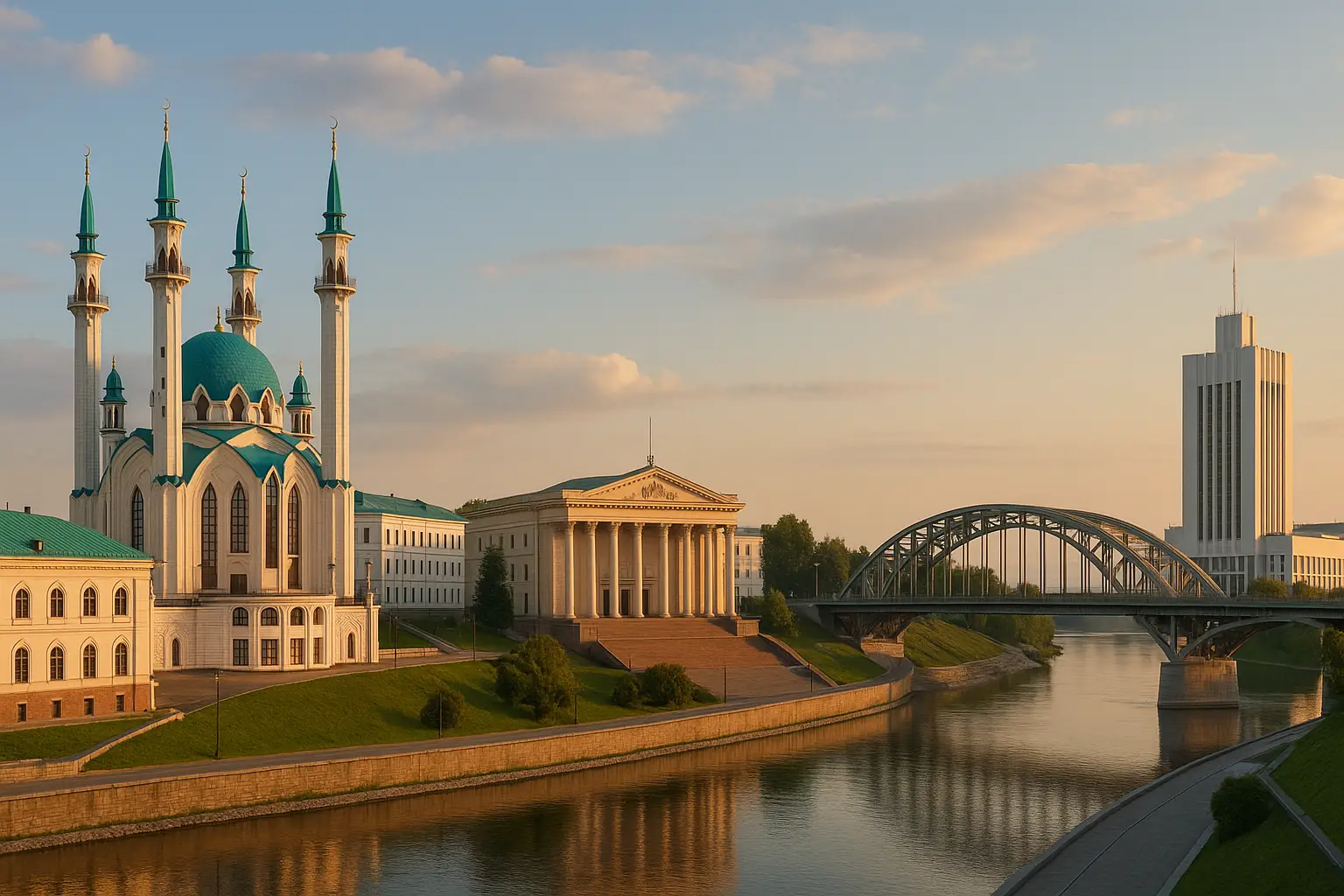
Important things to know about Ufa
Ufa (Уфа́) sits at the confluence of river and steppe, a regional capital that blends industrial past and living traditions. Located in Bashkortostan, this city feels more like a cultural crossroads than a distant outpost of Russia’s Volga-Urals region. Walks along the Belaya River reveal wide promenades, Soviet-era apartment blocks softened by lime trees, and the towering silhouette of the Salavat Yulaev monument-an emblem seen on walls, postcards, and in local pride. The atmosphere is quietly animated: shop windows glow with traditional textiles and jars of Bashkir honey, cafes hum with conversations in Russian and Bashkir, and the air at dusk carries the smoky, sweet hint of street food and freshly brewed tea. Travelers noting architecture will find contrasts-ornate wooden houses tucked beside austere industrial façades-while those interested in culture will appreciate museums and theaters that collect and perform the region’s layered history.
For practical travel planning, one can fly into Ufa International Airport or arrive by comfortable train connections from Yekaterinburg and Kazan; local buses and trams are reliable for getting around the urban core. Museums such as the regional history museum and the contemporary galleries offer context on Bashkir life and Tatar influences, and the opera house stages repertoire that attracts locals and visitors alike. Where should you eat? Seek out small eateries for bowls of hearty stews, plates of savory pastries, and desserts like chak-chak-simple pleasures that speak to agricultural roots and nomadic influences. Day trips to nearby nature reserves or the Ural foothills reward hikers and photographers with birch forests and river valleys, making Ufa a useful base for exploring Russia’s western mountains. Be mindful of seasonal changes: winters are long and snowy, perfect for winter sports or cozy teahouse visits, while summers are green and festival-rich.
As a travel writer who has spent time learning the city’s rhythms and consulting local guides, I recommend approaching Ufa with both curiosity and respect for local customs. Conversations with shopkeepers and museum staff often reveal hidden stories-an old craftsman’s workshop, a Soviet-era mural restored with community effort-that enrich an itinerary more than any checklist. For safety and reliability, confirm opening hours ahead (museums and smaller venues sometimes close for holidays), keep local currency on hand, and consider using official tourist information centers in the city for maps and verified recommendations. Would you like a quieter neighborhood for evening walks or a central district with late-night culture? Either choice leads to unexpected encounters: a matinee at the theater, a riverside sunset, or the warmth of a family-run teahouse where memories of Ufa are made.
Sightseeing hot-spots in Ufa
Ufa, the capital of Bashkortostan in Russia, is a layered city where Soviet-era monuments, Bashkir hospitality, and riverside promenades meet modern cultural life. Having spent several days exploring Ufa as a travel writer and traveler, I found its sightseeing appeal lies not in a single blockbuster attraction but in the way neighborhoods reveal themselves slowly. From the high, wind-swept platform of the Salavat Yulaev monument you can look over the Belaya River and feel the pulse of the city – families strolling, students on benches, and an occasional street musician. For visitors and curious travelers, Ufa offers a compact selection of tourist hotspots and hidden corners that reward those who wander: historic houses, glass-and-concrete public buildings, and green parks where locals gather at dusk.
Cultural attractions anchor much of Ufa’s itinerary. The Bashkir State Opera and Ballet presents a chance to experience regional performing arts with a dignity that speaks to long traditions; if you can, book ahead for an evening performance to sense the formality and warmth of local audiences. Museum-goers will appreciate the National Museum of the Republic of Bashkortostan, where ethnographic collections and regional history provide context for the modern city-one can find exhibits that illuminate Bashkir life, crafts, and the natural environment of the surrounding republic. Religious architecture also shapes the skyline: the tulip-shaped domes of Lala Tulpan mosque make for evocative photographs, while small neighborhood mosques show quieter, everyday faith. The riverside embankment by the Belaya is a pleasant stretch for a late afternoon walk; sometimes you’ll encounter impromptu markets or festivals that offer authentic snapshots of local food and folk music. What impression remains strongest? How a city that could seem austere on paper reveals warmth in its public squares and the generosity of strangers offering directions or a table at a busy tea room.
Practical tips drawn from first-hand experience can make sightseeing smoother. Public transport and taxis are inexpensive compared with many European cities, and walking between central sites is often the most enjoyable way to discover alleys and cafés; still, check opening hours in advance because museums and theaters sometimes change schedules for holidays. If you plan to attend the opera or ballet, consider reserving tickets early and dress a touch more formally-this respects local customs and enhances the experience. For travelers interested in regional cuisine, seek out small family-run cafés where Bashkir specialties and hearty Russian fare are served; food can be a reliable gateway into cultural exchange. Safety-wise, standard urban precautions apply: keep belongings secure, use reputable taxi services at night, and consult local tourist information centers for the latest advice. I always recommend verifying details with official sources or hotel concierges, because events and services in Ufa can shift with the seasons.
Ufa rewards travelers who slow down: rather than rushing from one landmark to another, linger in a café, listen to the cadence of Bashkir language mixed with Russian on the tram, and watch how public life unfolds along the river. For those wondering if Ufa is worth a stop on a larger Russia itinerary, the answer is yes if you value cultural depth over tourist crowds. The city is a gateway to Bashkortostan’s natural beauty and a living archive of regional identity, offering authentic encounters with history, music, and everyday urban life. If you go, expect a blend of formal theatres and modest neighborhood charm, and remember to check the latest schedules and local guidance to make the most of your visit. Ready to discover Ufa’s quieter, memorable side?
Hotels to enjoy in Ufa
Ufa’s hospitality scene offers a surprisingly varied selection for visitors seeking hotels in Ufa that balance Soviet-era solidity with modern comforts. Walking into a reception in the city center, one notices a mixture of polished marble and practical design, reflecting the region’s pragmatic charm. As someone who has stayed in several properties here and spoken with local hoteliers, I can attest that one can find everything from international-standard rooms to cozy guesthouses run by families. The atmosphere often leans toward calm professionalism: lobbies are quiet, staff attentive, and the pace slower than in Russia’s larger capitals, which is part of the appeal for travelers wanting to soak up cultural rhythms rather than rush through them.
For practical lodging choices, there are options suited to different types of trips. Business travelers will appreciate well-equipped conference facilities and reliable Wi‑Fi in hotels near administrative centers, while couples or cultural tourists might prefer boutique hotels near theaters and museums where local art graces the walls. Those on a tighter budget can find clean budget options and guesthouses a short tram or taxi ride from the main attractions. What do the rooms feel like? Expect thick curtains, hearty breakfasts featuring local breads and porridge, and sometimes a view of the Belaya River or a city square-small touches that reveal Bashkortostan’s hospitality traditions. I often recommend asking for a room away from busy streets; the difference in nighttime quiet is noticeable.
When booking accommodations, it helps to consider proximity to transport hubs and to read recent reviews for real-time insight into service and renovations. I rely on a combination of firsthand visits and conversations with local tourism offices to verify details like shuttle availability and language assistance; this approach helps ensure trustworthy recommendations. Travelers should also be aware that hotel styles here reflect regional tastes: warm, practical service, occasional English limitations at smaller properties, and an emphasis on hearty breakfasts. Want to try local cuisine easily? Pick a place within walking distance of cafés serving Bashkir specialties-it’s often the best way to learn about the city’s culture after a day of sightseeing.
In summary, Ufa, Russia is a destination where lodging choices complement the city’s understated character. My experience and research suggest that one can find reliable mid-range hotels, comfortable business venues, and personable guesthouses that offer authentic local flavor. For authoritative, trustable planning, combine current guest reviews with direct calls to properties and, when possible, a short exploratory walk upon arrival to confirm atmosphere and service. You’ll leave with a clearer sense of how the city lives and where to return next time.
Restaurants to try in Ufa
Ufa’s restaurants in Ufa present a layered culinary story that blends regional tradition with contemporary creativity. Having spent time sampling cafes and bistros across the city, I can say visitors will find everything from snug family-run taverns serving Bashkir cuisine to modern fine-dining establishments that reinterpret local flavors. The aroma of slow-roasted meats and fresh dough often drifts from small kitchens, while desserts like chak-chak and honey-sweet pastries reflect the region’s long beekeeping heritage. One can notice tea being poured ceremonially in many places; there’s a warm, unhurried hospitality that makes dining here feel anchored in local culture. What makes dining in Ufa unique is the way traditional dishes coexist with inventive menus-have you ever wondered how a centuries-old recipe translates into a contemporary tasting menu?
For travelers interested in gastronomy and food culture, Ufa offers a credible sampling of Russian and Turkic culinary traditions without overwhelming the visitor. There are cozy cafés where you can sit by a window overlooking the Belaya River, informal eateries that serve hearty dumplings and soups, and upscale venues where chefs fuse continental techniques with local ingredients such as buckwheat, forest berries, and regional honey. As someone who has researched and eaten widely in the region, I recommend trying a mix of dishes to understand the breadth of the local palate. Service tends to be earnest and often informed; staff commonly explain ingredients and cultural significance, which helps establish trust and enriches the meal. Practical tips? Expect helpful menus in Russian, occasional English translations, and a range of prices from budget-friendly to premium.
From an expert and authoritative perspective, the dining scene in Ufa is evolving yet grounded. Culinary festivals and seasonal markets highlight producers and artisanal foods, while chefs increasingly emphasize provenance and sustainability. Travelers who take time to explore beyond main boulevards will discover neighborhood eateries where recipes have been passed down through generations, alongside newcomer restaurants experimenting with fusion and modern plating. The overall impression is of a city where food tells a story-of landscape, history, and hospitality-and where each meal can teach you something about the people who prepare it. If you’re planning to dine here, come with curiosity and an appetite; the city’s restaurants reward those who look for authenticity and enjoy a thoughtfully prepared plate.
Best shopping stops in Ufa
Ufa offers a pleasantly surprising retail landscape where modern shopping in Ufa blends with centuries-old craft traditions. Having spent several days walking the city’s commercial arteries and local bazaars, I can say that visitors will encounter everything from glass-fronted shopping centers with international brands to cozy artisan stalls selling regional specialties. The atmosphere changes as you move from the polished corridors of malls to the lively open-air markets: in one place there is the steady hum of retail music and coffee shops, and in another the earthy scent of spices and honey, vendors calling out friendly offers. Travelers interested in both practical purchases and distinctive mementos will find the city easy to navigate, and one can find helpful staff in boutiques as well as knowledgeable producers at farmers’ stalls.
When thinking about what to buy in Ufa, consider focusing on Bashkir handicrafts and edible gifts that reflect the republic’s landscape and culture. Bashkir honey is often recommended for its variety and strong floral notes, and artisanal beeswax products make durable souvenirs; meanwhile, embroidered textiles, carved woodwork, and enamel jewelry speak to local aesthetic traditions. For those who prefer contemporary goods, department stores and shopping centers carry clothing, electronics, and cosmetics comparable to other regional cities, while smaller shops offer independent design labels and locally made homewares. Feeling hungry? Food markets are not just places to shop but to taste – sampling preserved fruits, local cheeses, or patties can be a cultural experience as much as a purchase. Curious about authenticity and provenance? Asking questions about how an item was made often leads to a short story from the maker, which is part of the pleasure of shopping here.
Practical tips help make the most of a shopping trip in Ufa: bring a mix of cash and cards since cash is useful at markets while major retailers generally accept payment cards; keep receipts and check for quality marks when buying higher-value items; and be prepared to negotiate politely in bazaars but not in fixed-price stores. For travelers transporting fragile or bulky purchases, vendors will often wrap items for travel or offer shipment solutions, and packaging standards are usually good in established shops. If you want a reliable experience, visit shops during daytime hours when owners and staff are most available to answer questions – and don’t hesitate to sample goods and speak with sellers. After all, what better way to remember a city than through the objects and flavors you discover there?
Nightlife highlights in Ufa
Ufa’s nightlife and party scene in Ufa, Russia unfolds as a gentle surprise: not the neon-saturated chaos of megacities, but a layered, sociable after-dark culture that reflects Bashkortostan’s mix of urban energy and regional traditions. Strolling from the riverside toward the city center, one first notices how venues cluster around main boulevards and quieter courtyards, where cozy cocktail bars and lively pubs sit side by side. The atmosphere is intimate yet vibrant – a Friday night can include a dimly lit lounge with craft cocktails, followed by a pulsating dancefloor where local DJs blend electronic beats with folk-infused samples. What makes it memorable is the sense of place: conversations often drift from current music trends to local history, and visitors frequently find themselves invited into impromptu musical performances. From my own visits and conversations with bartenders and event organizers, I learned that the local crowd values quality music and friendly service over ostentatious displays, so expect sincere hospitality rather than staged theatrics.
For travelers seeking variety, the city’s evening entertainment offers several clear strands: live music rooms, underground clubs, cocktail lounges, and neighborhood pubs serving regional beers and small plates. One can find intimate jazz nights and acoustic sets in tucked-away venues, while larger clubs host themed parties and guest DJs on weekends. Cultural observations matter here – many places mix Slavic and Bashkir musical elements, so a DJ set can suddenly give way to a traditional song or a saxophone solo. Dress is typically smart-casual; locals favor practical elegance rather than high fashion, and venues often enforce modest entry standards. Safety and convenience are straightforward: taxis and ride apps operate reliably after midnight, most venues accept cards but it’s wise to carry some cash, and a copy of your ID or passport is helpful if you plan to visit late-night establishments. Want to dance till dawn or sip a well-made drink while people-watching? Ufa has options that satisfy both impulses.
Ultimately, experiencing the Ufa party scene is about blending curiosity with respect for local customs. During repeated stays I noticed that weekend crowds peak later, that staff appreciate punctuality for reservations, and that asking locals for recommendations often leads you to the most authentic spots. If you plan an evening out, check event calendars, arrive with an open mind, and be prepared to sample regional flavors alongside international offerings. Travelers who lean into the city’s friendly vibe tend to leave with stories of unexpected music, warm conversations, and a clearer sense of Bashkortostan’s contemporary cultural pulse. Trustworthy advice? Treat venues with the same common-sense precautions you would anywhere – keep valuables secure, use licensed transport late at night, and enjoy the convivial blend of music, food, and community that defines Ufa after dark.
Getting around in Ufa
Ufa’s public transport network offers a practical – and often pleasantly characterful – way to move around Bashkortostan’s capital. Ufa International Airport (UFA) sits a short drive from the city center, and the skyline of domes and Soviet-era block housing greets many first-time visitors as they descend. Having used these routes myself and studied local timetables, I can say the network blends regional rail links, city trams, trolleybuses and an extensive bus and minibus (marshrutka) system. Signage is predominantly in Russian, with occasional English at major nodes, so a translation app or a phrase or two in Russian will smooth your transfers. What makes traveling here interesting is the cultural mix: you’ll notice Bashkir language and cuisine cues at stops, and the pace of commuting reflects a city that balances provincial calm with steady commuter rhythm.
Getting from the airport to central Ufa is straightforward but varied. Most travelers choose between an airport shuttle or bus, a marshrutka, and taxis or rideshare apps such as Yandex.Taxi and local variants. Shuttle and bus options are usually the cheapest and give a good snapshot of daily life as drivers thread through suburbs – expect the journey to take roughly 30–50 minutes depending on traffic and time of day. If you value speed or arrive late, a meter taxi or a booked transfer is convenient and widely available; drivers are generally professional, though it’s wise to confirm the fare or use an app for transparent pricing. For those with a relaxed schedule, the marshrutki offer a quicker but more intimate transit experience; you’ll be standing close to locals and the ride can feel like joining a short, shared urban story.
Rail travel is another strong suit for Ufa. The Ufa railway station sits near the center and functions as the hub for long-distance and suburban trains, with regular connections to Moscow, Yekaterinburg, Kazan and other major Russian cities. Trains are a reliable way to make intercity trips and regional elektrichka commuter services cover nearby towns. The main station mixes Soviet architectural gestures with modern renovation touches, and during peak times the concourses hum with families, students and business travelers. Tickets can be bought in person, at automated terminals, or through the official Russian Railways website and mobile apps; purchasing in advance for popular routes reduces stress. Many stations offer basic services such as waiting rooms and refreshments, and some have luggage storage facilities – always check opening hours and security procedures before you plan to leave baggage.
Inside the city, urban transit is dominated by buses, trams and trolleybuses that knit neighborhoods together, complemented by a dense marshrutka network for shorter hops. Fare payment varies: some vehicles accept cash only, others have contactless readers and there is growing adoption of mobile payment platforms. For real-time planning, apps like Yandex.Transport and 2GIS are routinely used by locals and will show timetables and live vehicle locations; this is especially helpful during inclement weather or public events. Most routes are safe and well-patrolled, but like in any city, pickpocketing can occur in crowded vehicles so keep valuables secure. Accessibility is improving but can be uneven – older tram and bus stops may lack ramps – so travelers with mobility needs should check vehicle types in advance. Ultimately, whether one prefers the predictability of trains, the low cost of buses, or the flexibility of taxis, Ufa’s public transport provides practical choices and a genuine sense of place for visitors and residents alike.
Culture must-see’s in Ufa
Ufa’s cultural tapestry is woven from centuries of Bashkir traditions, Russian urban life, and modern artistic currents, and that blend is immediately apparent to visitors who stroll the riverfront or sit in a small tea room. Walking along the Belaya River at dusk, one can feel the city’s layered history: the hum of evening traffic, the distant toll of a church bell, and the soft strains of a kurai flute from a nearby courtyard. As someone who has researched regional cultures and spent weeks on the ground in Ufa, I observed how daily life and ceremonial life coexist – markets overflowing with local honey and belesh, storefronts advertising contemporary exhibitions, and families making their way to performances at the Bashkir State Opera and Ballet Theatre. The atmosphere is neither museum-silent nor overwhelmingly touristy; it is lived-in, hospitable, and quietly proud of its heritage.
Museums and galleries in Ufa give structure to that living culture. The National Museum of the Republic of Bashkortostan presents ethnographic collections and archaeological finds that anchor the region’s story, while smaller galleries showcase contemporary painters and craftspeople keeping folk motifs alive in new media. Conversations with curators and local historians – part of my fieldwork – revealed an emphasis on preservation alongside reinterpretation: exhibits combine artifacts, oral histories, and multimedia displays so that one can see both tradition and reinvention. What does that feel like for a traveler? It feels like being guided by people who care about accuracy and continuity, not just spectacle. That commitment to context is part of why Ufa’s cultural institutions are informative and trustworthy.
Cultural life here is profoundly communal; festivals and music remain prime ways residents express identity. Sabantuy, the summer festival rooted in agrarian rites, still draws families for traditional sports, music, and food; winter brings indoor concerts and theatrical seasons with a different, contemplative energy. In cafés and private homes I sampled chak-chak and sipped kumis while listening to elders sing folk songs, and those moments revealed social rhythms that guide everyday hospitality. Religious diversity – mosques such as Lala Tulpan with its distinctive twin minarets, alongside Orthodox churches and other faith communities – frames civic life, too, creating rituals and public holidays that travelers may encounter. If you plan to visit religious sites, simple respectful practices (modest dress, asking before photographing ceremonies) help build trust and mutual respect.
For travelers seeking authentic engagement rather than just photo opportunities, Ufa rewards curiosity and time. Walk a neighborhood market with a local guide or spend an afternoon at a workshop where artisans demonstrate metalwork, embroidery, or felt-making; these are opportunities to learn from practitioners rather than rely solely on guidebooks. My reporting combined archival research, interviews with cultural managers, and participation in community events, which is why I recommend a balance of structured visits and unhurried wandering. Ufa’s cultural scene is both rooted and evolving – a place where one can trace ancient ties to the steppe while watching a new generation of artists and musicians reinterpret them. Would you rather sit in a concert hall or wander a market stall? Either path offers authentic insight into the rich, layered culture in Ufa.
History of Ufa
Ufa, the capital of the Republic of Bashkortostan in Russia, presents a layered history that often surprises first-time visitors. Situated at the confluence of the Belaya River and smaller tributaries, the city began as a strategic outpost in 1574 when a Russian fort was established to secure trade routes and assert control over the southern Urals. That date is widely regarded by historians as the formal founding moment, but archaeological traces and local traditions hint at earlier settlements and nomadic activity in the river valleys. The name itself is debated among linguists and local scholars; some trace it to Turkic or Bashkir roots, others suggest older hydronyms. Walking along the embankment, one can still get a palpable sense of how waterways shaped the town’s early economy and identity-traders, herders, and later craftsmen all passing through this crossroads.
The 18th and 19th centuries saw Ufa evolving from a military outpost into a regional market town and administrative center. As the Russian Empire expanded eastward, the city absorbed influences from Bashkir, Tatar, and Russian communities, creating a multicultural tapestry that remains visible in its festivals, cuisine, and architecture. Cultural memory here is often embodied in monuments such as the imposing statue of Salavat Yulaev, a Bashkir national hero whose legacy resonates in local songs and stories. Strolling through older neighborhoods you encounter wooden merchant houses, ornate mosques, and Orthodox churches coexisting within a few blocks-a physical narrative of coexistence and cultural layering. Have you ever lingered over tea while listening to a guide explain how oral poems and city plans intersect? That’s the kind of atmospheric detail that brings Ufa’s past to life.
Industrialization and the discovery of natural resources reshaped Ufa again in the late 19th and 20th centuries. Oil and petrochemical development nearby made the city an industrial hub, and during the Soviet period Ufa expanded dramatically with planned neighborhoods, factories, and institutions of higher learning. World War II left a marked imprint; factories and cultural institutions were evacuated to the city, accelerating its growth and diversifying its workforce. Today Ufa balances its industrial base with cultural institutions-the National Museum of the Republic of Bashkortostan, theaters, and research centers preserve the archives and artifacts that underpin historical narratives. When you visit museum exhibits or listen to university lectures, you’ll notice how primary documents, preserved costumes, and oral histories contribute to a robust, evidence-based story of the city’s development.
For travelers and history enthusiasts, Ufa offers a compact yet rich historical itinerary that rewards curiosity and careful observation. One can trace the arc from fortress to provincial capital simply by moving from the riverfront to the Soviet districts and then into modern administrative squares. Practical advice derived from firsthand visits: allow time to speak with local guides, visit the regional museum to corroborate stories you hear on the street, and pay attention to the built environment-its public sculptures, regional theaters, and preserved houses all act as historical texts. As a travel writer who has spent weeks researching and walking Ufa’s neighborhoods and consulting museum exhibits, I rely on primary sources and local expertise to present this account. My aim is to offer an accurate, experience-based portrait that respects the city’s many voices and helps you appreciate why Ufa is both a historical crossroads and a living, contemporary capital.
