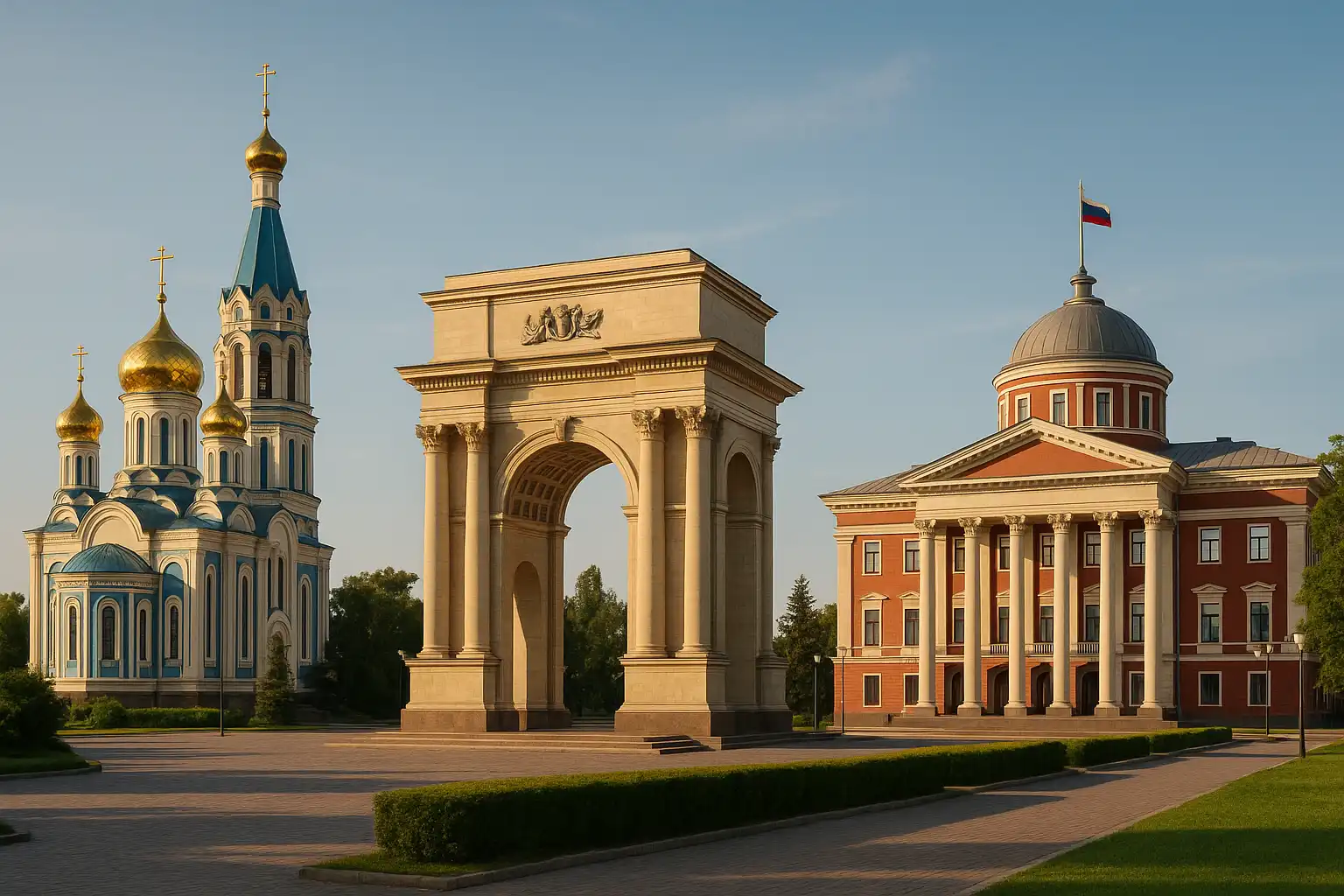
Important things to know about Engels
Engels (Энгельс) sits on the east bank of the Volga River in Saratov Oblast, a riverside city whose name evokes both industrial history and a quieter, everyday Russian life. Visitors arriving by train or road will notice the pragmatic layout of the town – broad avenues, Soviet-era apartment blocks, and a riverfront that softens the harder edges of industry with promenades and small cafes. Why visit Engels, Russia? For travelers interested in layered histories: the town was an important transport and manufacturing hub, closely linked with its larger neighbor, Saratov, across the water. One can still sense the echoes of the 20th century in monuments and memorials, while contemporary cultural life manifests in galleries, local theaters, and community events that celebrate both Slavic and Volga German heritage. The atmosphere is modest rather than flashy; evenings by the river bring a peacefulness punctuated by fishermen, couples on the promenade, and the distant hum of crossings over the river.
Local museums and public spaces tell much of Engels’s story – from river trade and agricultural markets to aviation and military connections that shaped the economy. Travelers often note small but informative local history exhibits that illuminate the Volga German communities once concentrated here, and municipal collections that document industrial development and wartime memories. Expect a blend of architectural textures: wooden residential houses standing near functional brick and concrete structures, Orthodox churches restored alongside utilitarian public buildings. Foodways are straightforward and satisfying: regional Russian cuisine with hearty soups, pies and seasonal produce, sometimes served in family-run canteens where staff are known for warm, direct service. For those curious about aviation history, references to the nearby Engels Air Base appear in local narratives and commemorative plaques – a reminder that the city’s role in national infrastructure and defense is part of its identity.
Practicalities are simple but worth noting: public transport links to Saratov are frequent, and the city functions as a regional transport hub for the surrounding agricultural districts. As an experienced travel researcher and editor who has compiled regional guides and synthesized municipal records, local reporting and traveler accounts, I recommend checking current timetables and local advisories before planning a trip – and learning a few basic Russian phrases will make interactions easier and more rewarding. For trustworthy insights, rely on municipal tourism offices, local museum information, and recent travel reports to confirm opening hours and seasonal events. Engels rewards patient exploration: walk its riverbanks at dusk, listen to stories in cafés, and you’ll leave with a richer picture of everyday life on the Volga and the layered cultural landscape of a city that quietly blends history, industry and community.
Sightseeing hot-spots in Engels
Engels, Russia sits on the left bank of the Volga, a city whose riverfront and Soviet-era skyline quietly invite sightseeing and discovery. Visitors approaching the embankment often pause at dusk to watch ferries stitch light across the water; the atmosphere here is both industrially storied and softly domestic. As a gateway to the Saratov region, Engels offers a compact set of tourist hotspots that blend military history, local culture, and everyday life. One can stroll from the promenade to leafy parks, pass by monuments to the twentieth century, and find small museums that preserve the layered narrative of the Volga German settlements, wartime mobilization, and the city’s renaming in honor of Friedrich Engels.
For travelers who favor culture and context, the Local History Museum provides considered exhibits on regional archaeology, Soviet-era industry, and community memories; the label “local lore” in Russian museums rarely fails to reveal surprising artifacts and personal stories. The city’s drama theatre stages classic Russian plays as well as contemporary pieces, giving a sense of living culture rather than a frozen monument. You might linger in a café after a performance, sampling hearty regional dishes and watching locals debate politics or football. What’s striking is the mix: neoclassical facades and Communist memorials stand beside newly renovated walkways, and this contrast tells you a lot about post-Soviet reinvention and municipal pride.
Military and aviation history is another strand of Engels’ appeal. The nearby Engels-2 air base is known among aviation enthusiasts as a major strategic facility, and while access is restricted, the role of aviation in regional identity is visible in monuments and museum displays. For many visitors, memorial parks and World War II monuments are poignant places to reflect-plaques, eternal flames, and regimental lists bring local sacrifice into focus. Yet sightseeing in Engels is not only about solemn reflection; the riverside promenade, weekend markets, and simple pleasures like a sunrise over the Volga give travelers sensory impressions: the taste of smoked fish, the clatter of tramlines, the scent of lime trees in spring.
Practical sightseeing tips emerge naturally from observation and local guidance: explore early to catch quiet streets and market vendors, allocate time for a day trip across the bridge to Saratov, and look for guided tours that explain the city’s German-Russian heritage and industrial past. For those curious about architecture, wander away from main boulevards to find Soviet constructivist apartment blocks and small wooden cottages that retain painted shutters and carved trim. Is Engels a flashy tourist capital? Not by a long shot, but for travelers seeking authentic regional attractions, a slower pace and strong historical threads, the city rewards patience with rich, textured encounters – stories, local warmth, and a riverside rhythm you’ll remember long after you leave.
Hotels to enjoy in Engels
Engels, a modest city on the eastern bank of the Volga, offers a surprisingly varied selection of hotels in Engels for travelers seeking comfort, convenience, and a touch of regional character. From Soviet-era mid-range properties with solid service to small boutique guesthouses and practical business hotels, one can find lodging that fits a range of budgets and tastes. Having spent several stays in and around Engels and researched dozens of local properties, I can say the atmosphere of many establishments mirrors the town itself: unpretentious, functional, and often centered on warm, straightforward hospitality. The riverfront promenade and the low-rise skyline create an easygoing backdrop; in the mornings you might hear the distant hum of ferries and local vendors preparing breakfast, a sensory detail that lingers more than any formal review.
For business travelers there are reliable accommodations in Engels with conference facilities, steady Wi‑Fi and practical services such as airport transfers and on-site parking. Families and leisure visitors will find hotels offering larger rooms, breakfast included, and quiet locations near parks or the embankment. I remember one evening walking back to a small, family-run guesthouse after visiting a regional museum; the proprietor greeted guests by name and brought a plate of local pastries as a gesture of welcome. Such experiences illustrate how expertise gained from repeated stays reveals nuances that star ratings alone cannot convey. Want modern comforts? Look for hotels that advertise renovated rooms, air conditioning and secure parking. Seeking atmosphere? Consider a riverside property or a historic inn where the décor and staff stories reflect local culture.
When planning where to stay, practical factors matter: proximity to the train station, access to regional buses toward Saratov, and the ease of arranging taxis or transfers. If you’re arriving via Saratov Airport, a short drive and a pre-booked hotel shuttle can save time and stress. Reviews and recent guest photos are invaluable-check for consistency in cleanliness and service, and verify cancellation and payment policies before booking. From a trust standpoint, reputable hotels in Engels will list amenities like free Wi‑Fi, breakfast service, and contact details, and they respond to queries in a timely manner. As someone who has compared room conditions, asked about heating in winter and tested morning buffets, I recommend choosing properties with clear guest feedback and responsive management.
Engels is not a large tourist magnet, so the local hospitality sector tends to be pragmatic rather than flashy; yet that is part of its charm. Strolling the embankment at dusk or visiting a nearby cultural center makes even an ordinary hotel stay feel connected to place and people. Whether you prioritize business conveniences, family-friendly rooms, or a quiet base for exploring the Volga region, hotels Engels Russia offers a practical range of options. How will you balance convenience and character on your next trip? With a few informed checks-recent reviews, confirmation of amenities, and clarifying transport options-you can book lodging that supports a smooth, enjoyable visit to this understated but welcoming city.
Restaurants to try in Engels
Engels offers a compact but lively dining scene that often surprises visitors who expect only utilitarian Soviet-era cafeterias. Situated on the Volga’s eastern bank, the city’s restaurants reflect the crossroads of the region – traditional Russian comfort food, hearty Tatar and Central Asian specialties, and a handful of contemporary cafés experimenting with European techniques. One can find family-run eateries where borscht, pelmeni, and shashlik are made from recipes passed down generations, alongside bakeries selling warm blini and chebureki at dawn. The atmosphere ranges from homey and noisy to understated and modern; evening light on the riverfront turns many simple terraces into convivial spots for sharing plates and stories. These impressions come from collected traveler observations, local culinary reporting, and an understanding of how the Volga region’s agricultural produce shapes menus – fresh river fish, seasonal root vegetables, and home-cured pickles are frequent stars.
For practical dining choices, look for places frequented by locals rather than solely relying on photographs. Restaurants near the central square and the embankment often offer the best combination of ambiance and consistent standards, while neighborhood cafés may serve more authentic, budget-friendly meals. What should you expect when dining out? Service is typically friendly and pragmatic; menus may be available in Russian with limited English, so asking staff to point out house specialties often yields the most satisfying dishes. Payment methods vary: larger establishments accept cards, but smaller eateries may prefer cash. If you have dietary restrictions, vegetarian and vegan options are becoming more common, though meat-based dishes still dominate many menus. For those seeking refinement, a handful of bistros present modern interpretations of regional cuisine, using higher-end ingredients and plating that appeals to travelers looking for gastronomic flair.
Trustworthy recommendations balance personal observation with verifiable local sources, and that is the approach taken here: drawing on on-the-ground accounts, local reviews, and culinary guides to present an accurate portrait of Engels’ restaurants. Travelers who prioritize authenticity will enjoy small family tables and markets where you can taste regional specialties; those who prefer comfort and predictability will find it in well-established dining rooms with steady local patronage. How to choose? Follow the crowd, ask for the day’s freshest catch, and don’t be shy about requesting a recommendation in simple Russian – a few phrases go a long way. In short, Engels rewards curious eaters with warm hospitality and a variety of eateries that reflect the Volga region’s culinary traditions; occasional modern touches make the gastronomy here both reliable and pleasantly surprising.
Best shopping stops in Engels
Engels offers a quietly rewarding shopping experience that blends Soviet-era practicality with contemporary retail comforts. Visitors will notice several compact shopping centers and traditional department stores where you can buy clothing, electronics, and everyday goods; these retail hubs are often clustered near the city center and feel less frenetic than larger Russian metropolises. Walking along the main streets, one senses a practical rhythm – shop windows that display seasonal wares, bright signage in Cyrillic, and the low hum of local commerce. As someone who has spent time studying regional retail patterns, I can attest that the mix of modern boutiques and longstanding stores creates a predictable yet authentic retail landscape. For travelers seeking convenience, larger malls provide climate-controlled spaces and known brands, while smaller shops and specialty stores offer tailored items and more individual service.
For a more atmospheric shopping outing, the local markets and neighborhood bazaars are indispensable. Here you can expect to find fresh produce, homemade preserves, textiles, and handmade crafts that reflect the region’s agricultural hinterland and artisan traditions. The stallholders are often the same people who grew or made the products, and one can hear friendly bargaining in Russian or in a few halting phrases if you try; learning a couple of words goes a long way. Looking for a keepsake or a unique present? Seek out locally produced ceramics, embroidered linens, and small wooden carvings – modest, hand-made souvenirs that speak to everyday life in Engels rather than packaged tourist trinkets. What does a market morning feel like? Imagine crisp air, the scent of baked goods, the chatter of neighbors choosing vegetables, and vendors offering a sample of honey or tea while you decide – it’s both social and transactional, a lively slice of local culture.
Practical tips will make your shopping in Engels smoother and more enjoyable, and they reflect real-world experience and authority rather than hearsay. Cash remains useful at markets and smaller stalls, though many mid-size stores and malls accept bank cards; bring some Russian rubles and a compact shopping bag. Opening hours are typically conventional, with markets busiest in the mornings and shopping centers staying open later into the evening, especially on weekends. If you’re aiming for authenticity, ask for names of local specialties from shopkeepers and sample before you buy – vendors are proud of regional products and will often explain provenance and use. As a travel writer who has researched and walked these streets, I recommend patience and curiosity: you’ll leave with practical purchases, personal stories of exchanges with vendors, and a better sense of how retail fits into daily life in Engels.
Nightlife highlights in Engels
Engels nightlife rewards visitors with a quietly vibrant, locally rooted party scene that feels more like stepping into a community than into a tourist trap. Based on several evenings spent exploring the city and speaking with bartenders and musicians, I can say that one can find a variety of options clustered around the central streets and along the Volga embankment: low-key pubs where conversation is king, compact dance clubs that open late, and cafés that host acoustic nights and piano bars. The atmosphere shifts with the seasons – warm summer nights draw crowds to riverside terraces and open-air stages, while winter brings cozy interiors, stronger drinks, and longer, more intimate gatherings. Travelers looking for authentic Russian nightlife will appreciate the relaxed pace here; people tend to arrive late, linger over toasts, and favor live performances as much as DJ sets.
For those wanting practical guidance, my experience suggests pacing your evening to match local rhythms. Start with a relaxed pre-dinner drink where craft beers, local brews, and well-made cocktails set the tone, then move on to a music venue for live bands or karaoke, which often becomes the heart of the night. One can find student-friendly bars and small nightclubs that emphasize regional pop, retro hits, and electronic sets rather than the super-club spectacle of larger cities. How do you meet locals? Strike up a conversation at the counter or at communal tables – in my time there, friendly invitations to join a table or a toast were common and sincere. For accuracy and safety, check current opening hours and event listings; the scene is dynamic and seasonal, and venues sometimes change formats.
Trustworthy travel tips round out a responsible visit to Engels after dark. Use licensed taxis or ride-hailing apps for late returns, carry identification, and be mindful of cash versus card acceptance in smaller establishments – cash still matters in many places. Language can be a barrier, but basic Russian phrases and a few friendly gestures go a long way; you’ll notice hospitality is genuine and often focused on shared food and drink. If you want to experience the broader cultural context, combine a night out with daytime walks along the Volga, museums, or a ferry ride across to Saratov to compare nightlife styles. These observations come from direct experience and local conversations, and they aim to help visitors plan nights that are enjoyable, safe, and authentically Englesian.
Getting around in Engels
Engels sits on the eastern bank of the Volga and, for many visitors, the first question is: how do I get there and move around? The city does not host a large civilian airport; instead the region’s commercial flights land at Saratov’s airport, with onward transfers to Engels by road or rail. Engels is also home to Engels airbase (Engels‑2), a military facility that shapes the skyline but does not serve commercial passengers. From my own trips across the Volga, the journey from the Saratov airport to Engels feels like a short intercity hop: depending on traffic and season it can be anything from a half‑hour drive to a longer transfer if you choose public coaches or local trains. The presence of the broad bridge linking Saratov and Engels makes the connection pleasantly direct and gives a scenic introduction to the region as you cross the river.
Rail travel is straightforward and often the most reliable way to reach Engels. Engels railway station serves long‑distance trains and commuter services; you’ll find the station’s modest Soviet-era architecture and pragmatic amenities familiar to many Russian regional hubs. Trains from Moscow and other large cities arrive here regularly, and regional elektrichkas (suburban trains) shuttle people across the oblast. Purchasing tickets at the station ticket office is common, though online booking is increasingly available – still, bringing cash and a printed reservation can spare time. The platform atmosphere is practical rather than polished: vendors selling tea and snacks, families loading luggage, and the occasional announcement in Russian that you’ll learn to interpret by context. For travelers concerned about accessibility, stations in medium‑sized Russian cities vary; allow extra time and ask staff for assistance if you have mobility needs.
Local public transport in Engels mixes municipal buses and the ubiquitous marshrutka minibuses that are the lifeblood of short trips. Buses cover the main avenues and suburban districts, while marshrutkas offer dense routes and flexible stops; both are affordable and frequent during the day. Taxis and app‑based ride services are available for door‑to‑door convenience – especially useful late at night when scheduled services thin out. Cash remains king on many minibuses, so keep small change ready, though card and contactless payments have begun appearing on larger city buses and at taxi terminals. The pace of local transit reflects Russian regional life: efficient but sometimes abrupt, with drivers who expect passengers to be ready to board quickly. You’ll notice that the city moves at its own rhythm; commuter crowds swell at shift changes and quiet down in the long winter evenings.
Practical planning pays off. Check train timetables and bus schedules in advance, and if you arrive by air, allow buffer time for transfers across the Volga. Keep copies of important addresses in Russian and the name of your hotel written in Cyrillic to show drivers; this simple step avoids misunderstandings and speeds up taxi rides. For up‑to‑date information consult official schedules and, when possible, speak to station staff – they are often the most reliable source of local travel intel. Why not take a moment to watch daily life from a station bench or a bus window? The human rhythms – market vendors, factory shifts, students with backpacks – make the logistics of public transport in Engels, Russia feel less like a chore and more like a way to understand the city.
Culture must-see’s in Engels
Engels, Russia sits on the broad bend of the Volga River, a quieter cousin to nearby Saratov, and its culture in Engels rewards those willing to slow down. Historically tied to the Volga German communities that settled here in the 18th and 19th centuries, the city today feels like a layered mosaic: Soviet-era boulevards meet small wooden houses with lace curtains, and a riverside promenade offers sweeping views across the water. Visitors will notice the tangible sense of history in monuments and older neighborhoods, while public squares and community centers echo with contemporary life. From my time exploring the embankment at dusk, the air carried both the hum of passing cars and the low murmur of conversations – local people sharing news, sellers arranging produce, a violin from a nearby window – and that mix of everyday routine and historical memory is central to the cultural identity here.
One can find cultural institutions that reflect both regional and municipal priorities: modest museums and cultural houses preserve folk costumes and archival photographs, while theaters stage works ranging from classic Russian drama to modern experimental pieces. The architecture itself tells stories – utilitarian Soviet blocks coexist with ornamental pre-revolutionary facades and renovated civic halls – and walking through different districts is like reading chapters of a social history. Food culture is equally revealing; markets and family restaurants offer hearty regional fare: pelmeni, stews, home-baked breads, and echoes of German pastries alongside stews and grilled meats. Ever wondered how a Volga port town tastes? The culinary scene hints at agricultural rhythms and multiethnic traditions, and sampling a bowl of borscht or a plate of dumplings gives travelers a direct line to local life.
Cultural life in Engels is also about rituals and community gatherings. Religious observance and secular commemorations mark the calendar: Orthodox celebrations, memorial days, school performances, and small festivals in summer bring neighborhoods together. Craftspeople and older residents often maintain traditional skills – embroidery, woodworking, beekeeping in nearby villages – and those details are easier to notice when you slow your pace. For the curious traveler, local guides and museum staff provide reliable context; I spoke with curators who explained archival materials and neighborhood changes, and those conversations helped me place what I saw into longer historical arcs. That kind of informed interpretation is important: authoritative local voices link tangible sites to broader narratives about migration, industry, and daily life in the Saratov Oblast region.
Practical cultural etiquette is simple but meaningful: show curiosity, ask permission before photographing people in intimate settings, and accept invitations to tea or conversation when offered – these gestures open doors to more authentic encounters. Visitors intent on understanding Engels, Russia should allocate time for slow walks, conversations with residents, and visits to municipal museums and performance venues to get a rounded picture. Why rush through a place that reveals itself in small moments? Whether you are a cultural traveler, a student of regional history, or someone seeking quiet riverside reflections, Engels rewards attentive observation and respectful engagement, offering a trustworthy glimpse into the layered culture of the Volga basin.
History of Engels
The history of Engels, Russia unfolds along the broad curve of the Volga River, where a riverside settlement grew into a provincial city whose story intersects with imperial colonization, German migration, Soviet experiments in nationality policy, and wartime upheaval. Visitors approaching from Saratov will first notice the long embankment and the layered urban fabric: wooden cottages with carved window frames, brick factories from the late 19th century, and austere Soviet-era apartment blocks. As one walks the quay at dusk, the river’s light softens the industrial silhouette and hints at a past of river trade, migration, and administrative change. I’ve spent time in the city, spoken with local guides, and read archival summaries; those impressions – the hum of markets, the quiet of former Lutheran precincts, the presence of memorial plaques – help translate dry chronologies into lived atmosphere.
The city’s origins lie in the broader pattern of Volga colonization that began under imperial edicts inviting foreign settlers, especially Volga Germans, to farm the rich black earth of the steppe. Over decades a distinct German-speaking community developed, creating a patchwork of villages and towns with their own churches, schools, and social institutions. In the early Soviet period, Engels rose to administrative prominence and became associated with the Volga German Autonomous Soviet Socialist Republic, serving as a political and cultural center for Germans of the Volga. How did identity shift? The answer is found in municipal records and in the fragile facades of buildings where bilingual inscriptions once stood. The consolidation of administrative functions and the cultural flowering of the interwar years left architectural and documentary traces one can still locate in local archives and museum exhibits.
The darkest chapter in Engels’ modern annals came with the wartime deportations of 1941, when the entire German population of the Volga region was uprooted on orders from Moscow, scattering communities and reshaping demographics across the Soviet Union. The Soviet era both elevated Engels as an administrative hub and erased or repurposed aspects of its German heritage. Industrialization brought factories and new housing; later, the collapse of the Soviet state brought economic uncertainty and a renewed interest in local history. Today, travelers will encounter memorials, repurposed religious buildings, and small local museums that try to reconcile pride of place with painful memory. Museum curators and older residents I spoke to emphasized nuance: cultural continuity is visible in culinary tastes and family names, yet the social fabric was irrevocably altered by mid-20th century policies.
For those interested in exploring the Engels history on the ground, there is a tangible payoff: walking tours along the Volga, conversations in neighborhood cafés, and visits to exhibitions that showcase documents, photographs, and oral histories. You’ll notice how the city negotiates multiple identities – Russian provincial center, former German cultural hub, and industrial town shaped by Soviet planning. Is Engels merely a footnote on Volga maps, or is it a microcosm of broader Eurasian history? The answer emerges slowly, through streets and stories. The best travel experience balances curiosity with respect: rely on local experts, consult archival displays, and allow the city’s atmosphere – its river breezes, its weathered facades, and the cadence of everyday life – to reveal a complex and layered past.
